REVIEW · SIEM REAP
2-Day : Angkor Sunrise, Kompong Phluk Sunset & Banteay Srei Tour
Book on Viator →Operated by Siem Reap Shuttle · Bookable on Viator
Angkor at dawn hits different, and this route is built around that timing, from Angkor Wat sunrise to the Kompong Phluk sunset finish. I like how the schedule keeps you moving between far-flung sites without fuss, and I also like the practical comforts: bottled water, cold towels, and hotel pickup/drop-off so you don’t lose time hunting meeting points.
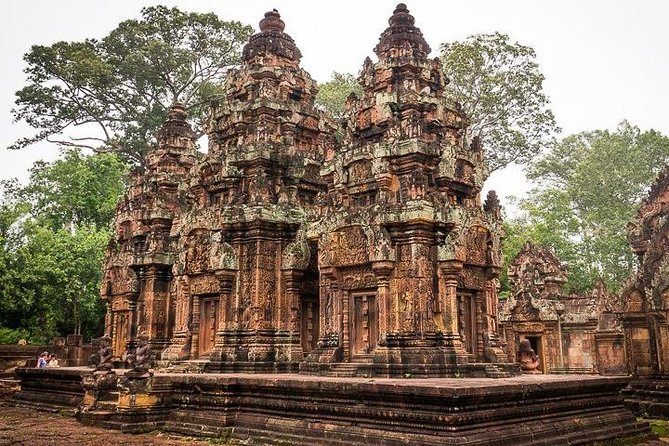
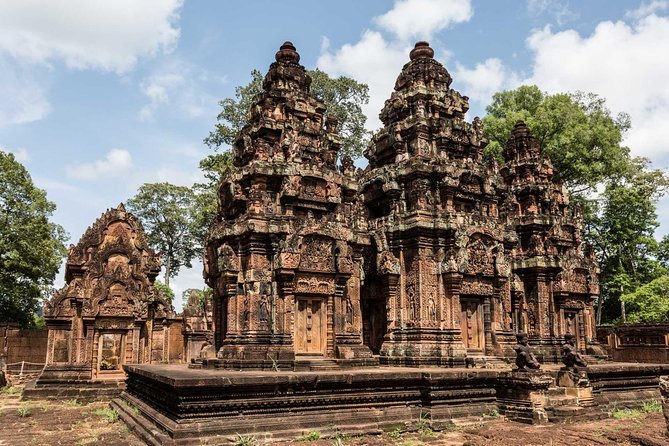
You’re not stuck just in the famous complexes either. You’ll work through a classic Angkor circuit (Ta Prohm and Bayon type stops), then go farther out for Banteay Srei, known for its fine pink sandstone carvings, before ending with Tonle Sap Lake views.
One consideration: most temple entrance fees are not included (Angkor Park Entrance Fees, plus several specific temples), so you’ll want to budget extra on top of the $55 price and keep your cash/card ready.
In This Review
- Key things to know before you go
- Price and what’s actually included (and not)
- Pickup, timing, and the 18–20 hour reality
- Angkor Wat sunrise: the early gate payoff
- Srah Srang and breakfast: a calmer Khmer royal-pool pause
- Ta Prohm: trees, roots, and a photo-friendly maze
- Bayon Temple: the face towers of Angkor Thom
- Kompong Phluk floating village and sunset: Tonle Sap’s slower rhythm
- Banteay Srei: the pink sandstone temple you earn by going farther out
- The “extra temples” stretch: Pre Rup, East Mebon, Ta Som, Neak Poan, Preah Khan
- What the guides do (and why names matter)
- Comfort, group size, and what to pack
- Should you book this Angkor sunrise to Banteay Srei circuit?
- FAQ
- What time does the tour start?
- Is hotel pickup and drop-off included?
- How long is the experience?
- Are temple entrance fees included?
- Is breakfast included?
- Do we get a boat ride at Kompong Phluk?
- What is the group size limit?
- Is lunch included?
- Do I need insect repellent?
- Is the tour affected by weather?
Key things to know before you go
- Start at 4:30am so you’ll be in place for Angkor Wat sunrise lighting and crowds.
- Hotel pickup and drop-off means less logistics and fewer chances to miss the group.
- 4×4 army Jeep off-road driving helps you reach bumpy routes like the one toward Banteay Srei.
- Small-group pace (max 10 travelers) typically makes timing feel more controlled.
- Water + cold towels are included, which matters when you’re outside for long stretches.
- Srah Srang and Kompong Phluk fees are included, but many other temple tickets are on you.
Price and what’s actually included (and not)
At $55 per person, this is priced as a budget-friendly way to cover a lot of ground in one long push—especially with hotel pickup, an English-speaking guide, and an air-conditioned vehicle. For a full Angkor-day circuit, the value is in the routing: you’re not spending hours figuring out where to go next, and you’re riding in the kind of vehicle that’s meant for rough roads.
That said, the big “watch out” is that Angkor Park Entrance Fees are not included. The itinerary lists many temples as admission not included (Angkor Wat, Ta Prohm, Bayon, Banteay Srei, and others), while Srah Srang and Kompong Phluk are listed as included. So plan for additional spending at the temples you enter yourself.
You’ll also need to plan your own lunch—it’s not included—but breakfast is included as a set-menu meal at/near Srah Srang. If you dislike long days, you’ll want to pack an easy snack strategy for the gaps between stops (since the tour doesn’t list lunch).
You can also read our reviews of more evening experiences in Siem Reap
Pickup, timing, and the 18–20 hour reality
The day starts at 4:30am. That’s early enough that you should treat it like a small mission: set a backup alarm, confirm pickup time with your hotel, and have your water bottle situation sorted before you step out.
The tour runs about 18 to 20 hours, which means you’re combining sunrise temple time, midday walking, and a late finish after a boat-based sunset. You’ll be on the move between multiple temple complexes, so think “marathon sightseeing,” not “relaxing afternoon.” The good news is you’re doing it in a structured way—your guide and driver handle route changes and timing.
This is also a good group size for early temple hours: the maximum group size is 10 travelers. Smaller groups usually mean less standing around, and in a place like Angkor (where it’s hot, crowded, and spread out), that matters.
Angkor Wat sunrise: the early gate payoff
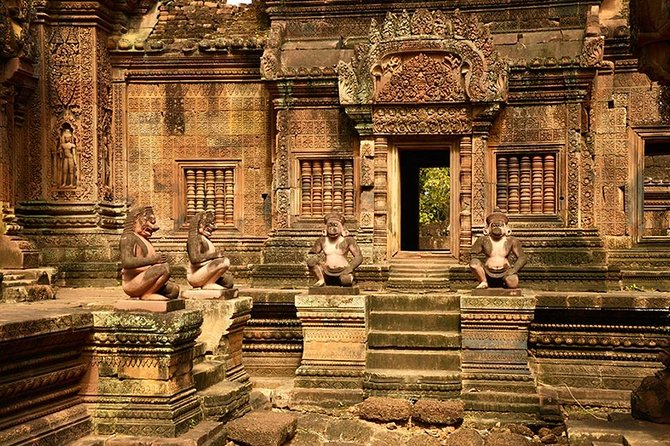
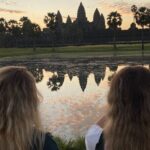
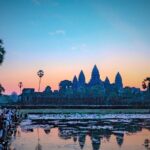
You’ll start with Angkor Wat Sunrise, with about 3 hours allocated for the morning light and temple viewing. This is the headline moment: the soft morning hours make a huge difference, and it’s when the sky, stone, and pond reflections look their best.
Practical tip: keep your camera strap short and your stance stable. Sunrise spots can get busy even with a good start time, and you don’t want to spend the best minutes fiddling with gear. Wear something breathable—you’ll be walking and standing outdoors.
Also remember: admission is not included for Angkor Wat. So if you’re budgeting, this is one of the key entry fees you’ll pay separately.
Srah Srang and breakfast: a calmer Khmer royal-pool pause
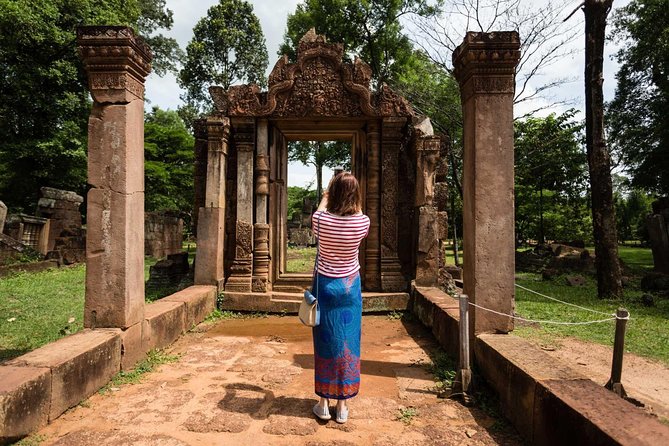
After sunrise, you’ll head to Srah Srang, described as an ancient royal pool used by Khmer kings. You’ll have about 1 hour here, and it’s paired with breakfast nearby as a set-menu meal.
What I like about this stop is the “break in tempo.” Angkor can turn into a constant sequence of stone corridors and carvings. Srah Srang slows things down. You can look at the waterworks and causeway edges with less rush than the main temples, and it’s a good moment to reset before the next big hits.
This part is listed with admission included, which helps your budget compared with other stops.
Ta Prohm: trees, roots, and a photo-friendly maze
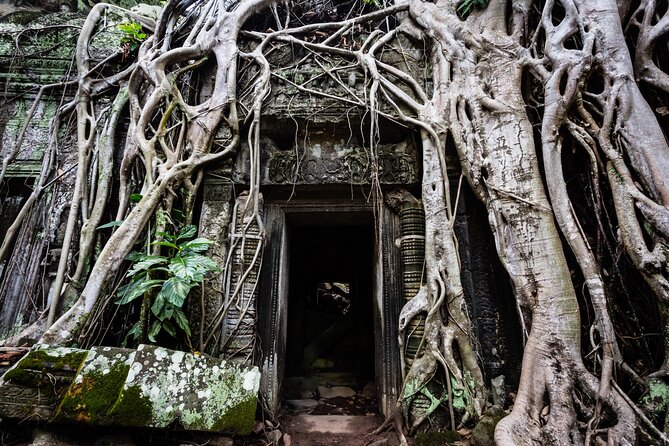
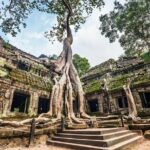
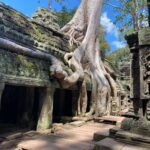
Next up is Ta Prohm for about 1 hour 30 minutes. The main draw is the interaction between nature and architecture: huge tree roots woven through ancient stone walls. It’s visually dramatic, but what you’re really paying for here is perspective—seeing how different time scales overlap at the same site.
A realistic note: with all that visual complexity, it’s easy to lose time while photographing. I recommend picking one or two “must-see” angles and then using the rest of the time to watch how the light changes as you move.
Admission is listed as not included for Ta Prohm, so again, be ready for the pay-on-site reality that comes with most Angkor temple tickets.
You can also read our reviews of more tours and experiences in Siem Reap

Bayon Temple: the face towers of Angkor Thom
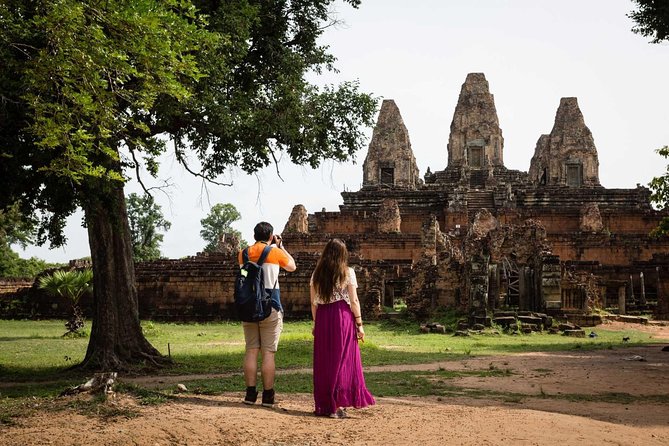
You’ll then visit Bayon Temple, set in the heart of Angkor Thom, with about 1 hour. Bayon’s famous for the 200 serene stone faces and the tight, carved-feel corridors around it. If you want the Angkor mood without as much wandering, Bayon is often a good “focused” stop in the middle of the day.
This is another site where your guide can make a big difference. A good guide helps you understand what you’re seeing, and in a place like Bayon, that changes it from just pretty statues into a clearer story of the Khmer world.
Admission is listed as not included here too.
Kompong Phluk floating village and sunset: Tonle Sap’s slower rhythm
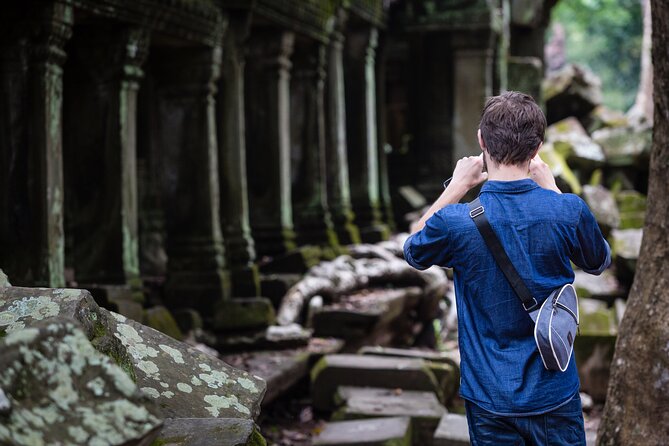
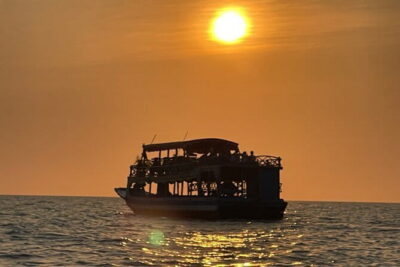
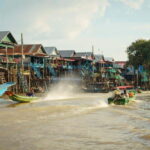
Then comes the big tonal shift: Kompong Phluk Floating Village & Sunset for about 6 hours, with admission included and a boat tour fee included. This is where the trip stops being only stone and starts being about living landscapes—stilted homes, mangroves, and Tonle Sap Lake on the horizon.
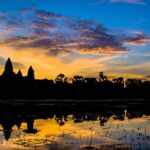
The itinerary focuses on exploring by boat through the floating village area and mangrove surroundings, then winding down for sunset. Sunset over Tonle Sap is exactly the kind of payoff you need after a day of temple walking. The light softens the whole setting, and your eyes get a break from carved stone.
Practical advice: bring insect repellent (it’s specifically recommended for the experience), and wear shoes that handle wet or uneven areas near the water. You’ll also be grateful for the bottled water and cold towels during this long, heat-heavy day.
Banteay Srei: the pink sandstone temple you earn by going farther out
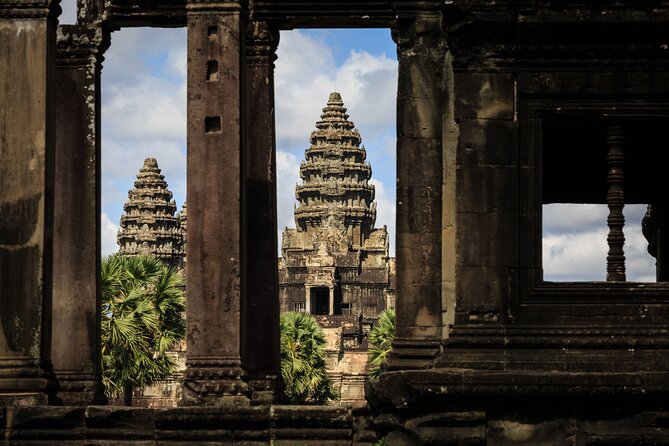
Now for the farthest-flung temple element: Banteay Srei. The tour notes it’s about 38 km (24 miles) out of town, which is exactly why this stop can feel special—you’re not just bouncing between the most central, easiest-to-reach sites.
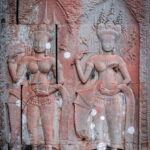
Banteay Srei is known as the Citadel of Women, and it’s admired for its pink sandstone and extremely detailed carvings (the itinerary even calls it the most detailed carvings in all of Angkor). With about 3 hours, you’ll have time to look closely rather than just passing through.
This is one reason I like this tour: it’s built to use the 4×4 army Jeep concept. Off-road and bumpy roads can be part of the journey to the quieter sites. That matters when a temple is spread out and not directly on the main route.
Admission is listed as not included for Banteay Srei, so this is another major ticket you’ll pay separately.
The “extra temples” stretch: Pre Rup, East Mebon, Ta Som, Neak Poan, Preah Khan
After Banteay Srei, you’ll keep going through several additional temple stops. This is where you get a “more complete Angkor feel,” not just the handful of biggest names.
- Pre Rup Temple (about 30 minutes): A 10th-century brick mountain temple where you climb for panoramic views. Short stop, high payoff. If you’re expecting a long “climb ritual,” you may find it brisk, but the viewpoints are the point.
- East Mebon (about 30 minutes): Noted for elephant statues and stone carvings, and the itinerary says it was once built on an island in a sacred reservoir. That island-of-the-past idea makes the carvings feel a bit more connected to their original setting.
- Ta Som (about 45 minutes): Known for a gate wrapped by a giant tree. This is a slower, quieter-feeling stop, and it’s a good break if your legs are tired.
- Neak Poan (about 1 hour): A smaller temple on an island surrounded by ponds symbolizing four elements; it was believed to be a healing place. It’s a gentle shift from “big carvings everywhere” to “calm geometry and water.”
- Preah Khan (about 1 hour 30 minutes): Described as a jungle-covered maze of corridors with carvings and calm beauty, built by King Jayavarman VII to honor his father. This stop is about atmosphere—corridors, shade, and walking through a space that feels less like a showpiece and more like a place you can lose your sense of time.
For most of these, admission is listed as not included. So from a budget standpoint, it’s smart to assume you’ll pay several temple fees during the day, not just one.
What the guides do (and why names matter)
A recurring theme in the experience is that the guide’s role is big. People mention guides such as Ra, John, Chhayakim, Sothea Yon, Sopheap Rath, and Mr Vy. While you can’t control who you get, you can expect the tour to be guide-led: explanations, site context, and help spotting what’s worth photographing.
Why that matters: Angkor is visual overload. Without guidance, you can end up with lots of photos and not much understanding. With a solid guide, you get meaning for the faces at Bayon, the royal-pool purpose at Srah Srang, and why Banteay Srei’s carvings feel so precise.
Comfort, group size, and what to pack
You’ll be out for a long stretch, and the tour tries to keep you comfortable with bottled water and cold towels. There’s also an air-conditioned vehicle, plus the itinerary notes 4×4 army Jeep travel for off-road access. That combo is a practical way to handle long hours: AC for the transfers, Jeep for the rougher segments.
Dress in comfortable, casual clothing, and remember you’re visiting ancient religious grounds, so treat it respectfully. You’ll want:
- Insect repellent (recommended)
- Light layers (early morning can feel cooler, midday heat can be intense)
- Closed-toe shoes with grip
- A hat and sunscreen are smart even though not listed—because Angkor doesn’t wait for your skin to adjust
The tour operates in all weather conditions, so have rain-ready gear just in case. If the weather turns, you’ll still be out walking.
Should you book this Angkor sunrise to Banteay Srei circuit?
Book it if you want maximum value from a limited time window. This tour fits people who like structured days, early starts, and seeing a broad spread of Angkor sites—including Banteay Srei without needing to coordinate separate transport.
Skip it (or reconsider) if you hate long days or if you’d rather pay for fewer temples with more free time. With 18–20 hours and multiple admission-paid sites, you’ll be busy and you’ll likely spend extra on entrances and plan around lunch being on your own.
If you’re the type who enjoys sunrise lighting, temple architecture, and a real sunset at Tonle Sap, this is a strong match—especially for a first Angkor trip where you want the big moments plus the far-flung detail stop.
FAQ
What time does the tour start?
The tour starts at 4:30am.
Is hotel pickup and drop-off included?
Yes. Hotel pickup and drop-off are included.
How long is the experience?
It runs about 18 to 20 hours.
Are temple entrance fees included?
No. Angkor Park Entrance Fees are not included, and many specific temples are listed as admission not included. Srah Srang and Kompong Phluk are listed as included.
Is breakfast included?
Yes. Breakfast is included as a set-menu meal.
Do we get a boat ride at Kompong Phluk?
Yes. The Kompong Phluk portion is done by boat, and the boat tour fee is included.
What is the group size limit?
The maximum group size is 10 travelers.
Is lunch included?
No. Lunch is not included.
Do I need insect repellent?
Yes. Bringing insect repellent is recommended.
Is the tour affected by weather?
It operates in all weather conditions, so you should dress appropriately.