REVIEW · SIEM REAP
Angkor Wat & Banteay Srey Tour
Book on Viator →Operated by Easy Angkor Trip · Bookable on Viator
Angkor can feel overwhelming fast. This tour keeps it organized with a guided loop through the big classics and the pink Lady Temple, all in one day. I like the private-group vibe and the way the day is timed so you’re not just sprinting from stone to stone.
Two things I really appreciate: first, the comfort upgrades—A/C transportation, plus cool towels and cool drinking water for the heat. Second, the guide quality. I’ve seen how Oun Kosorl and Sinann-style guidance can turn a pile of carvings into a clear story, and they’re also the kind of people who help with great photos.
One consideration: entrance fees aren’t included, and you’ll also want to plan for meals since none are provided. If you hate paying extra once you arrive, this is where your budget needs a little flexibility.
In This Review
- Quick Hits: What Makes This Angkor Wat & Banteay Srey Tour Work
- How the Day Flows: Pickup, Ticket Pass, and Getting Oriented
- Angkor Wat: The Moat, the 65-Meter Scale, and Why 3 Hours Is the Right Start
- Bayon at Angkor Thom: Smiling Faces, 54 Towers, and a Real-Life History Twist
- Ta Prohm: Yoni and Lingam, the Victory Gate Walk, and the Spung Trees
- Banteay Srei: The Pink Lady Temple, Delicate Carvings, and a Local Sugar Palm Stop
- Banteay Samre: A Short, Hindu-Style Pause Near the East Baray
- Price and Value: Why $50 Works Here (Even With Entrance Fees Extra)
- Guides Make the Difference: Oun Kosorl, Sinann, and What You’ll Benefit From
- Getting the Most Out of It: Timing, Walking, and Heat Reality
- Who Should Book This Tour, and Who Might Want a Different Style
- Should You Book This Angkor Wat & Banteay Srey Tour?
- FAQ
- Is hotel pickup included?
- Are entrance fees included?
- What’s included in the tour price besides the guide?
- Are meals provided?
- How long is the tour?
- Can I cancel and get a full refund?
Quick Hits: What Makes This Angkor Wat & Banteay Srey Tour Work
- Hotel lobby pickup and a start at the ticket office, so you’re not stuck figuring it out on your own
- A/C transport with cool towels and drinking water to make the long day feel manageable
- Angkor Wat first (the biggest time block) with guided context for the moat, height, and reliefs
- Bayon and Ta Prohm set you up for contrast: smiling faces, then roots and spung trees
- Banteay Srei takes you off the main track, about 35 kilometers away, for the finest pink-sandstone carving
- Guides can connect dots across Cambodian history, and some will even answer Khmer Rouge questions if you ask
How the Day Flows: Pickup, Ticket Pass, and Getting Oriented
This tour starts the easy way: your driver or guide picks you up from your hotel lobby at the time you selected. From there, you head straight to the ticket office to get the temples pass before you start touring. It’s a small step, but it saves real time when you’re visiting one of the world’s most ticket-and-line-heavy sites.
You’ll be traveling by A/C vehicle, which matters in Siem Reap. Between heat, long temple walls, and stair climbs, that comfort turns the day from hard to just tiring. You also get cool towels and cool drinking water, so you’re not guessing what to bring or rushing to find it after you arrive.
The tour is set up as a private experience for your group, but it also notes group discounts. Practically, that means your day is planned around your party, not a big public shuffle.
You can also read our reviews of more tours and experiences in Siem Reap.


Angkor Wat: The Moat, the 65-Meter Scale, and Why 3 Hours Is the Right Start
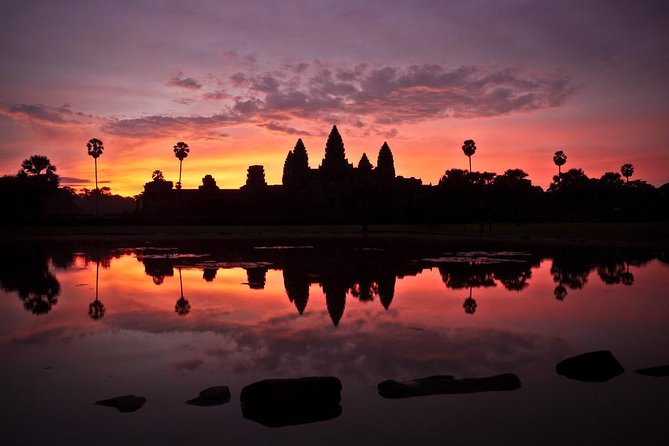
Angkor Wat is the anchor point of the whole day. You spend about 3 hours here, which is enough time to see the main temple’s layout, notice the relief details, and not feel panicked every time someone calls out the next stop.
What makes Angkor Wat special is the sheer design thinking: it’s the largest and most famous Khmer temple, built in the 12th century between 1113 and 1150 during the reign of Suryavarman II. The temple rises to about 65 meters, and it sits inside a broad moat (listed as Ko Tek). That moat and the overall geometry are part of why the temple feels like a fortress of meaning, not just a building you walk through.
Look for the exterior and interior walls covered with carved base-reliefs. With a guide, those aren’t just decorations—they turn into stories you can actually track while you’re walking. This is one of the places where the right guide pays off fast, especially if they help you understand what you’re looking at rather than dumping facts as a lecture.
Important budget note: the admission ticket for Angkor Wat is listed as not included. So even though the tour price is attractive, you should expect to pay an entrance amount for this stop.
Bayon at Angkor Thom: Smiling Faces, 54 Towers, and a Real-Life History Twist
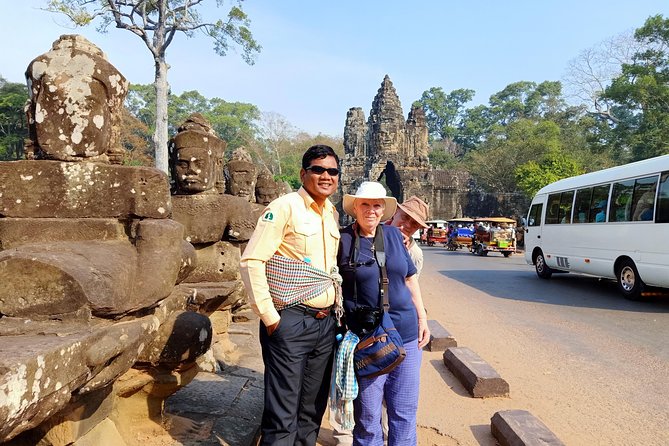
After Angkor Wat, you head to Bayon, also known as PRASAT BAYON or Angkor Thom. Here you get about 2 hours, and the pace often feels different. Angkor Wat is huge and symmetrical; Bayon hits you with dense detail and faces from every angle.
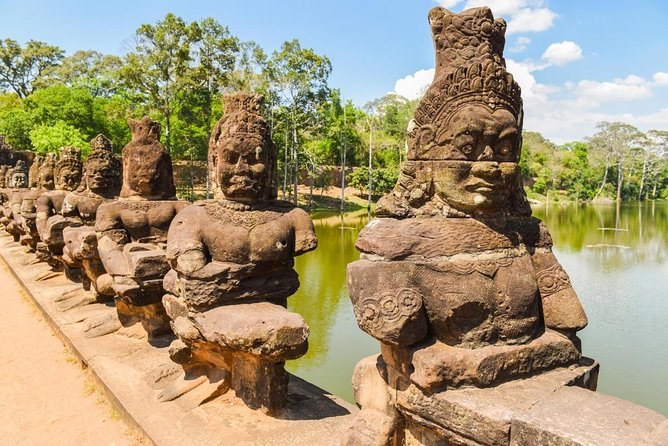
Bayon is Buddhist style and was built in the late 12th or early 13th century by Jayavarnam VII. The most famous feature is the 54 towers representing provinces during the Khmer empire. On those towers are over 200 smiling faces carved into the stone—so you can’t just look once and move on. Your brain keeps trying to figure out who is watching you back.
There’s also a darker historical note: Bayon was damaged in 1811 by Cham invaders. A good guide connects that damage to what you see today, so the temple feels less like a museum and more like a structure that has survived chaos.
Admission here is listed as free, which helps make the day feel like good value once you’re already paying for Angkor Wat.
Ta Prohm: Yoni and Lingam, the Victory Gate Walk, and the Spung Trees
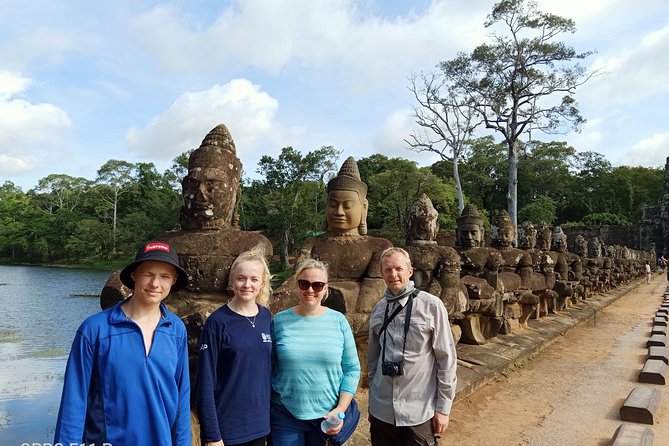
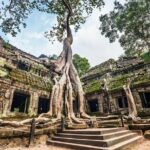
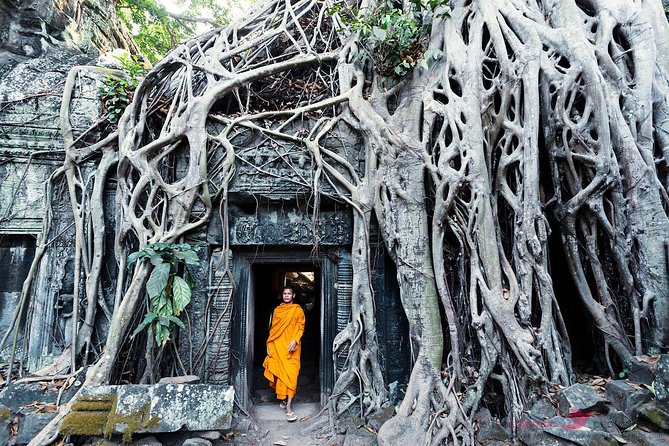
Next is Ta Prohm, with another 2 hours. This temple is the one many people remember for the spung trees—those roots and branches that grow strongly up, on, and over the sandstone blocks. Even if you don’t love crowds or long lines, Ta Prohm has a cinematic feel that’s hard to fake.
Ta Prohm was built in the late 12th century by Jayavarman VII and dedicated in 1186 to his mother. The story gets more interesting as you learn that it shifted religious identity over time. It started with a Buddhist background, then later was converted to Hindu. That conversion mattered physically: some Buddhist galleries were destroyed and replaced with Hindu symbols such as yoni and lingam.
There’s also a path detail: Ta Prohm is 1.5 kilometers from Bayon through the Victory Gate. That kind of connection is handy. When you understand the route between temples, the whole Angkor Thom area reads like one coordinated space instead of separate photo stops.
Admission for Ta Prohm is listed as free, which is great for your budget. The bigger cost is energy—expect uneven stone, stairs, and lots of time looking up.
Banteay Srei: The Pink Lady Temple, Delicate Carvings, and a Local Sugar Palm Stop
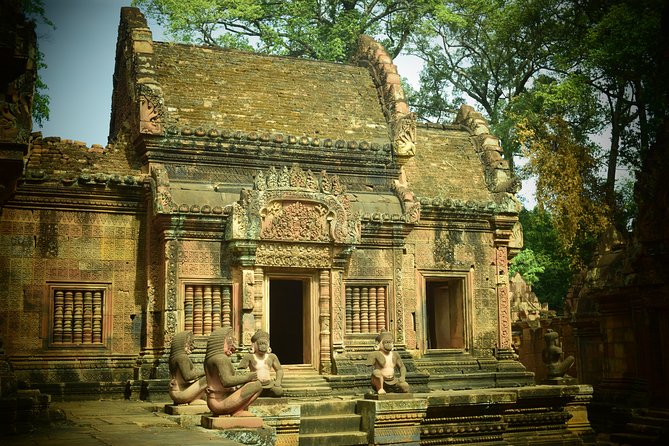
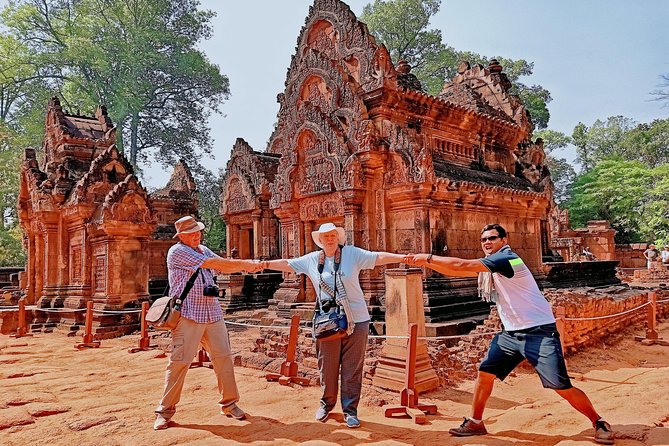
Banteay Srei is a different kind of Angkor. It’s described as the most beautiful pink sandstone temple, famous for delicate carving. You’ll also hear it called the Lady Temple, and the nickname fits: the carvings feel finer and more detailed than the big monuments.
You get about 2 hours here. The travel time is longer because Banteay Srei is about 35 kilometers away from the main grand tour area. That distance matters. It’s one of the reasons the day doesn’t just feel like “Angkor Wat plus extras.” It feels like a real outing.
There’s a clever bonus built into the route: on the way, you can stop mid-way to see locals making natural sugar products from the sugar palm. That’s the sort of stop that gives your brain a break from temple stone. It’s not just a shopping moment; it’s a quick look at how people turn local plants into everyday goods.
Admission for Banteay Srei is listed as free. So again, you’re paying your main entrance cost for Angkor Wat and then getting several lighter-ticket stops after.




Banteay Samre: A Short, Hindu-Style Pause Near the East Baray
To finish strong without exhausting yourself completely, the day includes Banteay Samré for about 1 hour. This temple sits about 400 meters east of the East Baray and was built in the early 12th century during the reigns of Suryavarman II and Yasovarman II.
Architecturally, it’s Hindu and in the Angkor Wat style, which makes it a good “bridge” stop. You can compare it to what you saw earlier—especially the larger temple grammar of moats and organized layout—without having to commit to another long visit.
Banteay Samré is listed as free too. That makes it one of the cleanest value additions on the route: less time, still meaningful, and it helps you finish the day feeling like you saw variety, not just the same temple complex from different angles.
Price and Value: Why $50 Works Here (Even With Entrance Fees Extra)
The tour price is listed at $50 per person, and the big value is what’s already included. You’re getting A/C transport, cool towels, cool drinking water, and a speaking guide and driver. For a full day in Angkor’s heat, those extras are not fluff. They’re what help you keep your energy for the real work: walking, climbing, and looking closely.
Now the budget reality: entrance fees are not included. Also, meals aren’t included (no breakfast/lunch/dinner listed). So the trip isn’t all-in at $50.
Here’s the good part: the stops other than Angkor Wat are listed as free admissions—Bayon, Ta Prohm, Banteay Srei, and Banteay Samre. That means your extra spending is likely concentrated at Angkor Wat. If you’re the type who wants the iconic temple experience without adding a bunch of additional paid-entry stops, this structure is pretty smart.
If you’re hoping for sunrise: sunrise is listed as an extra charge, so this day tour may not match a sunrise plan unless you pay for that add-on.
Guides Make the Difference: Oun Kosorl, Sinann, and What You’ll Benefit From
The strongest praise in the experience centers on the guides. People specifically mention the enthusiasm and detailed guidance from Mr Oun Kosorl and the help from Sinann when needed. That’s not small praise. In Angkor, the difference between a good day and a frustrating day often comes down to whether someone can explain what you’re seeing as you go.
You’ll also notice a practical pattern from past experiences: guides often help with photography and don’t treat it like a rushed afterthought. If you care about getting clear shots at the right angles—especially with Angkor Wat’s dramatic setting—that matters.
Another theme: guides can help you understand more than temples. Some guides have shared context beyond the stones, including the Khmer Rouge history in plain terms. Even if you don’t go deep, it can help you connect Cambodia’s past to what you see today.
One more useful tip: if you want something more local, you might ask your guide about adding a village-style stop. Past experiences show guides can suggest a community detour when you’re up for it. Just remember that may depend on timing and what fits the day.
Getting the Most Out of It: Timing, Walking, and Heat Reality
This is a 7 to 10 hour day, and the itinerary packs in five major stops. Even with A/C driving, you’ll still be outside for long stretches. Start thinking like a temple walker: wear supportive shoes, expect steps and uneven stone, and plan for sun exposure.
You’ll also want to pace yourself during the big “look up” parts. Angkor Wat relief walls and Bayon’s faces can pull your neck muscles fast. Break your photos into short bursts, then take a moment to actually read the carvings or follow your guide’s explanation.
Because the day includes multiple free-admission temples, you may feel like you can slow down. You can—but don’t let your schedule vanish. The order matters: Angkor Wat first gives you scale, Bayon then hits you with emotional detail, and Ta Prohm adds a completely different visual story with the roots and spung trees.
Who Should Book This Tour, and Who Might Want a Different Style
This tour suits you if you want a guided day that hits the big hits without having to manage details like transport and ticket logistics. You’ll love the mix if you care about variety: monumental Angkor Wat, expression-filled Bayon, tree-overgrown Ta Prohm, and the delicate carving focus of Banteay Srei.
It’s also a good choice if you value a guide who can make history understandable fast, and who can help with photos without turning the day into a photo shoot marathon.
You might consider a different option if you dislike paying extra on arrival, because Angkor Wat entrance is not included and meals are not included either. You should also think about whether you’re comfortable with stairs. Temples are gorgeous, but they’re still climbs.
Should You Book This Angkor Wat & Banteay Srey Tour?
If you want a smart, organized Angkor highlight circuit with real guidance and comfort support, this is an easy yes. The included A/C transport, cool towels, and water are exactly what make a long day feel doable. Add in a guide like Oun Kosorl or Sinann-style storytelling, and your time at each temple stops feeling like random sightseeing.
Book it if:
- you want Angkor Wat plus Bayon and Ta Prohm, with Banteay Srei’s pink sandstone as the standout later in the day
- you’re okay budgeting for entrance fees at Angkor Wat
- you’d rather be guided than figure out timing and ticket logistics solo
Skip or compare if:
- you need meals included
- you specifically want sunrise covered without extra cost
- you want an all-in price with no on-site admissions
FAQ
Is hotel pickup included?
Yes. Your guide or driver picks you up from your hotel lobby at the time you selected during booking.
Are entrance fees included?
Entrance fees are not included. Angkor Wat’s ticket is listed as not included, while admissions for Bayon, Ta Prohm, Banteay Srei, and Banteay Samre are listed as free.
What’s included in the tour price besides the guide?
Included items are A/C transportation, cool towels, cool drinking water, and a speaking guide and driver. A mobile ticket is also mentioned.
Are meals provided?
No. Meals (breakfast/lunch/dinner) are not included.
How long is the tour?
It’s listed as approximately 7 to 10 hours, with time allocated to each stop.
Can I cancel and get a full refund?
Yes. You can cancel up to 24 hours in advance for a full refund, and changes within 24 hours are not accepted.