REVIEW · SIEM REAP
Siem Reap: Angkor Wat Small-Group Full Day Tour and Sunset
Book on GetYourGuide →Operated by Passion Indochina Travel Co.,Ltd. · Bookable on GetYourGuide
Big temples, tight timing, and a real Khmer day. This 10-hour Angkor Wat sunset tour links the fortified Angkor Thom complex with Ta Prohm, then finishes with Angkor Wat and a climb up Phnom Bakheng for views at sunset.
I like the way the plan hits both the famous icons and the lesser-noticed corners. I especially love the Bayon temple’s hundreds of stone faces and the chance to see how locals in Phum Preah Dak make palm cake and palm sugar.
One thing to plan for: the sunset portion may not put you right where you imagined near Angkor Wat, and the day can feel rushed if you’re expecting a slow, wandering pace.
In This Review
- Key things I’d pay attention to
- A 10-hour Angkor day that keeps moving (for a reason)
- Angkor Thom: the Great Royal City and that Tomb Raider statue
- Bayon’s stone faces, plus the royal terraces that explain the temple mindset
- Ta Prohm: where nature and stone share the same frame
- Lunch time and Phum Preah Dak: palm cake and palm sugar
- Angkor Wat in the afternoon: the scale hits differently than photos
- Phnom Bakheng sunset climb: where the payoff meets the stairs
- Price and value: $32 gets you the route, then the pass and lunch add up
- Who this tour fits best (and who might want a different style)
- Booking verdict: should you do it?
- FAQ
- What is the duration of the tour?
- Is hotel pickup and drop-off included?
- What sites does the tour include?
- Is the Angkor pass included in the price?
- Is lunch included?
- What transport will I use?
- Is there an English-speaking guide?
- What is included in the comfort items?
- What should I bring for the day?
- Is there any dress code?
Key things I’d pay attention to
- Angkor Thom first: Bayon faces, Terrace of Elephants, and multiple royal-era temples in one morning sweep
- Ta Prohm in original state: trees and roots are part of the architecture, not a backdrop
- Phum Preah Dak cultural stop: palm cake and palm sugar lessons make the temples feel more human
- Angkor Wat late in the day: you get the giant scale plus jungle views before sunset
- Phnom Bakheng climb: the payoff is worth it, but you’ll earn it with stairs
A 10-hour Angkor day that keeps moving (for a reason)
This is a classic “hit the highlights without sleeping in a van” format. You’ll start with hotel pickup in Krong Siem Reap, then spend the day bouncing between major temple zones, with breaks built in for lunch and a village experience.
The value here is the structure. Angkor is spread out, and going in on your own means you’ll spend time solving logistics—what to see next, how to time entry, and how to avoid losing half a day to transfers. This tour is designed to keep your brain focused on what matters: stone carvings, temple layouts, and the stories those places were built to tell.
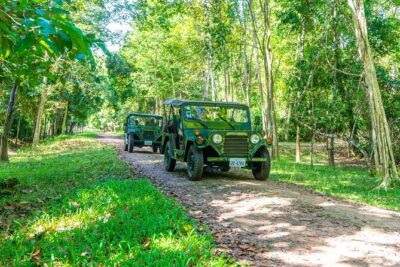
You’ll travel by luxury minivan with insurance, with a licensed English-speaking guide and practical touches like cold drinking water and cold towels.
You can also read our reviews of more evening experiences in Siem Reap
Angkor Thom: the Great Royal City and that Tomb Raider statue
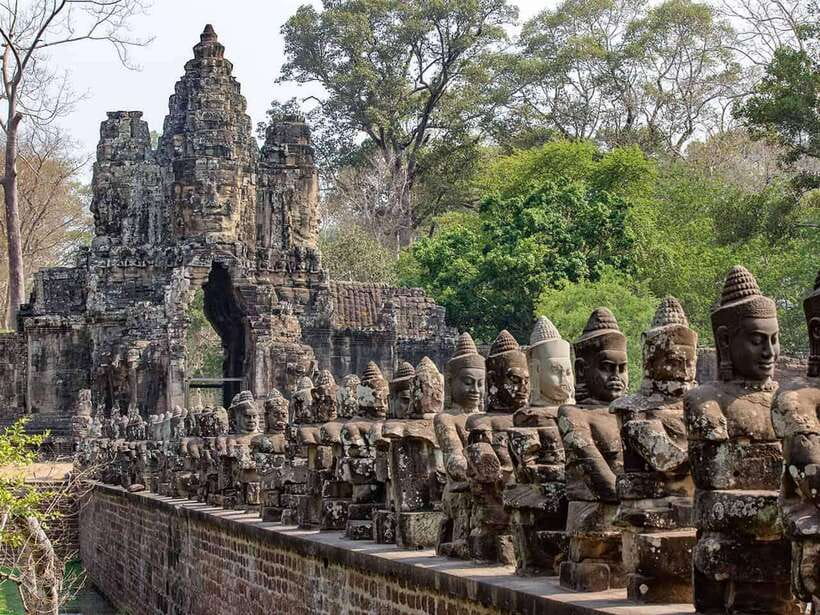
You’ll arrive at Angkor Thom, the fortified “Great Royal City” built in the 12th century by King Jayavarman VII. This part matters because it sets the tone: you’re not only seeing temples, you’re seeing how Khmer power was staged—walls, gateways, and ceremonial spaces all working together.
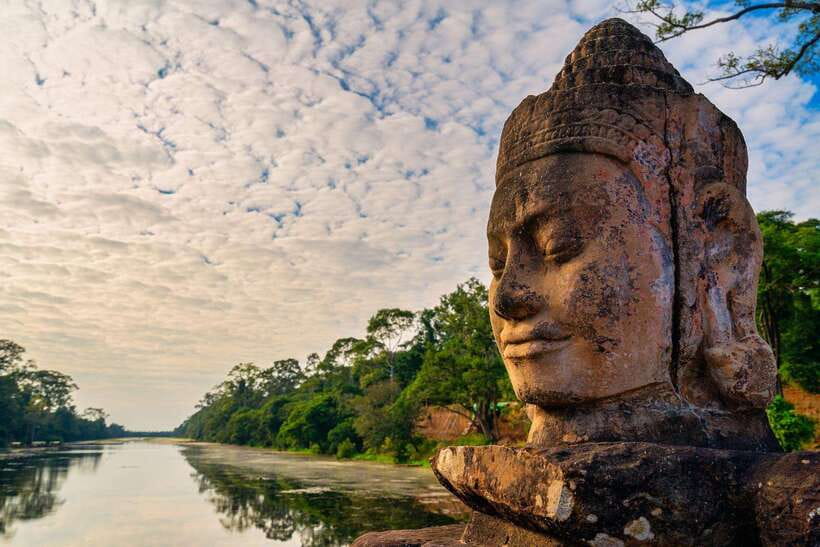
A standout stop is the imposing statue of Avalokiteshvara, which is also featured in the Tomb Raider movie. Even if you’re not a movie fan, it’s a useful visual marker. It gives your eyes something big and clear right when you step into the area, before the finer details start competing for attention.
What I’d do with your time here: don’t rush past the gateways and walls. Spend a few extra minutes looking at how the city was designed to funnel movement. That’s the feeling you’ll carry into Bayon and the terraces later.
Bayon’s stone faces, plus the royal terraces that explain the temple mindset
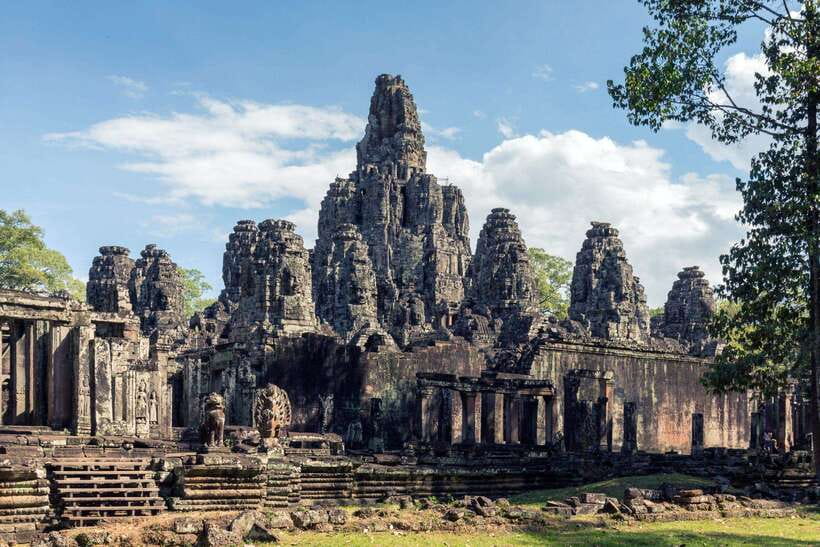
Bayon is the “wow” moment for many first-timers, and for good reason. The temple is decorated with hundreds of stone faces, so no matter where you stand, the place feels like it’s watching back. It’s not just decoration—it changes how you understand the space. You start reading the temple like a living monument, not a pile of ruins.
From there, you visit the Terrace of Elephants. In Khmer royal architecture, terraces are more than platforms. They’re stages for display—processions, ceremonies, and power made visible.
You’ll also see other Angkor Thom landmarks tied to the royal complex, including Phimeanakas and the Terrace of the Leper King, plus Baphuon Temple. These stops are valuable because they widen your view beyond the one big camera shot. You’ll start noticing patterns—how different rulers and styles left their signature across the same fortified world.
A practical tip: wear comfortable shoes. These complexes involve lots of walking over uneven stone. If you’re used to smooth city pavements, Angkor will humble you fast.
Ta Prohm: where nature and stone share the same frame
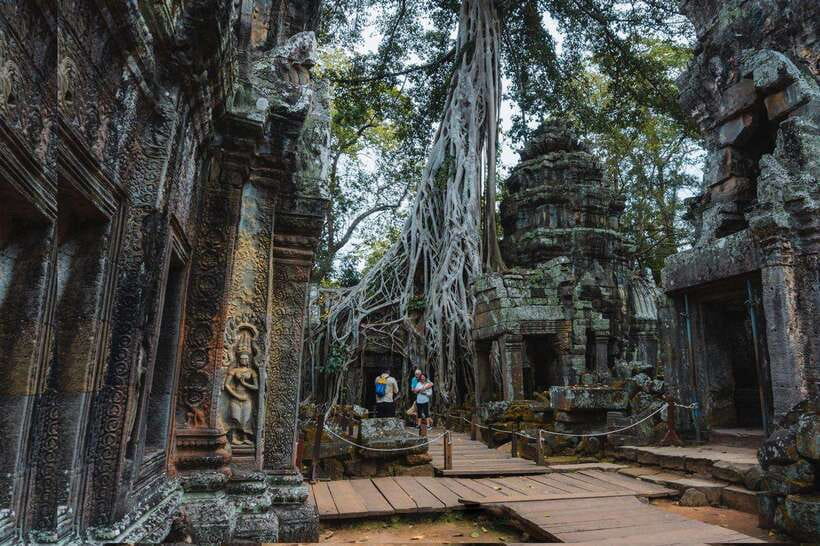
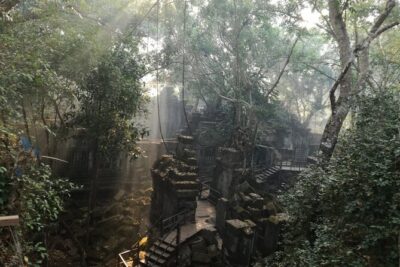
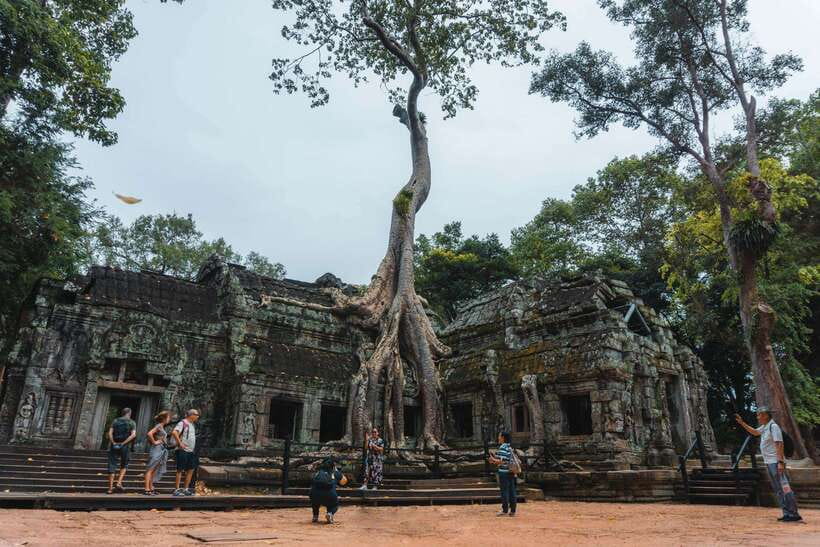
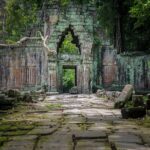
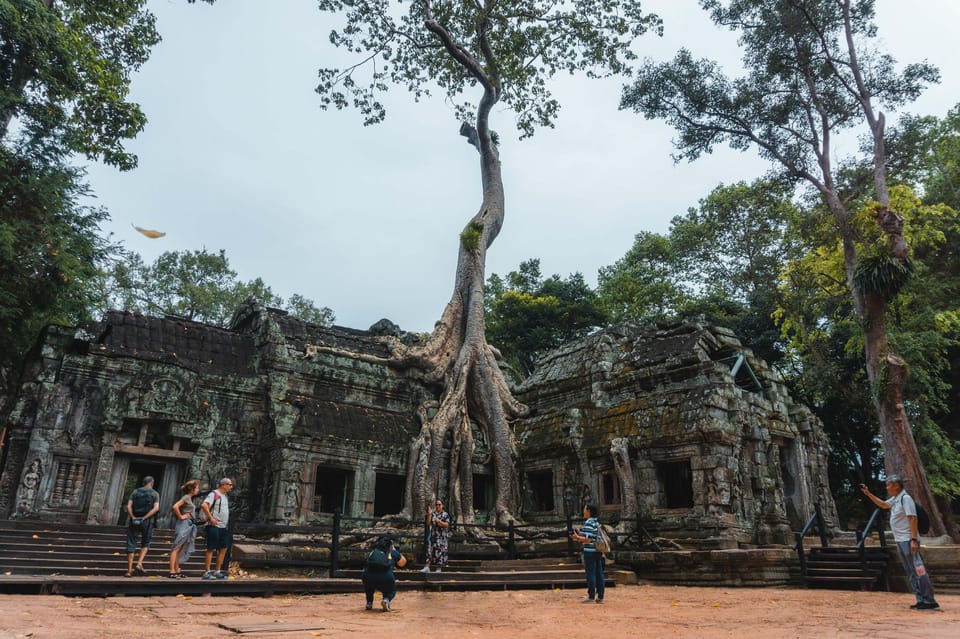
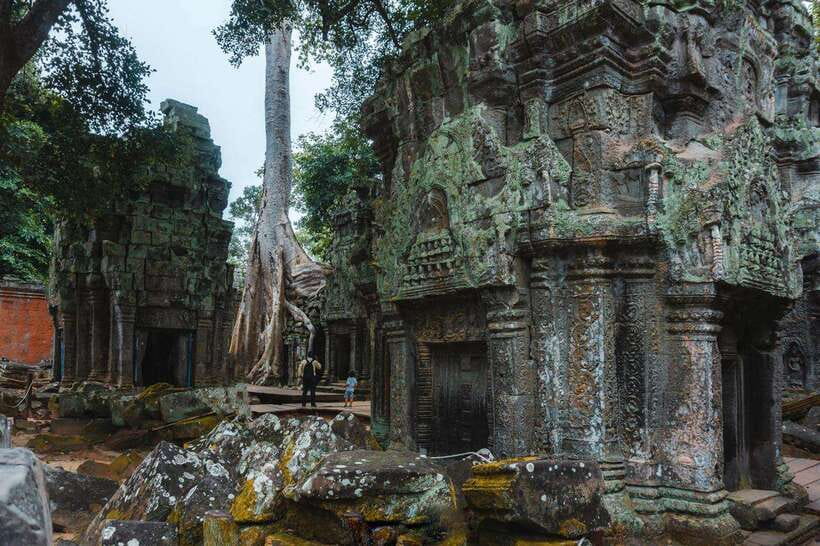
Next comes Ta Prohm, famous for being left in its original state and overgrown with trees and roots. This isn’t “ruins plus random greenery.” The trees are part of the scene the way columns and walls are part of it.
You’ll see the classic look that made it a pop-culture icon as well, since Ta Prohm appears in the Tomb Raider franchise. But if you strip away the movie reference, the real experience is quieter and stranger: roots crawling over stone, branches reaching into corridors, and a sense that the temple is halfway between human design and forest recovery.
The best way to enjoy Ta Prohm is to slow down your eyes. Instead of scanning for the most obvious structures, look for the edges where stonework meets root. That’s where the story feels most physical.
Lunch time and Phum Preah Dak: palm cake and palm sugar
After Ta Prohm, you’ll have lunch at a local restaurant, then continue to Phum Preah Dak, an authentic village where you can learn how locals make palm cake and palm sugar.
This is one of the parts I think is easy to undervalue—until you’ve done it. Temples are dramatic, yes. But a village craft stop gives you a different kind of context: how everyday life here connects to the same landscape that produced these massive stone monuments.
Important detail for planning: lunch isn’t included in the tour price. The schedule still has you eating as part of the day, but you’ll pay separately. I’d also plan to carry cash for lunch in case payment is handled on the spot, because sometimes meal logistics can be simple rather than card-friendly.
What you’ll take from Phum Preah Dak: not just souvenirs, but a clearer sense of where local ingredients and traditions come from—palm-based sweets, taught step-by-step, tied to daily work.
You can also read our reviews of more tours and experiences in Siem Reap
Angkor Wat in the afternoon: the scale hits differently than photos
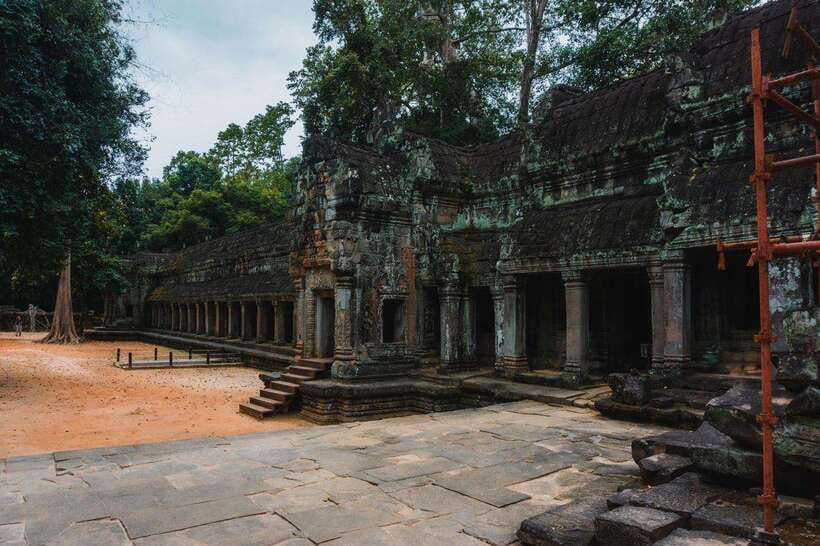
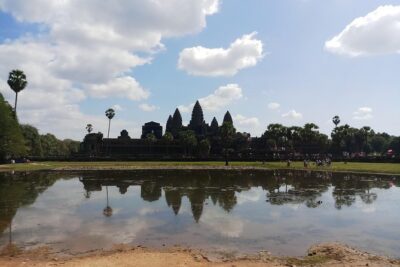
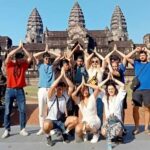
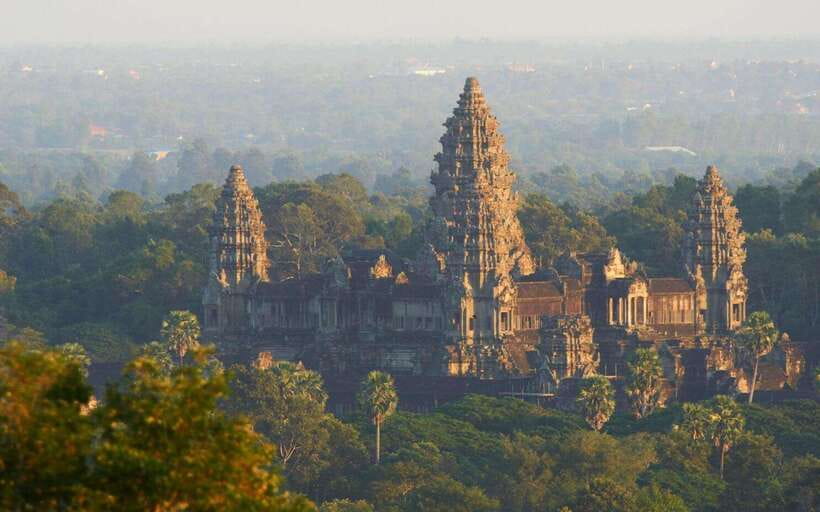
Angkor Wat is described as the largest sacred building on Earth, and it really does have that effect in person: the scale is harder to comprehend when you’re standing next to it, not staring at it through a lens. You’ll also get views of dense jungle surrounding the complex, which helps the site feel less like an isolated monument and more like a central piece of a living environment.
This portion is especially good for first-timers because it gives you a clean “masterpiece” moment after you’ve already built context at Angkor Thom and Ta Prohm. When Angkor Wat is the final big temple you see, it lands as a culmination instead of just another stop.
Keep your expectations realistic: this is a major landmark. You’ll want to watch where you step, save your best angles for times when you have space, and accept that the day’s flow is designed to keep you moving.
Phnom Bakheng sunset climb: where the payoff meets the stairs
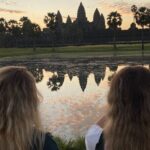
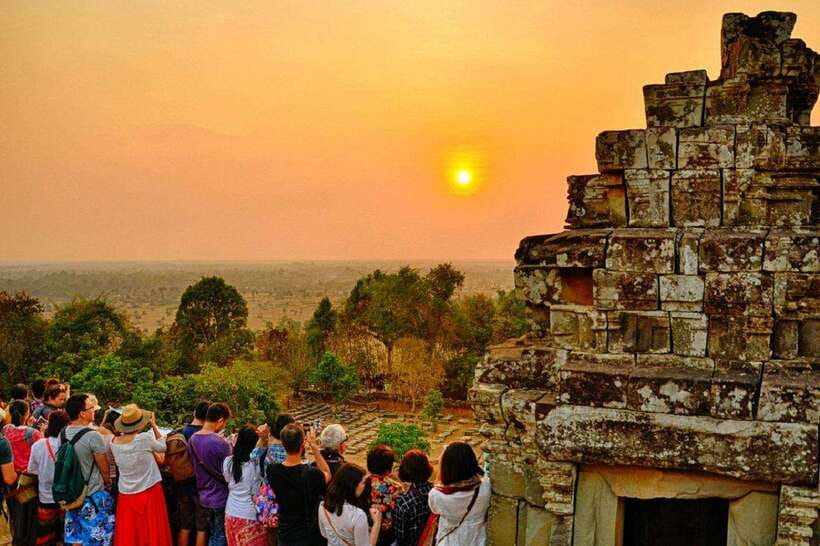
The tour ends with a climb to Phnom Bakheng to watch sunset. This is a popular choice because it gives you height and the kind of wide views that make the long day feel worth it.
A key consideration: the sunset part isn’t always right where you might expect relative to Angkor Wat itself. If sunset positioning is your top priority, I recommend going in flexible. The win is the viewpoint and timing—not a promise that you’ll be standing at a specific photo-perfect spot.
What to bring yourself psychologically: sunset climbs can feel like a workout. Wear the shoes you’ll actually trust on uneven paths. Also, because this is Cambodia in a sunny season for much of the year, bring what the tour asks for—a sun hat and sunscreen—and keep your water habits consistent.
Price and value: $32 gets you the route, then the pass and lunch add up
At $32 per person, the headline price looks like a bargain for a full-day temple circuit. The catch is that two big items are separate.
Here’s what’s included: hotel pickup and drop-off, a luxury minivan with insurance, an English-speaking guide, and cold water plus cold towels.
Here’s what costs extra:
- Angkor pass: $37 per pax
- Lunch (not included)
So your true planning number is the tour price plus the Angkor pass, then whatever you choose for lunch. That matters because temple touring can’t avoid the entry fees. When you account for that, this still can be good value because you’re paying for transportation, guide time, and a structured day that doesn’t leave you hopping between tuk-tuks and unanswered questions.
My value takeaway: if you’d otherwise hire a driver for the day (or spend time coordinating transfers), the added cost of the organized tour often comes back to you in stress-free sightseeing.
Who this tour fits best (and who might want a different style)
This is a strong fit if you:
- are seeing Angkor for the first time and want a well-paced overview
- care about the key temples—Angkor Thom, Bayon, Ta Prohm, Angkor Wat—without building your own route
- want at least one culture stop that isn’t just another shop stop, like Phum Preah Dak and its palm cake and palm sugar lesson
- appreciate a guide who can explain what you’re looking at, not just point and move on
It may be less ideal if you:
- want sunset to be perfectly timed and perfectly located close to the Angkor Wat structures
- get antsy when a schedule feels compressed (temple days often do)
- prefer to linger for long periods at each temple and return later by your own plan
- hate the idea of paying for lunch separately
Also, follow the clothing guidance: short skirts aren’t allowed.
Booking verdict: should you do it?
I’d book this if you want a classic Angkor highlights day with a real guide, comfortable transport, and a cultural stop that adds meaning beyond temples alone. The combination of Bayon’s stone faces, Ta Prohm’s tree-and-root effect, Angkor Wat’s scale, and a Phnom Bakheng sunset climb hits a lot of the emotional range of Angkor in one shot.
Before you book, do two simple checks:
- Make sure you budget for the $37 Angkor pass and lunch on top of the $32 tour price.
- If sunset is your top priority, keep your expectations flexible about the exact viewing position and go for the climb-and-view experience rather than a guaranteed Angkor Wat-adjacent photo angle.
If you’re ready for a full day of walking and you’d rather have someone else handle the routing, this tour is a smart, solid value.
FAQ
What is the duration of the tour?
The tour runs for 10 hours.
Is hotel pickup and drop-off included?
Yes. Pickup and drop-off at your hotel are included.
What sites does the tour include?
You’ll visit Angkor Thom (including Bayon and Terrace of Elephants), Ta Prohm, and Angkor Wat, plus a sunset climb at Phnom Bakheng. You’ll also stop at the village of Phum Preah Dak.
Is the Angkor pass included in the price?
No. The Angkor pass is not included and costs $37 per person for this tour.
Is lunch included?
Lunch is not included, even though the day includes a lunch stop during the itinerary.
What transport will I use?
You’ll travel in a luxury minivan with insurance, with a licensed driver.
Is there an English-speaking guide?
Yes. The guide speaks English.
What is included in the comfort items?
The tour includes cold drinking water and cold towels.
What should I bring for the day?
Bring comfortable shoes, a sun hat, sunscreen, and comfortable clothes.
Is there any dress code?
Yes. Short skirts are not allowed.