REVIEW · SIEM REAP
Siem Reap: Tonle Sap Lake – Fishing Village & Flooded Forest
Book on GetYourGuide →Operated by Journey Cambodia · Bookable on GetYourGuide
Cambodia’s floating world shifts with the seasons. This short trip is interesting because it connects the scenery to real livelihoods, not just photos. I love the boat cruise through Kampong Phluk and the chance to see stilt homes where people work every day. I also like how the guide explains the rhythm of life here, from fishing and aquaculture to farming activities that change with wet and dry months.
The main thing to consider is seasonal water levels. If you go during the lowest-water period, access to certain parts of the flooded forest and even views from the village can be more limited than you’d hope, making the scenery feel quieter.
In This Review
- Key highlights worth your attention
- Tonle Sap’s Flooded World: Why This Trip Feels Like a Reality Check
- Entering Kampong Phluk by Boat: Stilt Villages and Flooded Forest Canals
- The Back Roads After the Cruise: Rice, Fish, Ducks, and Cricket Catching
- Snacks and Rural Markets: Food You Actually Notice and Remember
- The Buddhist Monastery Stop: Timing Matters
- Price and Logistics: Does $45 Worth It for a 4-Hour Day?
- Who This Tour Fits Best (and Who Might Want Another Option)
- Should You Book This Tonle Sap Fishing Village Tour?
- FAQ
- How long is the Tonle Sap Lake fishing village and flooded forest tour?
- Where does pickup and drop-off happen?
- Does the tour include a boat cruise?
- What is Kampong Phluk?
- What’s not included in the tour?
- Is the monastery visit included?
Key highlights worth your attention
- A UNESCO-recognized biosphere reserve: Tonle Sap’s seasonal flooding drives everything from fish spawning to birds and village life
- Kampong Phluk by boat: three small fishing villages with stilt houses and forest-canals you cruise slowly
- Working-water ecosystem: you’ll see aquaculture and local agriculture shaped by the lake’s expansion and shrinkage
- Rural markets and food: look for Khmer snacks plus vegetables and foods you’re unlikely to find in the tourist center
- Guides can make it click: guides such as Sargon Pal and Chhay have a way of turning the day into a story about survival and adaptation
Tonle Sap’s Flooded World: Why This Trip Feels Like a Reality Check
Tonle Sap is the world’s second-largest freshwater lake, and it’s productive in a way that’s hard to understand until you see the seasonal cycle. In the wet season the lake can swell to about 12,000 km². In the dry season it shrinks dramatically, down to around 2,500 km², draining into the Tonlé Sap River.
That expansion and contraction matters because it decides where people live and how they earn money. Each year, millions of fish move to spawn in the flooded forest around the lake, which also attracts water birds. Communities settled along the shoreline don’t treat this as an occasional event. They treat it like the calendar.
This is why I think this half-day format works so well. You don’t have to “learn Cambodia” for a week. You can get a grounded, practical sense of how ordinary work becomes possible (or harder) when the water rises.
And yes, it’s also visually memorable. The whole area is a biosphere reserve recognized by UNESCO in 1997, so you’re not just seeing “pretty water.” You’re watching an ecosystem that’s been studied and protected because it functions at a massive scale.
You can also read our reviews of more tours and experiences in Siem Reap
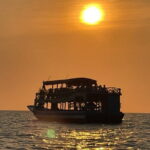
Entering Kampong Phluk by Boat: Stilt Villages and Flooded Forest Canals
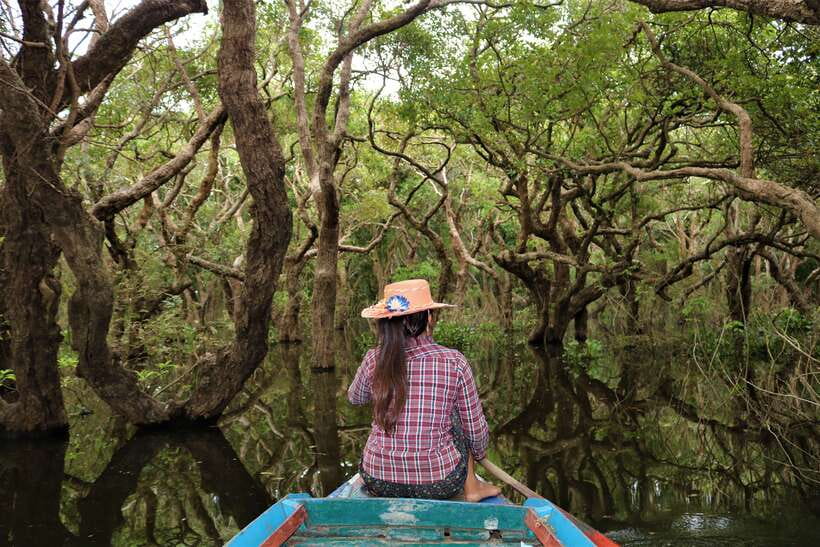
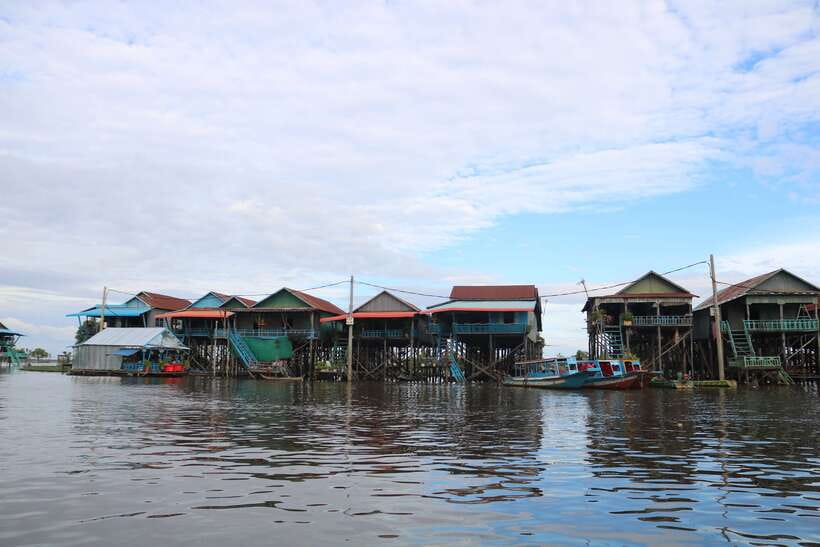
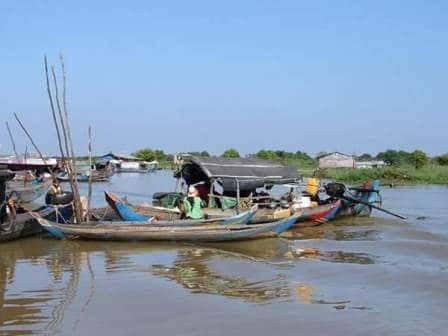
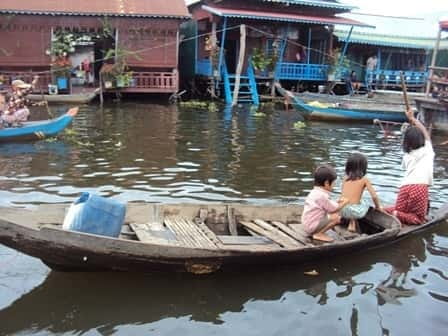
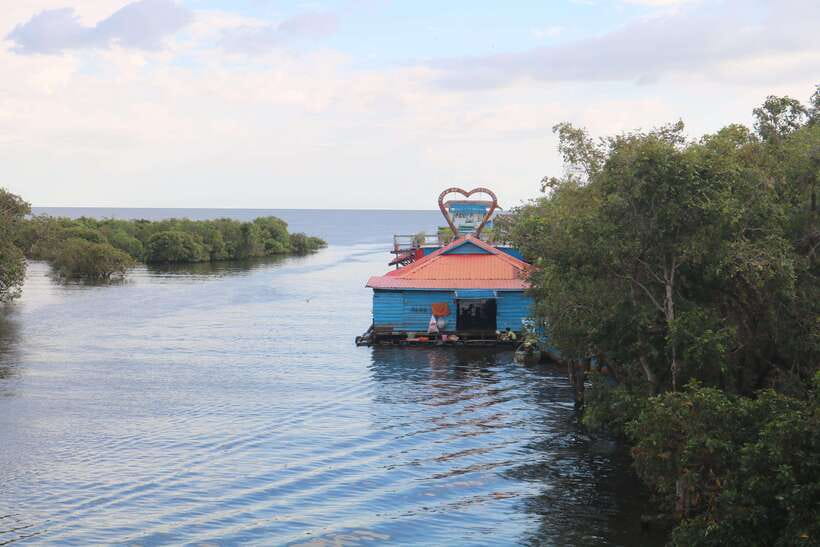
Most of your time is built around the water. The core experience is a boat cruise to Kampong Phluk, known as a set of three small fishing villages. The point isn’t speed. It’s watching how the built environment changes once water levels rise.
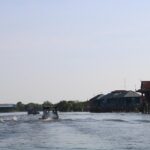
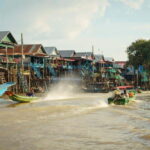
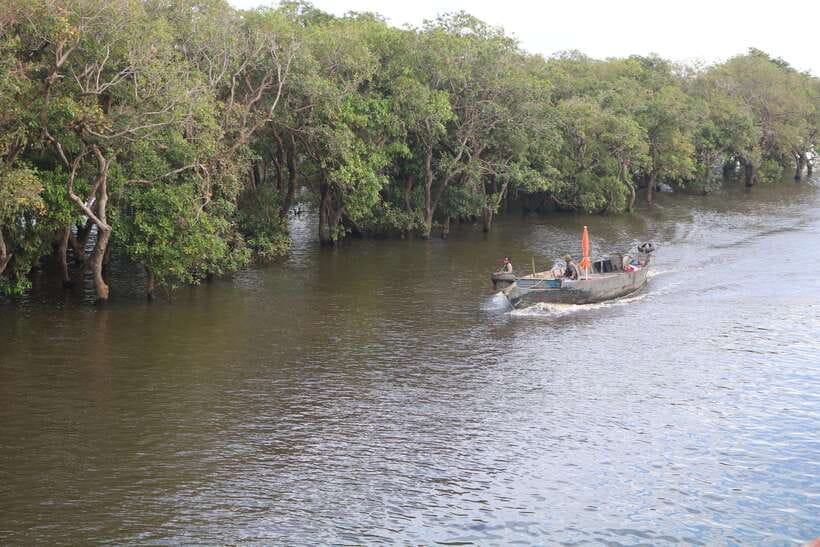
From the boat, you’ll see homes on stilts and people doing day-to-day work. When water covers the forest, the channels turn into the roads. That’s why the cruise often feels slower and more observational than a typical sightseeing ride.
Kampong Phluk is also where the phrase flooded forest turns into something you can picture. In wet conditions, the forest becomes part of the living space and fishing landscape. You’ll catch glimpses of flora and fauna along the canal routes, and it feels like you’re threading through the margins of an enormous natural machine.
Here’s the practical takeaway: what you see depends heavily on timing. In higher-water periods, the flooded forest setting is more dramatic, and you’re more likely to get that full sense of how the lake “wears” the landscape. In low-water periods, your boat route and the amount of village access can feel more restrained. That doesn’t mean the tour is bad. It means expectations should match the season.
Also, plan for a bit of walking when you’re on land. The experience includes some guided sightseeing and short walks, so comfortable shoes help, even though most of the time is on the water.
The Back Roads After the Cruise: Rice, Fish, Ducks, and Cricket Catching
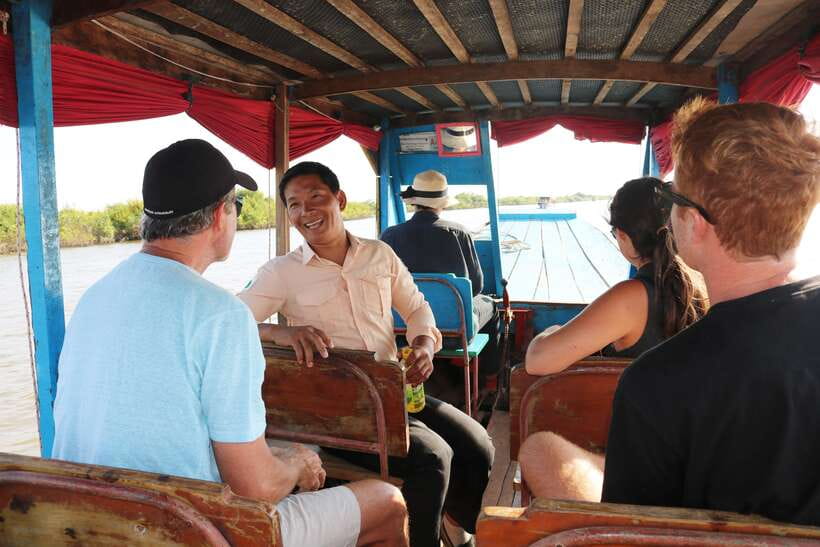
The land portion of this tour is one of its best value points because it keeps you from turning Tonle Sap into a one-dimensional “boat ride.” After the cruise, you travel back by roads through countryside areas where seasonal work is visible.
This is where the day gets hands-on in a cultural way. You might see rice planting or harvesting depending on timing, and you’ll notice how closely farming is tied to the flooding cycle. You could also spot fish smoking and the work that goes into fish paste, known locally as prohoc making.
One of the more surprising items that can show up during seasonal agricultural activities is cricket catching. It sounds like a novelty until you remember that life here is about making use of whatever’s available. When the lake and forest change the schedule of food production, people adapt their “protein supply” too.
Duck farming is another activity you may witness. It’s not just an animal detail. It’s a clue to how households plan for food and income in different water conditions. If you only saw the water, you’d miss that the lake is also part of a wider working landscape that stretches into fields, sheds, and village economies.
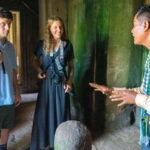
If your guide is strong at explaining the why behind each activity, the back-road portion can feel like the missing chapter. Guides such as Chhay have been praised for making the day about real survival challenges and community support, not just pointing at scenes for a quick photo.
Snacks and Rural Markets: Food You Actually Notice and Remember
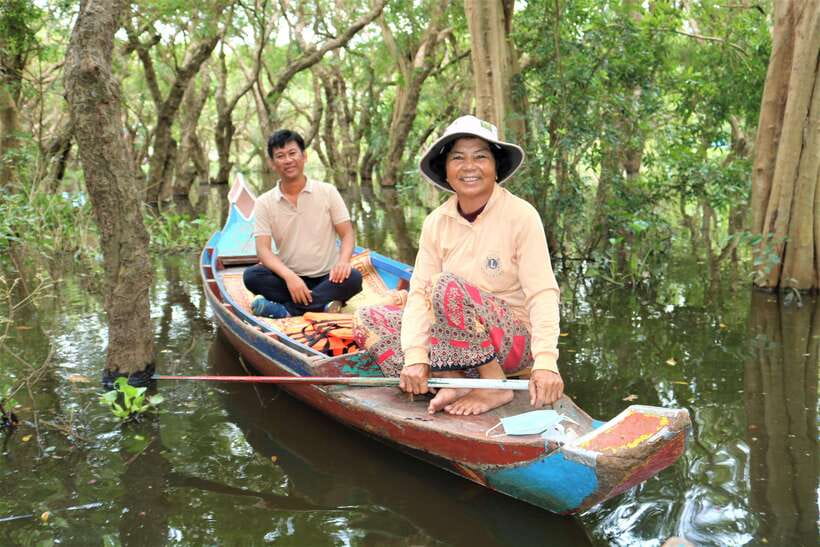
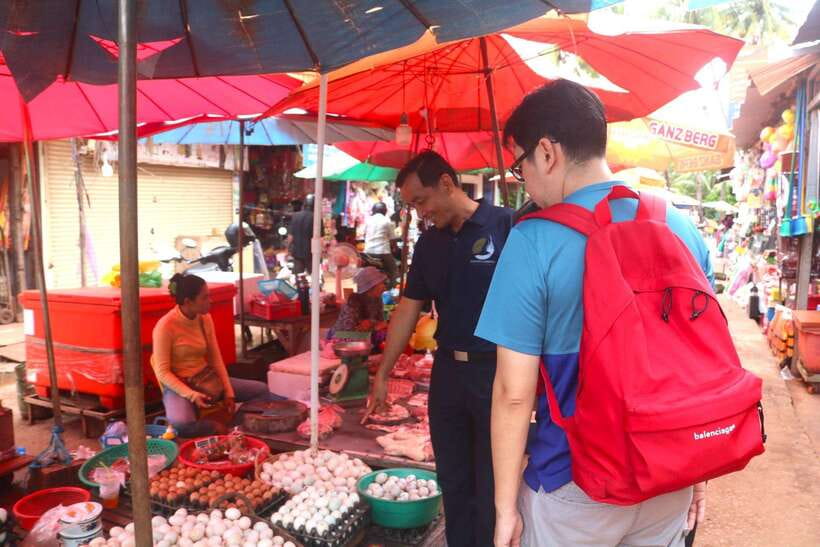
Between the countryside driving and the village visits, there’s time for a local stop that’s tied to food. You can pick up Khmer snacks and explore the more rural market atmosphere, including local foods and vegetables that are easier to overlook when you stay in Siem Reap’s core streets.
This is the part I like when you want a tour that doesn’t feel like a checklist. Instead of only collecting sights, you get a small food connection you can carry with you. And because Tonle Sap’s productivity feeds into the regional diet, the food theme makes practical sense.
One gentle caution: markets can be busy, and tastes vary. If you have strict dietary needs, you’ll want to pay attention to what you’re given. The tour includes water, but it doesn’t say it includes meals, so keep your appetite in mind and don’t treat snack time as a full dinner plan.
The Buddhist Monastery Stop: Timing Matters
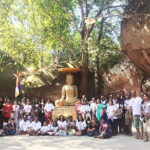
Your day can include a visit to a Buddhist monastery. The suggested visit period is between the end of July and early March, which matters because religious sites and ceremonies can align with seasonal schedules.
So if you’re traveling outside that window, don’t assume you’ll see the same atmosphere as someone who went during peak months. The tour still includes the monastery stop as part of the experience, but your exact experience may vary with timing.
This stop is also a good change of pace after the water and the working countryside. It gives you a quieter lens on community life and local routine, and it pairs nicely with the rest of the day’s focus on how people live with the lake’s rhythm.
Price and Logistics: Does $45 Worth It for a 4-Hour Day?
At around $45 per person for a 4-hour experience, this tour sits in the mid-range for Siem Reap area day activities. What makes it feel like fair value is that you’re getting more than one type of access: hotel pickup and drop-off, an English-speaking guide, air-conditioned transport, boat cruise time, entrance being covered, and even mineral water plus a cool towel.
You’re also not locked into a single kind of sightseeing. The experience spreads across water village viewing, an ecosystem setting, agriculture observations, and a monastery visit. That variety is what you’re really paying for: context.
A small detail that matters for expectations: the tour does not include a rowboat at the mangrove forest. That means if you were imagining a more hands-on mangrove segment, you might not get that extra add-on included in the base price.
You do have choices in how you fit it into your trip. Departures can be morning or afternoon, and the time of year still affects what’s visible due to water levels. If you’re trying to maximize the “flooded forest” look, the season is your bigger lever than the departure time.
Finally, the operator offers free cancellation up to 24 hours in advance for a full refund, and there’s also a reserve-now, pay-later option. Those two things are worth a quick look because Tonle Sap is seasonal. If your schedule is flexible, you keep options open.
Who This Tour Fits Best (and Who Might Want Another Option)
This is a strong pick if you want to see Cambodia beyond temples. You’re looking at daily life tied to the lake and its seasonal flooding cycle, with real work happening all around you.
It’s also ideal if you like guides who explain context. In the better experiences, guides bring the day alive by connecting what you see—stilt housing, aquaculture, rice work—to why Tonle Sap behaves the way it does. When a guide like Sargon Pal provides clear explanations, the trip can feel relaxing rather than rushed.
What about limitations?
- It’s not suitable for wheelchair users, based on the activity details provided.
- Low-water seasons can limit access and reduce how dramatic the flooded forest looks. The tour isn’t at fault for that. Mother Nature is in charge here, like it always is around Tonle Sap.
If you’re traveling with kids, this can work because the boat segment is naturally fun. Still, expect short walks and guided stops, so it’s not a purely sit-on-the-boat type of tour.
Should You Book This Tonle Sap Fishing Village Tour?
I’d book this if you want an off-the-temple day that explains a living system. The boat cruise to Kampong Phluk plus the agriculture-focused back-road portion gives you the kind of context that most half-day tours skip. At $45 for about 4 hours, it’s also a reasonable value when you factor in pickup, guide, boat time, and included entrance.
Hold off or adjust expectations if you’re visiting during low-water months and you’re specifically chasing the most dramatic flooded-forest visuals. In those seasons, parts of the experience can feel more limited than you’d hoped. Still, the theme stays the same: people adapting to a lake that changes the rules.
If you want your day in Siem Reap to feel grounded, practical, and a little surprising, this is one of the better ways to do it.
FAQ
How long is the Tonle Sap Lake fishing village and flooded forest tour?
The duration is 4 hours.
Where does pickup and drop-off happen?
Pickup and drop-off are included from your hotel in Siem Reap city (with pickup listed for Krong Siem Reap).
Does the tour include a boat cruise?
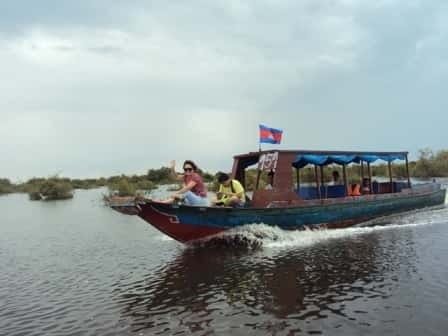
Yes. You’ll take a boat cruise to visit the fishing villages at Kampong Phluk.
What is Kampong Phluk?
Kampong Phluk is described as a collection of three small fishing villages in a flooded forest setting.
What’s not included in the tour?
A rowboat at the mangrove forest is not included.
Is the monastery visit included?
The tour includes a Buddhist monastery stop, with the suggested visit period noted as between the end of July and early March.