REVIEW · SIEM REAP
Private Tour: (Avoid Crowds & Heat) 2-Day Angkor Temples
Book on Viator →Operated by Affinity Angkor · Bookable on Viator
Two days in Angkor feel like a movie set—minus the chaos. This private tour starts early, mixes quieter temples on Day 1 with the big-name sites on Day 2, and keeps you comfortable with pickup, an air-conditioned vehicle, and snacks. I especially like how the route is set up to reduce time in the worst heat and crowd crush.
What I like most is the human side: a licensed guide who times things for better views and explains what you’re actually looking at. You’ll likely want that help because there’s a lot of walking, and yes—there are plenty of stairs and climbing.
In This Review
- Key highlights I’d center in your decision
- Why this 2-day Angkor plan works when you want fewer crowds
- Price math: tour cost vs Angkor Archaeological Park ticket
- Meeting at 7:30 and staying comfortable in the Siem Reap heat
- Day 1 temple circuit: pink sandstone, quiet settings, and the Big Loop feel
- Banteay Srei: Citadel of Beauty, carved in pink sandstone
- Banteay Samre: isolated and peaceful
- Pre Rup: the temple of turning the body
- Preah Khan: a Buddhist university and city
- Neak Pean: a healing temple by a pond
- Day 2 big hitters: Angkor Wat, Angkor Thom, and Ta Prohm’s famous trees
- Angkor Wat: the world’s largest religious monument
- Angkor Thom: the walled city with temple stops inside
- Ta Prohm: strangler figs, silk-cotton trees, and film-famous ruins
- Ta Nei: a quieter add-on to avoid the worst of it
- Using your licensed guide to get more from each temple
- What to pack and what your body should be ready for
- Who this private 2-day Angkor tour is best for
- Should you book this private 2-day Angkor tour?
- FAQ
- Is the Angkor entrance ticket included in the tour price?
- What time does the tour start?
- Does the tour include hotel pickup and drop-off?
- Is this a private tour?
- What’s included during the tour?
- Can I add sunrise or sunset?
- Which temples are included across the two days?
Key highlights I’d center in your decision
- A smart two-day rhythm: smaller temples first, headline ruins second
- Fewer crowds by design: early starts plus sites chosen for calmer moments
- Air-conditioned comfort: hotel pickup/drop-off with snacks and refreshments
- Sunrise or sunset added for free: ask on Day 1 for the following day
- Guides with standout track records: names like Tay, Sopheara, Viet, and Kim show up in past experiences
- A small, focused temple mix: Angkor Wat, Angkor Thom, Ta Prohm, plus outside-Angkor stops
Why this 2-day Angkor plan works when you want fewer crowds
Angkor can feel like two trips at once: one part awe, one part survival. The awe is easy. The survival is harder, especially if you’re dealing with midday heat or a wall of people moving at your exact pace.
This tour’s value is that it’s built around timing. You start at 7:30 am, and the itinerary spends Day 1 on temples outside the main Angkor Wat hub—places that feel more spread out and less like a conveyor belt. Day 2 then brings you to the core sights: Angkor Wat, Angkor Thom, and Ta Prohm. That ordering matters. It helps you spend your best energy on the hardest highlights, without frying yourself on day one.
Because it’s private, your guide can adjust pacing to your group. In past experiences with Affinity Angkor, guides like Tay, Viet, Kim, and Sopheara are specifically praised for steering routes toward better moments and fewer people. That’s not just a nice-to-have in Angkor—it changes the whole feel of the day.
You can also read our reviews of more private tours in Siem Reap
Price math: tour cost vs Angkor Archaeological Park ticket
The tour itself is $62 and runs about 2 days. But here’s the key number: the Angkor Archaeological Park entrance pass is not included in that price.
The ticket is listed as $62 per person for a 2- or 3-day visit. So when you budget, plan for roughly:
- $62 for the tour
- $62 for the Angkor Archaeological Park pass
In other words, the real cost is closer to about $124 per person for this experience, before any meals you buy on your own. Still, I find it can be fair value because you’re getting:
- hotel pickup and drop-off in Siem Reap
- a professional licensed guide
- air-conditioned private transport
- snacks and refreshments
If you’re going to spend two full days in Angkor anyway, the added fee for a guide and comfortable transport can be worth it—especially on a route that’s trying to dodge peak crowds.
Meeting at 7:30 and staying comfortable in the Siem Reap heat
Starting early is where you win in Siem Reap. The tour begins at 7:30 am in Siem Reap, and you get hotel pickup and drop-off, which removes the hassle of figuring out how to get to each site (and the cost of taxis that may not line up with your timing).
The vehicle is air-conditioned and private, and the tour includes snacks and refreshment. Some past groups even mention extra comfort details like cold water and lemongrass scented cool towels. That matters because Angkor isn’t just about hot weather—it’s about sun + walking + waiting for people to move so you can see.
If you’re the type who gets grumpy when you’re tired, this is one of those tours where you feel the benefit quickly: you’re not losing energy on logistics.
Day 1 temple circuit: pink sandstone, quiet settings, and the Big Loop feel
Day 1 is set up like a warm-up that still feels impressive. You start with temples that are famous, but not as relentlessly packed as the very center of Angkor Wat.
You’ll typically move between stops with short, manageable time on each site. The itinerary lists times like 1 hour here, 45 minutes there, so you’re not stuck wandering without a plan.
Banteay Srei: Citadel of Beauty, carved in pink sandstone
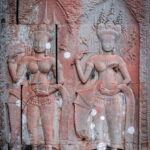
Banteay Srei is one of those temples where your eyes keep zooming in. It’s often described as beautiful in part because of its exquisite decorative carving, built in the second half of the 10th century. The site is a little more than 20 km north of Angkor, which helps with the sense that you’re not just trapped in the main rush.
What to expect: lots of detail work—carvings, patterns, and stonework that reward slow looking.
Watch-outs: you may want good footwear and time; even when the stop isn’t long, the terrain can be uneven.
You can also read our reviews of more tours and experiences in Siem Reap



Banteay Samre: isolated and peaceful
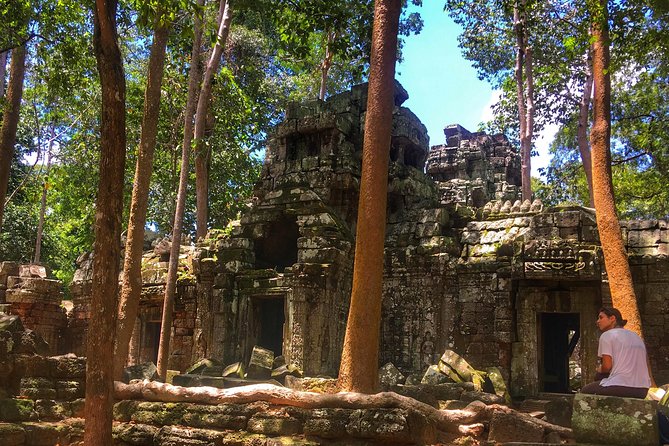
Banteay Samre is presented as an isolated temple with a peaceful setting. It dates to the first half of the 12th century, and the style of its tower is noted as reflecting Angkor Wat.
What I’d love here: fewer people, more quiet, and a temple that helps you understand Khmer temple design beyond the obvious headline names.
Trade-off: because it’s quieter, you’ll get more out of it if you listen to your guide’s explanation rather than just doing selfies and moving on.
Pre Rup: the temple of turning the body
Pre Rup translates to turning the body, and it was built in the middle of the 10th century. The big visual idea here is the harmony of color between laterite, brick, and sandstone.
What to expect: a temple where the materials matter. The guide can point out how the different colors affect how you read the structure.
Physical note: even short stops can involve stairs and climbing, depending on how far you go up.
Preah Khan: a Buddhist university and city
Preah Khan is built under Jayavarman VII in the late 12th century and is described as a Buddhist university and city. The atmosphere is said to feel similar to Ta Prohm, but with its own twist: unique round-columned, two-storied building features.
Why it’s a smart Day 1 stop: it starts connecting the dots between temples as communities, not just monuments.
Time reality: the tour lists about 1 hour here, which is enough to see the main elements without sprinting.
Neak Pean: a healing temple by a pond
Neak Pean was built in the late 12th century by Jayavarman VII with the purpose of miraculous healing. The standout detail is an unusual monument that appears in the middle of the pond, described as pure symbolism.
What to expect: a calmer, more reflective stop.
Best use of your time: take a minute to stand where you can see the relationship between pond and structure instead of just moving past quickly.
Day 2 big hitters: Angkor Wat, Angkor Thom, and Ta Prohm’s famous trees
If Day 1 helps you build context, Day 2 gives you the wow factor. The schedule stays concentrated around central Angkor sites.
Angkor Wat: the world’s largest religious monument
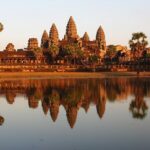
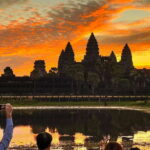
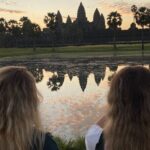
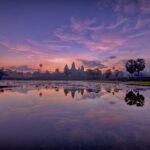
Angkor Wat gets about 2 hours on this tour. It’s described as the world’s largest religious monument—so your expectations should be high.
What to expect: classic Angkor architecture, huge scale, and the need to pace yourself. You’ll want breaks for water and shade because the site is big.
Common mistake I’d avoid: trying to see everything at once. Better move slowly through a few key vantage points and let the shape of the complex sink in.
Angkor Thom: the walled city with temple stops inside
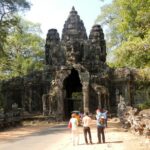
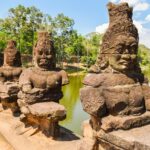
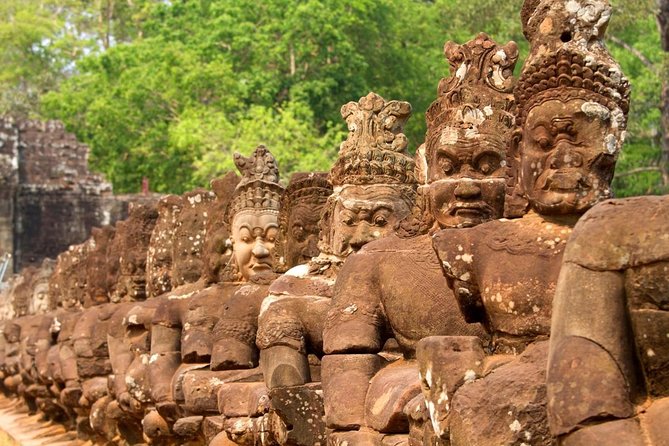
Angkor Thom is the charming capital city of the Khmer empire, inside a wall—plus many temples within. The tour highlights multiple inside landmarks such as Bayon, Phimeanakas, Baphuon, the Terrace of the Elephants, the Terrace of the Leper King, and Prah Palilay.
The tour lists about 2 hours for Angkor Thom, so think of it as a guided route through the most important zones rather than a full archaeological marathon.
Why this works: Bayon and the surrounding areas can be overwhelming alone. A guide helps you build a mental map fast—so you understand where you are and why it matters.
Ta Prohm: strangler figs, silk-cotton trees, and film-famous ruins
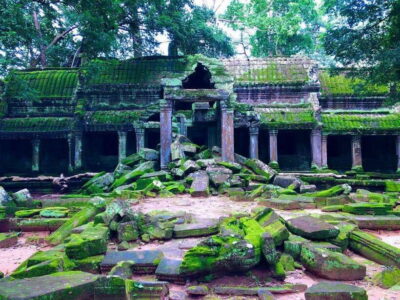
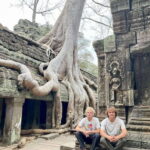
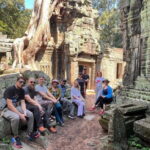
Ta Prohm is famous for a romantic atmosphere and the way strangler figs and silk-cotton trees intertwine among ruins. The tour gives about 1 hour here.
What to expect: photo moments, but also a real lesson in how nature and architecture interact over time.
Practical tip: if you want the tree-and-stone views without feeling rushed, give yourself a few slow minutes. The best angles aren’t always the quickest angles.
Ta Nei: a quieter add-on to avoid the worst of it
Ta Nei is included as a Buddhist temple built in the reign of Jayavarman VII in the late 12th century. It’s specifically called out as a good place to avoid crowds, with about 30 minutes.
I like this as a balance after Angkor Wat and Ta Prohm. It’s the kind of stop that can feel calmer simply because the route around the main sites has already done its heavy lifting.
Using your licensed guide to get more from each temple
Here’s where private tours earn their keep. In a place like Angkor, the difference between seeing and understanding can be the difference between a good day and a memorable one.
Your guide’s job isn’t just reading facts. It’s managing timing, explaining patterns you’d otherwise miss, and helping you decide where to spend your limited energy.
In past experiences shared with this operator, guides have been praised for being able to:
- manage each temple visit smoothly
- manipulate route planning to reach better views and fewer people
- bring Khmer civilization and temple architecture to life with clear explanations
You may see guide names like Tay (praised for route planning and interesting storytelling), Viet (praised for history and culture context), Kim (praised for evoking the era of Khmer civilization), Tai (paired with driver Mr. Long in at least one review), and Sopheara (praised for smart, well-educated temple context).
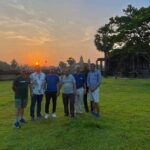
Also note a helpful perk: on Day 1, you can tell your guide if you want sunrise or sunset on the following day, and it’s listed as complimentary. That can be a great way to see Angkor without the full midday glare—just be aware you’ll likely need to be more flexible with energy levels.
What to pack and what your body should be ready for
This tour includes temples that involve stairs and climbing. One review flat-out points out lots of stairs and climbing, which is exactly the kind of detail you should not ignore.
So plan like this:
- wear comfortable shoes with grip
- bring water and use the provided refreshment stops
- plan for sun exposure (even if it feels fine in the morning)
- expect a slow, steady pace rather than a sprint
If you have mobility limits, this tour might still be possible, but you should think hard about your comfort on uneven stone surfaces and steps.
Who this private 2-day Angkor tour is best for
I’d point you toward this tour if:
- you’re first-time in Cambodia and want a guided route that hits the major sites
- you care about history and temple symbolism, not just ticking boxes
- you want fewer crowds and less heat stress
- you like the structure of an itinerary that keeps you moving without rushing you
It’s also a good fit if you’re traveling with a small group. One past booking mentions a private tour for 3 feeling well worth it, largely because of the comfort and guide attention.
Should you book this private 2-day Angkor tour?
Book it if you want a guided, two-day plan that’s designed to reduce crowd pain and help you actually understand what you’re seeing. The combination of private transport, licensed guiding, and a route that balances quieter temples with the big Angkor names is the core reason this works.
Skip it or reconsider if you:
- strongly prefer wandering independently without a tight plan
- know you’re not comfortable with stairs and climbing
One last budgeting note: the tour price is $62, but the Angkor entrance pass is separate and listed at $62 per person for a 2- or 3-day visit. If you factor that in up front, the value feels clearer.
FAQ
Is the Angkor entrance ticket included in the tour price?
No. The Angkor Archaeological Park entrance pass is not included. It’s listed as $62 per person for a 2- or 3-day visit.
What time does the tour start?
The tour start time is listed as 7:30 am.
Does the tour include hotel pickup and drop-off?
Yes. Hotel pickup and drop-off in Siem Reap are included.
Is this a private tour?
Yes. It’s a private tour/activity, meaning only your group participates.
What’s included during the tour?
Included items are a professional licensed guide, private air-conditioned vehicle transport, snacks and refreshments, and hotel pickup/drop-off. There’s also an option for sunrise or sunset.
Can I add sunrise or sunset?
Yes. If you let your guide know on Day 1, sunrise or sunset on the following day is complimentary.
Which temples are included across the two days?
You’ll visit Banteay Srei, Banteay Samre, Pre Rup, Preah Khan, Neak Pean, Angkor Wat, Angkor Thom, Ta Prohm, and Ta Nei.