REVIEW · SIEM REAP
Private Siem Reap City Tour
Book on Viator →Operated by Tour Guide-Siem Reap · Bookable on Viator
Cambodia’s recent past hits hard, fast. On this private Siem Reap loop, the War Museum and Wat Thmei Memorial give real context, while Artisans d’Angkor and the Old Market keep the day human-scale. If you’re lucky, your guide (like Chansip or Sothoun Ok) brings clear English, friendly energy, and practical local tips.
I like the timing because it feels unhurried: one hour at the War Museum, 30 minutes at Wat Thmei, then a full stop at Artisans d’Angkor followed by Psar Chaa in the afternoon light. The hotel pickup and drop-off, plus drinking water, make this easy to fit into a real itinerary without babysitting logistics.
The main drawback is that the memorial stops can be emotionally heavy, and two entrance fees (War Museum and Wat Thmei) are not included in the tour price. Plan to spend a little extra for those tickets and bring the right mindset.
In This Review
- Key reasons this tour works in Siem Reap
- What you’re really doing with this private 3–4 hour loop
- War Museum Cambodia: more than a room of artifacts
- Wat Thmei: the memorial stop that changes the tone of the day
- Artisans d’Angkor: where the day turns hopeful
- Psar Chaa (Old Market): shopping with bartering time built in
- Preah Enkosei Temple: a time-warped finale
- Guides matter more than you think here
- Price and value: when $112 per group makes sense
- Practical tips before you book (and during the day)
- Should you book this private Siem Reap City Tour?
Key reasons this tour works in Siem Reap
- War Museum Cambodia: See weapons and military vehicles gathered from Cambodian battlefields, with history placed in context.
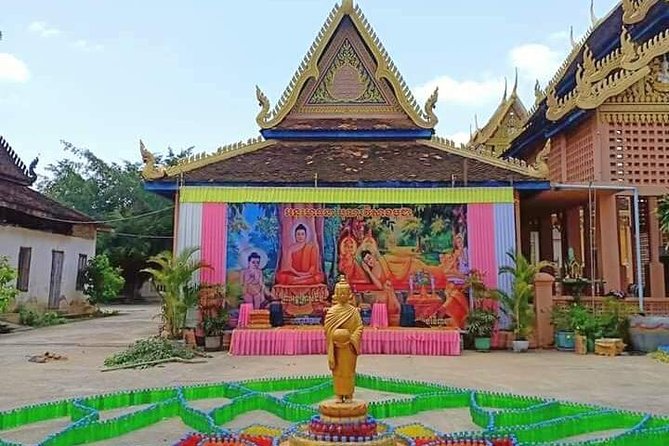
- Wat Thmei (Memorial of Victims of the Khmer Rouge Regime): A sobering reminder of the turbulent years that shaped modern Cambodia.
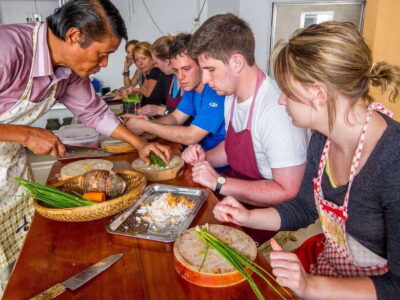
- Artisans d’Angkor workshop: Watch artists producing lacquer, stone carvings, and silver plating (admission included).
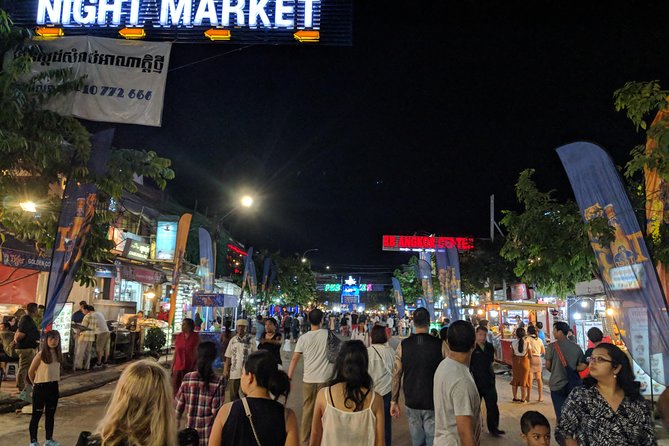
- Psar Chaa (Old Market): Short, focused time to browse and use bartering skills for gifts.
- Preah Enkosei Temple: A surviving mid-10th-century temple (30-minute visit) that anchors the day in older Siem Reap.
What you’re really doing with this private 3–4 hour loop
This is a city tour that targets meaning, not just landmarks. In a few hours you get two very different kinds of understanding: how Cambodia got shaped by recent turmoil, and how the country is moving forward through craft, markets, and daily life.
Because it’s private, you’re not stuck behind a crowd shuffling at the same pace. Your guide can keep the day coherent, explain what you’re looking at, and slow down when questions pop up. The structure also helps: you start with history (War Museum), move to memory (Wat Thmei), then shift tone to hands-on creativity (Artisans d’Angkor), and end with a temple and a market stop.
The practical payoff is big. Hotel pickup and drop-off means you’re not spending your limited time figuring out tuk-tuk math. And the tour includes drinking water, a small detail that matters in Siem Reap’s heat.
You can also read our reviews of more city tours in Siem Reap

War Museum Cambodia: more than a room of artifacts
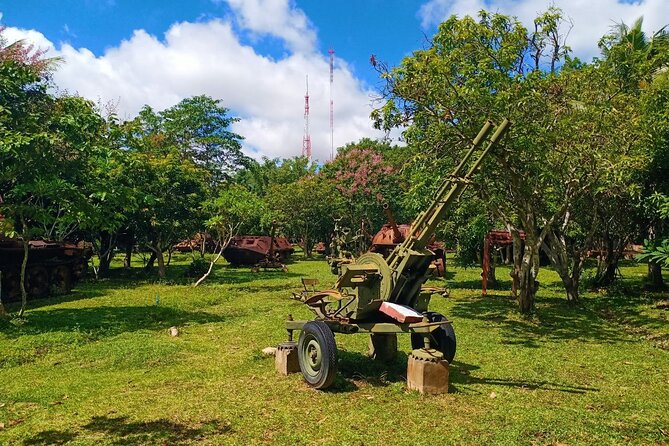
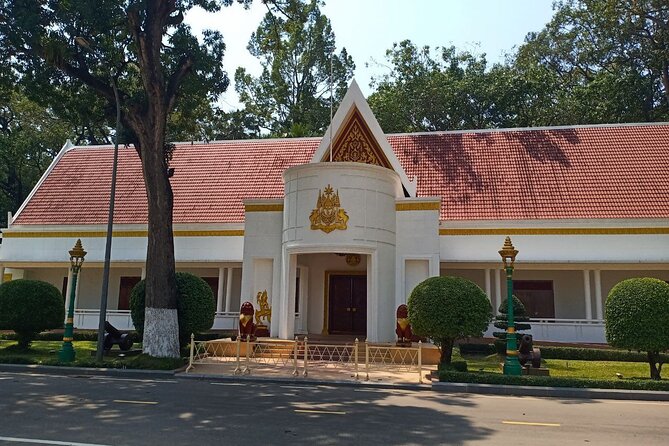
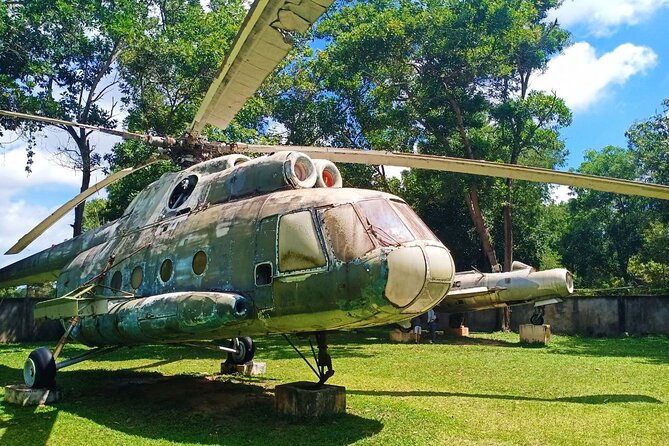
Your first stop is War Museum Cambodia, typically about an hour. Admission isn’t included, so you’ll budget $5 per person. What makes the visit click is the way the museum collects weapons and military vehicles from Cambodian battlefields and uses them to explain the recent years of conflict and how they shaped the country you see today.
Why I think this stop is valuable is simple: it gives you a framework. When you later hear Cambodian stories about survival, rebuilding, and national identity, you’ll have a clearer sense of what the big picture was. This isn’t just a collection for collectors; it’s presented as context.
A smart way to approach it is to treat it like a timeline in physical form. If your guide can point out connections between what you see and what Cambodia endured, you’ll get more from the hour than you would by rushing through displays.
Possible consideration: since the tour is only 3–4 hours total, you won’t be doing a deep, multi-museum day here. If you want long hours of reading and lingering, you might feel a little compressed—but for most people, one hour hits the right balance.
Wat Thmei: the memorial stop that changes the tone of the day
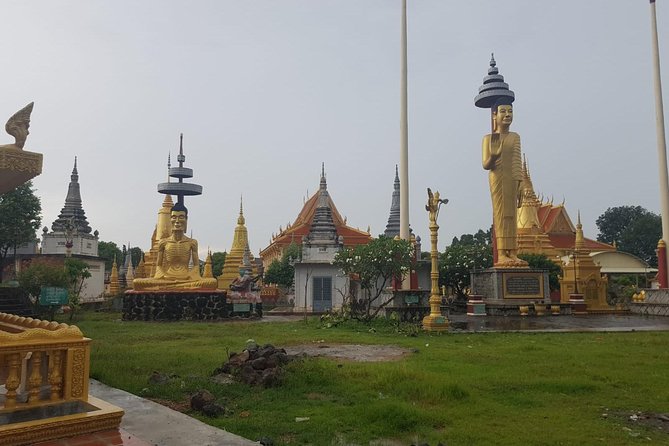
Next you’ll visit Wat Thmei, also known as the Memorial of Victims of the Khmer Rouge Regime. The itinerary sets aside about 30 minutes, and entrance is not included at $3 per person.
This is a powerful contrast to the museum. Where the War Museum shows the material side of conflict, Wat Thmei is about the human cost. The tour description explicitly flags it as a sobering reminder of Cambodia’s recent turbulent past, and that’s the right expectation to carry in.
I’d plan your energy for this moment. In a short day, it’s easy to steamroll from one stop to the next, but the memorial deserves slower attention. If your guide offers a bit of framing—why the memorial exists, what it stands for—you’ll leave with a better understanding than if you treat it like just another photo stop.
Downside to consider: if you’re traveling for a light sightseeing break, this is the heaviest part of the tour. It’s not the tour’s fault, it’s just the topic. Go with the mindset that you’re here to learn, not to speed through.
Artisans d’Angkor: where the day turns hopeful
After the memorial, you get a palate cleanser: Artisans d’Angkor workshop for about an hour. Admission is included here, so you won’t add another ticket cost for this stop.
This is where you see Cambodia’s creativity in action. The tour highlights skilled artists producing lacquer, stone carvings, and silver plating. Even if you don’t buy anything, watching the work being made helps you understand what you’re seeing in the shops later in the market.
Why this stop matters is that it gives you a different kind of history. Instead of focusing only on what happened, you see what’s being built now—through craft skills passed along and turned into real objects people use and collect. That balance is part of why this tour feels complete: you don’t just learn about suffering, you also witness the forward motion.
Practical tip: since you’ll likely browse later at the Old Market, use this stop to look closely first. If you want a specific style, keep an eye on materials and finishing techniques. A guide can also point out differences in what looks similar across stalls.
Psar Chaa (Old Market): shopping with bartering time built in
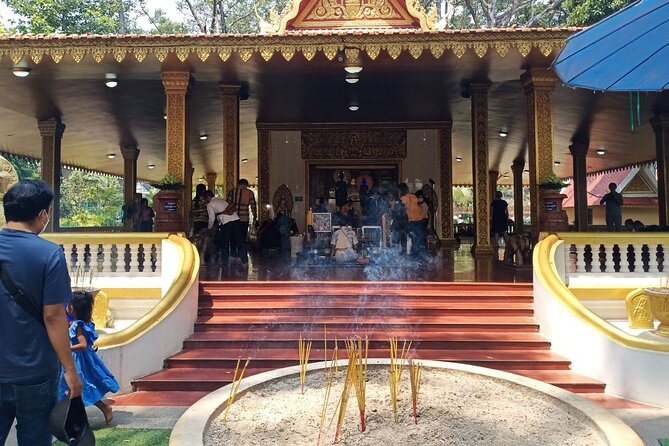
Your fourth stop is Psar Chaa – Old Market, usually around 30 minutes. Entrance is included, so you’re paying only for what you choose to buy.
This is the most flexible part of the tour. You’ll browse, look for gifts, and practice bartering skills if that’s your thing. Even if you don’t want to negotiate hard, Old Market is useful because it gives you a snapshot of local shopping and what’s available beyond the souvenir version of Siem Reap.
A quick way to get value in only half an hour: decide on a shortlist before you arrive—one category (like lacquerware or small carvings), one budget range, and one practical test (how it’s made or how well it’s finished). That keeps you from wandering aimlessly, especially when shops start blending together.
Potential consideration: 30 minutes is short. If you love shopping, you may want extra time before or after the tour. But for a city tour that also includes two history stops, the tight timing makes sense.
You can also read our reviews of more private tours in Siem Reap




Preah Enkosei Temple: a time-warped finale

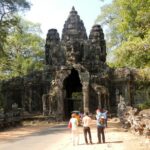
Your final temple stop is Preah Enkosei Temple, about 30 minutes. The itinerary notes it’s the only temple from the Siem Reap period still standing in modern Siem Reap, built in the mid-tenth century by Divakarabhata, a high-ranking Brahmin who married Rajendra (the details here are part of the temple’s story as presented in the tour description).
This is a nice way to end the day because it ties the tour together. You’ve moved from recent conflict to memorial reflection, then to present-day craft. A temple that survived into modern Siem Reap gives you another time anchor and helps you see the city as layered, not stuck in one era.
One practical note: by the time you reach this stop, you’ll likely be moving more at a walking pace, since you’ll have already visited multiple locations. If you’re sensitive to heat or fatigue, this is the moment to slow down and let your guide set the pace.
Guides matter more than you think here
This tour is built around sites that require context. That’s why the guide quality shows up again and again in the reviews you can find for this experience.
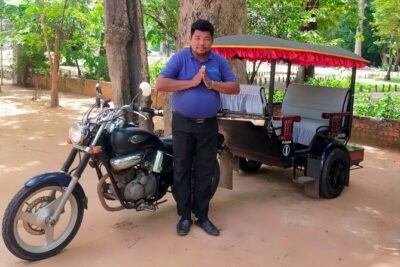
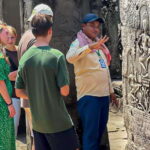
Guests specifically praised guides like Chansip for speaking English well, staying friendly, and using humor without making light of serious topics. Another guide, Sothoun Ok, was highlighted for being very knowledgeable, good English, and for taking great photos—useful if you want images that actually show what you learned, not just what you walked past.
And there was a practical bonus noted: one guide even suggested halal restaurants in town. That’s small, but it’s the kind of local help that saves you time later when you’re hungry and tired.
In short: this tour works best when the guide can connect dots across the day. If your guide is strong, the War Museum and Wat Thmei stop feeling like separate boxes. They start feeling like one storyline.
Price and value: when $112 per group makes sense
The tour price is $112 per group (up to 6) for about 3 to 4 hours. That means the base cost per person depends entirely on your group size.
Here’s the math using only what’s provided:
- If you use the full 6-person capacity: $112 ÷ 6 = about $18.67 per person
- If it’s just 2 people: $112 ÷ 2 = $56 per person
- Your total also changes based on entrances not included: $5 per person for the War Museum and $3 per person for Wat Thmei, or $8 per person total
So with 6 people, a rough all-in target is $26.67 per person ($18.67 + $8). With 2 people, it’s about $64 per person ($56 + $8).
Is it good value? For most people, yes, because the included items stack up:
- a guide
- private transportation
- hotel pickup & drop-off
- drinking water
- travel insurance
If you try to recreate this on your own, you’d likely spend time coordinating rides and entrance timing. This tour trades that effort for a smooth, pre-planned route—plus the context a good guide can provide at each stop.
Practical tips before you book (and during the day)
Keep these in mind so your time stays enjoyable:
- Budget for the two extra tickets: War Museum Cambodia ($5 pp) and Wat Thmei ($3 pp).
- Decide what kind of day you want. This route mixes solemn memorial sites with an artisan workshop and shopping time. If you want only temple-photo time, this may feel heavy. If you want understanding, it’s a smart balance.
- Wear or bring something comfortable for walking. The itinerary includes multiple locations in sequence, so you’ll be moving between them throughout the morning or afternoon.
- Bring small bills for purchases at Psar Chaa and for any items you see at the artisan workshop. You’ll have a short window for shopping, so having the option to pay quickly helps.
- Use the mobile ticket on the day-of check-in process. It removes the need to hunt for paper tickets.
One more thought: the itinerary is designed with short visits at several stops (30 minutes here, 30 minutes there). If you’re the type who loves to linger, ask your guide if there’s any flexibility on pacing, but expect that the route is built to fit everything into the 3–4 hour window.
Should you book this private Siem Reap City Tour?
Book it if you want Siem Reap beyond temple cliffs and sunset photos. This is a well-paced introduction to recent Cambodian history through War Museum Cambodia and Wat Thmei, then a hopeful turn through Artisans d’Angkor, with Psar Chaa Old Market shopping time and a final temple stop at Preah Enkosei.
Skip it (or choose a different tour) if your idea of vacation is light and carefree all day. Wat Thmei is the emotional anchor here, and the day is intentionally built around context.
If you’re traveling with family or friends and can fill the private group up to 6, the price becomes especially attractive. Even with fewer people, you’re still paying for guide-led storytelling and private transport, which is what turns a list of stops into a coherent experience.