REVIEW · SIEM REAP
Full-Day Siem Reap Angkor Major Temples Private Tour
Book on Viator →Operated by Angkor Boutique Tours · Bookable on Viator
One trip through Angkor can feel like sensory overload. This private full-day route keeps you organized, with an English-speaking guide and air-conditioned driving between major temples. I especially like the calm, practical flow from Ta Prohm to Angkor Wat, and the way the guide tries to time entries to help you avoid the worst crowds. The main thing to consider is that admission fees are not included, and some parts of the day involve walking plus steep steps (Baphuon, in particular).
The value here is less about speed and more about not guessing. You get pickup at your hotel lobby before 8:00 am, cold water and a cold face towel along the way, and a licensed driver with a well air-con-equipped car or van. Also, having a private group means your pace is more flexible when the heat or stairs get real.
Before you go, read the dress rules. You’ll need shoulders and knees covered for places of worship, and you may risk being refused entry if you show up in shorts or sleeveless tops. It’s not hard, just annoying if you forget—so plan clothing that you can comfortably wear in the sun.
In This Review
- Key highlights before you go
- Price and logistics: what you’re really paying for
- Getting picked up in Siem Reap (and keeping the day smooth)
- Your route from Ta Prohm to Angkor Wat: how the pacing works
- Ta Prohm: tree roots, movie vibes, and why 1 hour is the sweet spot
- Angkor Wat: the world-scale icon, with breathing room
- Bayon: the 216 smiling faces and the feeling of being watched
- Bayon area side stops: Baphuon and the steep-steps decision
- Phimeanakas: short visit, high payoff for understanding the royal palace area
- Terrace of the Elephants and Terrace of the Leper King: small stops that add context
- Angkor Thom South Gate: your final big silhouette
- What I’d watch out for: dress code and the steep-temple factor
- Guide quality: why punctual and un-rushed matters in Angkor
- Value check: does a $68 private tour add up?
- Who this tour suits best
- Should you book this private major-temples tour?
- FAQ
- What time does the tour start, and where do I meet the guide?
- Is the Angkor temple admission ticket included in the price?
- How long is the full-day tour?
- Is this a private tour or a group tour?
- What dress code do I need for the temples?
- What happens if the weather is bad, or I need to cancel?
Key highlights before you go
- Private group tour with licensed driver and guide so the day stays focused and not crowded with strangers
- 8:00 am start from your hotel lobby to get underway early
- Major temples in one organized circuit from Ta Prohm through Angkor Wat
- Cold mineral water and cold face towel to reset during the hottest stretches
- Steep-temple heads-up for Baphuon (you can decide how far to go based on your condition)
- Crowd-aware timing so you’re more likely to enter at calmer moments
Price and logistics: what you’re really paying for
This tour costs $68 for a full day (about 6 to 8 hours), and it’s priced like a practical, mid-market way to cover the big names without turning your day into a puzzle. You’re not paying for temple admission in that price, and that’s the key tradeoff. Admission tickets are not included at each stop, and you’ll purchase the ticket on the way partway through the experience.
What you are paying for is coordination: pickup, transport, guide commentary, and a low-friction itinerary. The included A/C car, fuel, and an English-speaking tour guide remove most of the stress that can come with temple-hopping on your own. Add the cold mineral water and cold face towel, and you’ve got a setup that helps you survive a long day without feeling like you’re scavenging.
One more practical perk: it’s listed as a private tour/activity, meaning it’s just your group. If you’re traveling with family or friends and you want to move together (not wait on strangers or get rushed), that privacy can be worth more than a cheaper group ticket.
You can also read our reviews of more private tours in Siem Reap
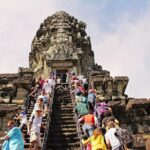
Getting picked up in Siem Reap (and keeping the day smooth)
Your day starts around 8:00 am. Your guide meets you in the lobby area of your staying hotel before 8:00 and you head out from there. This matters in Siem Reap because temple time is tight: if you slip on timing early, you lose your best window.
The tour vehicle is described as cleaned and well air-con equipped, which is exactly what you want. Angkor days can be long and hot, and the comfort of the ride affects how much energy you have for the temples themselves. This is also where the included cold face towel and bottled water make a noticeable difference. You’re not waiting until you’re already drained.
If you’re someone who hates last-minute logistics, the structure helps. You’re not negotiating every turn, and you’re not trying to figure out which stop first. The route is laid out, and the guide helps you keep it moving.
Your route from Ta Prohm to Angkor Wat: how the pacing works
This circuit hits the big visual anchors and the most story-rich stops, in a logical order:
- Ta Prohm (1 hour)
- Angkor Wat (1 hour 30 minutes)
- Bayon (1 hour)
- Baphuon (20 minutes, steep)
- Phimeanakas (10 minutes)
- Terrace of the Elephants (10 minutes)
- Terrace of the Leper King (10 minutes)
- Angkor Thom South Gate (5 minutes)
That schedule is where the “value” lives. You get enough time at Angkor Wat and Bayon to actually look, not just photo-sprint. Then you hit the smaller royal-area details—short, focused visits that add context without dragging the day out.
One thing to know: while the itinerary gives time blocks, it also mentions that entry timing is adjusted to help avoid crowds. That’s helpful, because the temple experience can swing from peaceful to chaotic depending on when you arrive.
Ta Prohm: tree roots, movie vibes, and why 1 hour is the sweet spot
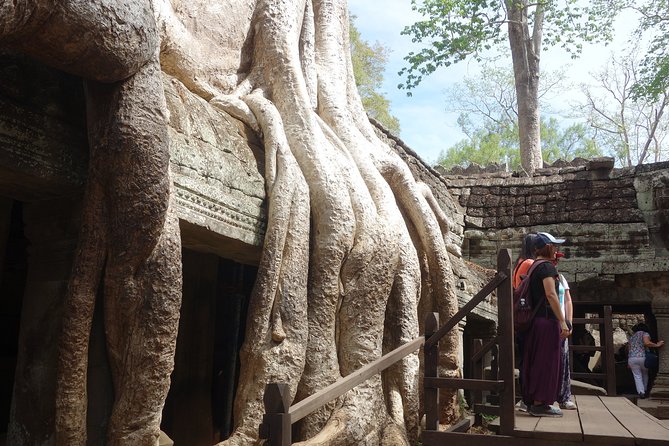
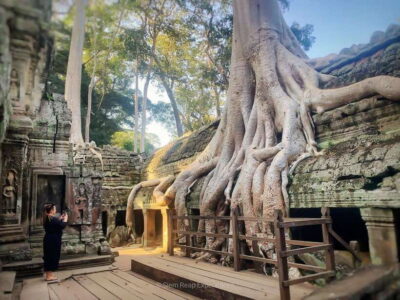
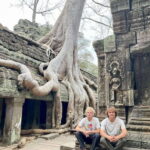
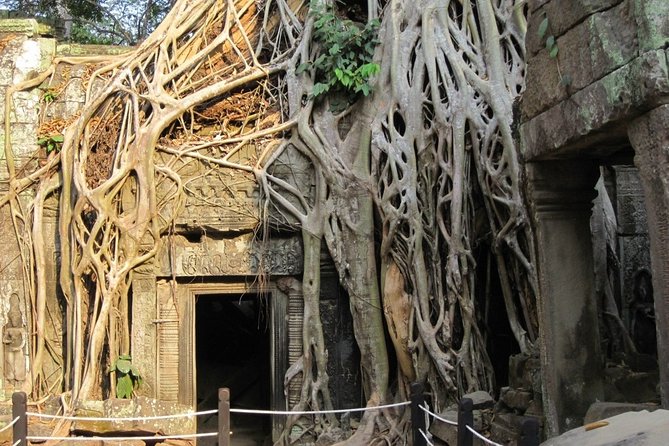
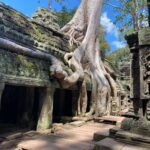
Your first major stop is Ta Prohm, a temple famous for areas overgrown by tree roots. It’s the one that many people mentally picture before they ever arrive—like a place where nature is actively part of the architecture.
You’ll have about 1 hour here. That’s enough time to do two things well: take in the big framing shots and then slow down to notice the texture—stone, root, shadow, and the way the scene shifts as you move. The root growth makes direction matter; if you just walk in a straight line and leave fast, you miss the best angles.
The biggest “consideration” for Ta Prohm is not the temple itself. It’s energy. You start at 8:00, but you’re still in open-air walking from early on. Wear footwear you’re happy to walk in all day, and keep your water handy.
Angkor Wat: the world-scale icon, with breathing room
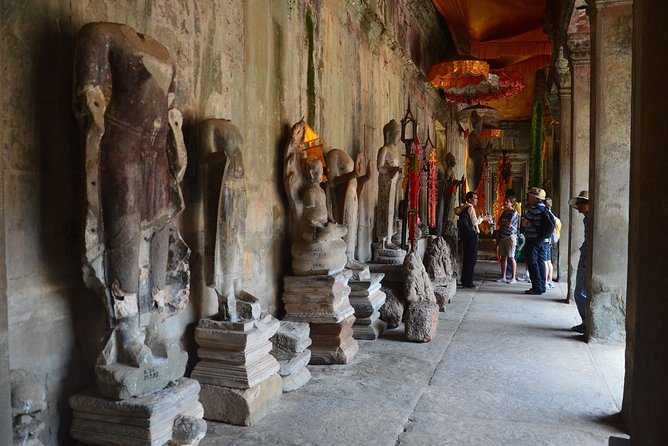
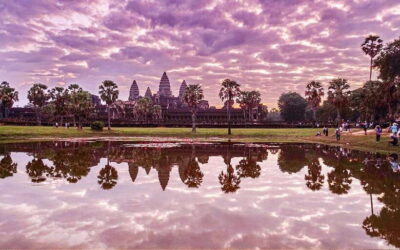
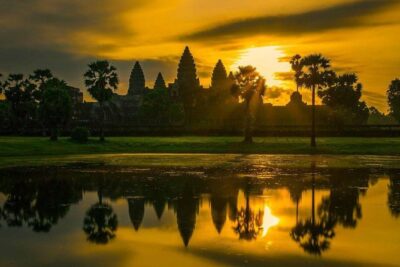
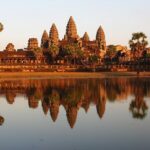
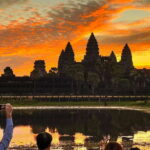
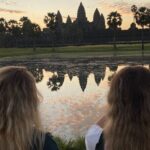
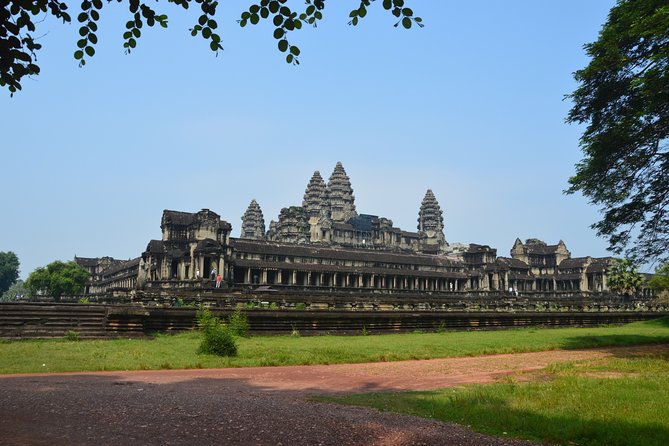
Next comes Angkor Wat, described as the world’s biggest temple and built in the early 12th century, with symbolism tied to an emperor’s tomb concept. Regardless of how you frame it, it’s the main gravitational pull of the whole complex.
You get about 1 hour 30 minutes at Angkor Wat. That longer time is a smart choice. Angkor Wat isn’t a single photo; it’s layers—approach, courtyards, views from different positions, and the way the light changes on stone surfaces. With ninety minutes, you can actually slow down and not feel like you’re being herded.
If you care about photos, this is the stop where you’ll want to be a little strategic. Don’t just stand at the first obvious angle. Walk a bit, check the flow of people, and give yourself space to reposition without stopping your whole group.
You can also read our reviews of more tours and experiences in Siem Reap

Bayon: the 216 smiling faces and the feeling of being watched
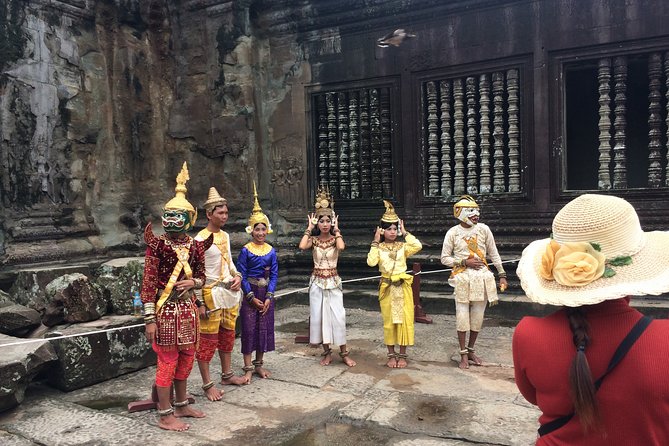
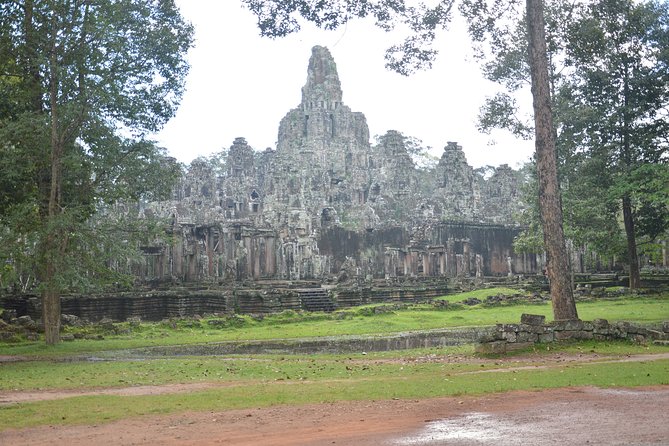
After Angkor Wat, you’ll head to Bayon Temple, famous for 216 smiling Buddha faces on the top of its towers. It’s one of those places where the details do the work for you. Even if you don’t know the deeper meanings, you can feel the rhythm of repeating faces and towers as you move.
You get about 1 hour here. That’s plenty because Bayon’s impact comes quickly, then deepens the longer you linger. The trick is to keep your eyes moving: from the main faces to surrounding reliefs and back again, so the temple doesn’t turn into one flat view in your memory.
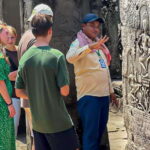
A guide helps here because the temple can feel abstract at first. With a good explanation, you connect what you’re seeing to a story—so you don’t leave with only an image, but also with understanding.
Bayon area side stops: Baphuon and the steep-steps decision
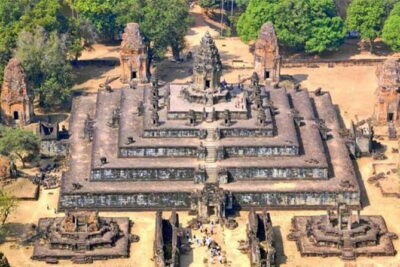
From there, the itinerary continues with Baphuon Temple (about 20 minutes). It’s described as the biggest temple in the Angkor Thom area, and the key practical detail is that it’s very steep. The tour guide will let you go up or not based on your physical condition.
I like that approach. It’s respectful, and it keeps the experience from turning into a forced workout. If you want the view from higher up, you can choose that. If you’d rather preserve your energy, you still get the temple without pushing your body too far.
This is also where you should decide your own comfort level for stairs. If you’ve got knee issues or you’re visiting during peak heat, take the guide’s judgment seriously. A temple can still be worth your time even if you don’t climb every step.
Phimeanakas: short visit, high payoff for understanding the royal palace area
Next up is Phimeanakas, located in the middle of the old royal palace area. You’ll spend about 10 minutes here, which might sound short, but the goal is to give you orientation. When you connect Phimeanakas to where kings and power were centered, the broader Angkor Thom layout starts to click.
Think of this stop as a “mental map” break. It’s short enough that it doesn’t drain the day, yet it adds meaning to the time you spent at the larger, more dramatic structures.
Terrace of the Elephants and Terrace of the Leper King: small stops that add context
You then move to two quick stops, each around 10 minutes:
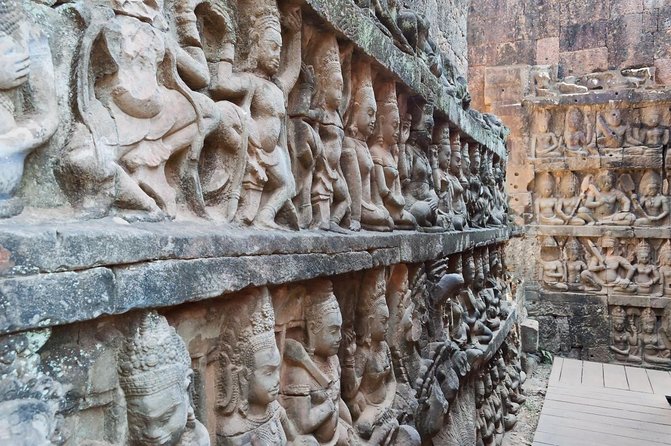
- Terrace of the Elephants, described as an ancient entertainment arena for royalties and high-ranking officials
- Terrace of the Leper King, described as an ancient royal crematorium
Both are fast, but they matter because they shift your attention from big faces and towers to the ceremonial spaces around them. These terraces show how formal power and public life overlapped in royal Cambodia—entertainment, ritual, authority—less about the towering images and more about what happened at ground level.
A guide’s explanation helps you read these terraces. Without words, it’s easy to treat them like scenic platforms. With context, you start seeing them as parts of a working system, not just a backdrop.
Angkor Thom South Gate: your final big silhouette
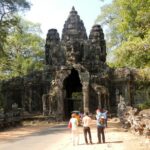
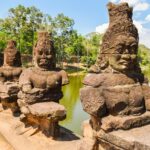
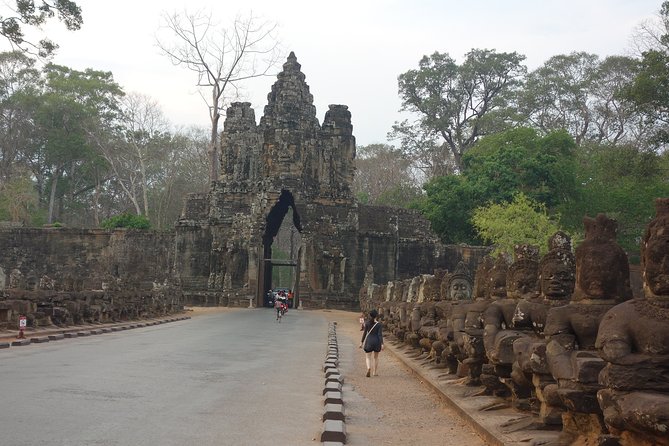
The day ends at Angkor Thom South Gate, one of the five impressive gates of Angkor Thom. You’ll spend about 5 minutes here.
Five minutes is brief, so you’ll want to use it well. Arrive with the mindset of a final photo-and-exit moment. If you love gates and symmetry, take a couple of steps to find a balanced view. If you’re tired, don’t fight it—this is an endcap, not an extended stop.
What I’d watch out for: dress code and the steep-temple factor
Two considerations can make or break the day.
First: the dress code. Shoulders and knees must be covered at places of worship and selected museums. No shorts or sleeveless tops for both men and women. If you don’t comply, you may be refused entry. I’d rather you be slightly warm and comfortable than trying to improvise at the last second.
Second: the physical reality of temples. Baphuon is described as very steep, and that’s the one stop that explicitly gives you a decision point. If you’re worried, ask your guide to guide you toward the best compromise. You’ll still get value from the visit without pushing beyond your comfort.
Guide quality: why punctual and un-rushed matters in Angkor
One of the best parts of this kind of tour isn’t the monuments. It’s the human rhythm that holds everything together.
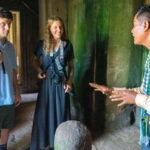
There’s strong praise for Mr Brown Then, especially for being punctual, having temple knowledge, and not rushing people. That last detail sounds small until you’re standing in the heat, surrounded by crowds. When a guide doesn’t yank you onward, you get time to look properly. You can read stone, follow explanations, and step into photos without feeling like you’re holding the schedule hostage.
You’ll also appreciate licensed drivers and clean, air-conditioned vehicles. In practice, that means fewer stress moments, fewer sudden stops, and a smoother flow between sites.
Value check: does a $68 private tour add up?
For a private, full-day Angkor circuit, $68 can be good value if you care about convenience and pacing. Here’s the honest math-minded way to think about it:
- Included: A/C transport, fuel, English-speaking guide, cold water, and a cold face towel
- Not included: lunch, dinner, breakfast, and the temple admission fees
- What you gain: a structured route through the major stops, with timing attempts to reduce crowd pressure
If you’re traveling solo, this price can still make sense when you compare the cost and time of organizing your own guide and transport. If you’re traveling with a group, you can spread the “private” cost and get even better value—especially with pickup from your hotel lobby.
The only real downside risk is the admission fees you still need to budget for, plus your personal comfort with the walking and steps. If you plan around those, the tour’s format feels efficient rather than rushed.
Who this tour suits best
This fits well if you want:
- A private format with your own group
- An easy day plan with major temples covered
- An English-speaking guide and transport that’s air-conditioned
- A bit of crowd-aware timing rather than full-on chaos
It may not be ideal if:
- You want lots of free time to wander without a schedule
- You’re uncomfortable with stairs or steep climbs (Baphuon)
- You’re hoping the price includes temple admission and meals (it doesn’t)
Should you book this private major-temples tour?
I’d book it if your top goal is a smooth, well-paced highlights day through Siem Reap’s major Angkor sites, with the comfort details that help you last the full 6 to 8 hours. The best reason is simple: you get structure, not just transportation. And with strong praise around guide style—punctual, knowledgeable, and not rushing—the day should feel enjoyable instead of frantic.
I’d think twice if you can’t meet the dress code or if you don’t want to deal with admission tickets that are not included. Those are solvable issues, though—just plan ahead.
FAQ
What time does the tour start, and where do I meet the guide?
The tour starts at 8:00 am. Your guide waits in the lobby area of your hotel before 8:00, and pickup is included.
Is the Angkor temple admission ticket included in the price?
No. Admission tickets are not included. You’ll purchase the ticket partway through the experience.
How long is the full-day tour?
The duration is about 6 to 8 hours.
Is this a private tour or a group tour?
It’s a private tour/activity. Only your group will participate.
What dress code do I need for the temples?
You need to cover your shoulders and knees. No shorts or sleeveless tops allowed. If you don’t follow the rules, you may be refused entry.
What happens if the weather is bad, or I need to cancel?
The experience requires good weather. If it’s canceled due to poor weather, you’ll be offered a different date or a full refund. You can cancel for a full refund up to 24 hours before the start time.