REVIEW · SIEM REAP
Private Day Angkor Wat Temple and Banteay Srei Temple Tour
Book on Viator →Operated by Angkor Guide Tour · Bookable on Viator
A day of temples, planned with care.
This private tour strings together major Angkor sights with enough stops to feel like you hit the highlights, without the stress of sorting tickets, timing, and transport on your own.
I especially like the combination of an English-speaking guide and air-conditioned vehicle. You get clear explanations at each site, plus cool water and towels to keep you moving through Cambodia’s heat.
One consideration: you still need the Angkor temple pass, which is not included in the tour price. Budget for that add-on so your day stays smooth.
In This Review
- Key tour highlights you’ll feel on the ground
- A private Angkor day that balances awe with logistics
- Price, temples pass, and where the value really comes from
- How the day runs: pickup, pacing, and timing that helps
- Ta Prohm: vines, roots, and the atmosphere of Rajavihara
- Pre Rup: a shorter stop with big temple-city context
- Banteay Srei: Pink Ladies Temple and the art of tiny details
- Angkor Thom South Gate to Bayon: entering the stone city
- Baphuon, Phimeanakas, and the royal enclosure feel
- Terrace of the Elephants and Terrace of the Leper King: ceremonial drama in stone
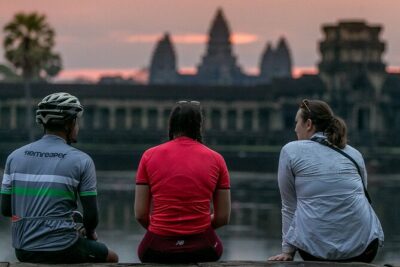
- Angkor Wat: the final payoff and what to notice
- Who this private tour fits best
- Should you book this Angkor Wat and Banteay Srei day?
- FAQ
- How long is the Private Day Angkor Wat and Banteay Srei Temple Tour?
- Is hotel or airport pickup included?
- Is this tour private or shared?
- What’s the price of the tour?
- Do I need to buy a temple pass?
- Are admission tickets included for the temples?
- What’s included in the tour price?
- Does the tour offer a mobile ticket?
- What hours does the tour operate?
- What’s the cancellation policy?
Key tour highlights you’ll feel on the ground
- Private route control: it’s only your group, so your pace and priorities can matter.
- English guide guidance: you’re not just walking in the dark; you’re reading the temples with someone who explains them.
- Smart classics + standout craftsmanship: the day pairs big-name monuments with Banteay Srei’s razor-fine carvings.
- Comfort supports a long day: AC transport, parking fees, and quick breaks help when you’re stacking stops.
- A final payoff at Angkor Wat: you close with the most iconic temple in the Angkor complex.
- Real-world flexibility: a strong guide can adjust how you move around if someone in your group has mobility needs.
A private Angkor day that balances awe with logistics
Angkor is the kind of place where your brain says wow, but your feet say nope. This tour is built to solve that mismatch. You’re not hunting buses, arguing about tuk-tuk prices, or trying to connect the dots between temples. Instead, you get one guide, one route, and a clear plan that fits into an 8.5-hour day.
What I like most is that it’s not just about ticking off famous names. The route moves from Ta Prohm’s tangled roots to the smaller, jewel-like artistry of Banteay Srei, then into Angkor Thom’s stone city and finally ends at Angkor Wat. That order matters because your eyes learn as you go. Early on you see temples shaped by different eras and religions; later you see how the whole Angkor story connects.
You’ll also notice the comfort pieces are actually useful. The tour includes an air-conditioned vehicle, cool water, and towels. Those extras don’t sound romantic, but they keep you steady when the midday sun hits and you still have several sites left.
You can also read our reviews of more private tours in Siem Reap
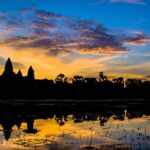
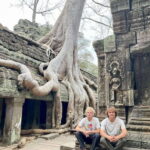
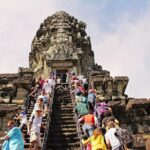
Price, temples pass, and where the value really comes from
The tour price is listed at $43 per person, and the duration is about 8 hours 30 minutes. That’s a reasonable base cost for a private day with an English guide plus transport coverage like parking fees and road tolls.
Here’s the key part: the temples pass is not included. The Angkor pass for one day is listed at $37 per person. So your all-in budget is basically $43 + $37, or about $80 per person before any snacks or personal expenses.
Is that good value? For me, yes—because your money buys more than a vehicle. It buys:
- guided explanations while you’re standing in front of the carvings and towers,
- a timed route through multiple major sites,
- transport that helps you avoid wasting time between distant points.
If you’re the kind of traveler who wants to understand what you’re looking at (not just snap photos and move on), the guide is the difference-maker.
If you want the math to be simple, plan for roughly $80 total per person, and you’ll feel in control of the day rather than surprised by add-ons at the ticket gate.
How the day runs: pickup, pacing, and timing that helps
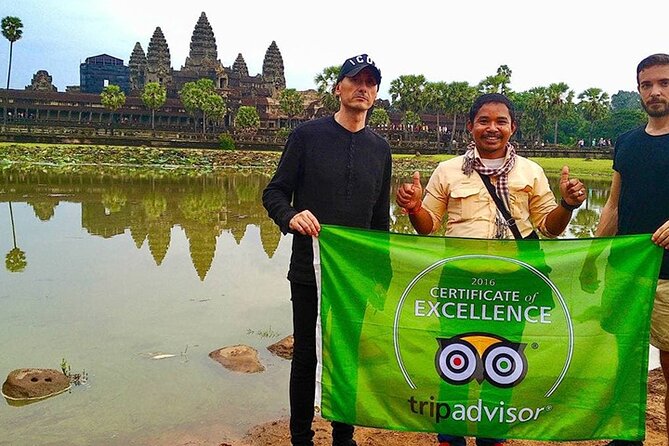
This is a private tour, so it’s built for just your group. The tour includes pickup and drop-off, and it also lists pickup/drop-off at the airport. It runs daily during Angkor operating hours: 8:00 AM to 4:00 PM.
Because the temples pass is time-based, you’ll want to stay aware of the clock. The itinerary includes long stand-and-look moments at some stops (like Angkor Wat), and shorter ones at others (like Pre Rup). That mix means you’ll get a variety of experiences without spending all day in one spot.
Also, plan to be flexible with walking. Even when a vehicle brings you close, you’re still dealing with uneven stone, steps, and long distances across the Angkor grounds. If you have mobility needs, this is one of the reasons a guide matters. A guide can help adjust how you move through the day, including arranging closer access and switching transport modes when needed, so you’re not forced to skip key areas.
Ta Prohm: vines, roots, and the atmosphere of Rajavihara
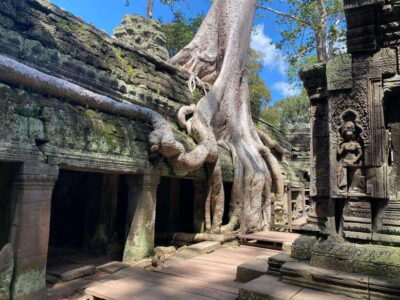
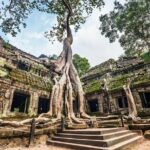
The first temple stop is Ta Prohm, originally known as Rajavihara, meaning monastery of the King. It was built as a Mahayana Buddhist monastery and university, with construction dated to 1186 AD.
Why Ta Prohm hits differently: it’s not a temple that feels perfectly restored and tidy. It feels alive. Giant tree roots spread across the stone, and vines tangle through the ruins. You can look at the carvings, but you’ll also feel the scale of nature taking back the structure.
Practical advice: give yourself time to look slowly at layers. Start with the big shapes first—doorways, towers, and the overall layout—then move down to details. In a place like this, if you rush, you miss the story your eyes are trying to tell.
One more tip: Ta Prohm can be a photo trap if you’re chasing angles constantly. Instead, pick a few moments where you pause and let the scene come to you. The best shots often happen when you stop moving and simply watch.
Pre Rup: a shorter stop with big temple-city context
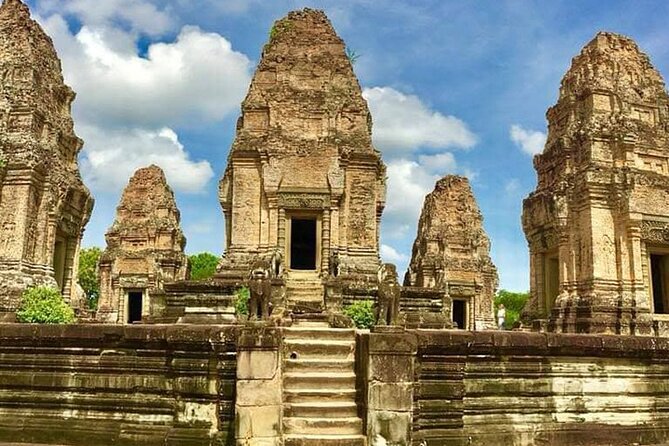
Next up is Pre Rup, a state temple associated with King Rajendravarman. It’s dated to the late 10th century, around 961 or 962 AD, and it was built about 1.3 km north of East Mebon.
Pre Rup’s value in this itinerary is that it helps you understand Angkor’s earlier royal temple language. It’s not the only temple of this style, but it’s a strong checkpoint between the jungle-thick mood of Ta Prohm and the more organized grandeur of Angkor Thom.
This is a shorter stop, about 20 minutes, so treat it like a “reset and orient” moment. Look at the overall form first, then let your guide point out what’s significant about the layout and age. You won’t get a long linger here, but you’ll appreciate it more because you’ll already be warmed up by Ta Prohm’s textures.

Banteay Srei: Pink Ladies Temple and the art of tiny details
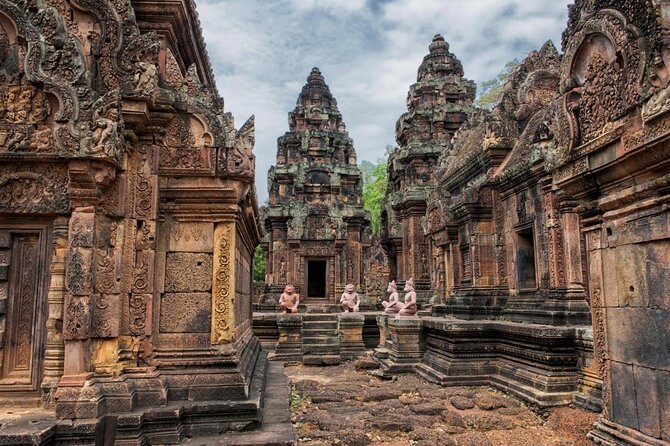
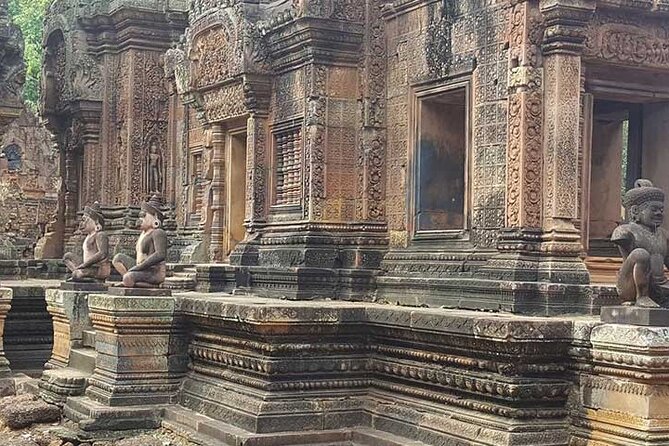
Then comes Banteay Srei, often called the Pink Ladies Temple. It’s a 10th-century Khmer temple dedicated to the Hindu god Shiva, near Phnom Dei about 25 km northeast of the main Angkor area.
This stop is the artistic payoff. Even though it’s smaller than several other Angkor temples, it’s famous for fine Khmer craftsmanship—motifs, figures of gods, and detailed carving.
Here’s how to get the most out of Banteay Srei:
- Slow down and zoom in with your eyes, not just your camera.
- Let your guide lead you to specific carved sections so you know what you’re looking at.
- Expect to see patterns and figures that you would easily miss at a faster pace.
One reason this temple works well in a longer day: it gives you a different kind of awe. Instead of massive scale, you get precision. After hours of stone towers and courtyards, your brain loves a place where details take center stage.
Angkor Thom South Gate to Bayon: entering the stone city
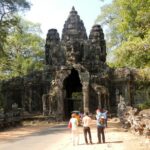
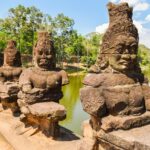
From Banteay Srei, you head into Angkor Thom, starting at the South Gate. You cross a 100-meter wide moat, and the causeway is flanked by naga balustrades—so you’re entering the city with a visual “myth highway” feel.
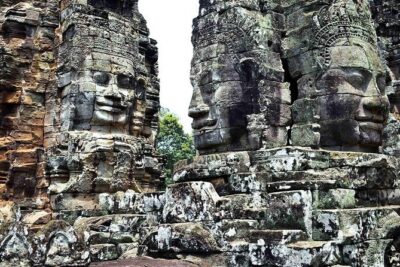
At the Bayon Temple, you meet the faces. There are 173 gigantic faces remaining on the towers, and there’s long-running debate about who they represent. Local Khmer belief includes that the faces represent the Four Faces of Prohm.
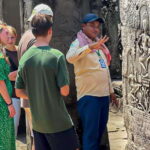
Bayon is where your guide’s explanation really matters. If you only look at the obvious faces, you’ll still enjoy it. But if you understand how the temple functions and why it’s built this way, the experience becomes more than a photo stop. It becomes a viewpoint into how Angkor’s rulers and beliefs were expressed in stone.
A practical note: Bayon can feel crowded depending on timing. So instead of trying to see everything from one angle, choose a few viewpoints and rotate. Let the face tower shapes guide you.
Baphuon, Phimeanakas, and the royal enclosure feel
After Bayon, the route moves through the Angkor Thom royal area:
- Baphuon Temple, the state temple of King Udayadityavarman II
- Phimeanakas, a temple in the royal enclosure with a story people like to share
- short stops along the royal boundary areas leading into the terraces
The idea here is to give you an orderly sense of how the “center of power” area was structured. Angkor Thom isn’t only temples scattered around. It’s a deliberate city plan, with key temples and ceremonial spaces.
The stop lengths here are shorter than Bayon and Angkor Wat, but don’t treat them as filler. The benefit of the shorter timing is that it keeps the day from dragging, while your guide ties the pieces together into a coherent route.
Terrace of the Elephants and Terrace of the Leper King: ceremonial drama in stone
Next you’ll reach two long, iconic royal terraces:
- Terrace of the Elephants, built by King Jayavarman VII in the late 12th century. It stretches over more than 300 meters from the Baphuon in the south to the Leper King terrace in the north.
- Terrace of the Leper King, forming part of the same royal terrace system and facing the parade grounds associated with the palace area.
These terraces matter because they’re not just decorations. They’re stage sets for power—built for ceremonies and processions. And because they run so long, you can get a sense of movement: you can imagine people walking and watching from the palace side toward the parade space.
If you’re the type who likes historical “vibes,” these terraces are a good place to slow down and let your guide explain how the layout was meant to work.
Angkor Wat: the final payoff and what to notice
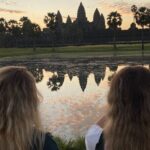
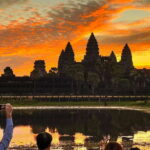
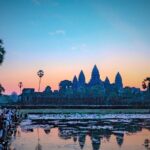
The day closes with Angkor Wat, the big one. It’s described as the abode of Hinduism’s ancient gods and the jewel of the Khmer archaeological crown. It’s also the largest of Angkor’s temples.
What makes Angkor Wat worth your last big chunk of energy is the symbolism built into the layout. It has five concentric rectangular walls and moats, symbolizing a cosmic chain of mountains and ocean. The central tower represents Mount Meru, said to be the center of the Hindu and Buddhist universe.
So when you’re at Angkor Wat, don’t only look outward. Look at the geometry:
- inner vs outer walls,
- the idea of layers moving you through the sacred space,
- the central tower as the “anchor” of the whole composition.
This stop is listed as about 3 hours, which is a gift. If you only have one temple in Angkor to enjoy properly, Angkor Wat is the one. By the time you arrive, you’ll already have context from Ta Prohm, Banteay Srei, and Angkor Thom, so the experience feels less like a random monument and more like a conclusion.
Who this private tour fits best
This tour is a strong match if you:
- want a guided day rather than navigating by yourself,
- like seeing both the famous headliners and the detailed craftsmanship of Banteay Srei,
- prefer a private setup where your group can set the pace,
- value transport support (AC vehicle, cool water, towels) during a long temple day.
It’s also a good option for groups who need flexibility. When you book a private guide, you have more ability to adjust how you move through the day. One example from a previous experience was a guide who helped a companion using crutches by arranging closer access and switching transport modes so she wouldn’t miss key sites like Ta Prohm and Angkor Wat.
If you’re traveling solo and want maximum value, you might compare this against shared tours. But if you care about comfort and explanation, the private format often pays off quickly.
Should you book this Angkor Wat and Banteay Srei day?
I’d book it if you want a well-paced “greatest hits plus craftsmanship” day with an English guide and transport support. The itinerary has a logical flow: Ta Prohm and Pre Rup set the stage, Banteay Srei gives you precision and artistry, Angkor Thom brings you into the city layout, and Angkor Wat lands the finale with big symbolism and enough time to appreciate it.
I would hesitate only if you’re trying to minimize total cost. Once you add the $37 one-day temple pass, the day becomes a bigger financial commitment. Also, if you hate walking and you don’t want to deal with stone steps and uneven surfaces, you’ll want to plan carefully and talk to your guide about mobility arrangements before the day starts.
If you like clear planning and you want your temple time to feel meaningful—not just busy—this is a solid choice.
FAQ
How long is the Private Day Angkor Wat and Banteay Srei Temple Tour?
It’s approximately 8 hours 30 minutes.
Is hotel or airport pickup included?
Yes. Pickup is offered, and the inclusions list pickup/drop-off at the airport as well.
Is this tour private or shared?
It’s private. Only your group participates.
What’s the price of the tour?
The listed price is $43.00 per person.
Do I need to buy a temple pass?
Yes. The temples pass is not included. The listing shows a 1-day pass price of $37.00 per person.
Are admission tickets included for the temples?
No. The itinerary notes that admission ticket is not included for the stops.
What’s included in the tour price?
Included items are an air-conditioned vehicle, an English tour guide, parking fees and roads tolls, cool water and towels, and pickup/drop-off at the airport.
Does the tour offer a mobile ticket?
Yes, the tour features include a mobile ticket.
What hours does the tour operate?
It lists Monday through Sunday from 8:00 AM to 4:00 PM.
What’s the cancellation policy?
You can cancel for free. The listing says you can cancel up to 24 hours in advance for a full refund.