REVIEW · SIEM REAP
Private Angkor Wat Temple Tour
Book on GetYourGuide →Operated by Travel to Inspire · Bookable on GetYourGuide
You come for the world’s biggest Hindu temple, then stay for the details. This 7-hour private Angkor tour in Siem Reap Province mixes hotel pickup with a licensed English-speaking guide, so you can focus on the stonework (and not the logistics).
I especially like the small comforts that make the heat easier to handle—cold towels and iced water are part of the flow. The main catch is that temple entry is not included, so you’ll need to handle the temple pass/tickets before you arrive.
In This Review
- Key Points Worth Your Time
- Angkor Wat: The Big First Impression You Actually Get Time For
- Angkor Thom South Gate: The Ancient Capital Starts at the Entrance
- Bayon Temple: Those Smiling Faces Make Sense When Someone Explains Them
- Ta Prohm Jungle Ruins and Spung Tree Roots
- How the 7-Hour Loop Feels: Comfort, Timing, and Real Breaks
- Price and Value: What $35 Covers (and What You Must Arrange)
- What to Bring (So Angkor Doesn’t Beat You)
- Heat, Strain, and the Routes You Should Expect
- Who This Tour Suits Best (and Who Should Rethink It)
- Should You Book This Private Angkor Wat Temple Tour?
- FAQ
- How long is the Private Angkor Wat Temple Tour?
- What temples will I visit during this tour?
- Is hotel pickup and drop-off included?
- What’s included in the price?
- Are temple tickets included?
- Where do I get the temple pass?
- Do you provide a tour guide in English?
- Is this tour private or in a group?
- What should I bring to visit the temples?
- Are shorts or sleeveless shirts allowed?
Key Points Worth Your Time
- Hotel pickup from Siem Reap Town saves you the early-morning scramble.
- Angkor Wat first, guided and unhurried with time for photos and a real walkthrough.
- Angkor Thom at the South Gate lets you connect the grand entrance to the rest of the ancient capital.
- Bayon Temple’s face towers are easier to read when someone explains what you’re looking at.
- Ta Prohm’s Spung (tree roots) is a great “wow” stop that feels like you stepped into a movie set.
Angkor Wat: The Big First Impression You Actually Get Time For
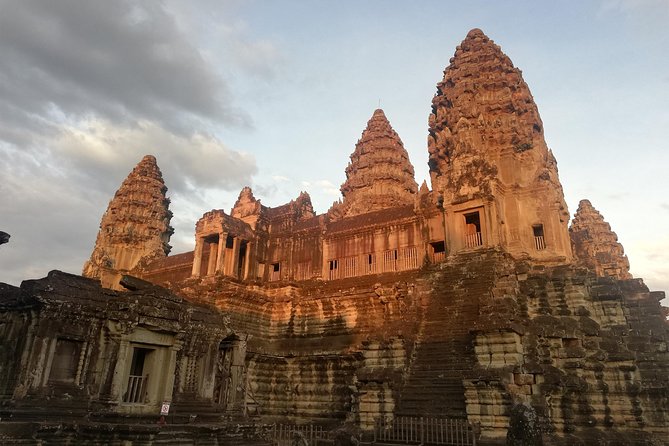
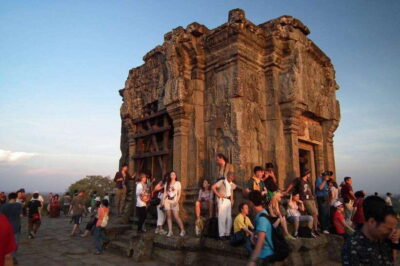
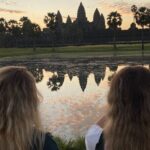
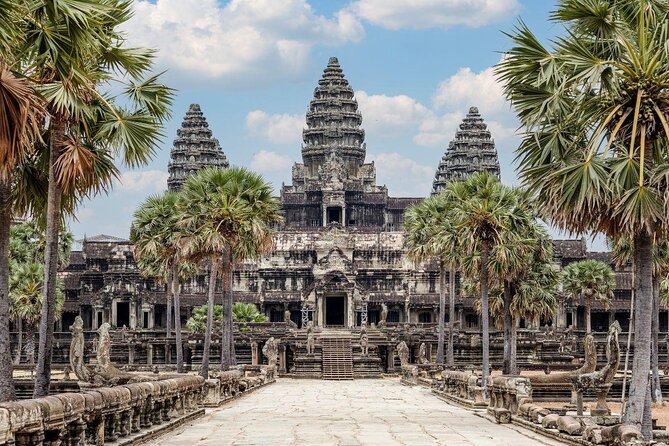
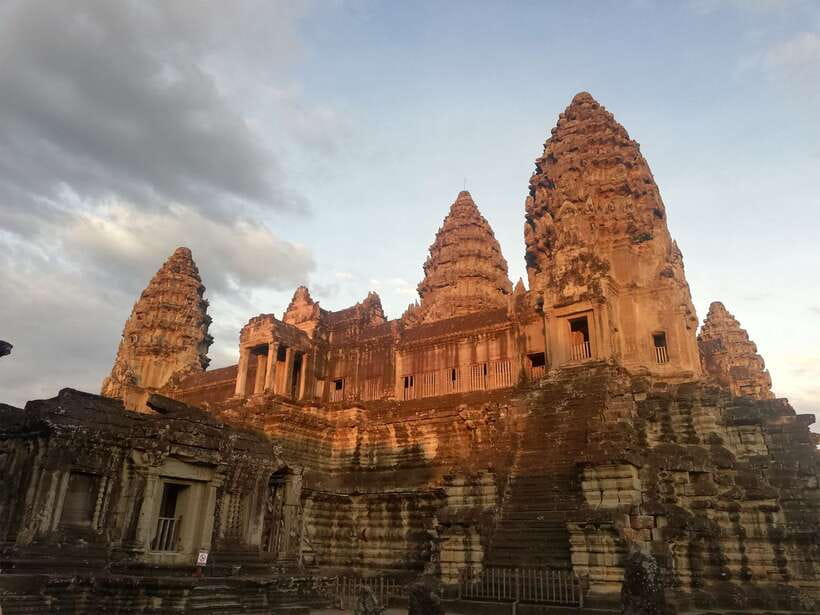
Angkor Wat is the one that makes people whisper, even when they’re not trying. Built in the early 12th century under King Suryavarman II, it’s the world’s largest Hindu temple complex—and it works at every scale: from the overall symmetry to the carvings you only notice when you slow down.
On this tour, Angkor Wat is your first major stop, with a mix of guided time, photo stops, and a break where you can reset. The tour context matters here: Angkor Wat is made of three levels and topped with five main towers reaching about 65 meters. When your guide points out how the levels relate to the layout and religious symbolism, the place stops being just “impressive” and starts making sense fast.
There’s also the modern connection you shouldn’t skip. Angkor Wat is Cambodia’s national symbol, representing the soul of the country—and it even appears on the national flag. That’s why this isn’t only an ancient monument. It’s part of daily identity, not a distant relic.
Practical note: this is also where you’ll want the right clothing. You’re walking on uneven paths and you’ll be in direct sun for stretches, so your long pants and long-sleeved shirt plan pays off quickly.
You can also read our reviews of more private tours in Siem Reap
Angkor Thom South Gate: The Ancient Capital Starts at the Entrance
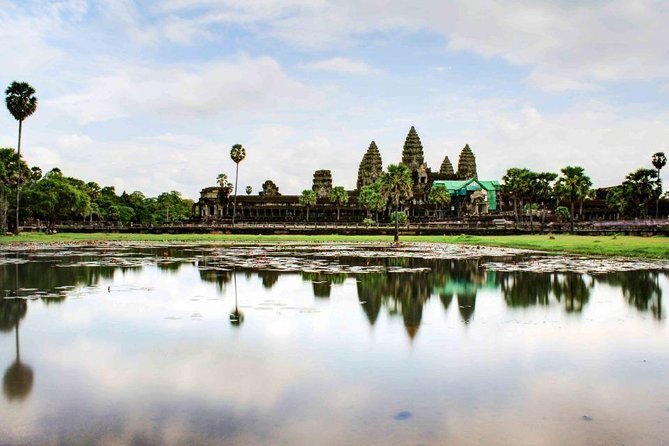
After Angkor Wat, you’ll head to Angkor Thom, the ancient capital of the Khmer Empire. The city has stood for over five centuries, so you get this feeling of arriving somewhere already “settled,” even if it’s mostly ruins now.
Your first big moment inside Angkor Thom is the South Gate. Look for the famous statue that features 54 figures on each side. It’s the kind of detail that’s hard to appreciate if you’re rushing. With a guide, you understand that the gateway isn’t just decoration—it’s part of the ceremonial approach that sets the tone for the rest of the complex.
From there, you’ll move through key areas inside Angkor Thom, including stops connected to the Royal Palace and a cluster of major ruins. Depending on how the day flows, you’ll encounter:
- Baphuon Temple
- Elephant Terrace
- Terrace of the Leper King
- The Royal Palace area
If you like architecture and want more than “left turn, right turn,” this middle section is where a good guide earns their pay. It’s also a nice rhythm break. Angkor Wat is huge and grand; Angkor Thom feels more like a living city layout that happens to be in stone.
Bayon Temple: Those Smiling Faces Make Sense When Someone Explains Them
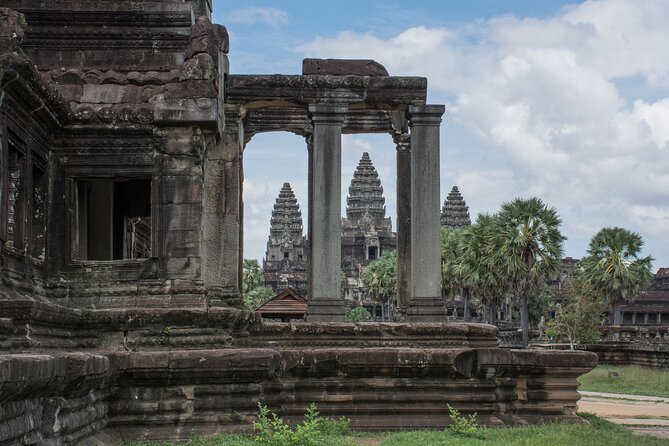
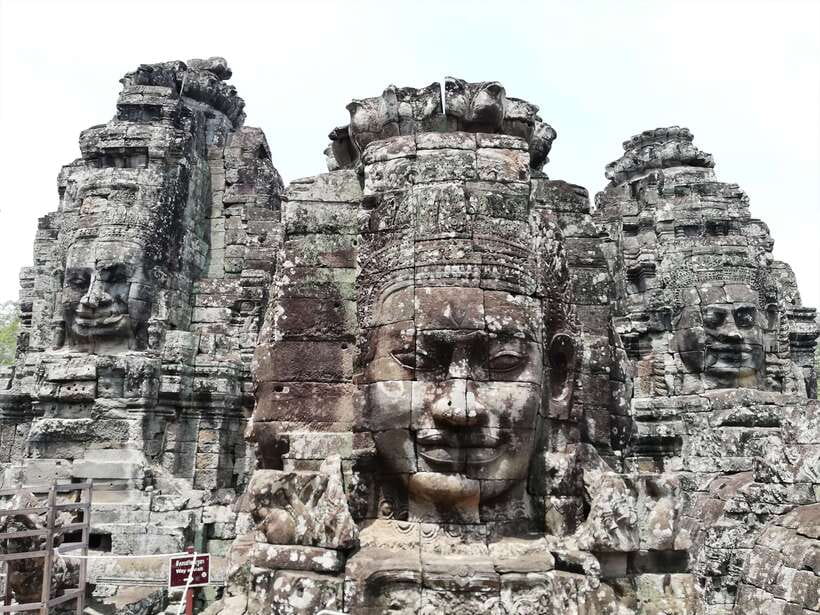
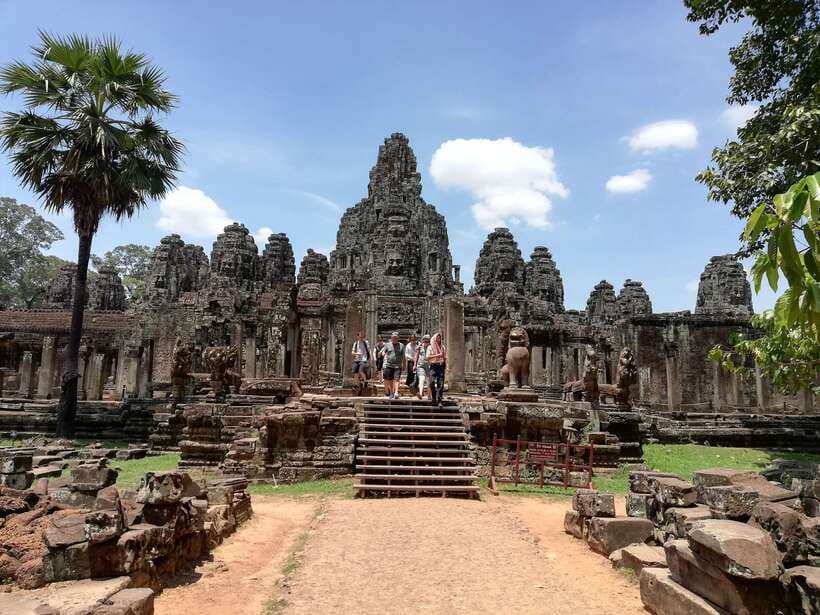
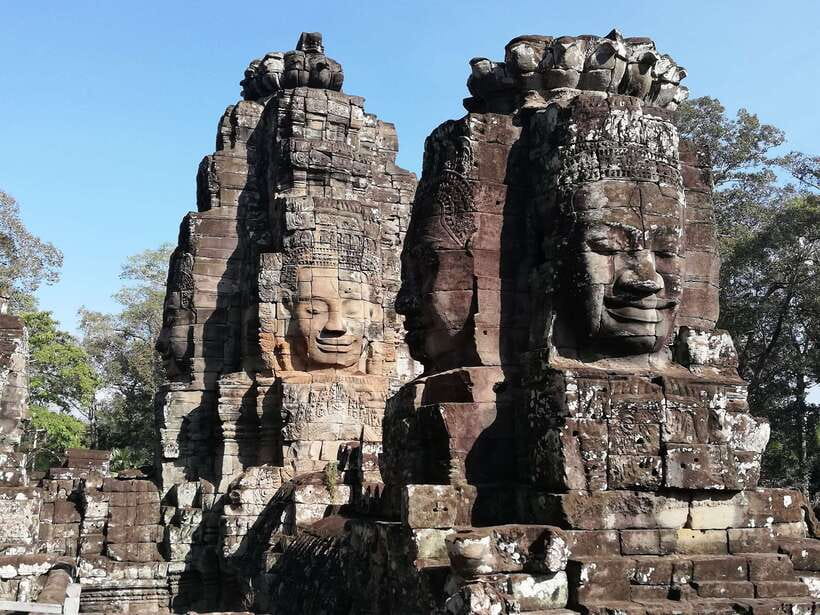
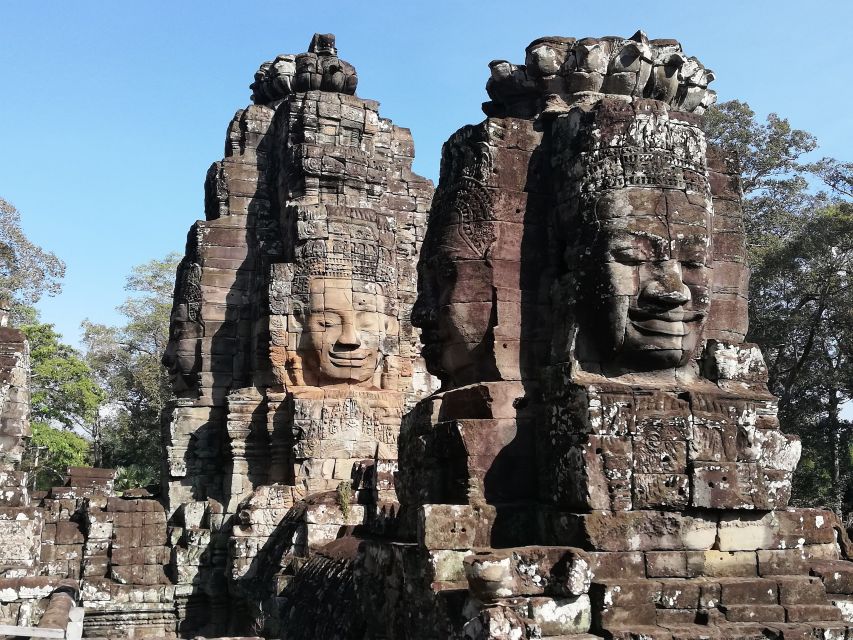
Bayon Temple is famous for its face towers—iconic smiling expressions that show up in photos everywhere. The key is understanding what you’re looking at and where to stand so you get the full effect.
This stop is shorter than Angkor Wat, with guided time plus time to pause and take photos. In about an hour, you’ll cover the main viewpoints and the areas your guide highlights so you don’t spend all your time trying to figure out which face is which.
Why Bayon hits differently than the other stops: it’s not only about size or symmetry. It’s about presence. Those faces feel like they’re watching you even as you move around the towers and corridors. With a guide explaining the context, you can focus on how the temple design guides your sightlines and your sense of scale.
Ta Prohm Jungle Ruins and Spung Tree Roots
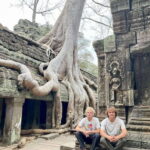
Then you switch from open stone grandeur to something closer to fantasy. Ta Prohm is known as the Tomb Raider Temple, and it earns the nickname. The ruins are woven into the jungle, with tree roots pulling through the stonework in a way that looks both natural and impossible.
This is where the tour earns its “walk this way” energy. You’ll get guided time, photo stops, and some free time to look around on your own. The centerpiece detail is the tree roots called Spung—a name that helps you talk about what you’re seeing instead of just calling it roots and moving on.
One practical reality: this is also a photo-heavy section, and it’s easy to lose time here if you’re chasing the perfect shot. Still, Ta Prohm is a great way to end the temple circuit because the setting changes the whole mood. You’re not leaving Cambodia feeling like you saw only buildings. You’re leaving feeling like you saw how nature and history share the same space.
How the 7-Hour Loop Feels: Comfort, Timing, and Real Breaks
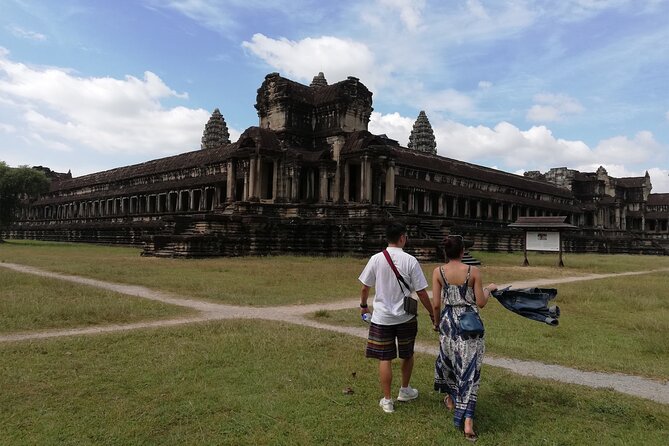
This tour is built around a simple rhythm: van ride, temple stop, brief break, then back to the van. You’ll be on the road for short stretches (around 10–18 minutes between stops), and the total day is paced so you’re not stuck in one place all morning.
That timing matters at Angkor. The heat can turn a “quick visit” into a miserable slog if you didn’t plan for it. This is why the small comfort items show up during the transfers—cold face towels and iced water help you reset before the next walk. It’s the kind of detail that doesn’t sound huge until you’re standing in direct sun.
Also, pickup and meeting flow is designed to be easy. Pickup is included from any hotel in Siem Reap Town. You wait in the lobby about 10 minutes before pickup, show your voucher, and the driver waits no longer than 5 minutes after the scheduled time. That means fewer missed pickups and less stress.
Group size is flexible: you can go private or in a small group. A smaller group tends to feel more personal at Angkor, where you’ll appreciate a guide who can answer questions without rushing the whole schedule.




Price and Value: What $35 Covers (and What You Must Arrange)
At $35 per person for a 7-hour tour, the value is mostly in the included basics:
- Hotel pickup and drop-off
- Drinking water
- A licensed English-speaking tour guide
What’s not included is just as important:
- Temple tickets/pass (you’ll need this to enter)
- Meals
- Travel insurance
- Tipping for the guide and driver (recommended)
Here’s the key part you shouldn’t ignore: you need the temple pass before you enter temples, and you can buy online from Angkor Enterprise dot gov dot kh. So even if the tour price feels low, your cost will rise once you add temple entry. The good news is that handling the pass in advance makes the day smoother.
Bring cash as well. It’s useful when you’re doing anything temple-related on the ground, and it helps if you run into last-minute costs like snacks or small essentials.
What to Bring (So Angkor Doesn’t Beat You)
This tour sets you up for comfort, but you still need to dress correctly and pack smart.
Bring:
- Comfortable shoes
- A hat
- Water
- Comfortable clothes
- A long-sleeved shirt and long pants
- Cash
- A charged smartphone
Not allowed:
- Shorts or short skirts
- Sleeveless shirts
- Drones
- Alcohol and drugs
- Chewing gum
- Fireworks or making fire
Why this matters: Angkor sites are strict, and the rules aren’t just about “respect.” They’re about access. If your outfit doesn’t match the dress code, you can lose time before you even get inside.
On the day, plan for real walking. Even when each stop includes breaks, you’re moving through uneven surfaces. If you’re going to take photos, you’ll be stopping, standing, and stepping around regularly.
Heat, Strain, and the Routes You Should Expect
Angkor is a big sight. Even with a guide and a van between stops, you’ll still feel the day. One piece of real-world context from the tour experience: people have handled hot conditions (38°C was mentioned), and the comfort touches like cold towels and iced water help, but they don’t remove the need for basic heat management.
So if you’re prone to overheating, treat this like an outdoors day, not a museum trip. Use your hat, wear breathable layers, and drink water early. Don’t wait until you’re tired to start hydrating.
Also, Ta Prohm and some of the Angkor Thom areas involve rough terrain. If you don’t enjoy uneven stone, bring extra patience.
Who This Tour Suits Best (and Who Should Rethink It)
This tour is a strong fit if you want:
- Easy logistics with pickup and drop-off
- A guide who explains what you’re seeing, not just where to stand
- A “main temples” route that’s efficient but not too rushed
It may be a tough choice if you:
- Are pregnant
- Use a wheelchair
- Have had recent surgeries
That’s not about attitude—it’s about walking and uneven ground. If any of those apply to you, ask about alternatives before you book.
Should You Book This Private Angkor Wat Temple Tour?
If you want the classic Angkor circuit—Angkor Wat, Bayon, Ta Prohm, and Angkor Thom—with comfort and guidance, this is a solid pick. The biggest reason to book is the balance: you get structure (guided walkthroughs) plus time to look around and take photos, and the van transfers keep the day manageable.
Before you hit reserve, do two things:
1) Make sure your temple pass plan is done in advance via Angkor Enterprise.
2) Pack for hot-weather rules and walking—long pants, long sleeves, hat, shoes.
If those two are handled, this tour is a smart value way to see the Khmer masterpieces without turning your day into a logistics puzzle.
FAQ
How long is the Private Angkor Wat Temple Tour?
The tour lasts 7 hours.
What temples will I visit during this tour?
You’ll visit Angkor Wat, Bayon Temple, Ta Prohm Temple, and Angkor Thom (including several sites within the complex).
Is hotel pickup and drop-off included?
Yes. The tour includes hotel pickup and drop-off from Siem Reap Town.
What’s included in the price?
Included features are hotel pickup and drop-off, drinking water, and a licensed English-speaking tour guide.
Are temple tickets included?
No. Temple tickets are not included, and you need a temple pass to enter the temples.
Where do I get the temple pass?
You can buy it online from Angkor Enterprise dot gov dot kh before you enter the temples.
Do you provide a tour guide in English?
Yes. The tour includes a licensed English-speaking tour guide, and the tour guide languages also include French, German, and Spanish.
Is this tour private or in a group?
It’s available as private or small groups.
What should I bring to visit the temples?
Bring comfortable shoes, a hat, water, comfortable clothes, a long-sleeved shirt, long pants, cash, and a charged smartphone.
Are shorts or sleeveless shirts allowed?
No. Shorts, short skirts, and sleeveless shirts are not allowed.