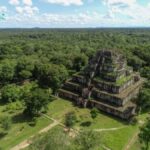
Ancient stone, made understandable fast. This private 3-day Angkor experience in Siem Reap strings together major Khmer sites and a real look at life on Tonle Sap, with a local English-speaking guide walking you through what you’re seeing.
I love the private, English-speaking guide approach because it turns crowded ruins into a clear story you can follow. I also like the temple mix here: you start with more delicate, smaller sanctuaries and work up to big-impact names like Bayon and Angkor Wat, so the contrasts stay interesting instead of feeling repetitive.
One thing to consider: the temple tickets and Tonle Sap boat fee are not included, so your final out-of-pocket cost is higher than the $110 tour price once you add those line items.
In This Review
- Key highlights before you go
- Entering the Angkor story with a private guide
- Day 1: Banteay Srei, Ta Som, Neak Pean, and Preah Khan
- Day 2: Angkor Thom South Gate, Bayon faces, and Ta Prohm’s roots
- Day 3: Tonle Sap floating village and the crafts of Les Artisan D’Angkor
- Price and value: what the $110 doesn’t include
- Who this tour suits best (and who might want something else)
- Practical takeaways for planning your days in Siem Reap
- Should you book this private 3-day Angkor temples tour?
- FAQ
- What’s included in the $110 tour price?
- Are temple tickets included?
- How much does the Tonle Sap boat visit cost?
- Is this a private tour or shared group?
- Does the itinerary include any activities with admission included?
- Can I cancel for a full refund?
Key highlights before you go
- Private transportation with A/C keeps the long temple days more bearable.
- Hotel pickup and drop-off saves time and makes the route feel easy.
- A temple-focused 3-day route hits classics like Bayon, Ta Prohm, and Angkor Wat.
- Small sculpted sites in Day 1 give you a chance to see the Khmer style up close.
- Tonle Sap floating village by boat adds daily-life context beyond temple walls.
- Les Artisan D’Angkor included lets you watch traditional wood/stone carving and other crafts.
Entering the Angkor story with a private guide
Angkor Archaeological Park preserves the remains of several Khmer capitals from the 9th to the 15th centuries, and it’s often described as the largest pre-industrial city in the world. The tricky part is that these sites can feel like a pile of stone unless someone connects the dots. That’s where this tour’s format helps: it’s private, so you’re not squeezed into someone else’s pace or forced to guess what everything means.
Your guide is there to explain the temples as you move between them, including how different rulers shaped what got built. In one standout review, the guide Mr. Buth Chansip was praised for an educational background that gave deep insight across the temple stops over three days. That kind of explanation matters most at Angkor, because so much of the detail is carved for a reason, not just decoration.
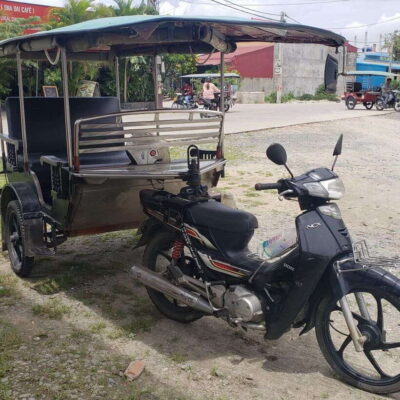
The other quiet advantage is logistics. You’re picked up at your hotel and transported privately with A/C, which is practical in Siem Reap’s heat and humidity. When you’re bouncing between sites all day, comfort isn’t a luxury; it’s part of whether you enjoy the experience or just endure it.
You can also read our reviews of more private tours in Siem Reap
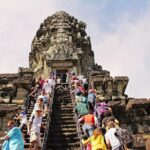
Day 1: Banteay Srei, Ta Som, Neak Pean, and Preah Khan
Day 1 is a smart way to start. Instead of beginning with the biggest monument first, you ease into the Khmer aesthetic with sites known for craftsmanship and distinctive layouts.
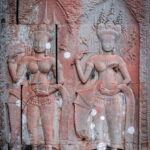
Banteay Srei (10th century) is treated as a highlight, often described as the jewel in classical Khmer art. The details you’re meant to notice here are the intricate carving and the pinkish sandstone tone. If you’re the type who likes to slow down and look at textures and patterns, this stop sets your eye up well for the rest of the journey.
Next is Ta Som, a late 12th-century site built in the Bayon style by Jayavarman VII, described here as Buddhist. This matters because it shifts you from the classical vibe of Banteay Srei into the era when Buddhist symbolism and Bayon-style features show up more clearly in the Angkor landscape.
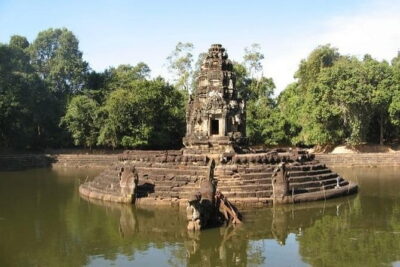
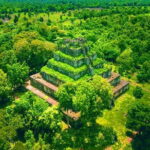
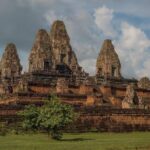
Then you visit Neak Pean, a smaller island temple in the middle of a baray (a reservoir) area. It’s not about scale; it’s about setting. The fact that it’s on an island-like spot makes it feel different from the main temple piles, and it helps you understand that the Khmer complex was never only about buildings. Waterworks and sacred geography were part of the plan.
After lunch, you move to Preah Khan, described as a huge and highly explorable monastic complex also built by Jayavarman VII in the late 12th century. This is where the day starts to broaden. Even with the time you have, you’ll feel the difference between a carefully finished small temple and a larger complex meant for ongoing religious and community life.
Day 1 is also a pacing test. The stops range from about 30 to 60 minutes, so you won’t be stuck waiting in a long line for one site, but you also won’t have hours to wander without guidance. For most people, that’s a good balance: it keeps your energy for the temples that need your attention most.
Day 2: Angkor Thom South Gate, Bayon faces, and Ta Prohm’s roots
Day 2 is where the tour leans fully into the famous Angkor icons. It’s also where your guide’s explanations can make a big difference, because these sites are instantly recognizable yet still hard to read without context.
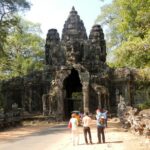
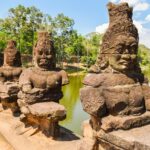
You begin at Angkor Thom South Gate, with a striking mythic scene on both sides. On the left side, 54 guardian gods (devas) pull the head of the snake Shesha; on the right side, 54 asuras pull the snake’s tail. The value here isn’t just seeing the figures—it’s understanding that the gate imagery is telling a story, not just decorating a doorway.
Then comes Bayon, one of the most visually memorable temples in the entire park. You’ll be looking at over 2000 large faces carved on 54 towers. The bas-reliefs are described as featuring genre scenes of everyday life: markets, fishing, festivals (including cockfights), and even jugglers. That’s a key reason this stop works so well on a guided route. You’re not only staring at stone faces; you’re connecting them to daily life imagery and the kinds of events that mattered.
After that, you visit Baphuon (1060, dedicated to Siva in a Hindu context) and Phimeanakas (late 10th to early 11th century, dedicated to Hindu gods). These two stops help round out the religious shifts across different rulers. Even without getting technical, you’ll start to notice how temple purpose and icon focus can change from one site to the next.
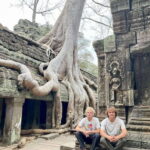
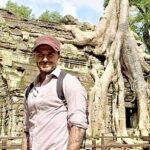
Next is Ta Prohm, often called the Jungle Temple. In this route, it’s framed as an ethereal, romantic-feeling scene because the temple is surrounded by dense jungle growth, with fig, banyan, and kapok tree roots spreading over the stones. The practical takeaway is that you’ll get a very different Angkor mood here. It’s still Khmer architecture, but nature is visibly part of the composition.
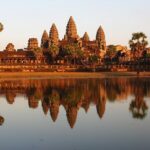
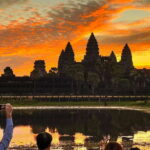
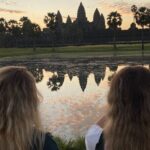
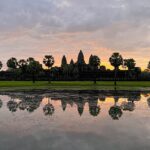
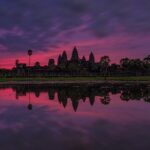
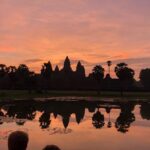
In the afternoon, the tour ends (or peaks) at Angkor Wat. It’s described as first Hindu, then later Buddhist, and as the largest religious monument in the world. The builder credited in your itinerary is Suryavarman II in the early 12th century. You’ll typically spend several hours here, and that longer time is important. Angkor Wat is the kind of site where you can’t just skim and move on; you need a bit of time to let the layout and major features sink in.
If you’re worried about overwhelm, this day is also a good reason to choose a private guide. With a fixed schedule, you still get a focused path through sites that are otherwise too big to process at once.
Day 3: Tonle Sap floating village and the crafts of Les Artisan D’Angkor
Day 3 adds a valuable contrast. If the first two days are about sacred stone and empire-scale monuments, the third is about modern life in the shadow of Angkor’s broader region.
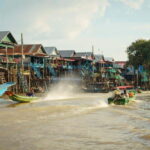
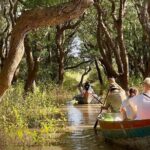
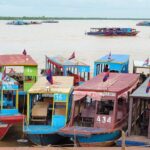
First up is Chong Kneas Floating Village on Tonle Sap lake. You take a boat to see the real lifestyle of three community groups: Cambodia, Cham, and Vietnam. The tour frames this visit as a look at everyday living—how people live around the water—rather than another temple stop.
Then you head to Les Artisan D’Angkor, a fine art school and workshop where wood and stone carving are taught, along with lacquering, silver plated work, and silk painting. Admission is listed as included, and that’s a meaningful detail. You’re not just watching from the outside; you’re visiting a place connected to skill-building and craft practice.
This combination can be a relief if you start feeling temple fatigue. It also makes your whole trip feel more grounded. You go home with more than only photos of ruins—you get a sense of how the region’s culture continues through art, making, and community life.
Price and value: what the $110 doesn’t include
The advertised price is $110 for the private 3-day tour (approx.). What you get in that base price is solid: private transportation with A/C, a private English-speaking guide, drinking water, hotel pickup and drop-off, and travel insurance.
But the key financial detail is this: temple entry and the boat ride cost extra. The temple ticket is listed as $62 per person, and the Tonle Sap boat fee is $15 per person. Meals and beverages aren’t included either.
So if you’re trying to plan your budget realistically, the tour price plus the two main add-ons comes to:
- $110 (tour) + $62 (temple ticket) + $15 (boat fee) = $187 per person, before meals.
That’s why I think it’s good value for the right traveler. You’re essentially paying for private logistics and interpretation across multiple major sites. If you’d otherwise be doing temples on your own with separate tickets and transport, the “pay for convenience” part can still feel worth it—especially because the route is dense and the guide is there to keep it understandable.
You can also read our reviews of more tours and experiences in Siem Reap
Who this tour suits best (and who might want something else)
This is best for you if you want:
- A structured route through Angkor rather than planning each day yourself.
- A guide who can explain major sites like Bayon’s carved faces and Angkor Wat’s religious evolution.
- Private transportation and hotel pickup because you like a smooth day.
It may not be ideal if you:
- Want to spend extra time lingering at one place for long stretches. Several stops are relatively short in duration, so the schedule favors coverage and variety.
- Are very price-sensitive once you add the temple ticket and boat fee. You can manage it by budgeting from day one, but it won’t match the base $110 “sticker price” once you reach the entry points.
Practical takeaways for planning your days in Siem Reap
A few practical things to know so you can focus on the experience itself.
First, you’ll be using a mobile ticket for this activity. That’s helpful for keeping things organized on the go.
Second, your guide and transportation are set up for a multi-stop route. That means you’re not negotiating cabs between distant sites or guessing what order makes the day work.
Third, understand the difference between included and not included. Drinking water is included, but meals and beverages are not. Temple tickets and the Tonle Sap boat fee are separate. If you plan for those costs early, you’ll feel less surprised mid-trip.
Finally, this route is private, meaning it’s only your group. That matters if your group has different needs—whether you like photo stops more often or prefer a faster pace.
Should you book this private 3-day Angkor temples tour?
I’d book this tour if you want a clear, guided path through Angkor’s biggest icons and you also care about context, not only sightseeing. The strongest reasons are the private setup, the English-speaking guide, and the way the itinerary balances famous monuments (Bayon and Angkor Wat) with distinct contrasts (Ta Prohm’s roots and Neak Pean’s water setting, plus Tonle Sap life on Day 3).
I’d hesitate only if you’re trying to keep costs to the absolute minimum, because the temple ticket and boat fee add up quickly. If you budget for the full total and accept a fixed schedule that favors variety over long lingering, this tour is a very efficient way to get meaning out of Angkor in just three days.
FAQ
What’s included in the $110 tour price?
The price includes private transportation with A/C, a private English-speaking tour guide, drinking water, hotel pick up and drop off, and travel insurance. The tour also uses a mobile ticket.
Are temple tickets included?
No. Temple tickets are listed as not included and cost $62 per person.
How much does the Tonle Sap boat visit cost?
The boat fee to Tonle Sap (for the Chong Kneas floating village visit) is listed as not included and costs $15 per person.
Is this a private tour or shared group?
It’s a private tour/activity, meaning only your group participates.
Does the itinerary include any activities with admission included?
Yes. Admission for Les Artisan D’Angkor is listed as included.
Can I cancel for a full refund?
Yes. There’s free cancellation up to 24 hours in advance of the experience start time for a full refund.