REVIEW · SIEM REAP
Preah Khan, Neak Pean and Pre-Rup Private Tour
Book on Viator →Operated by Journey2 Angkor · Bookable on Viator
Outside Angkor Wat, things get real.
This private half-day route mixes big temple walls with quieter, more curious spots around reservoirs. You’ll visit Preah Khan (a UNESCO-listed complex), then head to the serpent-laced Neak Pean and the jungle-leaning Ta Som, with a guide who ties names and symbolism to what you’re actually seeing. The main catch: the Preah Khan entrance fee is not included and is listed separately at $37 per person.
What I like most is the flow. You’re not stuck in a single mega-site for hours—you’re getting several different temples (and settings) in about 4 to 5 hours, which makes it ideal as a second-day plan in Siem Reap. I also like the practical setup: hotel pickup/drop-off, an air-conditioned vehicle, and bottled water help you stay comfortable while Cambodia’s heat does its thing.
One consideration: because Preah Khan admission is separate, your total day cost will be a bit higher than the $41 rate alone. If you’re budgeting tightly, it’s worth factoring that in before you book.
In This Review
- Key highlights worth marking on your day
- Outside Angkor Wat, the temples feel more human
- Preah Khan (Royal Sword): the story starts with Jayavarman VII
- Neak Pean and Ta Som: water temples and jungle edges
- East Mebon: a dry reservoir setting with a temple on the island
- Srah Srang and Pre Rup: water architecture and temple-mountain views
- The guide matters: Sim’s angle is what makes the stones readable
- Price and tickets: where the real value is
- Timing and comfort: how to make 4–5 hours feel like less
- Who this tour fits best
- Should you book this private tour?
- FAQ
- What is the duration of the Preah Khan, Neak Pean and Pre-Rup private tour?
- What does the tour cost per person?
- Is hotel pickup and drop-off included?
- Is there an English-speaking guide?
- Is entrance fee included for all temples?
- Which temples are included in the itinerary?
- Is this a private tour?
- Is bottled water included?
- Can I cancel for a refund?
Key highlights worth marking on your day
- Private, only-your-group experience with an English-speaking guide
- Preah Khan included in the route, but admission is paid separately
- Neak Pean and Ta Som have free admission on this itinerary
- Reservoir temples: Neak Pean sits on an artificial island in the water landscape
- Smart half-day timing: about 4 to 5 hours across six temple stops
- Guide Sim gets praised for helping you connect the stories to the stone
Outside Angkor Wat, the temples feel more human

Most first-time Angkor schedules try to cram in the headline sights. This tour is a smart alternative because it leans into the same royal era, but in a different mood—less about the famous silhouette, more about the original design logic of the Angkor world.
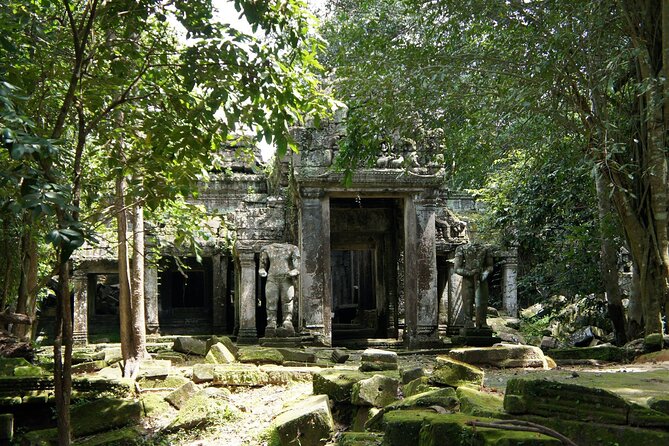
Preah Khan sets the tone. Built in the 12th century by King Jayavarman VII to honor his father, it’s part of the Angkor temple system and offers the kind of layout that rewards slowing down for details. Then the route shifts. Instead of staying in one “city temple” zone, you move through spaces that were designed around water and forest edges—Neak Pean, Ta Som, and the surrounding reservoir sites.
This is also a good pacing choice if you’ve already done Angkor Wat and want variety. You’ll still be in the Angkor area, but the temple experience feels broader because you’re covering multiple temples and settings in one trip.
You can also read our reviews of more private tours in Siem Reap
Preah Khan (Royal Sword): the story starts with Jayavarman VII
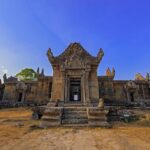
Your first stop is Preah Khan, a massive 12th-century temple in the Angkor area. It was built by Jayavarman VII in honor of his father, and that royal backstory matters here. When you know why a complex was created, the structure feels less like random ruins and more like a deliberate statement.
Plan for about an hour. That’s long enough to get oriented and see how the temple plan unfolds through successive rectangular galleried spaces. It’s also long enough to appreciate how large the complex is without turning the day into a stamina contest.
One practical note: Preah Khan’s entrance fee is not included. The tour listing sets it at $37 per person, so treat this first stop as the spot that drives your total cost up.
Neak Pean and Ta Som: water temples and jungle edges
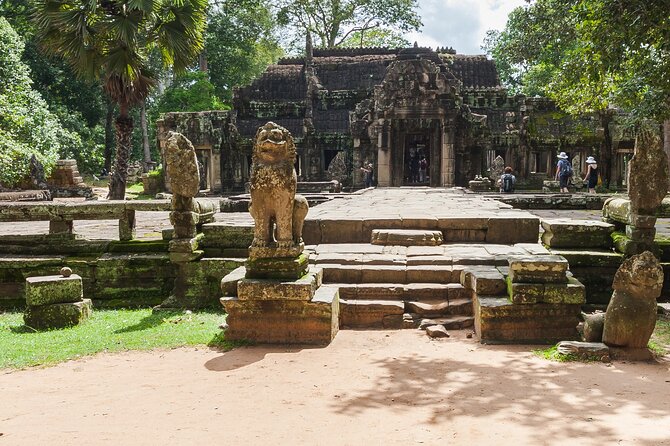
After the main complex, the day changes gear with Neak Pean. This one is built on an artificial island in the middle of a reservoir connected to Preah Khan. You’re basically walking into a designed “water world,” which is a huge part of why Neak Pean is such an interesting contrast.
Neak Pean is typically given about an hour, and the listing says admission here is free. That makes it a nice value move inside the tour—your money and time go further because you’re not paying extra at every stop.
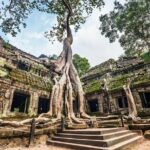
Then comes Ta Som, a smaller temple at Angkor built at the end of the 12th century for Jayavarman VII. It sits northeast of Angkor Thom and just east of Neak Pean. This is the stop where you’ll notice the atmosphere more than the scale. Even though it’s brief on the schedule (about 30 minutes), Ta Som often feels memorable because it reads like a temple caught between stone and jungle.
Admission for Ta Som is listed as free on this itinerary, which helps keep your spending predictable.
East Mebon: a dry reservoir setting with a temple on the island
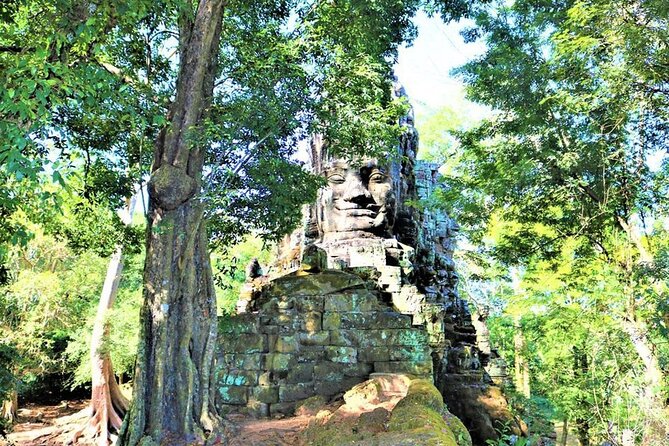
Next you’ll go to Eastern Mebon, built in the 10th century by King Rajendravarman. It stands on what used to be an artificial island at the center of the East Baray reservoir. The reservoir itself is now dry, but the “island” concept is still visible in how the temple sits within the old water geography.
This stop runs about 40 minutes. That timing is useful because it gives you enough minutes to notice the placement and not just snap photos and rush out. If you like temples that feel tied to geography—water systems, embankments, and planned spaces—East Mebon is a strong match.
Admission for Eastern Mebon is listed as free here.
Srah Srang and Pre Rup: water architecture and temple-mountain views
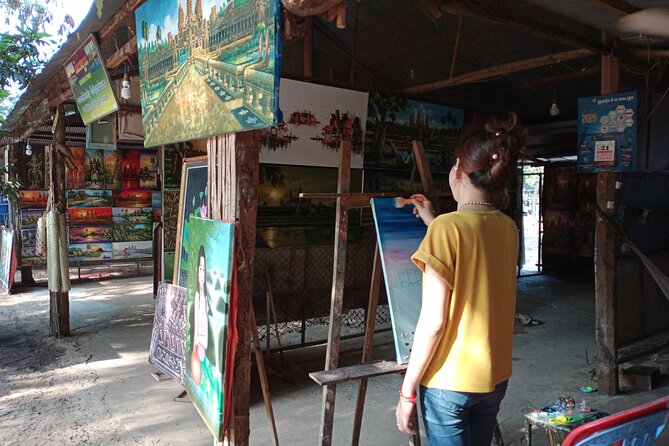
After the reservoir island stop, you shift again to two iconic Angkor forms: the water reserve and the temple mountain.
First, Srah Srang. It’s a large water basin dug in the mid-10th century by a Buddhist minister of Rajendravarman II, and later modified around the year 1200 by Jayavarman VII. The tour gives it about 20 minutes. Short as it is, this is the kind of stop where your guide’s explanation can turn a simple basin into a meaningful clue about how kings used public spaces.
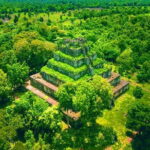
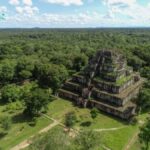
Then you finish with Pre Rup, built by Rajendravarman in the 10th century. It’s described as a temple mountain made from brick, laterite and sandstone. The name Pre Rup means something like tumbled/modern idea in the listing context, and what matters for you is the shape. Temple-mountains are meant to feel like stepping closer to the sacred, and Pre Rup does that through its layered form.
Pre Rup is scheduled for about 40 minutes and is listed as free on this tour. That means you end the day without surprise fees stacking up.




The guide matters: Sim’s angle is what makes the stones readable
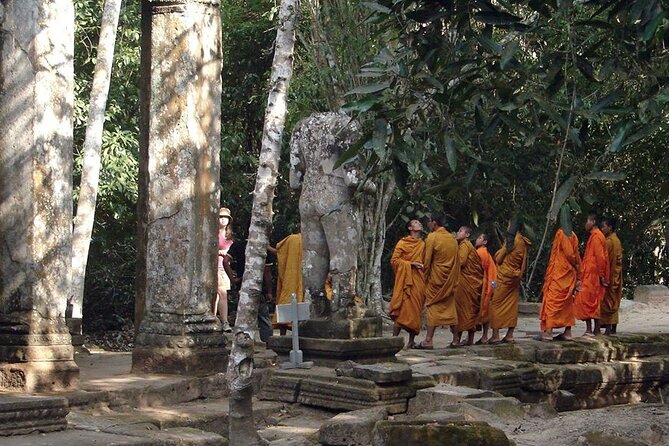
This tour isn’t just a route; it’s a translation layer between you and the temple design. The reviews highlight Sim as a stand-out guide in this exact Angkor sub-route, and that lines up with what I’d look for if I were choosing this kind of tour: someone who can connect royal names and temple purpose to what you’re walking past.
Sim is praised for helping people understand what’s outside the usual Angkor Wat box. That’s exactly what this itinerary is trying to do. You’re seeing Preah Khan’s royal intent, Neak Pean’s water symbolism, Ta Som’s forest-influenced atmosphere, and then the reservoir and temple-mountain contrast with East Mebon, Srah Srang, and Pre Rup.
In practical terms, a good guide helps you avoid a common Angkor mistake: treating everything like a photo stop. With the right explanation, you start noticing patterns—temple layout logic, water planning, and why the complex exists in that specific place.
Price and tickets: where the real value is
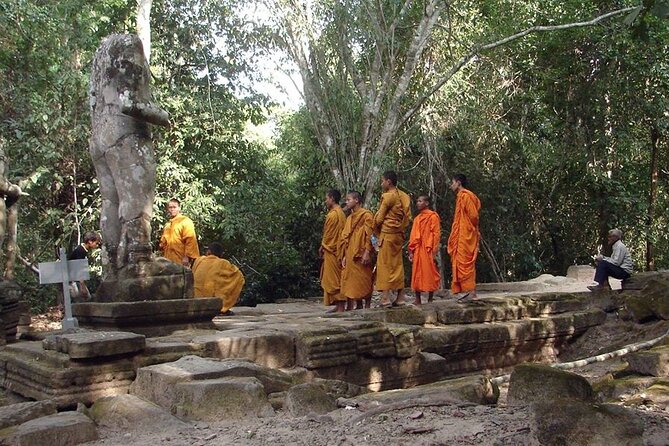
The listed price is $41 per person for the private tour, scheduled for about 4 to 5 hours. What you get for that rate is meaningful for Siem Reap: an English-speaking guide, a private air-conditioned vehicle, bottled water, and hotel pickup/drop-off.
But here’s the math you should do before you book:
- Tour base price: $41
- Not included: Preah Khan entrance fee = $37 per person
So, your likely total for the main paid entry point is around $78 per person, assuming you only pay what’s listed as separate. Other stops (Neak Pean, Ta Som, Eastern Mebon, Srah Srang, Pre Rup) are listed as free admissions on the itinerary.
That mix is the value: you’re paying for one major ticket and then moving through multiple free stops. If your day would otherwise include extra paid entries across several temples, this route can actually be cost-smart.
Also, this is a private format. Even if you’re traveling solo, you’re not sharing the vehicle with strangers in a way that forces you to rush. That’s a big deal when temple sites get hot and walking time matters.
Timing and comfort: how to make 4–5 hours feel like less
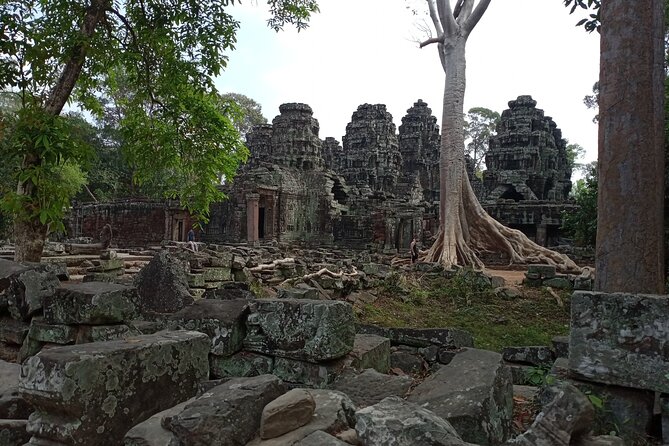
This itinerary is short enough to feel doable, but long enough to make it worthwhile. The tour is structured in blocks—Preah Khan about an hour, Neak Pean about an hour, Ta Som about 30 minutes, East Mebon about 40, Srah Srang about 20, and Pre Rup about 40. That rhythm helps you keep focus instead of fading halfway through.
You’ll have bottled water, and the vehicle is air-conditioned. That matters because the Angkor area can wear you down quickly, and breaks between sites are just as important as the temple time.
My tip for keeping it enjoyable: treat the first stop (Preah Khan) as your deep-attention zone, then let the day lighten up with the reservoir and jungle-temple contrasts. With this itinerary, that shift is built in.
Who this tour fits best
I think this tour is a strong match if:
- you already did Angkor Wat and want outer Angkor temples with different settings
- you like a guide who explains why temples look the way they do, not just where they are
- you want a half-day plan that doesn’t turn into a full-day slog
It may be less ideal if:
- you’re trying to minimize all ticket costs, since Preah Khan admission is an extra line item
- you prefer only the biggest, most famous Angkor sites without moving across several temple types
Should you book this private tour?
If you want a practical second-day Angkor plan with variety—royal temple architecture, water-designed symbolism, and a jungle-toned smaller temple—this one is easy to like. The route also offers a good balance of paid and free admissions, which helps your budget stay under control.
I’d book it if you care about understanding what you’re seeing. The experience works best when you’re ready to read the stone with your guide, and the route is built to make that learning feel natural.
FAQ
What is the duration of the Preah Khan, Neak Pean and Pre-Rup private tour?
The tour lasts about 4 to 5 hours.
What does the tour cost per person?
The price is $41.00 per person.
Is hotel pickup and drop-off included?
Yes, hotel pick up and drop off are included.
Is there an English-speaking guide?
Yes, the tour includes an English speaking tour guide.
Is entrance fee included for all temples?
No. Preah Khan entrance fee is not included and is listed as $37.00 per person. Other listed stops on the itinerary are listed as free.
Which temples are included in the itinerary?
The tour includes Preah Khan, Neak Pean, Ta Som, Eastern Mebon, Srah Srang, and Pre Rup.
Is this a private tour?
Yes. Only your group will participate.
Is bottled water included?
Yes, bottled water is included.
Can I cancel for a refund?
You can cancel up to 24 hours in advance for a full refund. Cancellation less than 24 hours before start time is not refundable.