REVIEW · SIEM REAP
Guided Private Tuk Tuk Tour Angkor Wat and Small Circle and Five Extras
Book on Viator →Operated by Angkor-Travel Tours · Bookable on Viator
Two Angkor Wat moments change your day. This intense early-start private tuk-tuk loop is built to beat crowds and squeeze in the right lighting, with Angkor Wat on your agenda twice. I especially love the Angkor Wat twice rhythm and the private English guide who helps you understand what you’re seeing while the driver waits nearby.
One thing to consider: this is a long, active day, with an 11–13 hour schedule, a 3.5 km walk in Angkor Thom, and steep steps at Ta Keo. If you want a slow, sleepy Angkor stroll, this may feel like too much.
In This Review
- Key Things I’d Prioritize on This Tour
- Why This Tuk Tuk Small-Circle Variant Feels Smarter Than the Standard Loop
- Price, Tickets, and the Real Cost You Should Budget
- The 6:30am Head Start: How the Route Uses Morning Light
- Angkor Wat from East Gate, Then Back for Late Afternoon Pond Reflections
- Prasat Kravan and Prasat Bat Chum: Short Stops That Teach You to Look
- Srah Srang Lunch Break: A Temple-Reservoir Setting With Real Options
- Banteay Kdei and Ta Prohm: The Jungle Temple Contrast, Without the Chaos
- Ta Nei on Gravel Roads: The Extra Stop That Breaks the Crowd Pattern
- Ta Keo, Spean Thma, Chau Say Tevoda, and Thommanon: A Route of “Why This One Matters”
- Mangalartha and Speeds You Can’t Ignore: Small Temples, Big Payoff
- The Angkor Thom Walk: Victory Gate Views and a 3.5 km Stretch
- The Prasat Chrung Corner Temples: What You See During the Hike
- Second Visit to Angkor Wat Plus Wat Thmey: A Meaningful Reset
- Who This Tour Fits Best (and Who Should Rethink It)
- Should You Book This Guided Private Tuk Tuk Tour?
- FAQ
- How long is the tour?
- What time does it start?
- Is pickup included?
- Is this tour private?
- Are Angkor tickets included in the price?
- How much is the Angkor Ticket?
- Is lunch included?
- What extra experiences are included besides the main circuit?
- Is there hiking involved?
- What is the cancellation policy?
Key Things I’d Prioritize on This Tour
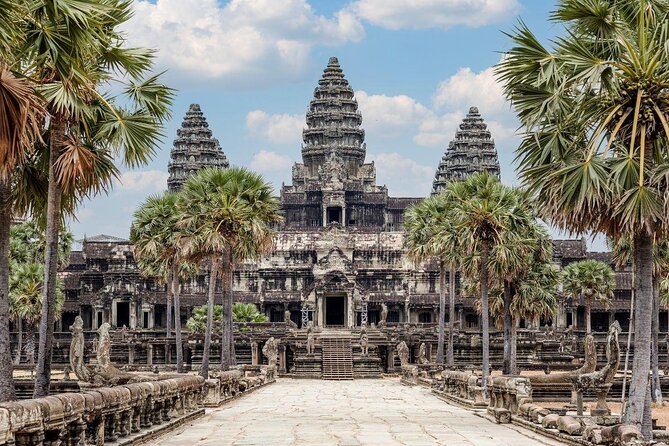
- 6:30am start to hit Angkor Wat while the day is still fresh
- Angkor Wat twice for both morning views and late-afternoon pond reflections
- Small, lesser-seen temples that break up the usual “same 5 stops” pattern
- 3.5 km hike in Angkor Thom through quieter city-wall areas
- Ta Nei on gravel roads for that Indiana Jones feeling (without needing a motorbike)
- Wat Thmey Killing Fields as a short, respectful stop that doesn’t eat your day
Why This Tuk Tuk Small-Circle Variant Feels Smarter Than the Standard Loop
This isn’t a relaxed hop-on hop-off day. It’s a deliberate route that treats the early hours like a tool, not a sacrifice. You leave at 6:30am for a reason: you’ll reach Angkor Wat in the best morning light and see parts of the complex before most tour groups arrive.
What makes it work is the private setup. You’re not waiting around for other people’s photos, and your guide leads you through each site while the driver stays put at the car park. That means less time “in transit,” more time inside temples where a good explanation changes everything.
The trade-off is stamina. You’ll walk between stops, climb when needed, and cover a lot of ground across different temple zones. If you’re traveling as a couple or on your own, that’s often perfect—just plan like it’s an all-day mission.
You can also read our reviews of more guided tours in Siem Reap
Price, Tickets, and the Real Cost You Should Budget
The tour costs $59 per person, and that includes your private transportation plus an English-speaking driver and licensed English-speaking Angkor guide. That’s a solid value if you want interpretation (not just “watch me take your picture in front of stones”).
The big missing piece is the Angkor Ticket. The tour doesn’t include it, and the info provided lists 1-day: $37 per person. Since this day includes multiple temple stops and two visits to Angkor Wat, you should make sure your ticket covers all the sites on your schedule. If you’re in Siem Reap for more than one day, you might choose a longer ticket—but that decision should be based on your actual plans, not the tour promise.
Lunch is also not included. Your lunch break is at Srah Srang, where several restaurants are available. The tour info notes the driver can drop you elsewhere if you agree to pay for extra kilometers, so you’re not locked in—but you’ll want to keep that in mind if you’re trying to hold your budget.
The 6:30am Head Start: How the Route Uses Morning Light
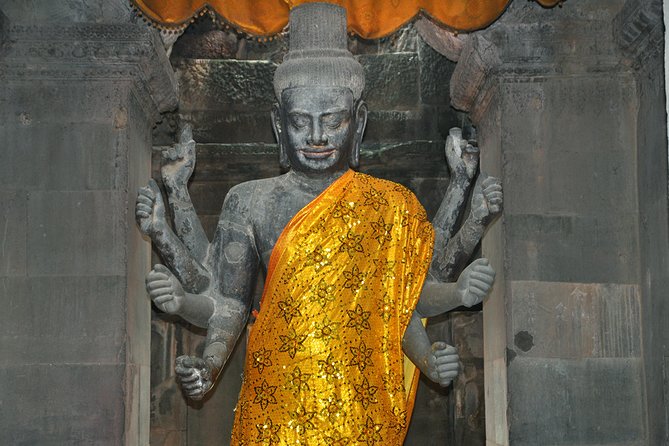
Starting at 6:30am sets the tempo. You get to Angkor Wat early enough that the first impressions feel less like a photo line and more like a place you can take in. The route begins with a drive to a less-frequented East Gate, so you see the complex from a quieter entry point before you move through the main areas.
This early start also matters because Angkor Wat rewards timing. The guide-style approach here isn’t about rushing you to “see it all.” It’s about getting you there when the light makes the carvings and towers read clearly, then returning later so you can compare the atmosphere.
If you hate crowds and you like structured sightseeing, this start time is one of the tour’s biggest wins. If you love sleeping in, you’re going to pay for that decision with an alarm that feels too cheerful.
Angkor Wat from East Gate, Then Back for Late Afternoon Pond Reflections
You visit Angkor Wat twice on the same day.
First comes the morning session: you enter through the East Gate for your best morning-light arrival, and you’ll still get the classic viewpoints later as you move through the complex. In plain terms, you don’t miss the postcard angles—you just don’t start the day stuck only in the busiest lanes.
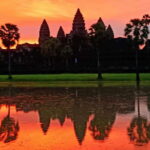
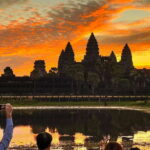
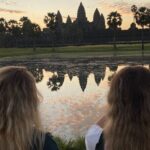
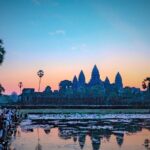
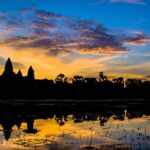
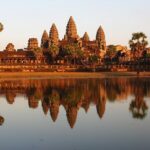
Stop 17 is your late-afternoon return. This is where the tour earns its second visit. You’ll spend another stretch at Angkor Wat for pictures of the towers mirrored in the temple ponds and moats. Late light also changes how the stone looks, so it’s not just repetition. It’s a “same building, different mood” lesson.
If you’re trying to maximize your Angkor Wat payoff in one day, this structure is hard to beat. Two visits means you can take your time without worrying you’ll only see it in harsh midday glare.
Prasat Kravan and Prasat Bat Chum: Short Stops That Teach You to Look
Between the major showpieces, the tour gives you smaller temples that many first-time visitors skip. These stops are quick—often 20 minutes—but that’s the point. You get the contrast: huge complexes, then compact sites where carvings and inscriptions are easier to focus on.
At Prasat Kravan, you’ll see five towers lined up. It’s especially notable for brick carvings that are large in size, which makes it different from the more common stone-and-stucco look you’ll see at bigger Angkor sites.
Prasat Bat Chum is smaller still, with three towers on a shared platform. The significance here is the large inscriptions, which reflect how Buddhist influence took a route through Angkor at some point in its history. Even if you’re not a deep-history person, inscriptions give you something concrete to notice—letters and story panels that anchor your attention.
The potential drawback: if you like lingering at everything, these stops may feel “too fast.” But if you want variety and a guided explanation, the short format keeps the day from becoming a slog.
You can also read our reviews of more private tours in Siem Reap
Srah Srang Lunch Break: A Temple-Reservoir Setting With Real Options
Lunch isn’t built into the tour price, but you do get a scheduled break at Srah Srang. The terrace with animal sculptures there is described as quite picturesque, and it’s also a meaningful spot because Srah Srang is an artificial basin (not a Baray reservoir). That little detail matters when your guide points out why it’s designed the way it is.
From a practical angle, this is a smart lunch choice. Instead of eating in transit or far from sightseeing, you pause in a place tied to the temple world. The info says several good restaurants are available around there.
There’s also flexibility: if you want to eat somewhere else, the driver can drop you to another location—just be prepared to pay for the extra kilometers. That’s useful when you’re craving a specific food style, but it can nudge your budget.
If you tend to get hungry and cranky, this scheduled pause is worth the effort. It’s one of the few guaranteed “sit-down” windows.
Banteay Kdei and Ta Prohm: The Jungle Temple Contrast, Without the Chaos
After lunch, you move into a temple pair that most people experience as “Ta Prohm and then… maybe more.” Here, you get Banteay Kdei first, which helps you understand the scale and layout language before you hit the world-famous jungle scene.
Banteay Kdei is described as the smaller sister of Ta Prohm, but it’s still large. The layout is labyrinth-like, so you won’t get lost if your guide keeps you oriented. This stop is 45 minutes, which is long enough to wander and still feel like you’re progressing.
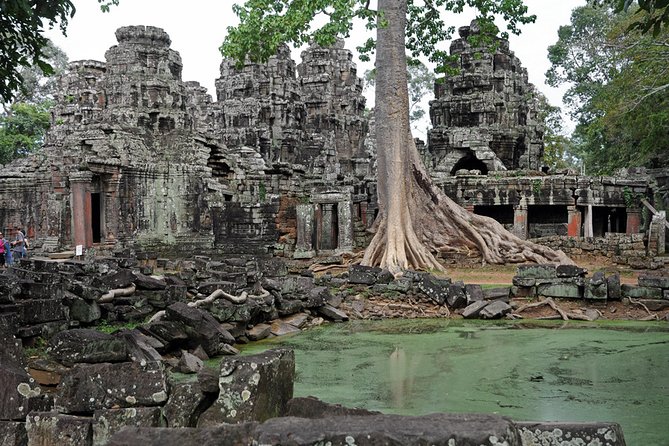
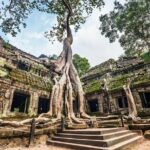
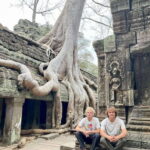
Then you reach Ta Prohm Temple. It’s known for being overtaken by massive strangle figs, and it’s a large compound, so take your time. The tour gives you 1 hour 15 minutes, which is just about right for soaking up the visual puzzle of the roots and corridors.
This is where the private format matters again. Instead of being shoved along in a crowd, you can let your guide point out patterns: where the fig roots take over, where the structure changes, and why certain angles photograph better.
Ta Nei on Gravel Roads: The Extra Stop That Breaks the Crowd Pattern
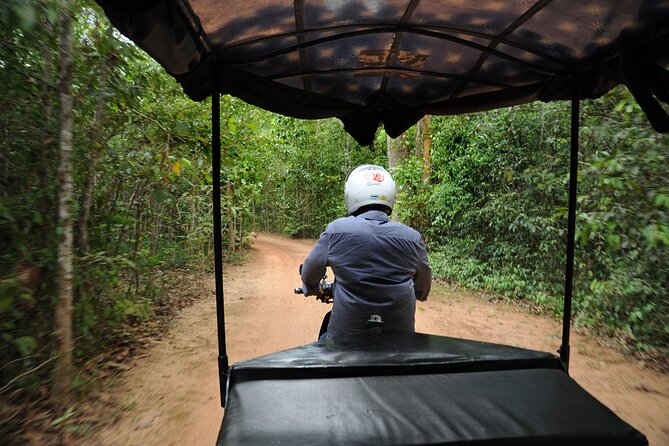
One of the standout extras in this itinerary is Ta Nei. It’s still hidden in the jungle and is only reachable on gravel roads, which is exactly why most casual routes don’t include it.
You’re given 30 minutes here, and that amount of time is perfect for what this place is: an open-ended exploration where the paths aren’t crowded and the ruins feel more like they’re waiting for you. The tour info even points toward an Indiana Jones feeling, which makes sense—Ta Nei reads as less staged, more off-the-beaten-path.
The consideration is comfort: gravel roads can be bumpy, and the route is more rugged than the main temple corridors. If you’re prone to back discomfort, you’ll want to plan for that ride and keep your pacing steady.
Ta Keo, Spean Thma, Chau Say Tevoda, and Thommanon: A Route of “Why This One Matters”
After Ta Prohm and Ta Nei, you shift into more mid-size temples and a quick photo stop. This is a good time to stay mentally engaged, because each stop has a different reason to exist.
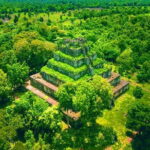
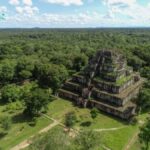
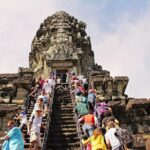
Ta Keo is a former state temple built like an artificial mountain and stepped pyramid. The note to remember is that the stairs to the upper platform are extraordinarily steep. That means you don’t just look from the ground—you choose how much climbing you do.
Spean Thma is a short photo stop at a late Angkor-period stone bridge. The construction used carved stones taken from earlier temples, and the riverbed has shifted since then. That kind of detail helps you understand ruins as living evidence, not only “old rocks.”
Then you get Chau Say Tevoda and Thommanon, treated as a pair. Chau Say Tevoda has a processional route from the east and lots of pediment carvings with mythological themes. Thommanon is the sister temple with towers in the same style as Angkor Wat. Short stops here—20 minutes and 15 minutes—still feel satisfying because you’re building a pattern across the day.
Mangalartha and Speeds You Can’t Ignore: Small Temples, Big Payoff
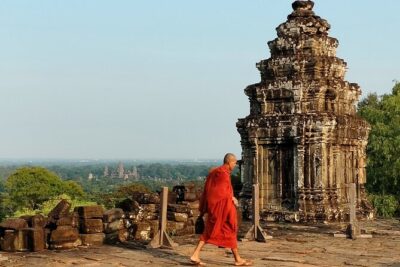
Mangalartha is described as a small temple on a steep, tiered platform from the 13th century, and it’s considered to be the very last stone temple built in Angkor. It’s also noted as rarely visited by tourists, which is the whole point of including it as an extra.
At 15 minutes, you’re not stuck for hours. You’re getting a quieter experience, which can be refreshing when earlier parts of the day already had you shoulder-to-shoulder.
The key practical thought: this tour mixes high-energy highlights with short stops. That means you need to stay present. If you zone out, you’ll miss the carvings, the layout cues, and the reasons your guide brought you there.
The Angkor Thom Walk: Victory Gate Views and a 3.5 km Stretch
Angkor Thom is where this “small circle plus” tour turns physical. You spend time along the city walls and include a 3.5 km hike to lonesome sites.
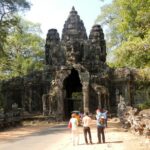
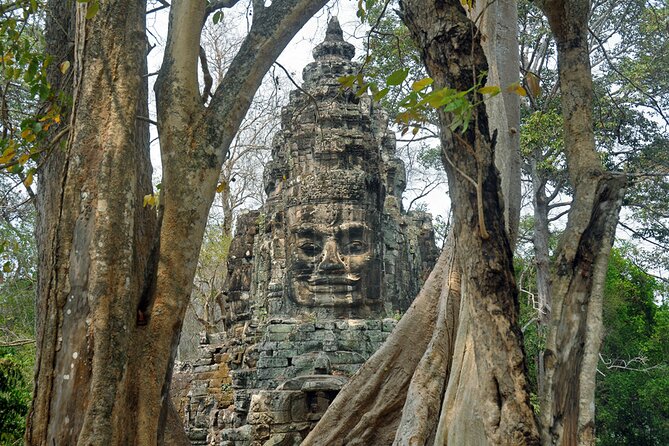
You’ll start with The Victory Gate, the second eastern gate of Angkor Thom. The tour includes climbing the wall for views toward the southern giant face of the gate. That’s the kind of vantage point you can’t really replicate by just standing outside.
Then there’s an emphasis on quieter angles, including walking along the medieval city walls to the lonesome East Gate. The description notes there’s no road leading to it, so you experience a highlight of Angkor Thom without crowds.
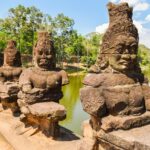
You also hit the South Gate, with the iconic face tower and railings showing rows of giant statues depicting demons and gods. Since the South Gate is one of the main visual anchors, the time you get here—about 15 minutes—works if you’re deliberate about taking a few photos and then looking for carvings and rail details.
If you’re okay with walking and climbing, this is one of the best parts of the day. If you’d rather “see first, walk later,” plan for this segment to be the toughest on your body.
The Prasat Chrung Corner Temples: What You See During the Hike
During the 3.5 km hike, you’ll see Prasat Chrung temples on the city walls. There are four temples in that group, and the tour says the hike will focus on the southeastern Prasat Chrung, noted as the best preserved.
This matters because city walls can feel repetitive if you only photograph gates and faces. Prasat Chrung gives you a change in structure and a reason to keep walking. It also keeps the hike from feeling like “exercise disguised as sightseeing.”
Your guide’s role here is important. In wall-walk areas, tiny directional cues make a huge difference in how smoothly you move and how often you end up facing the right angle.
Second Visit to Angkor Wat Plus Wat Thmey: A Meaningful Reset
After you finish the Angkor Thom walk and gates, the day lands back at Angkor Wat again for the late afternoon photo moments. That flow makes sense: you get energy from the city-wall views, then switch to the more iconic temple geometry with reflections.
Then there’s Wat Thmey (Killing Fields). The tour info calls it a photo stop with a small memorial stupa for victims of the Khmer Rouge and photo boards with images of those who were killed here. There’s also a large prayer hall in the open grounds.
This is a short stop—about 10 minutes, and the listing says admission is free. Even though it’s brief, it changes the tone of the whole day. If you’re sensitive to heavy history, give yourself space here. Treat it like a quiet pause rather than another photo checkpoint.
Who This Tour Fits Best (and Who Should Rethink It)
This tour is best for you if you:
- want a private guide who explains what you’re looking at, not just where to stand
- like to avoid crowds by using early hours
- enjoy mixing major icons (Angkor Wat, Ta Prohm, Angkor Thom) with smaller sites
- are okay with active sightseeing, including a 3.5 km walk and steep stairs
It may not fit if you:
- want a slow-paced day with long breaks
- hate steep climbs or are physically limited
- don’t want to manage the extra cost of the Angkor Ticket and lunch
As for group size, it’s a private activity, so it’s only your group. That usually makes the day feel more tailored, especially if you’re traveling solo or as a couple.
One more note from the provided feedback: solo travelers specifically praised how the tour team handled logistics smoothly and adjusted the day to interests. That’s the kind of practical comfort you want when you’re navigating on your own in a new country.
Should You Book This Guided Private Tuk Tuk Tour?
I’d book it if your goal is maximum value out of one intense day: two visits to Angkor Wat, a deep circuit of Angkor Thom gates and wall corners, plus quieter temple stops that most standard routes don’t squeeze in. The early 6:30am start and the private guide experience are the heart of the deal.
I’d think twice if you’re expecting a relaxed “choose-your-own-pace” outing. This schedule is packed, and there are active elements like the 3.5 km walk and steep steps at Ta Keo. Also budget for the Angkor Ticket (listed as $37 for a 1-day ticket) and remember lunch is on you.
If you want the best chance to see Angkor Wat in both morning light and late reflection, and you’d rather spend the day with a guide than guessing your way through, this tour style makes a lot of sense.
FAQ
How long is the tour?
It runs about 11 to 13 hours.
What time does it start?
The start time is 6:30am.
Is pickup included?
Pickup is offered. If pickup doesn’t work for you, the tour lists a meeting point at Jeep Tour Siem Reap Angkor on Little Pub St.
Is this tour private?
Yes. It’s a private tour/activity, and only your group participates.
Are Angkor tickets included in the price?
No. Angkor Tickets are not included, and you need a ticket valid for all temples you visit.
How much is the Angkor Ticket?
The provided info lists 1-day: $37 (US$) per person.
Is lunch included?
Lunch is not included. Lunch-break is at Srah Srang, where several restaurants are available.
What extra experiences are included besides the main circuit?
In addition to the major Angkor sites, the itinerary includes extra smaller temple stops and a Ta Nei stop reached by gravel roads.
Is there hiking involved?
Yes. The tour includes a 3.5 km hike in Angkor Thom.
What is the cancellation policy?
Free cancellation is available. You can cancel up to 24 hours in advance for a full refund.