REVIEW · SIEM REAP
Four-day tour Angkor Wat, Banteay Srey, Beng Melea and Siem Reap discovery
Book on Viator →Operated by Angkor Wat Travel Tour · Bookable on Viator
Angkor hits different when you’re not rushing. This four-day private route strings together the big classics with countryside stops, led by an English-speaking guide who tries to manage timing to reduce crowd pressure. You also get an air-conditioned ride, plus cold water and a cold towel so the long temple days stay bearable.
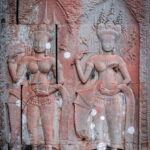
I particularly like the way the tour mixes famous stones with lesser-seen sites—so you get variety, not repeat after repeat. Banteay Srei’s pink sandstone carvings feel like a careful workshop, and Beng Mealea gives you that explorer feeling with its more remote, tangled ruins. It’s a temple circuit that still makes time for real Cambodian daily life, including the Tonle Sap floating village area.
One trade-off to plan for: the price doesn’t include entrance tickets or meals, so you’ll need extra cash for site fees and breakfast/lunch/dinner. And since several stops are outdoors and timed across multiple hours, you should expect a physically active day even with the vehicle and guide.
In This Review
- Key highlights worth marking
- How This 4-Day Siem Reap Route Feels: Private, Temple-Heavy, and Daylight Friendly
- Day 1 Through Angkor Thom: Bayon Faces, Ta Prohm Roots, Banteay Kdei, and Angkor Wat
- Kbal Spean’s 1,000 Lingas and the Pink Stone of Banteay Srei (Day 2)
- Neak Pean, East Mebon, and Preah Khan: Water, Mountains, and Monks
- Day 3’s Beng Mealea and Roluos Temples: The More Rugged Angkor Side
- Day 4 on Tonle Sap and Stone Carving: Kompong Phluk and Artisans Angkor
- Price and Value: What You Pay for, What You Don’t, and How to Budget
- Tips for Beating Crowds and Heat, With Realistic Expectations
- Who Should Choose This Private Tour, and Who Might Want Something Else
- Should You Book This 4-Day Angkor + Lifestyle Tour?
- FAQ
- What time does the tour start?
- Is this tour private?
- What’s included in the tour price?
- Are entrance tickets included?
- Are meals included?
- Who can join this tour?
- What if I need to cancel?
Key highlights worth marking
- Private pacing with English guidance: Many groups are led by guides such as Sa or Praim Hear, who explain Khmer and religious context in clear English.
- Crowd-management mindset: The guide works to adjust the daily schedule to help you see temples without the worst crush.
- Daylight temple moments: The plan is built around temple time, including an Angkor Wat light moment in the evening.
- More than postcard Angkor: Kbal Spean’s carvings, Neak Pean, and Preah Khan add variety beyond the usual checklist.
- Tonle Sap life at Kompong Phluk: You’re not just looking at ruins—you get a hands-on sense of Cambodian living.
- A craft stop at Artisans Angkor: You can watch and take part in stone carving (through the workshop experience).
How This 4-Day Siem Reap Route Feels: Private, Temple-Heavy, and Daylight Friendly
This is the kind of tour that makes Siem Reap feel like more than a one-day detour. You start at 8:30am and keep moving through a clear rhythm: major temple clusters, one countryside-style day, and a final blend of lake life and local crafts. Because it’s private, your guide can shift the order within the overall plan and keep the day moving at a pace that fits your group.
I like that the logistics include the basics that matter: an air-conditioned vehicle, cold water, and cold towels. On temple days, those small comforts add up, especially when you’re out for hours at a time.
You’ll also notice the tour isn’t only about temples. It builds in the Tonle Sap lake area and a workshop experience, so you get a more rounded sense of Cambodia—history plus present-day culture, side by side.
You can also read our reviews of more tours and experiences in Siem Reap.
Day 1 Through Angkor Thom: Bayon Faces, Ta Prohm Roots, Banteay Kdei, and Angkor Wat
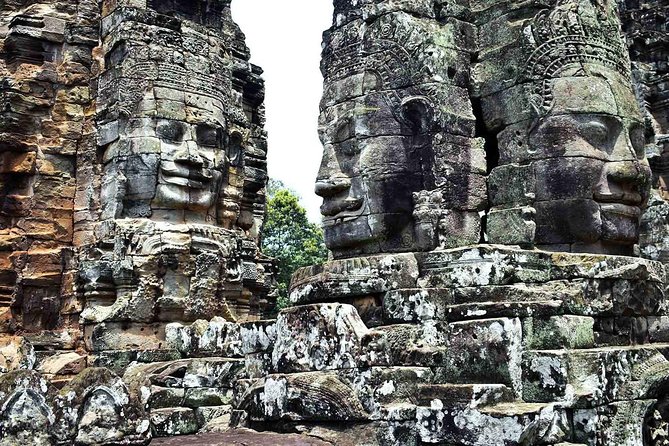
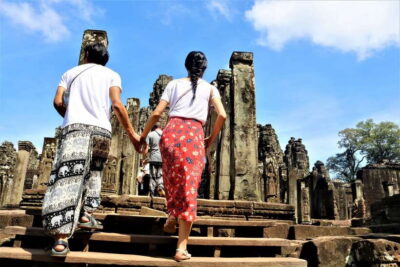
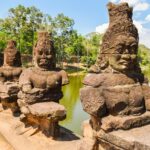
Day 1 is a powerful sweep through the Angkor Thom zone and then into Angkor Wat. You start with Bayon Temple, spending about 2 hours with the South Gate of Angkor Thom as your entry point. Bayon is famous for its 54 towers and the many stone faces of Avalokesvara. Even if you’ve seen photos, being there in person makes the repeating expressions feel almost like a living pattern across the complex.
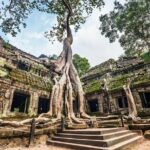
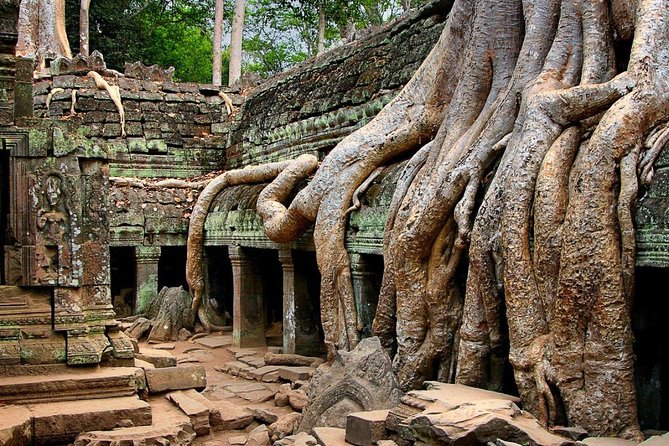
Next comes Ta Prohm, often called the jungle or tree temple because of the massive roots wrapping the stone. Expect it to be dramatic, but also expect it to be a bit chaotic because Ta Prohm draws attention from every direction. This is where having a guide who can suggest timing and walking routes helps you avoid wasting energy on congestion.
From there, you continue to Banteay Kdei for about 1 hour. It was built in the late 12th century during the era of King Jayavarman VII. It’s a useful “breather” temple: not as photo-famous as Ta Prohm, but still rewarding if you like reading the stone layout and understanding how these complexes were designed.
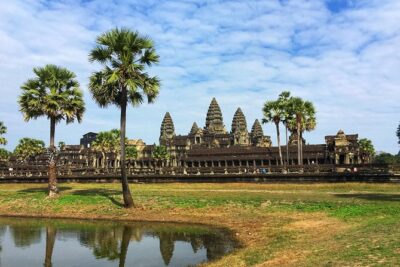
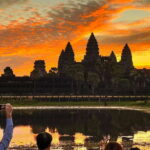
Finally, you reach Angkor Wat for around 3 hours. It’s the anchor site in the whole region, dedicated to Vishnu and associated with King Suryavarman II in the early 12th century. You’ll end the day with the kind of evening temple time that makes the whole area feel cinematic—especially when the light changes and the carvings look different than they do at midday.
Kbal Spean’s 1,000 Lingas and the Pink Stone of Banteay Srei (Day 2)
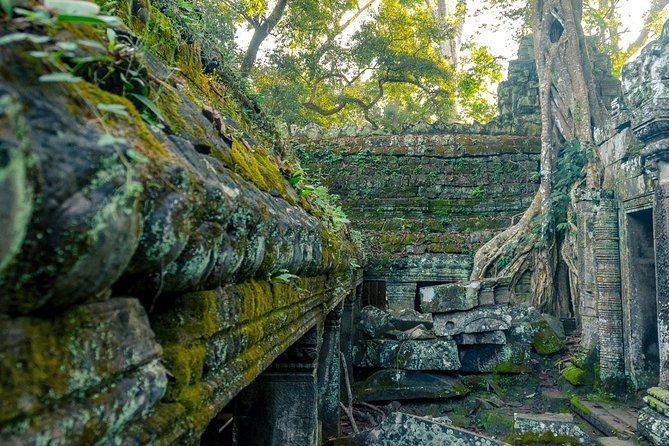
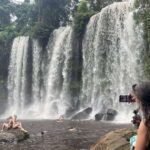
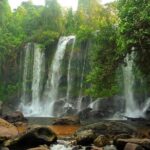
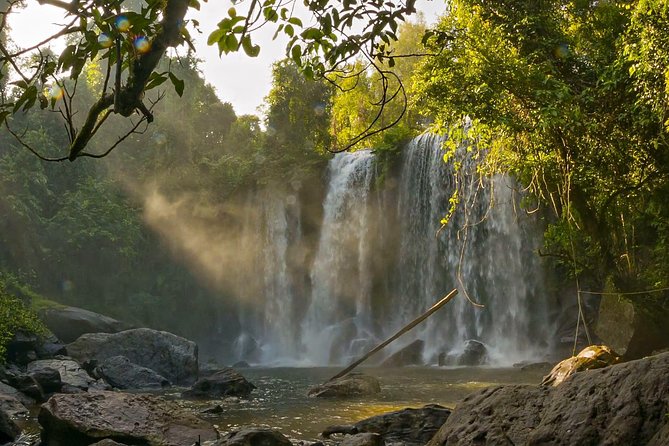
Day 2 is where the tour slows down into the more “ancient ritual in the landscape” side of things. You start with Kbal Spean for about 4 hours. This is the waterfall and river area with carvings under the water, including figures tied to Vishnu and Brahma and the famous river of 1,000 lingas. The carvings are the main event, and they’re worth your attention because they change the way you think about temple worship—this wasn’t only about buildings. It was also about sacred meaning in nature.
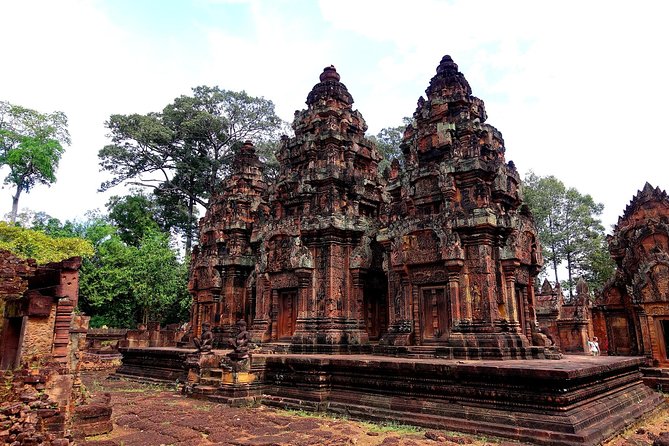
Then you head to Banteay Srei (about 2 hours). This is one of the places you’ll feel in your hands before you even touch anything: the stonework looks delicate compared to many larger Angkor structures. It’s described as the jewel in the crown of Angkorian art, carved from pinkish-hued sandstone. If you’re the type who loves fine details—arches, faces, ornamental patterns—this stop is a big win.
Back toward the main Angkor area, you visit Eastern Mebon for about 1 hour. It’s a large temple-mountain style structure, and it helps fill in the logic of Angkor’s layout. Then you continue to Neak Pean for about 1 hour, a temple on an artificial island in the center of a water reservoir. Neak Pean’s three levels and five brick towers connect the site visually to the idea of sacred water and cosmology.
You finish the day with Preah Khan (about 1 hour), a huge monastic complex. This is a good final note for Day 2 because it shifts you from carvings and small-scale detail into the scale of institutions—places meant to function, not just decorate a skyline.
Neak Pean, East Mebon, and Preah Khan: Water, Mountains, and Monks
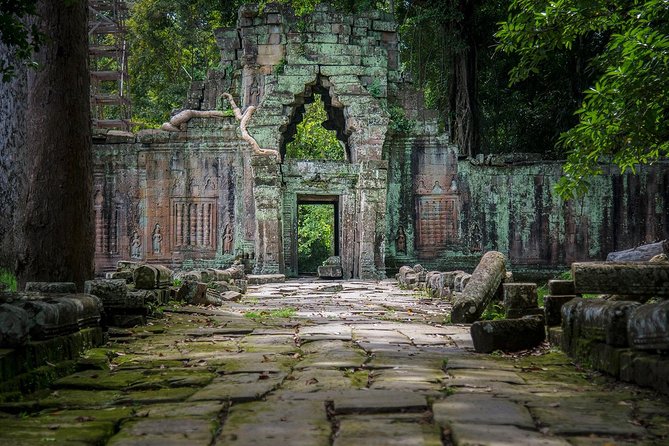
This is a smart block of temples if your goal is understanding, not just checking boxes. Angkor’s design language is repetitive on purpose: water reservoirs, temple-mountains, and complex monastic spaces show how Khmer builders used architecture to explain how they saw the world.
Neak Pean is especially worth your attention because it’s tied to water geography. You’re not just looking at stones; you’re tracing the idea of an artificial island in a reservoir and how that would affect rituals and movement. Even if you don’t obsess over symbolism, your brain catches the pattern quickly when multiple stops reinforce it.
Eastern Mebon adds the temple-mountain concept. It’s one of those structures that makes more sense when you’ve already seen other Angkor elements first. By the time you arrive, you’re ready to notice the intended sightlines and the “climb toward meaning” feel.
Then Preah Khan gives you a change of pace. It’s described as an explorative monastic complex, which usually means you can wander through sections and feel the site’s size. If you’re traveling with a group that enjoys history conversations, this is also a great place to ask your guide about how Hindu and Buddhist traditions overlap across time in the area—something guides like Sa and Praim Hear are known for explaining with confidence.
Day 3’s Beng Mealea and Roluos Temples: The More Rugged Angkor Side
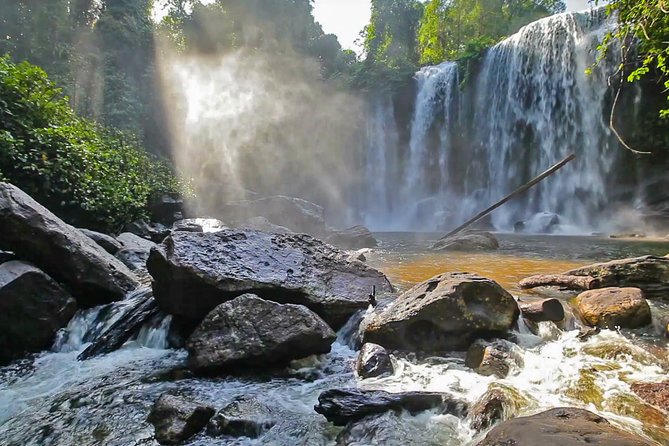
Day 3 tilts toward the less manicured, more adventurous side of Angkor. You head to Prasat Beng Mealea for about 4 hours. It’s around 70 kilometers north-east of Siem Reap and is often called the lost temple of Angkor. The point here isn’t only that it’s remote—it’s that the ruins feel less curated, more open-ended. That “find it yourself” mood is a nice contrast after the highly visited Angkor Wat region.
If your group likes photos, you’ll probably get a lot of variety here, but the real value is the feeling. It’s a temple you walk through and mentally reconstruct, rather than a polished circuit you zip past. For some people, that’s the best part of the whole trip.
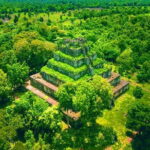
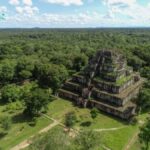
Then you move to Roluos Temples for about 3 hours: Bakong, Lolei, and Preah Ko, located about 11 kilometers southeast of Siem Reap Market. These are close together, so you can see the progression of early temple ideas in a manageable time frame. It’s a helpful day for getting your bearings beyond Angkor Wat itself.
If you’re thinking about it practically, Day 3 is also a useful pacing tool. After two long days of major temple complexes, Beng Mealea breaks the pattern, and Roluos brings you back into a tight cluster where you can keep understanding without losing the thread.
Day 4 on Tonle Sap and Stone Carving: Kompong Phluk and Artisans Angkor
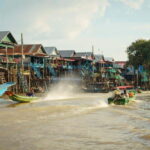
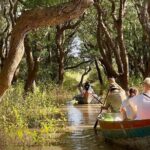
Day 4 connects the Angkor story to Cambodian life now. You start with Kompong Phluk on the Tonle Sap lake for about 4 hours. Tonle Sap is the biggest fresh water lake in Southeast Asia, and Kompong Phluk is presented as a place that helps you understand real daily life. The tour frames it as countryside reflection of Cambodian lifestyle—so it’s less about monuments and more about people, routines, and how communities live with the water.
This stop is valuable because it gives your brain a new reference point. After days of temple stone and religious symbolism, seeing how life works around the lake makes the whole region feel less like an isolated museum. You’ll probably remember the day more for its atmosphere than for any single viewpoint.
Later, you visit Angkor National Museum for about 1 hour. It’s a focused museum stop that presents major Buddha statues and relics in one gallery. The idea is simple: you get a chance to process what you saw in temples with a clearer sense of the religious objects and artistic styles tied to Buddhism in the region.
Finally, you end at Artisans Angkor for about 1 hour. This is a local NGO workshop where you can enter their workshop experience and craft your own stone carving. I like this kind of end to a temple-heavy tour: you go from reading history on walls to learning how skill and craftsmanship keep the story going in the present.
Price and Value: What You Pay for, What You Don’t, and How to Budget
At $202.57 per person for roughly 4 days, this tour can be good value if you care about guidance, comfort, and a well-paced route. You’re not just paying for transportation—you’re paying for an English-speaking guide, an air-conditioned vehicle, and time designed to make sense of a complicated area.
Here’s the part to plan for: entrance tickets and meals aren’t included. That means you should budget extra for site fees and daily food. In a trip like this, meals can also affect energy levels, so it’s worth leaving room for breakfast and lunch choices that keep you fueled.
Also, the tour includes pickup offered, a mobile ticket, cold water, and cold towels. Those details matter because temple days are long, and you’ll want the comfort of not having to track everything alone—especially when you’re visiting several sites across multiple regions.
Given the scale—Angkor Wat plus Bayon and Ta Prohm plus Banteay Srei plus Beng Mealea and a lake visit—this is more cost-effective than piecing everything together with separate guides and transport for each day.
Tips for Beating Crowds and Heat, With Realistic Expectations
The tour says your guide will try to manage the schedule to avoid the crowd as much as possible. That’s not a magic shield, but it’s exactly the right approach for Angkor. The temple area can feel overwhelming fast if you arrive at peak hours, so having someone plan timing helps you spend more time looking at the stones and less time stuck in lines.
Because most stops are measured in hours, you’ll want to treat this as an all-day rhythm. Think comfortable shoes, sun protection, and a water strategy. The tour already supplies cold water and cold towels, but you’ll still want your own basics.
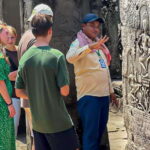
One more practical note: the guide’s ability to explain what you’re seeing can change your whole day. Guides like Sa and Praiim Hear are mentioned for strong English and for explaining both Hindu and Buddhist elements, plus Khmer stories connected to daily life. If you get a guide who helps you understand the meaning behind the carvings, the same stone structures feel far less repetitive.
Who Should Choose This Private Tour, and Who Might Want Something Else
Choose this tour if you want a guided route through the big Angkor must-sees and also want variety beyond Angkor Wat. The mix of Bayon, Ta Prohm, Banteay Kdei, Banteay Srei, Preah Khan, Beng Mealea, and the Roluos temples is broad enough to keep things interesting. Add Kbal Spean and Kompong Phluk, and you get more than an archaeology trip.
It’s also a good fit for people who enjoy context. The experience leans on a guide who explains temple history and mythology tied to Hindu and Buddhist traditions, plus anecdotes about Khmer culture and day-to-day life. If that’s your travel style, you’ll likely enjoy the structure of the days.
This might be less ideal if you want a relaxed, laid-back pace with lots of free time. The stops are scheduled in multi-hour blocks, and you’ll be out during temple hours with plenty of walking time on site.
Should You Book This 4-Day Angkor + Lifestyle Tour?
Yes, I’d book it if you want a private, English-guided route that treats Angkor as more than a single highlight. The biggest strengths are the pacing across major temple zones, the mix of “iconic” and more adventurous sites like Beng Mealea, and the day that connects to Tonle Sap life at Kompong Phluk. Add in the museum and the stone carving workshop, and you get history plus a taste of living culture.
Book it with one clear expectation: you’ll handle entrance fees and meals separately, and the days are active. If that fits your style, this is a smart way to see a lot of ground without turning your trip into a logistics puzzle.
FAQ
What time does the tour start?
The start time is 8:30am.
Is this tour private?
Yes. It’s listed as a private tour/activity, so only your group will participate.
What’s included in the tour price?
Included items are an air-conditioned vehicle, an English tour guide, and cold water and a cold towel. Pickup is also offered. You also get a mobile ticket.
Are entrance tickets included?
No. Entrance ticket fees are not included.
Are meals included?
No. Breakfast, lunch, and dinner are not included.
Who can join this tour?
Most travelers can participate. Children must be accompanied by an adult.
What if I need to cancel?
You can cancel for a full refund if you cancel at least 24 hours in advance of the experience’s start time. If you cancel less than 24 hours before, the amount paid won’t be refunded.