REVIEW · SIEM REAP
Exclusive Angkor temples and Small group temples tours
Book on Viator →Operated by Bayon Tabi Tour · Bookable on Viator
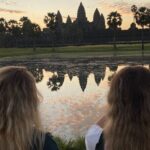
Sunset at Bakeng is the payoff. This full-day, small-group Angkor tour is built around the big sights plus a few carving-and-stone stops that give you a real feel for the Khmer world, with a smooth sunset finish at Phnom Bakheng. I love the small group size (max 25), which keeps the day moving without that cattle-car chaos. I also love the practical help I got from the guide and driver, including smart ideas for where to stand for photos. One thing to plan for: you still pay temple entrance fees and meals are not included.
You’ll get hotel pickup and a direct transfer back to Siem Reap after sunset, plus an air-conditioned van or bus and complimentary mineral water. The tour runs about 6 to 10 hours, and it uses a mobile ticket, which makes check-in easier than dealing with paper.
The main consideration is pace. Some stops are quick (30 minutes), and Angkor is spread out, so you’ll want comfortable shoes and a calm mindset that this is a tour day, not a slow stroll.
In This Review
- Key highlights I’d center your decision on
- What This Angkor Day Includes (and What You Must Budget)
- Entering Angkor Thom South Gate: The City Starts Before the Temples
- Angkor Thom + Bayon Faces: When the Khmer Capital Feels Personal
- Terrace of the Elephants + Terrace of the Leper King: Stone Carving Stops That Matter
- Terrace of the Elephants
- Terrace of the Leper King
- Ta Prohm: A Khmer Buddhist Site With a Different Role
- Angkor Wat for Hours: The World’s Largest Religious Monument
- Phnom Bakheng Sunset: Hindu and Buddhist Mountain Temple Views
- Price and Value: Is $19 Actually a Deal?
- Who This Tour Fits Best (and Who Might Want Another Option)
- The Guide and Driver Factor: The Service That Actually Improves Your Day
- Should You Book This Angkor Temples Small-Group Day?
- FAQ
- What temples are included on this tour?
- Is hotel pickup and drop-off included?
- Are temple entrance fees included?
- Are meals included?
- How long is the tour?
- What’s the group size?
- Is there a sunset portion?
- What does the tour include besides the guide and transport?
- Can I cancel for a full refund?
Key highlights I’d center your decision on
- Max 25 travelers means less waiting and more breathing room at temples
- Hotel pickup and drop-off removes the big hassle of coordinating transport
- Air-conditioned transport + bottled water helps you handle Siem Reap heat
- Big-ticket temples plus carving stops: Angkor Thom, Bayon, Ta Prohm, and Angkor Wat
- Phnom Bakheng sunset adds a spiritual Hindu-and-Buddhist mountain-temple moment
- Guide-led history ties the sights together so you’re not just collecting photos
What This Angkor Day Includes (and What You Must Budget)
This is an Angkor temples day built for first-timers and anyone who wants the main ruins without getting stuck on the most crowded bus.
At the base price you’re buying the people-and-transport part: an English-speaking guide, air-conditioned vehicle (van or bus), mineral water during the tour, and pickup/drop-off from your hotel. You’re also getting the convenience of a mobile ticket.
What’s not included is just as important for your budget. Temple entrance fees are $37 per person, and meals (lunch/dinner) are not included. So the real cost is usually the tour price plus the entrance fee plus whatever you spend on food. If you’re trying to travel ultra-cheap, compare that total against what you’d pay if you went independently.
The day is also guided by time at each main stop:
- South Gate of Angkor Thom (about 30 minutes)
- Angkor Thom (about 1 hour)
- Bayon Temple (about 1 hour)
- Terrace of the Elephants (about 30 minutes)
- Terrace of the Leper King (about 30 minutes)
- Ta Prohm (about 1 hour)
- Angkor Wat (about 3 hours)
Then you add the Phnom Bakheng sunset portion and return to Siem Reap afterward.
You can also read our reviews of more tours and experiences in Siem Reap.
Entering Angkor Thom South Gate: The City Starts Before the Temples
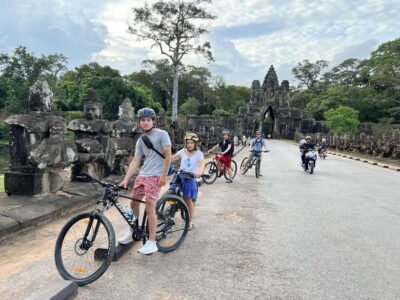
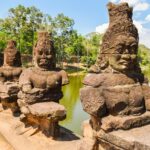
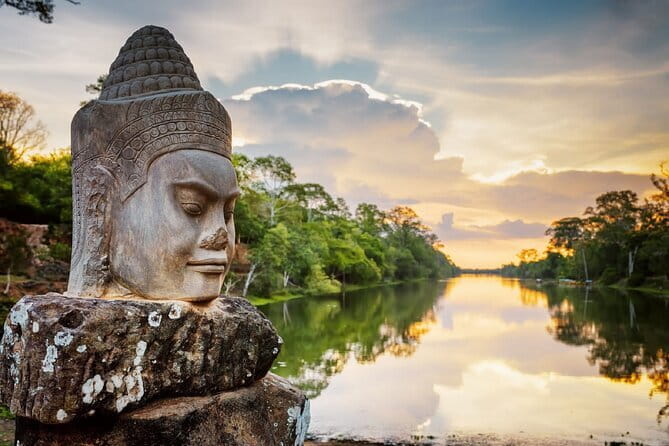
Your first meaningful stop is Angkor Thom South Gate. Angkor Thom is the Khmer capital city built as the great city, and the gate sets the tone. Even before you reach the most famous interior temples, you’re getting the sense of a planned urban center: a monumental approach, built to impress.
This stop is short (about 30 minutes), so treat it as a warm-up and orientation. I’d use this time to get your bearings—both literally and photo-wise. You’ll likely be ready for scale after this, because everything later feels bigger once you know how the city layout works.
A practical note: gates and courtyards can be crowded. The small group size helps, but you’ll still want to move calmly and follow your guide’s timing so you don’t lose time to bottlenecks.
Angkor Thom + Bayon Faces: When the Khmer Capital Feels Personal
Next is Angkor Thom (about 1 hour), followed by Bayon Temple (about 1 hour). Together, these two stops are where the day starts feeling less like a checklist and more like a story.
Angkor Thom is the “great city” and is home to some of the biggest and most popular temples. Your guide’s job here is to connect what you’re seeing to why it matters—how the Khmer empire built authority into stone, and why temples weren’t just religious sites, but also political statements.
Bayon is a standout because it’s richly decorated and tied to the late 12th or early 13th century. When your guide points out key features, Bayon often becomes the temple where you start understanding the design logic: repeated forms, strong symmetry, and deliberate “presenting the power” energy.
I’d focus on two things during your hour at Bayon:
- Spend a few minutes looking for how carvings and reliefs are arranged, not just what they depict.
- If you’re big on photos, take advantage of the guide’s stance ideas. The best photo help on this tour isn’t fancy gear—it’s where to stand so the angles make sense.
Terrace of the Elephants + Terrace of the Leper King: Stone Carving Stops That Matter
You’ll then shift from the headline temples to two carving-heavy stops: Terrace of the Elephants (about 30 minutes) and Terrace of the Leper King (about 30 minutes). These can feel like “in-between” temples, but they’re often the moment you slow down and actually look.
Terrace of the Elephants
This terrace is famous for the elephant imagery associated with Angkor’s royal and ceremonial storytelling. Even if you only get 30 minutes, this is where you can notice stone craftsmanship more closely than at larger complexes where you’re constantly on the move.
Terrace of the Leper King
This one is more story-driven. The statue is called the Leper King because discoloration and moss growing on it made it resemble someone with leprosy, and the tour info also notes it’s tied to Cambodian references (the name stuck because of what the stone looked like over time). I like this stop because it shows how meaning can change with time—how people read stories into ruins, and how weather and plants become part of the artwork’s current look.
Don’t rush these 30-minute blocks. They’re short for logistics reasons, but you’ll get more out of them if you use them like a mini museum visit: pause, look for the key figures, then move on.
Ta Prohm: A Khmer Buddhist Site With a Different Role
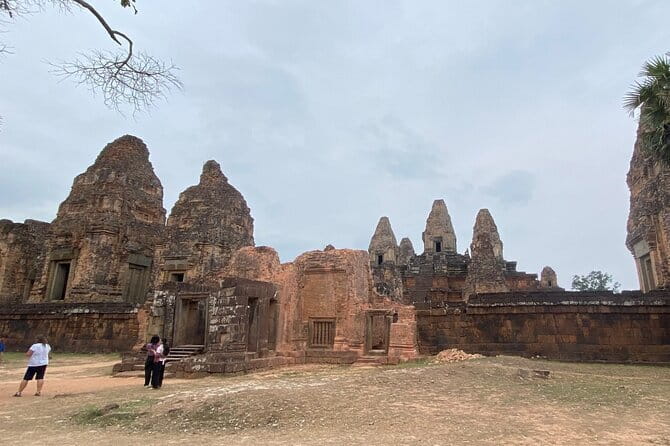
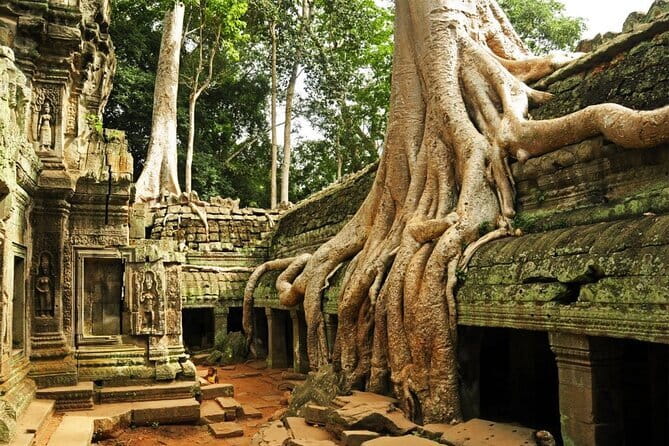
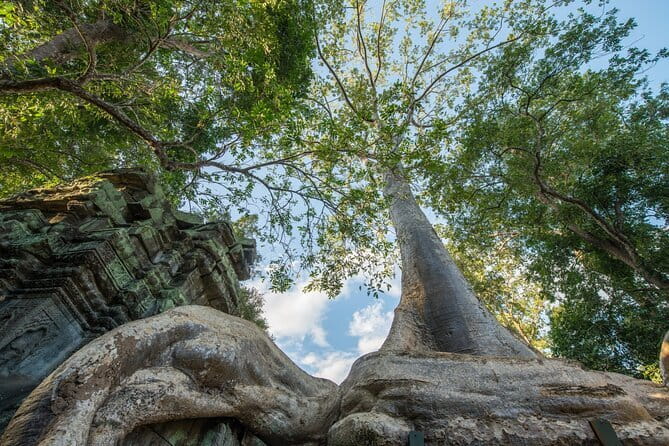
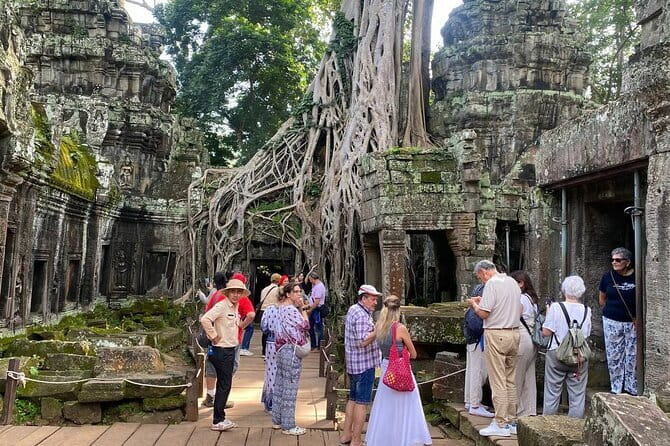
Ta Prohm is next (about 1 hour). It was founded by King Jayavarman VII as a Mahayana Buddhist monastery and university. That matters, because it tells you what type of place you’re looking at. Instead of only being a temple as a destination for prayer, Ta Prohm was part of an educational and religious system.
This stop is also where many visitors feel the contrast in the day. By the time you reach Ta Prohm, you’ve already seen Angkor’s “city power” and major temple artistry. Ta Prohm gives a different angle—still monumental, but with a clear function tied to monastic study and Buddhist practice.
Because your time here is about an hour, I’d focus on understanding the temple’s purpose rather than trying to do “everything.” If you follow your guide’s route, you’ll likely leave knowing what set Ta Prohm apart within Angkor’s overall religious landscape.
Angkor Wat for Hours: The World’s Largest Religious Monument
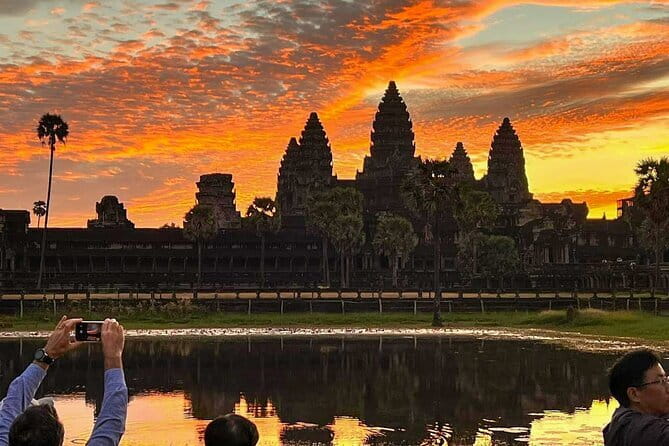
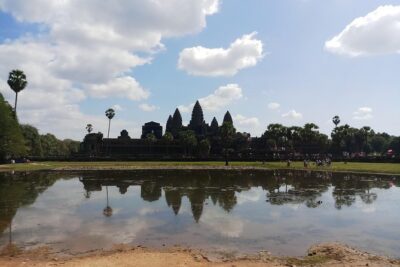
Then comes Angkor Wat (about 3 hours), the largest religious monument in the world on a site measuring 162.6 hectares. This is the reason many people book the day trip in the first place, and you’re given enough time here to do more than a quick walk-by.
With 3 hours, you can:
- Take time for first impressions without panicking that you’ll run out of time
- Spend more effort in the zones your guide emphasizes
- Get photos from multiple viewing angles
Angkor Wat is also where the history you hear earlier starts clicking. When your guide connects Angkor’s Khmer empire context to what you’re seeing now, it stops being “cool buildings” and becomes “a planned religious system in stone.”
What I’d watch for: Angkor Wat can feel visually overwhelming because there’s so much detail. The temptation is to look everywhere at once. Instead, pick a couple of structures or carving areas your guide highlights, then expand from there.
Phnom Bakheng Sunset: Hindu and Buddhist Mountain Temple Views
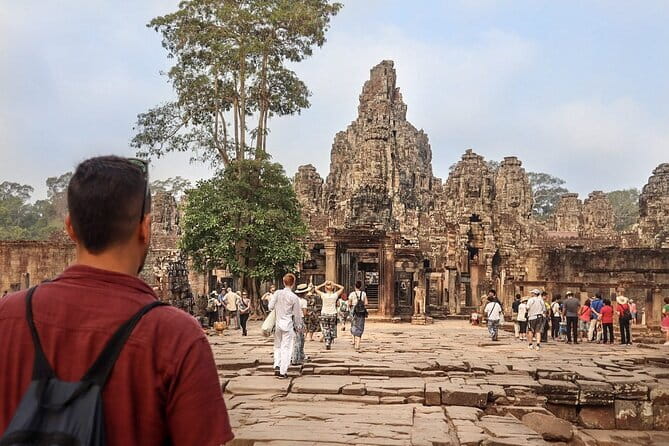
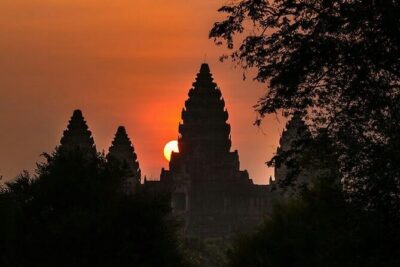
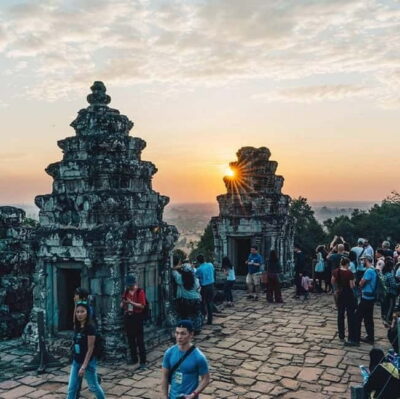
The last major highlight is Phnom Bakheng, where you’ll enjoy a Khmer sunset. Phnom Bakheng is described as a Hindu and Buddhist mountain temple. That hybrid religious identity is part of what makes the sunset part feel more meaningful than just another viewpoint.
Sunset at a temple changes your pacing. During daylight, you’re moving through stone. At sunset, you’re watching light shift across surfaces, and the atmosphere turns quieter even when there are other visitors around. This is also where the “small group” advantage can show up: fewer people to shuffle around you can make the experience feel less frantic.
After sunset, you return to Siem Reap and get transferred directly back to your hotel. That’s a big deal in practice. You’re not stuck figuring out transport at night when you’re tired, sweaty, and temple-saturated.
Practical tip: plan to dress for heat earlier, then be ready for cooler air as the sun drops. Wear shoes you trust on uneven stone and steps.
Price and Value: Is $19 Actually a Deal?
The headline price of $19 is low enough to get your attention. But here’s the math that keeps you honest:
- Tour price: $19
- Temple entrance fees: $37 per person
- Meals: not included
- What you get for the tour price: English-speaking guide, air-conditioned vehicle, mineral water, hotel pickup/drop-off, and a sunset temple experience at Phnom Bakheng
So you’re likely paying far more than $19 all-in once you add entrance fees and food. Still, the value can be good because:
- The entrance fee is part of what you’d pay no matter how you travel.
- The tour price covers transport and a guide who can help you understand what you’re looking at.
- The small group size (max 25) can save you time and stress, especially during busy temple moments.
- Direct hotel transfer after sunset is the kind of convenience that’s worth money when you’re done sightseeing.
If you’re comfortable paying entrance fees anyway and you want the guide’s explanations and logistics help, this can be a smart buy. If you’re determined to do the absolute cheapest day and don’t care about guided context, you might compare it against independent transport—but then you take on more planning and less “done for you” comfort.
Who This Tour Fits Best (and Who Might Want Another Option)
This tour works best for you if:
- You want the main Angkor temples—Angkor Wat, Angkor Thom, Bayon, and Ta Prohm—on a single day
- You dislike jam-packed bus tours and want a smaller group (max 25)
- You appreciate a local English-speaking guide who explains significance, not just where to walk
- You care about finishing with a Phnom Bakheng sunset rather than going back to town mid-afternoon
You might reconsider if:
- You hate structured itineraries and want more free time at each site
- You prefer fewer stops and longer stays in one temple area
- You’re traveling with very small kids or anyone who struggles with steps and heat, because some stops are short and the day is active
For most visitors, though, this format hits a sweet spot: enough variety to feel like a real Angkor “day,” without trying to do everything at a deep, slow pace.
The Guide and Driver Factor: The Service That Actually Improves Your Day
The best practical praise here isn’t about fancy extras—it’s about how the day runs. The guide and driver are described as amazing: fun, helpful, and going above and beyond. The biggest service detail I take from that is the photo support. Not just “take your picture,” but ideas of where to stand to get better shots, and help adjusting angles so you don’t end up with the wrong background.
That kind of on-the-ground assistance matters at Angkor, where viewpoint timing can make or break a photo and where crowd flow can change minute by minute.
If you’re someone who cares about getting decent photos without turning your whole day into a stress test, this tour’s human support can be a real advantage.
Should You Book This Angkor Temples Small-Group Day?
I’d book it if your priority is a smooth, guide-led Angkor day that covers the headline temples and ends with a sunset at Phnom Bakheng—without the worst crowd pressure. The small group size, hotel pickup/drop-off, air-conditioned transport, and mineral water make it feel built for comfort, even though you’re still doing a lot of walking and standing in the heat.
I’d also book it if you want your money to go toward the parts that keep the day enjoyable: a structured route, an English-speaking guide who explains what matters, and direct transfer back to your hotel after sunset.
Skip it (or rethink it) if you’re already comfortable navigating Angkor on your own and you’d rather spend your time longer in fewer places. Also, double-check your total budget since temple entrance fees ($37 per person) and meals aren’t included.
FAQ
What temples are included on this tour?
The tour covers Angkor Wat, Angkor Thom, Bayon Temple, Ta Prohm, plus stops at Terrace of the Elephants and Terrace of the Leper King.
Is hotel pickup and drop-off included?
Yes. Pickup and drop-off from your hotel are included.
Are temple entrance fees included?
No. Temple entrance fees are not included and are listed as $37.00 per person.
Are meals included?
No. Meals (lunch/dinner) are not included.
How long is the tour?
It runs about 6 to 10 hours, approximately.
What’s the group size?
The maximum group size is 25 travelers.
Is there a sunset portion?
Yes. The tour includes a Khmer sunset at Phnom Bakheng (Bakeng Mountain).
What does the tour include besides the guide and transport?
You get an English-speaking guide, air-conditioned vehicle (van or bus), mineral water during the tour, and a mobile ticket.
Can I cancel for a full refund?
Yes. You can cancel up to 24 hours in advance for a full refund.