REVIEW · SIEM REAP
Siem Reap: Angkor 1-Day Private Tour with Sunset or Sunrise
Book on GetYourGuide →Operated by Vamos Camboja Turismo · Bookable on GetYourGuide
Angkor looks different when you control the pace. This private tour strings together the big sights plus a few smarter photo stops, with hotel pickup, cold water, and a guide who works in your language.
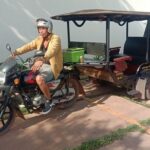
I especially like the fully private format and the way your guide can explain what you are seeing (with clear history and religious symbolism). I also like that you get comfortable transport—tuk-tuk for smaller groups or an A/C car for larger ones—so you spend more time at temples and less time stuck in heat.
One thing to watch: the sunrise or sunset timing can be affected by crowds and clouds, and the sunset hill option may be underwhelming if visibility is poor.
Key points I’d plan around
- Private guide in your language (English, Spanish, French, Portuguese, Italian, German, Japanese) for smoother temple explanations
- Sunrise vs sunset options: a 5:00 AM start for sunrise or an all-day rhythm ending around 6:30 PM for sunset
- Classic temple loop, well-paced for a 1-day visit, with built-in breaks and photo time
- Comfort details matter: cold towels and water at stops, plus hotel pickup/drop-off
- Two days is the sanity move if you want Grand Circuit temples and Banteay Srei without rushing
In This Review
- Sunrise or Sunset at Angkor: timing that changes everything
- What you actually get with a private tour (and why it’s worth it)
- Your temple day sequence: from Ta Prohm roots to Angkor Wat art
- Angkor Thom: South Gate faces, terraces, and Bayon smiles
- Angkor Wat: world-class symbolism without the rush
- Phnom Bakheng sunset: the payoff depends on the sky
- The 2-day option: a smarter pace for the Grand Circuit and Banteay Srei
- Transport details that affect comfort: tuk-tuk vs A/C car
- Lunch, breaks, and how to plan your food
- Dress code, what to bring, and what keeps you from getting stopped
- Price and ticket reality: what $110 covers and what costs extra
- Who this Angkor tour suits best (and who might rethink it)
- Should you book this private Angkor tour?
- FAQ
- Is the Angkor entrance ticket included?
- How much does the tour cost for a small group?
- What are the pickup times for sunrise and sunset options?
- Is lunch included?
- What’s the main difference between the 1-day and 2-day tours?
- Which languages are available for the guide?
- What transport will I use during the tour?
- Does the tour include hotel pickup and drop-off?
- What should I wear and bring for Angkor temples?
- Is this tour wheelchair accessible?
Sunrise or Sunset at Angkor: timing that changes everything
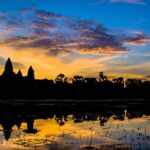
Choosing between sunrise and sunset is really about your energy level and your tolerance for early mornings. The sunrise option starts around 5:00 AM and usually ends around 12:00 PM, while the sunset option starts about 8:30 AM and runs until around 6:30 PM. If you want Angkor in cooler air and fewer midday crowds, sunrise is the better bet.
Sunset is more relaxed for your schedule, but it adds a big variable: the sky. On a clear evening, climbing for sunset views can feel like the payoff. If it’s cloudy, you can end up with less dramatic scenery than you hoped, and that can make the hill-top portion feel like work for not much payoff.
My practical advice: if sunrise sounds brutal, don’t force it. Instead, pick sunset and treat the day as a temple marathon with a calmer finish. If sunrise feels manageable, go for it—and pack a light breakfast like your hotel can prepare, because you may not want to hunt for food at 5:00 AM.
What you actually get with a private tour (and why it’s worth it)
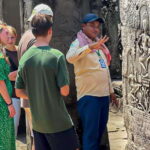
This is a true private group experience, not a shared minivan plan. That means the itinerary flow can match your pace: linger at details, ask questions, or adjust order when it makes sense. Guides are licensed local professionals, and you can request specific languages like English, French, German, Spanish, Italian, Portuguese, or Japanese.
Transport is another value point. For 1–2 people, the tour uses tuk-tuk on the day’s route (and in the 2-day option, that’s Day 1 on tuk-tuk). For 3+ people, you’ll usually get an A/C van or bus. If you hate overheating between stops, that A/C option matters a lot.
And yes, those small comfort items are included: cold water and a cold towel during visits. It sounds basic, but after hours in the sun, it’s the difference between pushing onward with grit and actually enjoying the day.
You can also read our reviews of more private tours in Siem Reap
Your temple day sequence: from Ta Prohm roots to Angkor Wat art
On the 1-day route, your day is built around the “hit list” while still giving you time to feel the place, not just photograph it and run.
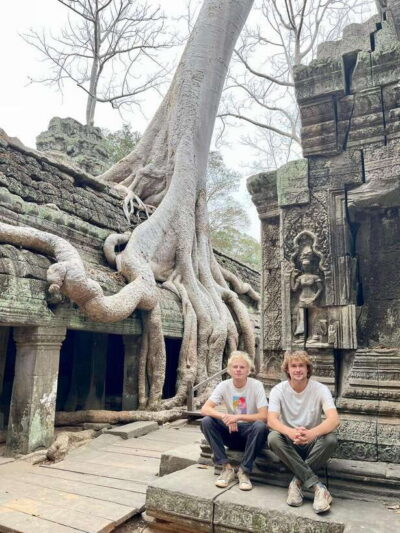
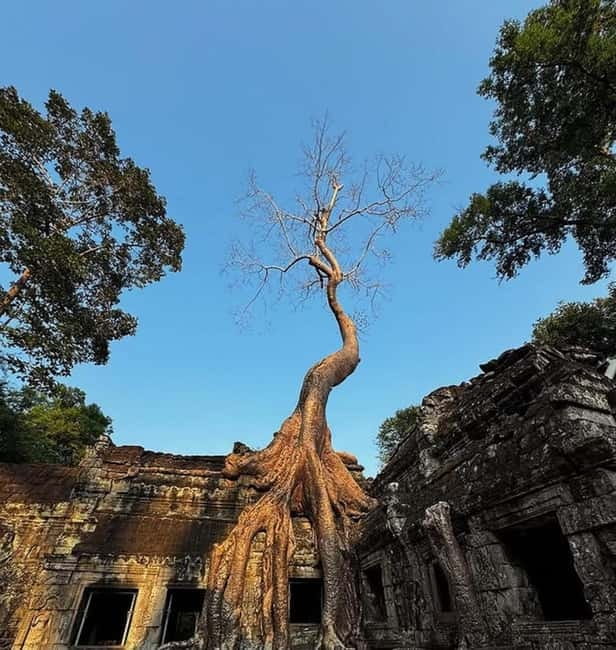
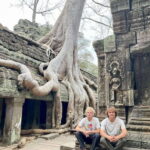
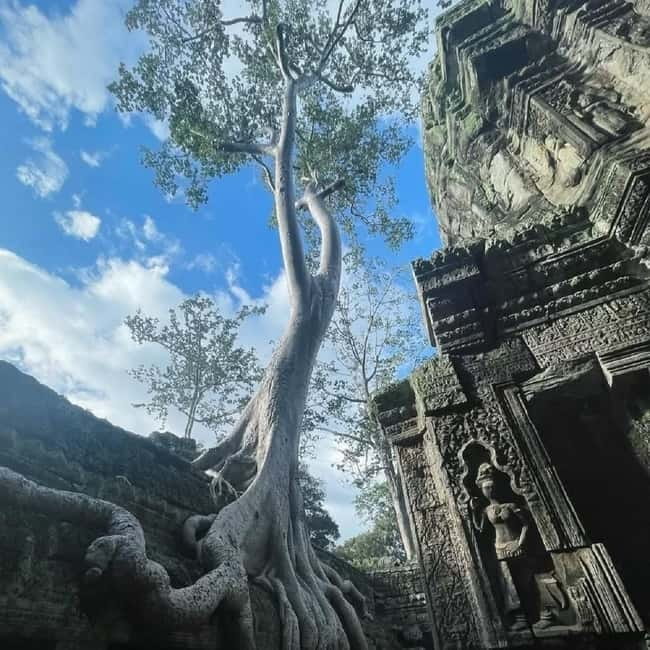
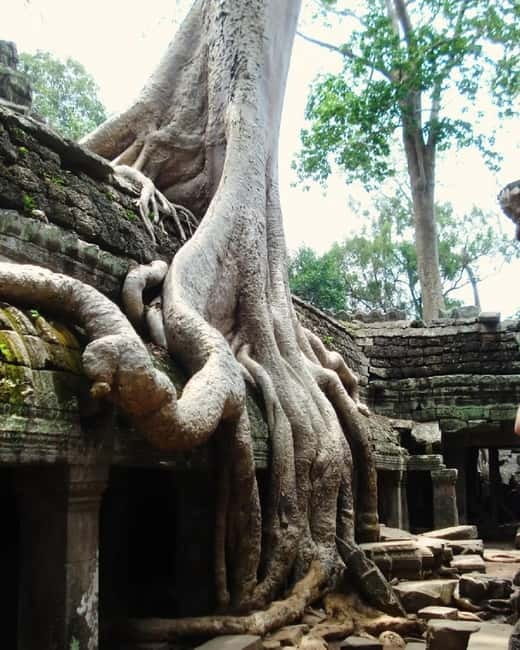
Ta Prohm is where you’ll start seeing Angkor’s signature contrast: stone architecture with huge tree roots weaving through walls. This stop is guided for about 1 hour, which is just enough time to spot the major structures and still catch the stories your guide will connect to the carvings and design.
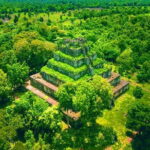
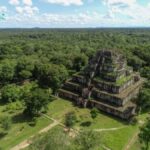
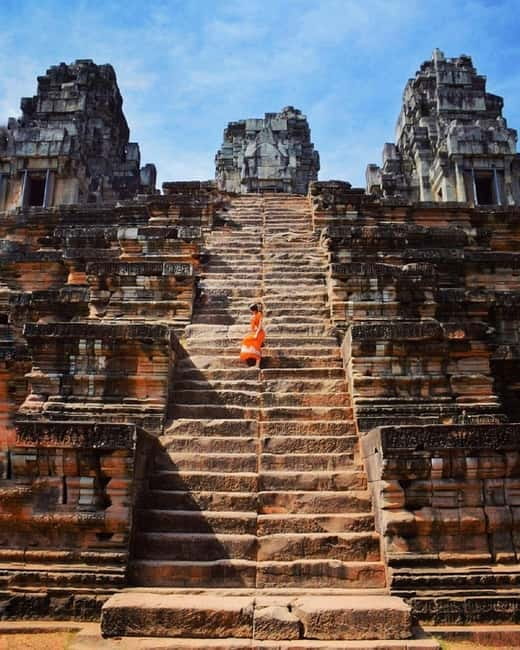
Next comes Ta Keo for roughly 30 minutes. This is a good palate cleanser between the dramatic jungle-mixed Ta Prohm vibe and the heavier political-religious Angkor Thom zone that follows. You get a chance to focus on the temple form and construction style instead of only on dramatic visuals.
Then you’ll move through the Victory Gate for a short photo stop (about 15 minutes). It’s a useful breather and a landmark moment—an easy place to reset before entering Angkor Thom’s core.
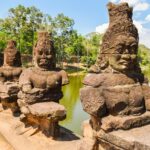
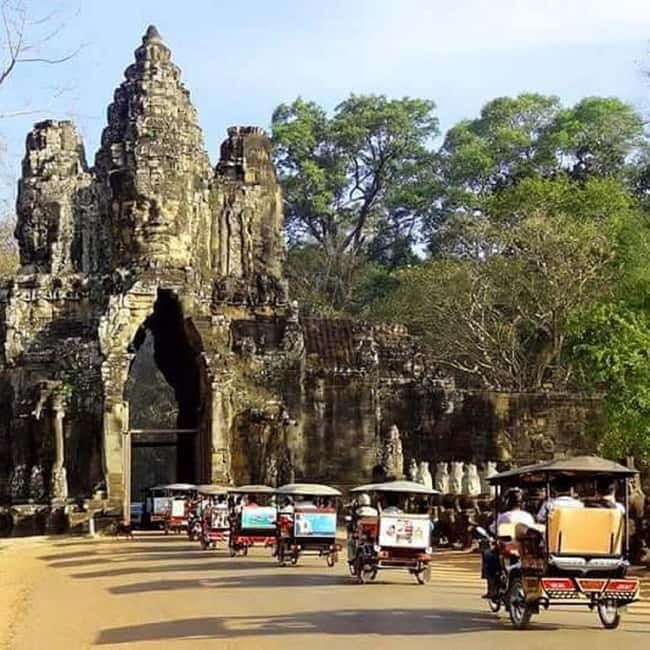
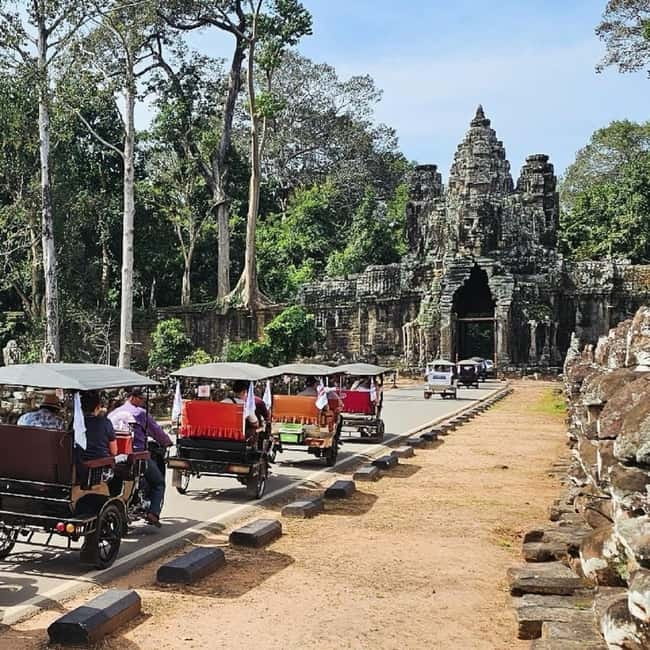
After that, you’re into Angkor Thom for about 1.5 hours. This is the city core, and the South Gate is the welcome you’ll be looking for: giant stone faces that frame your entry.
Angkor Thom: South Gate faces, terraces, and Bayon smiles
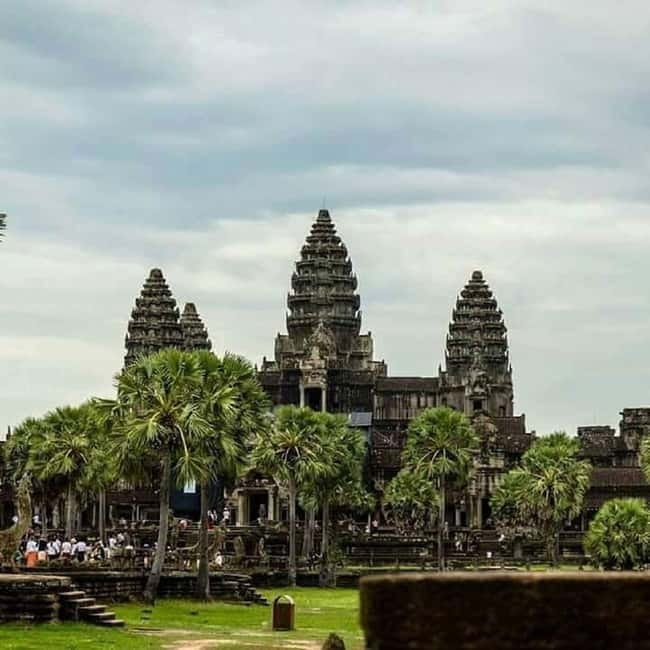
Angkor Thom is where your guide’s explanations really make the temples stick in your mind. The big sequence runs through the city’s ceremonial and symbolic spaces, and the carvings are part of the lesson.
You’ll spend time at Baphuon (about 45 minutes) and then Bayon (about 1 hour). Bayon’s towers with serene smiling faces are often what people remember most—yet the guided time helps you understand why the faces are there and how the temple fits into the story of Khmer power and belief.
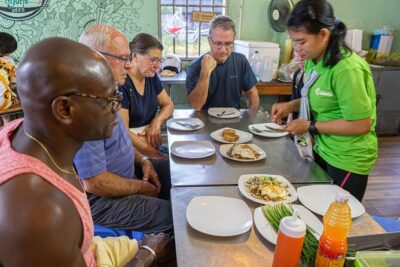
There’s also a water-and-memory stop: Srah Srang with a break and lunch time built in (about 1 hour). Lunch is not included, but having this pause in the route is smart. You get a chance to cool down before the later Angkor Wat segment.
Angkor Wat: world-class symbolism without the rush
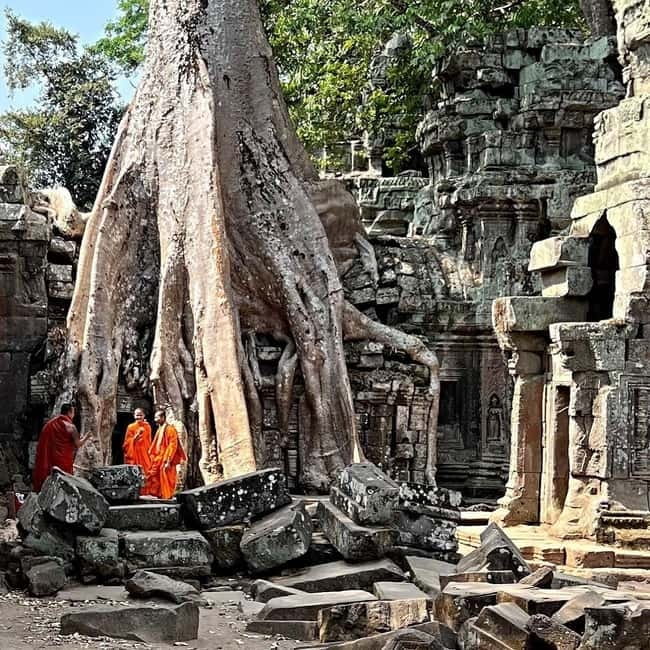
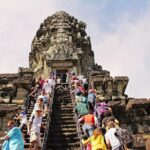
Angkor Wat is the late-day anchor on the 1-day plan, with about 2 hours guided time. This is where you’ll see the world’s largest religious monument take shape in details: the layout, the sacred geometry, and the art that turns stone into storytelling.
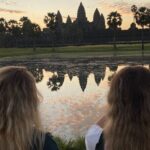
If you pick the sunrise option, your schedule shifts. Sunrise day starts early, then continues with the morning circuit before you finish around midday. If clouds aren’t too thick, the morning light can also make the stone surfaces feel sharper and the carvings easier to read.
A tip worth following: if you have limited time, ask your guide for the best photo moments and where to stand so you’re not just shooting crowded angles. The guides on this service are known for positioning you well for pictures, including helping you get great shots yourself.
Phnom Bakheng sunset: the payoff depends on the sky
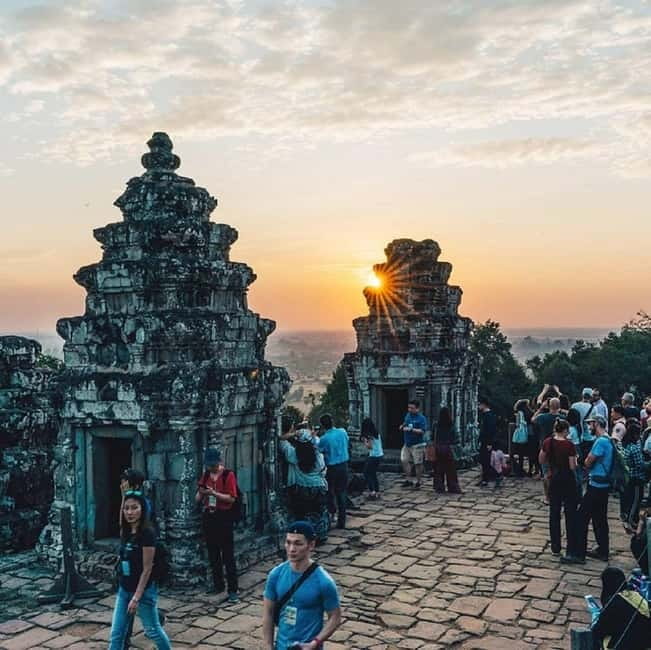
For the sunset option, you finish at Phnom Bakheng, with time for photos and the sunset itself (about 2 hours). This is a classic viewpoint area—trees, jungle edges, and the temple complex in the background.
Here’s the honest consideration: if you’re dealing with a cloudy evening, the view can flatten. In that case, you may feel like the hill climb is less rewarding than the photos you imagined. On the bright side, even without a perfect horizon, Phnom Bakheng still offers atmosphere and a sense of Angkor’s scale.
If you’re choosing sunset mainly for photos, be ready to adapt. Your guide can help you pick the most workable spots once you see the sky. The best experience usually comes when you treat sunset like a bonus, not a guaranteed payoff.
You can also read our reviews of more evening experiences in Siem Reap



The 2-day option: a smarter pace for the Grand Circuit and Banteay Srei
If you can spare the extra day, the 2-day tour is the “don’t feel rushed” plan. It combines the Small Circuit concept on Day 1 with the Grand Circuit temples on Day 2, plus Banteay Srei and a second sunrise.
Day 2 starts early again at 5:00 AM at Angkor Wat for sunrise. After sunrise, you’ll have breakfast time—your schedule allows a breakfast box or snacks you bring from your hotel. Then you move into the Grand Circuit for the morning and early afternoon temples.
The Day 2 temple lineup includes:
- Preah Khan (monastic complex with atmospheric corridors)
- Neak Pean (a smaller temple with tranquil pools)
- Ta Som (tree-covered gate)
- East Mebon (once standing on an island in an ancient reservoir)
- Pre Rup (mountain-style temple with broad views)
- Banteay Srei (the Citadel of Women, famous for intricate pink sandstone carvings)
This day ends around 1:00 PM and you return to your hotel. The value here is not just extra temples—it’s less pressure. Instead of cramming everything into one exhausting day, you spread it out and get better absorption.
Transport details that affect comfort: tuk-tuk vs A/C car
The transport choice isn’t trivia—it changes your whole day. For 1–2 people, tuk-tuk can be fun, but it also means more exposure to sun and dust as you travel between sites. For 3+ people, the A/C van or bus is a relief, especially in the middle hours.
On the 2-day option, the pattern is tuk-tuk on Day 1 and then a car on Day 2. That shift usually helps you handle Day 2’s longer list with better comfort. Either way, you get hotel pickup and drop-off, which removes one of the most stressful parts of planning Angkor.
Lunch, breaks, and how to plan your food
Lunch is not included in the tour price. The schedule gives you a structured break during Srah Srang, which is helpful because you are not trying to find a meal randomly while everyone is tired and hot.
My advice: keep expectations flexible. If you need strict dietary options, do some homework before you go. Otherwise, use the break time to reset and then head back into temple mode with energy.
For sunrise tours, remember food timing. The tour specifically recommends bringing a breakfast box from your hotel for the sunrise morning, so you’re ready to keep moving right after sunrise.
Dress code, what to bring, and what keeps you from getting stopped
Temple rules in Angkor are strict, and you’ll feel it if your clothes don’t match. Plan on comfortable shoes because you’ll walk. Bring sunglasses, a sun hat, sunscreen, and insect repellent. Also bring layers that can handle early morning or breezy hill-top areas.
What you wear matters:
- You may need a scarf to cover knees and shoulders for many temples.
- Except Angkor Wat, you must wear pants and skirts that cover knees and shirts that cover shoulders.
- No shorts, no short skirts, no sleeveless shirts, and no other revealing clothing.
If you travel with a tote bag or small backpack, you’ll be happier. You can store sunscreen and water while your guide keeps you moving between photo stops and guided areas.
Also note a hard limit: this tour is not suitable for wheelchair users.
Price and ticket reality: what $110 covers and what costs extra
The headline price is $110 per group up to 2, but Angkor’s entrance ticket is separate. You’ll need the Angkor Archaeological Park entrance ticket, which is $37 per person for 1 day and $62 per person for 2–3 days. Children under 12 can join without buying a ticket, and you’ll need to show a passport as proof for ticketing.
So what’s the value of the $110? You’re paying for:
- A licensed local guide in your language
- Private transport with pickup and drop-off
- Skip-the-ticket-line handling as part of the service
- Cold water and towels
- A guided route that hits major temples plus photo stops you might not find on your own
If you compare costs, the entrance ticket is only one piece. Where this tour becomes good value is when you factor in private guiding time and the logistics of getting between key sites efficiently—especially with the sunrise option and the hill sunset timing.
Who this Angkor tour suits best (and who might rethink it)
This private tour fits best if you:
- Want maximum time inside the temples and fewer headaches with logistics
- Prefer a guide who explains Khmer symbolism and history in a language you understand well
- Like the structure of a planned route but still want flexibility to control your pace
- Are traveling as a couple or small group and don’t want to share a guide with strangers
It can be less ideal if you want an unstructured wander or you’re trying to keep costs ultra-low. Also, if you’re not comfortable with early mornings, the sunrise option may feel like too much, and the cloudy-sunset risk is real.
One detail I’d highlight from the service reputation: guides like Youk, Buth, Visal, Thom, Phat, and Roberto are repeatedly praised for clear explanations, patience, and photo help. If photography matters to you, this is a strong reason to choose private instead of DIY.
Should you book this private Angkor tour?
Yes, if you want the Angkor highlights with a real guide, comfortable transport, and a schedule that doesn’t waste half your day getting organized. The private format is the big reason to book, especially if you care about understanding the carvings and layout instead of just collecting photos.
Choose the 1-day option if you’re short on time and want the Small Circuit feel with Angkor Wat and a sunset finish (or a sunrise-focused morning). Choose the 2-day option if you hate rushing and want Grand Circuit temples plus Banteay Srei with more breathing room.
If you’re the type who gets bothered by crowded sunrise viewpoints, consider sunset with the understanding that clouds can change the experience. Either way, bring the right clothes, plan for the entrance ticket cost, and you’ll get a smoother, more satisfying Angkor day.
FAQ
Is the Angkor entrance ticket included?
No. The Angkor Archaeological Park entrance ticket is not included. Prices listed are $37 per person for 1 day and $62 per person for 2–3 days, and you must show a passport as proof.
How much does the tour cost for a small group?
The price is $110 per group up to 2. For the 1-day and 2-day options, the entrance ticket is separate.
What are the pickup times for sunrise and sunset options?
The sunrise option pickup is 5:00 AM and the sunset option pickup is 8:30 AM. The sunrise day typically ends around 12:00 PM, and the sunset day ends around 6:30 PM.
Is lunch included?
No. Lunch is not included, though there is a lunch break time built into the schedule.
What’s the main difference between the 1-day and 2-day tours?
The 1-day option focuses on the Small Circuit-style route with a sunset finish (or sunrise-focused morning). The 2-day option adds more temples on Day 2, including the Grand Circuit and Banteay Srei.
Which languages are available for the guide?
The tour offers guides in English, Spanish, French, Portuguese, Italian, German, or Japanese. You can choose your preferred language.
What transport will I use during the tour?
For 1–2 people, it’s tuk-tuk (with a car available at checkout for the 1-day option). For 3+ people, it’s an A/C van or bus. The 2-day option uses tuk-tuk on Day 1 and car on Day 2.
Does the tour include hotel pickup and drop-off?
Yes. Hotel pickup and drop-off are included, and you’ll be picked up from your hotel in Krong Siem Reap.
What should I wear and bring for Angkor temples?
Bring comfortable shoes, sunglasses, a sun hat, sunscreen, and insect repellent. Plan clothes that follow the temple dress code: you may need a scarf, and except Angkor Wat you generally must cover knees and shoulders (no shorts, short skirts, or sleeveless shirts).
Is this tour wheelchair accessible?
No. It is not suitable for wheelchair users.