REVIEW · SIEM REAP
Angkor Cycling Tour
Book on GetYourGuide →Operated by BULFROG by CAMOUFLAGE ADVENTURES CAMBODIA · Bookable on GetYourGuide
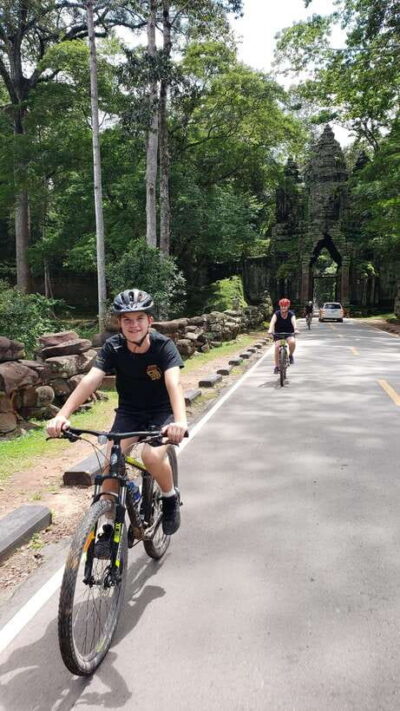
Angkor on a bicycle beats the usual rush. You get Angkor Wat with a guide who explains what you’re seeing, while the day also includes calmer riding through canal paths and rainforest trails. It feels like you’re traveling through the Angkor complex at a human pace, not just checking boxes.
My favorite part is the mix: 70% off-road trails paired with real nature breaks. At Jayatataka Baray you can slow down for birdwatching and wildlife moments (and if you’re lucky, you may spot freshwater otters), then get back on the bike for ruins that sit right inside the forest. One thing to plan for: the temple pass is required but not included, and you’ll need modest, temple-appropriate clothing.
In This Review
- Key takeaways before you book
- Why cycling Angkor feels different from tuk-tuk hopping
- The 7-hour plan: 35 km, temples first, then forest loops
- Angkor Wat by bike: moat rides and real guided context
- Angkor Thom fortifications: Ghost Gate and the thrill of wall riding
- Elephant Terrace lunch with a view, plus Khmer snacks
- Ta Nie Temple and Jayatataka Baray: the best wildlife break of the day
- Ta Prohm’s “tree and stone” effect: when the ruins grow back
- Cycling difficulty and what it means for your comfort
- Support, included extras, and how the day stays easy to manage
- Price and value: $65 for 35 km that blends ruins and nature
- Who should book this Angkor Cycling Tour
- Should you book this Angkor Cycling Tour?
- FAQ
- Do I need a temple pass for this tour?
- How long is the Angkor Cycling Tour?
- How far do we cycle?
- Is the route mostly paved or off-road?
- What’s included in the price?
- What’s not included?
- What language is the guide?
- Where do you pick me up and drop me off?
- What should I bring and wear?
- Is the tour suitable for everyone?
Key takeaways before you book
- 35 km route in 7 hours with a steady start at 7:45 AM and plenty of stops
- 70% off-road on jungle and countryside tracks, plus 30% paved roads for easier cruising
- Angkor Wat and Angkor Thom wall riding, including Ghost Gate and Bayon Temple
- Jayatataka Baray wildlife stop with birdwatching, plus chances to see monkeys and freshwater otters
- Ta Prohm’s jungle-ruins vibe—the famous roots-and-stone feeling
Why cycling Angkor feels different from tuk-tuk hopping
Angkor by car is fast. Angkor by bike is slow enough to notice details—tree roots wrapped around stone, small birds along the water, the way the ruins sit inside daily life. This tour uses that advantage on purpose. You spend the day moving under your own power, so the temples aren’t just something you stare at from a distance.
Two parts of the experience really click. First, the guided temple stops matter because Angkor is full of symbols, not just pretty towers. Second, the riding route is built to connect monuments with nature, so you don’t feel like you’re bouncing from one landmark to the next with long boring transfers. Instead, you keep turning history into a walk-and-ride loop.
Just remember the trade-off: you’re covering a lot of ground (35 km). Even with a moderate level, you’ll be grateful you chose a day that mixes easy stretches with more adventurous single tracks.
You can also read our reviews of more cycling tours in Siem Reap
The 7-hour plan: 35 km, temples first, then forest loops
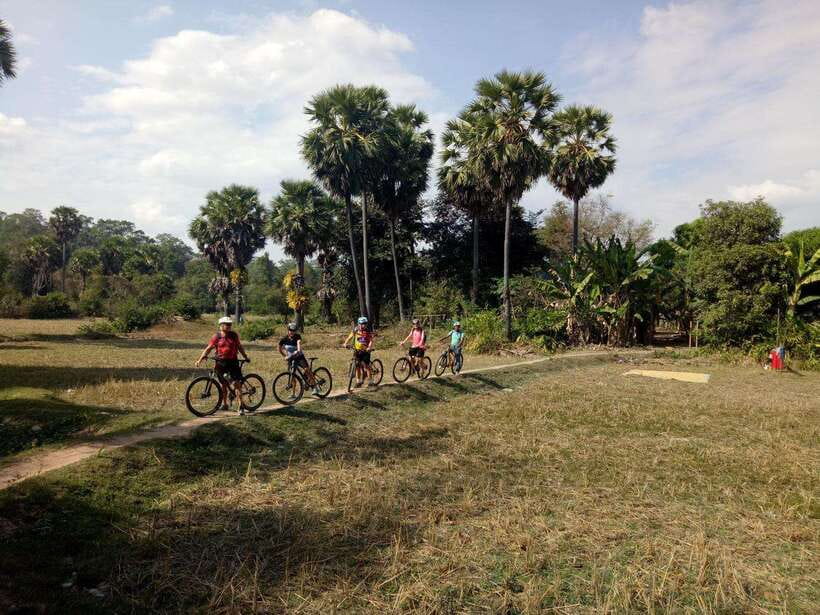
The day runs as a full temple-and-nature circuit, starting at 7:45 AM. You’ll get picked up about 15 minutes before from places in Siem Reap city, then do a quick bike fitting before heading out toward Angkor Wat.
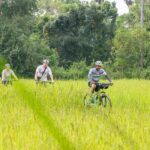
From there the flow is simple: ride to the first major temple, take guided time on foot, then ride between sites using a mix of paved roads and off-road trails. The route is listed as 30% paved and 70% off-road, and that off-road mix is a big part of why this day feels like an adventure rather than a scenic drive with handlebars.
By the time you reach Ta Prohm and start heading back into town, you’re not just done—you still get a “return ride” segment (about 12 km along winding single tracks and smooth bike lanes). It helps the day end on movement, not on exhaustion.
Angkor Wat by bike: moat rides and real guided context
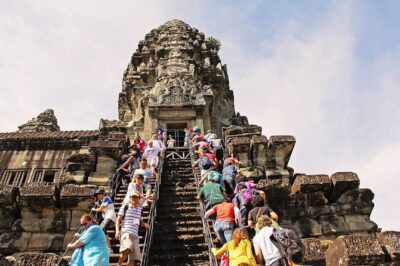
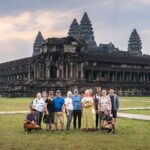
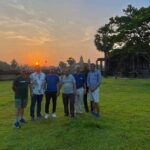
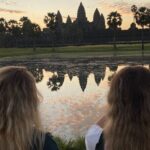
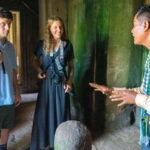
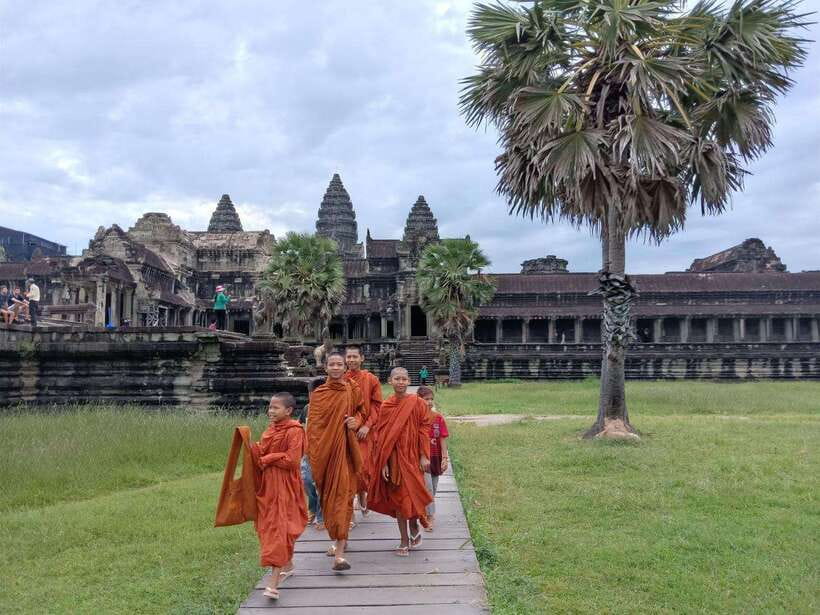
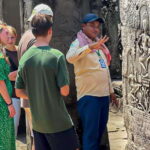
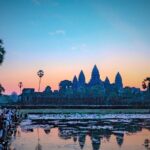
Angkor Wat is the headline, and this tour treats it like one. You ride in first, then spend around two hours exploring with your guide. The big value here is the guidance: you don’t just wander among towers and bas-reliefs. You get stories that help you read the temple instead of guessing.
Cycling along the moat area is also a smart way to start your day. It gives you a visual “warm-up” for what comes next. You see the temple from angles you’d miss if you arrived by vehicle, and you have time to take photos without feeling rushed.
Practical tip: Angkor Wat is sacred ground, so dress rules matter. You’ll want closed-toe shoes (required) and clothing that won’t look out of place at temples. The tour notes that you may wear shorts while biking, but bring spare cloth for temple visits.
Angkor Thom fortifications: Ghost Gate and the thrill of wall riding
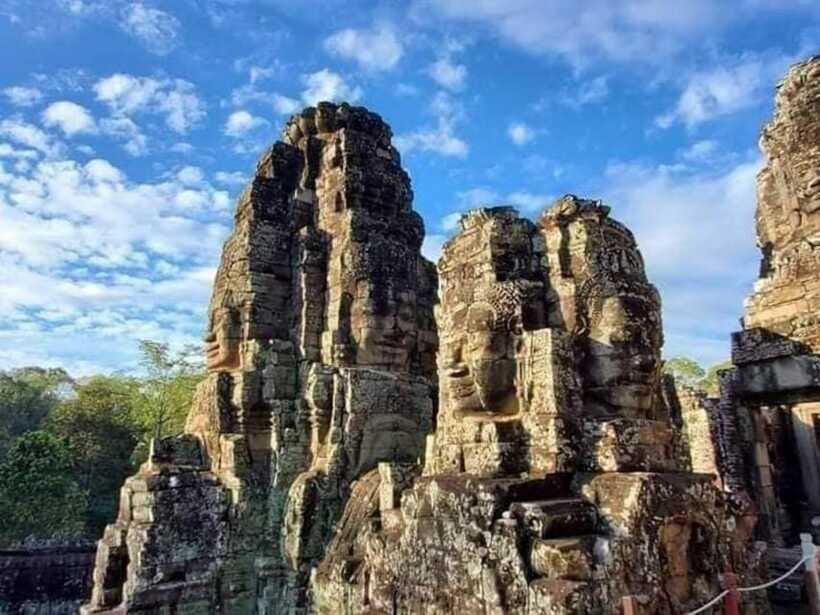
After Bayon and beyond, the Angkor Thom section turns your day into something more active. One of the most memorable elements is the ride connected to the ancient city’s fortifications—yes, it’s the chance to experience the structure from atop the wall area, which changes how you feel the scale of the place.
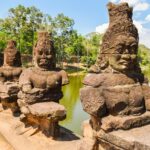
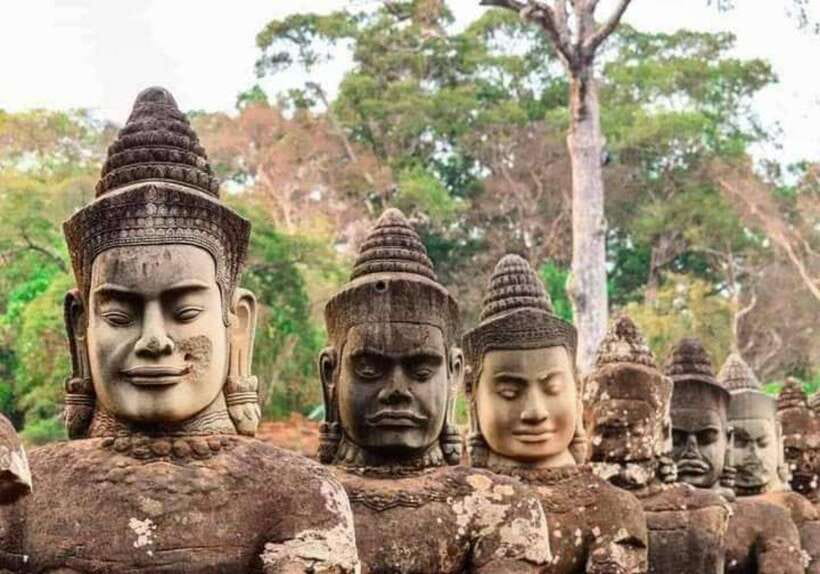
You’ll also visit Ghost Gate, a gateway with a mysterious reputation, with time to stop for photos and learn what makes it significant. This is one of those stops where the guide’s explanations can make the stones feel like a map, not just a backdrop.
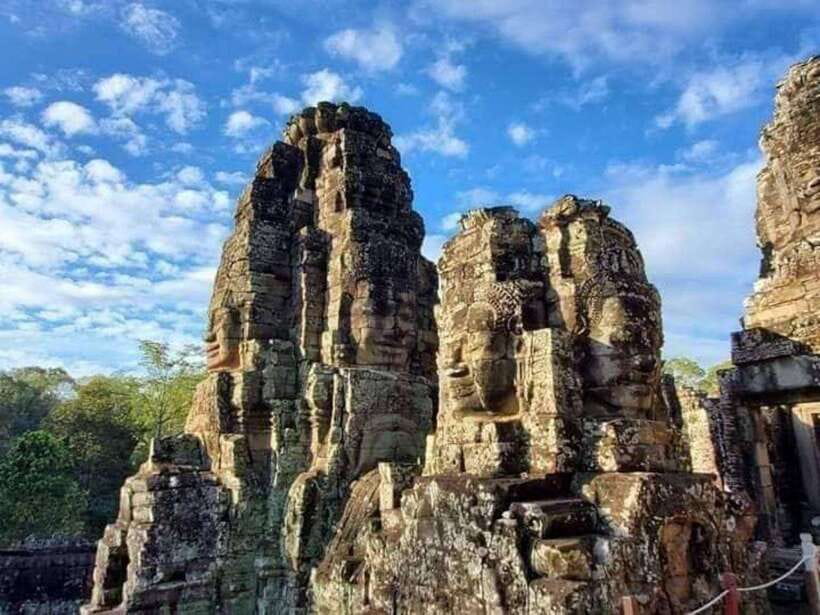
Then comes Bayon: its famous stone faces are carved high above, and you see them as the day’s light shifts. This part works because the earlier riding positions you for a slower, more attentive temple look. You’re already warmed up, so you can focus when you step off the bike.
Elephant Terrace lunch with a view, plus Khmer snacks
Lunch is planned at Elephant Terrace, and it’s not a random roadside meal. The tour includes lunch at a local restaurant in front of the Elephant Terrace area, so you can eat with the temple scene in the background.
You’ll also get water and snacks throughout the day, and the itinerary notes cold water and snacks served at stops with warm hospitality. That matters in Siem Reap heat. A day like this isn’t about eating a full buffet—it’s about staying fueled so you can keep moving.
What I like about this approach is that it keeps you from losing time to long transfers. You’re already cycling between major sites, so lunch becomes part of the route instead of a detour.
Ta Nie Temple and Jayatataka Baray: the best wildlife break of the day
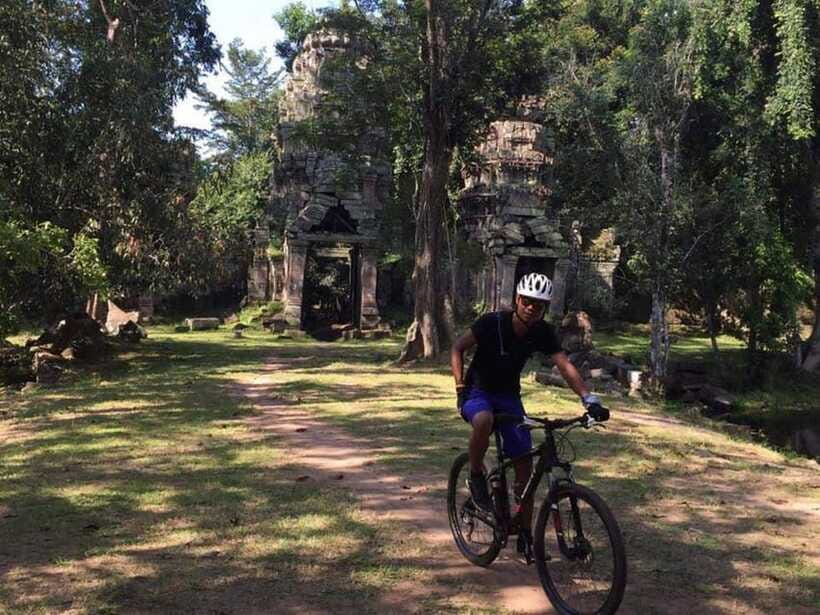
When your schedule includes ruins all day, you need a breather that isn’t just another stop with stones. This is where Ta Nie Temple and Jayatataka Baray do their job.
Ta Nie is described as a hidden sanctuary embraced by nature. That usually means fewer crowds and a more quiet feel than the big name temples—so your brain gets a reset between the major monuments. You ride out of the city to reach it, which already sets a different tone before you ever see the temple.
Then comes Jayatataka Baray, a wildlife-friendly pause where you slow down for birdwatching. The tour specifically highlights seeing birds and butterflies, with a chance to spot monkeys. You may also see freshwater otters, and the listed bird possibilities include cranes, egrets, lesser whistling ducks, and kingfishers.
Even if you don’t spot every animal, the value is the timing and the setting: this is a moment to step away from peak temple intensity and look at Angkor as a living ecosystem.
A nice bonus is the mention of a peaceful tree nursery garden at Jayatataka Baray. That gives you a calmer, greener interlude—perfect when you’ve already been cycling since morning.
Ta Prohm’s “tree and stone” effect: when the ruins grow back
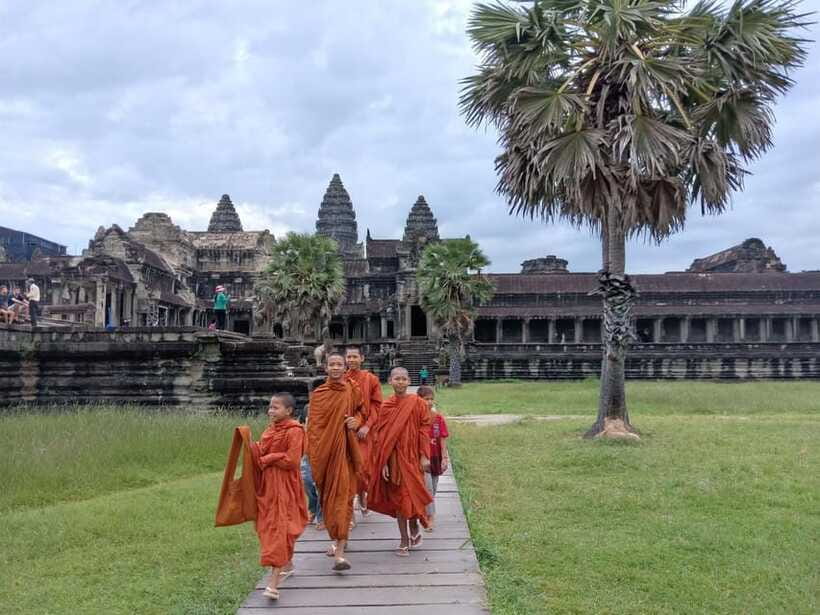
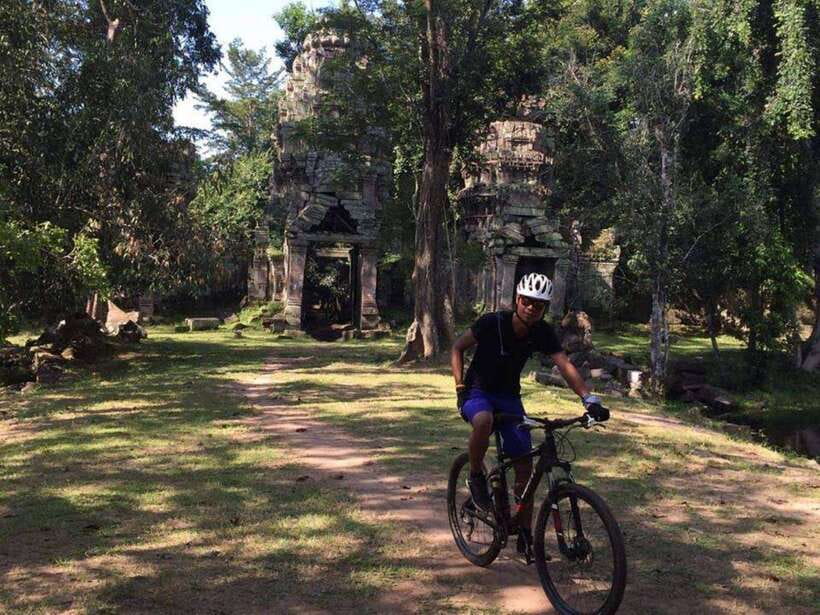
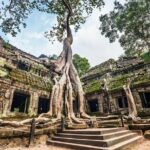
Ta Prohm is the temple most people recognize from images, but the real experience is the way the roots and stones feel interwoven. On this tour you arrive after the Jayatataka Baray stop, so by the time you reach Ta Prohm you’re ready for a dramatic shift back to monumental scale.
Expect the signature look: colossal tree roots wrapping around ancient walls. It’s one of those places where your photos can’t fully capture the depth. Even if you’ve seen pictures online, being there lets you see how thick the roots are and how tightly they hold the stone structure.
This stop also balances the day well. Earlier, you rode through walls and gates and studied temple architecture. Here, nature is the co-star, and your guide’s explanations help you understand that the jungle isn’t just decoration—it’s part of how the site survives and tells its story.
Cycling difficulty and what it means for your comfort
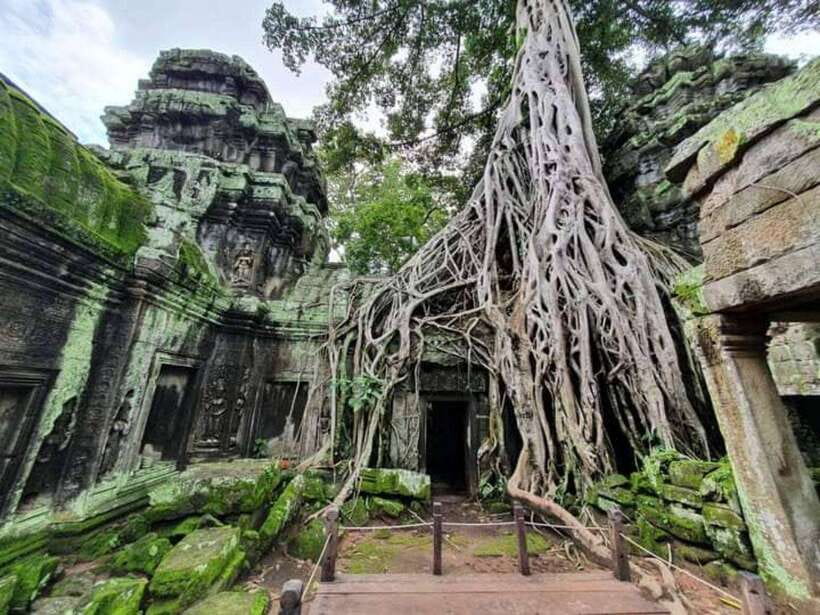
The tour is labeled Level: Medium, and the rhythm is usually described as mostly easy with a few moderate sections. That lines up with the route mix: 30% paved roads for smoother cycling, plus 70% off-road trails for the adventurous parts.
Off-road trails in Angkor can mean uneven ground, sandy or muddy sections, and tight turns where you’re forced to slow down and pay attention. That’s fun if you’re present. It’s not ideal if you’re expecting a casual ride like a beach bicycle path.
So dress for biking comfort and heat:
- Closed-toe shoes (required)
- Light, breathable clothing for the ride
- Spare cloth for temple visits (the tour explicitly calls this out)
- Sunscreen and sun glasses are recommended
Also note a restriction: loose clothing is not allowed. That’s the kind of rule that sounds small until you’re on a bumpy trail and something flaps around. Bring something fitted enough to move safely.
Support, included extras, and how the day stays easy to manage
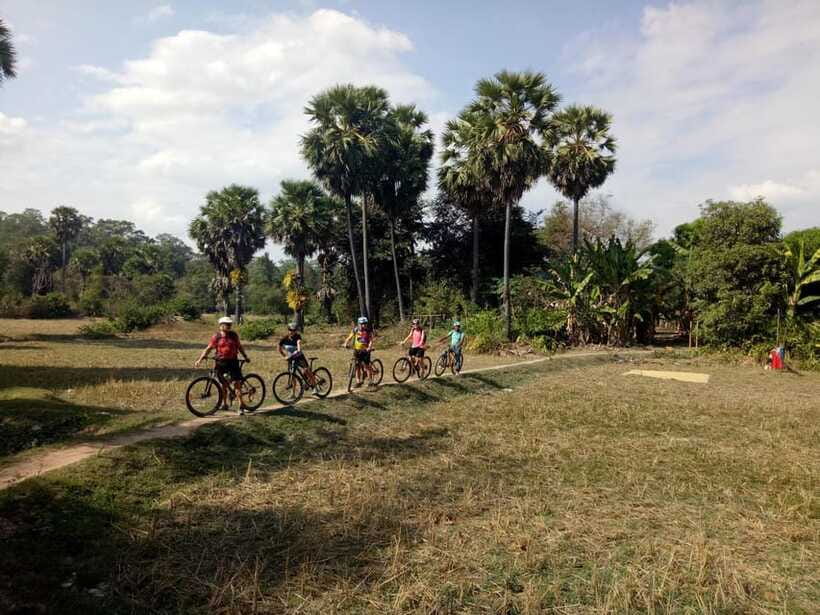
For a full-day cycling tour, the “small” logistics matter. This one includes:
- Mountain bike and helmet in all sizes
- An English-speaking guide (the tour also lists Spanish)
- Water and snacks, plus cold water/snacks at stops
- A bike spare part and a 1st aid kit
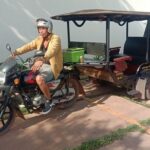
- Free tuk tuk transfers (a helpful cushion if weather, traffic, or timing gets weird)
There’s also a practical perk at temples: you get skip-the-line access through a separate entrance. That saves time during busy hours, and it keeps the day’s schedule more believable.
If you’re wondering about transport, the tour notes transfers by tuk tuk or minivan depending on group size. That flexibility is useful in Siem Reap where schedules can be thrown off by traffic.
Price and value: $65 for 35 km that blends ruins and nature
At $65 per person for a 7-hour day, the value depends on what you want from Angkor. If you only care about temples from a car window, you could do it cheaper or similarly priced using private transport. But if you want an active day that connects temples with forests, wildlife breaks, and off-road riding, this price feels fair.
Here’s what you’re paying for that you might otherwise have to assemble yourself:
- Guided temple time (including Angkor Wat exploration and the Angkor Thom/Bayon area)
- A long cycling route with a high share of off-road trails
- Lunch at a local restaurant near Elephant Terrace
- Water and snacks, plus stop refreshments
- Bike and helmet included, plus spare part support
- Free tuk tuk transfers and separate-entrance temple access
The main cost you still need to account for is the temple pass, which is required but not included. That extra expense is the biggest “gotcha.” Still, if you’re already planning a temple pass day, you’re basically converting temple time into a moving, nature-linked itinerary.
Who should book this Angkor Cycling Tour
This is a great fit if you want:
- A balanced day of history plus nature
- More peaceful pacing than you’d get with purely vehicle-based touring
- The chance to ride off the main roads (not just smooth pavement)
- Wildlife time, especially at Jayatataka Baray
It’s less ideal if you:
- Want a totally relaxed, no-effort day
- Have mobility limits that don’t match a 35 km ride with off-road sections
- Are pregnant (the tour states it’s not suitable)
If you’re comfortable riding a bicycle for hours and you like getting out of the crowd flow, you’ll probably enjoy the rhythm a lot—temples on foot, riding between them, and nature breaks that actually change the feel of the day.
Should you book this Angkor Cycling Tour?
If your ideal Angkor day includes two-wheel time, guided temple storytelling, and at least one genuine nature break, I’d book it. The combination of Angkor Wat, Angkor Thom’s wall-and-gate experience, Ta Nie’s quieter feel, Jayatataka Baray wildlife, and Ta Prohm’s jungle-ruins atmosphere is a strong mix for one day.
Book it with two things in mind: the temple pass is required (plan that cost), and you need to dress correctly for temples while still being comfortable for cycling. Get those basics right, and this becomes one of the more memorable ways to see Angkor without feeling rushed.
FAQ
Do I need a temple pass for this tour?
Yes. The tour notes that a temple pass is required but not included in the tour price.
How long is the Angkor Cycling Tour?
It’s a full-day tour listed as 7 hours, with the ride beginning at 7:45 AM.
How far do we cycle?
The route is about 35 km for the day.
Is the route mostly paved or off-road?
It’s planned as 30% paved roads and 70% off-road trails.
What’s included in the price?
Included are a mountain bike and helmet, English-speaking guide, lunch at a local restaurant, water and snacks, a 1st aid kit, a bike spare part, and free tuk tuk transfers.
What’s not included?
The temple pass, travel insurance, and personal expenses are not included.
What language is the guide?
The tour offers a live guide in English and Spanish.
Where do you pick me up and drop me off?
Pickup is included from hotels/apartments/Airbnbs in Siem Reap city about 15 minutes before. Drop-off options include Siem Reap Province and Krong Siem Reap.
What should I bring and wear?
You need closed-toe shoes. The tour also recommends sunscreen and sun glasses, and bringing spare clothing for temple visits since shorts may be okay while biking but temples require more modest covering.
Is the tour suitable for everyone?
It’s not suitable for pregnant women. The tour also specifies that loose clothing is not allowed.