REVIEW · SIEM REAP
Two-days tour discovering Angkor Wat and Floating Village
Book on Viator →Operated by Angkor Wat Travel Tour · Bookable on Viator
Angkor feels less chaotic with a plan. I love the air-conditioned vehicle with pickup and the fact that transport is taken care of, so you spend your energy on the sights instead of moving around. One heads-up: entrance tickets and meals aren’t included, so you’ll want to budget a bit extra.
The other big reason I like this route is the built-in Angkor Wat sunset and the smart mix of headline ruins and quieter stops like Banteay Kdei. Day two also reaches the Tonle Sap area via Kompong Phluk’s stilt homes, turning the trip into more than just temple sightseeing.
In This Review
- Key highlights at a glance
- How This Two-Day Angkor Plan Saves You Time (and Sunburn)
- Pickup at 8:30 and the Comfort of Having Transport Covered
- Day 1 Through Angkor Thom: Bayon Faces, South Gate Drama, and Ta Prohm Roots
- What can feel tiring on Day 1
- Banteay Kdei to Angkor Wat: Building Toward That Sunset
- Day 2 Kompong Phluk: Tonle Sap’s Floating Life, Hospital, and Fishery
- The main consideration for Kompong Phluk
- Museum and Market Stops That Help You Understand What You Just Saw
- Artisans Angkor Stone Carving: A Hands-On Souvenir With Meaning
- Price and Value: Why $92 Can Work (Even With Tickets Extra)
- Who Should Book This Tour (and Who Might Want a Different Style)
- Should You Book This Two-Day Angkor and Floating Village Tour?
- FAQ
- How long is the tour?
- What time does the tour start?
- Is pickup included?
- Are entrance tickets included?
- Do you visit Kompong Phluk and the Angkor National Museum?
- Can I cancel for a full refund?
Key highlights at a glance
- A two-day Angkor loop that hits the big names: Bayon (Angkor Thom), Ta Prohm, Banteay Kdei, and Angkor Wat
- Angkor Wat at sunset: one of the best times to see the temple’s silhouette and get great light
- Transport handled both days: air-conditioned comfort with cold water and a cold towel
- Real local life beyond the ruins: Kompong Phluk floating village on Tonle Sap
- Culture stop that adds context: Angkor National Museum before you judge what you saw all day
- Hands-on stone carving: a workshop visit at Artisans Angkor where you make your own piece
How This Two-Day Angkor Plan Saves You Time (and Sunburn)
Angkor has a way of making even excited people feel rushed. This tour keeps the schedule tight but not frantic by bundling the transport, the route between major sites, and an English-speaking guide into a single package. The payoff is simple: you get more time looking at temples and less time figuring out how to get there.
I also like the practical comfort details. An air-conditioned vehicle matters in Siem Reap heat, and the cold water and cold towel are the kind of small things that keep the day from turning into a sweat contest. And since it’s private, it’s just your group—no random merging into someone else’s pace.
The main tradeoff is also a common one in Cambodia: entrance tickets and meals are not included. You’ll still need to plan meals and pay site fees on your own, so this isn’t the “everything packed in” option.
You can also read our reviews of more tours and experiences in Siem Reap.

Pickup at 8:30 and the Comfort of Having Transport Covered
The tour starts at 8:30 am, which is a solid time to beat the worst of the day. From there, you’re in an air-conditioned vehicle with an English-speaking guide, moving between temples and stops without spending your energy on logistics.
This is more valuable than it sounds. Angkor ruins are spread out, and traffic and ticket lines can eat up hours fast if you’re doing it solo. With transport included both days, you can keep your attention on what matters: the temples, the views, and the little details you’d otherwise miss.
Also, you’ll get cold water and a cold towel, which is the kind of comfort that helps you actually enjoy the midday. If you’re sensitive to heat, that alone can make the day feel easier.
Day 1 Through Angkor Thom: Bayon Faces, South Gate Drama, and Ta Prohm Roots
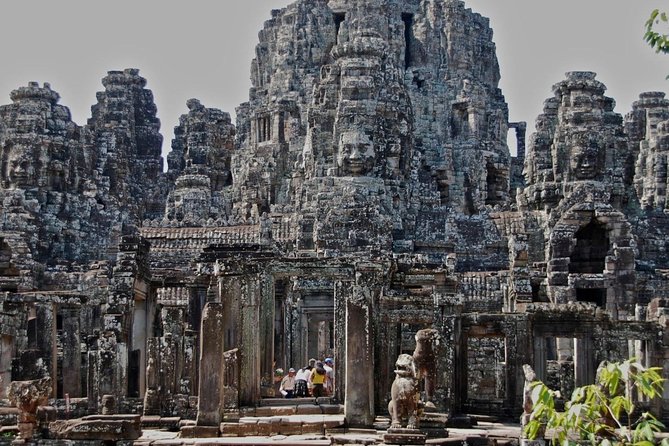
Your day begins with Angkor Thom and Bayon Temple, a classic starting point because it sets the tone for the whole region. You go through the south gate of Angkor Thom, then move through the complex with the famous Bayon temples. This is where you see the 54 towers and 216 faces of Buddhisatva Avalokesvara—a detail that’s easy to understand once you’re standing there, even if numbers feel abstract on paper.
After Bayon, you also visit Baphoun temple. This stop helps balance the day. Bayon gives you the iconic faces, and Baphoun adds another layer of temple architecture without turning the whole morning into one long photo line.
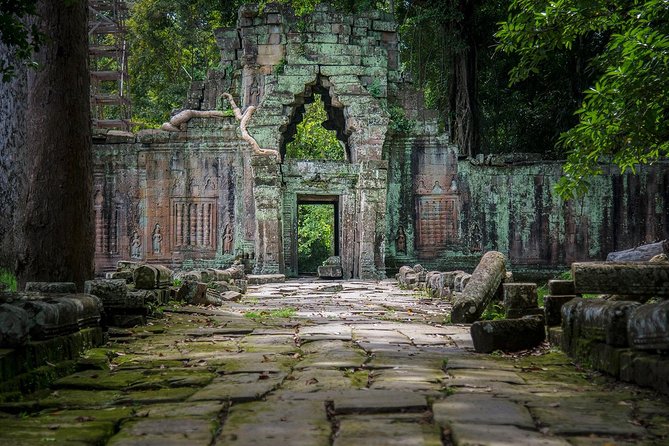
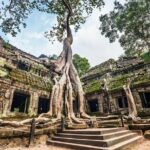
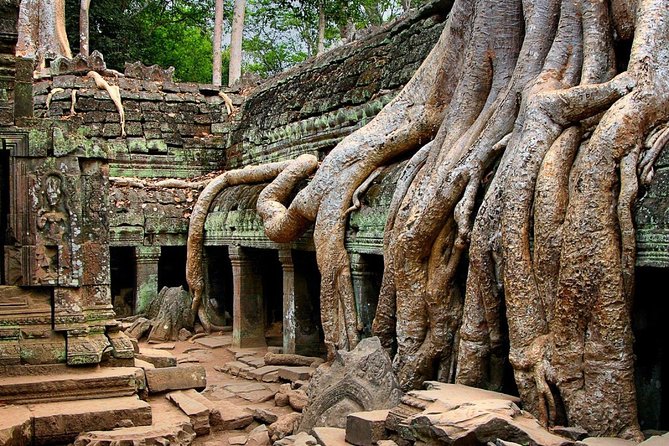
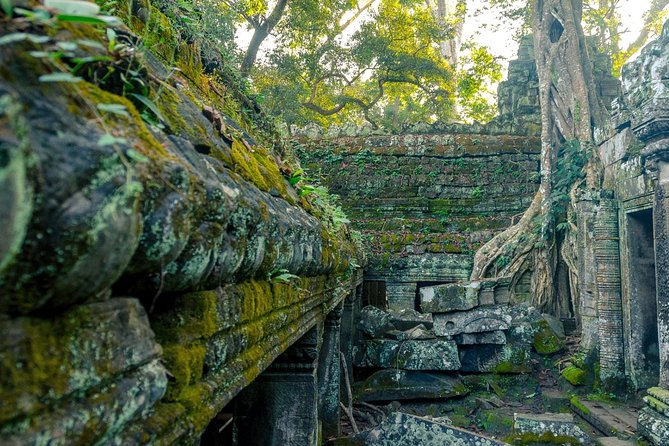
Then comes Ta Prohm, the so-called jungle temple or tree temple. The point here isn’t just the look—it’s the feel. Massive roots hold the stone in place like slow-moving time. The longer you stand there, the more you notice how the temple and the trees grew into each other over centuries, and that changes how you see restoration efforts in the region.
How to enjoy these stops more: slow down for the close-up details. With the guide, you can also get a better read on what you’re looking at without needing to guess.
What can feel tiring on Day 1
Two hours at Bayon/Angkor Thom and another two hours at Ta Prohm can sound like a lot, and it is in the heat. The comfort vehicle helps between stops, but you’ll still want to pace yourself, drink the provided water, and take short shade breaks when you can.
Banteay Kdei to Angkor Wat: Building Toward That Sunset
After Ta Prohm, the itinerary shifts into Banteay Kdei for about an hour. Built by King Jayavarman VII in the late 12th century, it’s a good choice because it feels less like a checklist item and more like a place you can stand in and absorb. It also gives your feet a small break from the heaviest crowds.
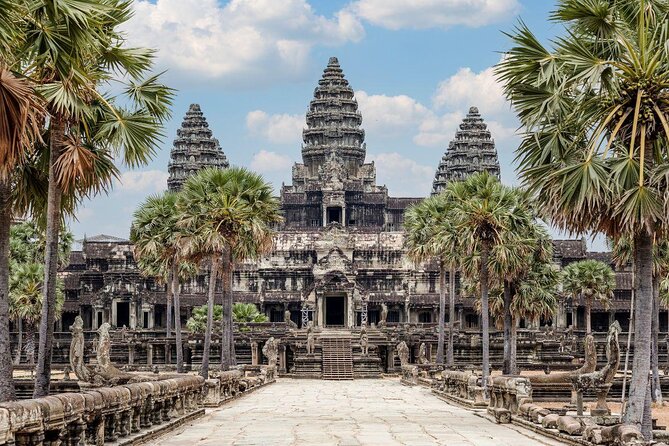
Then you move to Angkor Wat, which is the main event. You’ll spend roughly three hours here, and the tour is designed to end the day with sunset over Angkor Wat—a UNESCO World Heritage Site and one of Southeast Asia’s most recognizable temple complexes.
Sunset at Angkor Wat works because the lighting makes the temple read better. Stone texture shows up more clearly, shadows deepen, and the complex looks like it belongs to the landscape instead of sitting inside it. Even if you’ve seen photos, it’s the timing that makes it feel different in person.
One practical note: sunsets mean you’ll still be there when it’s cooler but not necessarily calm. It’s a popular moment, so your best move is to stay patient, pick your viewing spot, and let your guide handle the pacing so you’re not constantly relocating.




Day 2 Kompong Phluk: Tonle Sap’s Floating Life, Hospital, and Fishery
Day two heads to Kompong Phluk, about 30 km from Siem Reap, for roughly four hours. This is where the trip becomes more about people and daily life than stone. Kompong Phluk is a traditional floating village on Tonle Sap, the largest freshwater lake in Southeast Asia. Stilted houses rise above the water, and you’ll see how the community adapts to the lake’s rhythm.
This stop includes sights that most temple-only days skip. You’ll get to see tall stilted homes, a floating hospital, and a fishery, plus a look at old-style Khmer living. The floating setting changes how you think about infrastructure. It’s not just scenic—it’s functional.
What I think makes Kompong Phluk worth your time is that it adds context. When you’ve spent the first day in sacred architecture, it’s refreshing to see a different kind of culture built around the same region. You start noticing how water, livelihood, and community shape everything.
The main consideration for Kompong Phluk
It’s a full block of time, and you’ll be exposed to lake air and daylight. Wear and pack like you’ll be outside for most of the day. The tour includes water support via the vehicle, but this is still an excursion day, not a museum day.
Museum and Market Stops That Help You Understand What You Just Saw
After Kompong Phluk, you shift gears to indoor and semi-indoor learning. You’ll visit the Angkor National Museum for about one hour. The museum is focused on Buddha statues and relics, showing a major collection in one gallery. It’s a helpful bridge between temple ruins and what those places meant to people who lived with them.
Then there’s a stop to see Siem Reap’s old market. Markets are where a destination becomes real fast. Even if you keep purchases minimal, it’s a chance to understand what locals do day to day, how goods move, and what the area feels like when you’re not standing in front of a temple.
Neither of these stops are as visually dramatic as Angkor Wat. But they do something important: they make the ruins click faster.
Artisans Angkor Stone Carving: A Hands-On Souvenir With Meaning
The final activity is at Artisans Angkor (Artisans D’Angkor), a local NGO that helps improve life for disadvantaged Cambodians from rural areas. You’ll visit the workshop and try your hand at stone carving.
This matters because it’s not just a tourist craft. You’re watching a working environment, meeting the reality behind an organization, and making something with your own hands. The practical side is also good: it breaks up the day after temple viewing and lake walking, and it gives you a moment to slow down and focus.
If you’ve never carved before, don’t worry. You’re not expected to become an artist in an hour. The goal is participation, learning how the process feels, and taking home a small piece of the day.
Price and Value: Why $92 Can Work (Even With Tickets Extra)
At $92 per person for a roughly two-day experience, this tour can be good value if you want the major Angkor highlights without doing the planning math yourself. The price covers an English tour guide, an air-conditioned vehicle, and cold water and a cold towel, plus transport across both days.
The big reason the price feels fair is that it combines two “time-expensive” elements:
- Multiple temple sites that are awkward to string together efficiently on your own
- A full day trip component to Kompong Phluk, which takes real time and logistics
What’s not included is also clear: entrance tickets and meals. So if you’re trying to keep total spending extremely low, you’ll want to estimate those extra costs before you book. Still, for people who don’t want to spend their holiday assembling routes, paying for guidance and transport can make the whole trip less stressful.
Also, there’s pickup offered and group discounts mentioned, which can be helpful if you’re traveling with friends or family.
Who Should Book This Tour (and Who Might Want a Different Style)
This tour is a strong fit if you want:
- A guided Angkor route that hits major ruins over two days
- English commentary so you understand what you’re seeing as you walk
- A day on Tonle Sap via Kompong Phluk, not just temples
- A mix of big sights and calmer, contextual stops like the museum
It might be less ideal if you:
- Hate paying for entrance fees on top of the tour price
- Prefer fully unscheduled freedom to move at your own pace all day
- Want a heavy focus on one single theme, like only Angkor Wat or only living culture
If you’re traveling with kids, note that children must be accompanied by an adult. And if you have mobility limitations, “most travelers can participate” is the only accessibility info provided—so you’ll want to think through the amount of walking at temples and outdoors at the lake.
Should You Book This Two-Day Angkor and Floating Village Tour?
If your goal is to see the best of Angkor without turning your trip into a transportation puzzle, I’d say this is worth booking. The combination of major ruins, Angkor Wat sunset, and a real-world day trip to Kompong Phluk creates a two-day arc that feels complete.
Book it especially if you like having someone set the route, manage the timing, and explain what you’re looking at—like guide Sen, known for being upbeat and making the day feel smooth. Just do yourself a favor and budget for entrance tickets and meals, since that’s where the total cost will shift.
FAQ
How long is the tour?
It’s approximately 2 days.
What time does the tour start?
The start time is 8:30 am.
Is pickup included?
Pickup is offered, and the tour includes transport during the experience.
Are entrance tickets included?
No. Entrance tickets are not included.
Do you visit Kompong Phluk and the Angkor National Museum?
Yes. The tour includes Kompong Phluk on Day 2 and a visit to the Angkor National Museum.
Can I cancel for a full refund?
Yes. There’s free cancellation, and you can cancel up to 24 hours in advance for a full refund.