REVIEW · SIEM REAP
Siem Reap Morning Culinary & Culture Tour – (Vego also available)
Book on Viator →Operated by Urban Forage · Bookable on Viator
Siem Reap wakes up fast at breakfast time. This 3-hour morning culinary and culture tour threads local food with a bit of history and street-level daily life, starting right in the Made in Cambodia Market area. I love the way the guide connects what you’re eating to Khmer ingredients and culture, starting with a colorful market where the focus is on Khmer cuisine you don’t always see highlighted.
Two more things I like: you’ll get a real walking flow (market to pagoda to street stalls) instead of just hopping between restaurants, and the final meal is tied to the future of local food—produce grown nearby. One thing to consider is that the tour runs in the morning and depends on good weather, so plan to be flexible with your schedule if rain throws things off.
In This Review
- Key things I’d plan around
- Finding the tour at Made in Cambodia Market (the 9:00 am start)
- Khmer breakfast at the market: food that comes with context
- Walking orientation plus a pagoda stop: where the city makes sense
- Mother-and-daughter-run street shop: the kind of stop you remember
- The most famous Cambodian breakfast dish (and why “street” matters)
- The final up-market breakfast: produce grown next to the table
- Two surprises: the part you can’t plan around
- Price and value: is $45 worth it?
- Who this tour is perfect for (and who should skip it)
- Planning tips so your morning goes smoothly
- Should you book the Siem Reap Morning Culinary & Culture Tour?
- FAQ
- What is the duration of the Siem Reap Morning Culinary & Culture Tour?
- Where does the tour start?
- What time does the tour begin?
- How many people are in the group?
- What’s included in the experience?
- Is a vegetarian option available?
- What if the weather is bad?
Key things I’d plan around
- Small group, big attention: capped at 6 travelers, so you’re not shouting your questions across the street.
- Market-first learning: you start with a local market and Khmer ingredients before you eat, so it lands better.
- Food plus culture walking: a mini city orientation and a pagoda walk help you get your bearings fast.
- Multiple Khmer breakfast stops: including a dish tied to Khmer history dating back to the 13th century.
- Final breakfast where produce is nearby: the ending spot emphasizes locally grown ingredients.
- Two surprises at the end: you’ll get a special send-off—yes, two things.
Finding the tour at Made in Cambodia Market (the 9:00 am start)
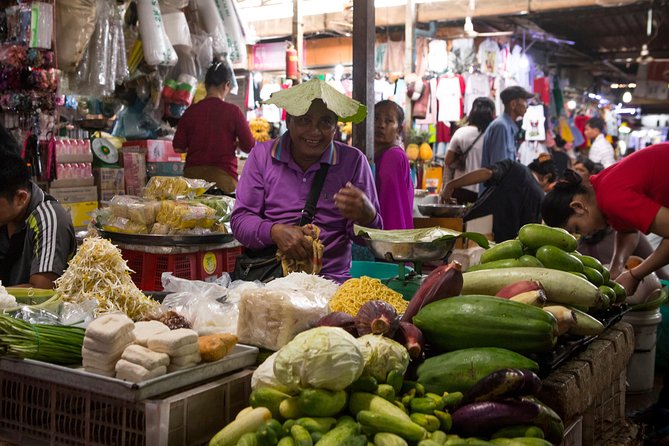
This tour starts at Sombai Liqueur Stall @ Made in Cambodia Market. The meeting point is clearly anchored in the market area, with the address listed as Made in Cambodia Market (Pobx 93/240, 17252 Siem Reap, Krong Siem Reap). That’s helpful because Siem Reap can feel like a patchwork of neighborhoods, and “arrive near X market” is easier than guessing a street name.
The start time is 9:00 am, and it runs about 3 hours. A morning slot is a good choice here. You get to eat while the city is still in its early rhythm, and the walking portions don’t feel like a midday slog.
You’ll also end back at the same meeting point, which keeps the logistics simple. And since it’s a mobile ticket, you’re not fussing with paper tickets in a hot, humid pocket of the day.
You can also read our reviews of more tours and experiences in Siem Reap
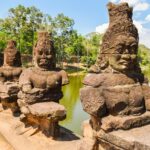


Khmer breakfast at the market: food that comes with context
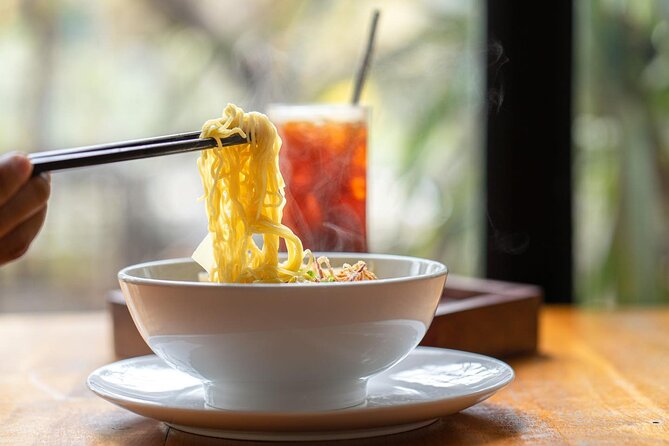
Your first stop is the local market, described as colorful and packed with sensory input. This is not just a quick look-around before eating. The goal is to learn about Khmer cuisine and ingredients—including elements that don’t always get the spotlight in tourist-focused food tours.
Here’s what I’d treat as the real value of starting in the market: when someone explains how ingredients behave in Khmer cooking and how people shop and select produce, the dishes you taste afterward make more sense. It’s the difference between eating food and understanding why it tastes the way it does.
You also try your first Cambodian breakfast dish at this stage. The important detail is that this specific breakfast dish is described as being rooted in history dating back to the 13th century. That one line changes the whole experience. Suddenly you’re not just collecting flavors; you’re tasting something with a long timeline behind it.
Practical tip: go with an appetite, but don’t show up so hungry that you feel rushed. The tour is paced, and they’re stacking tastings across multiple stops.
Walking orientation plus a pagoda stop: where the city makes sense
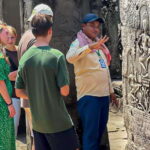
After the market, you move into the street with guided mini city orientation. Think of it as the part of the morning that helps you understand where you are and how people move through Siem Reap day to day.
Then there’s a pagoda walk. The tour frames this as more than scenery. It’s part of understanding Khmer culture, history, and how everyday life connects to religious spaces. You’ll be walking and learning along the way, so the pagoda isn’t just a photo stop—it supports the bigger story the guide is building.
What you’re doing during this stretch is building a mental map. Even if you don’t catch every detail, the combination of street-level walking and a cultural stop makes the later food tastings click.
Since this is a small group (maximum 6 travelers), the guide can slow down when you need a minute, and questions won’t get lost. If you like to ask why something is prepared a certain way or how daily habits influence eating, this format is a win.
Mother-and-daughter-run street shop: the kind of stop you remember
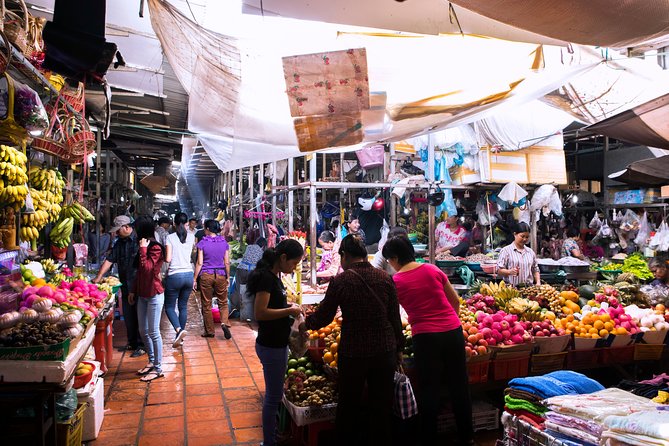
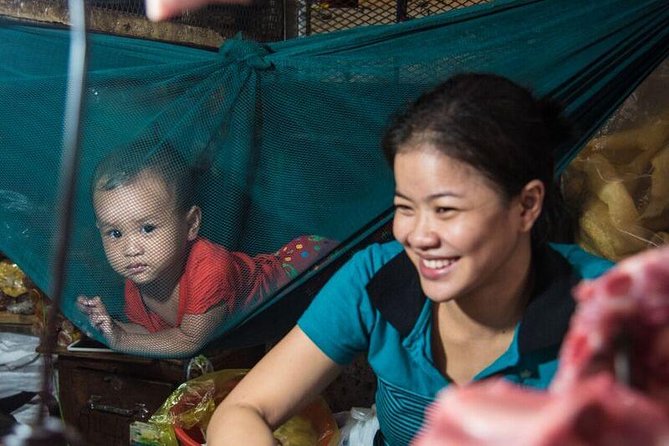
Next comes another breakfast favorite, this time at a mother-and-daughter-run street shop. That family-run setup matters. The tour is clearly pushing you toward places where Khmer food is part of routine, not a performance for visitors.
You’ll also get another round of tasting, with the stops designed to build. First you learn and eat at the market. Then you walk, orient, and visit a pagoda. Now you’re in the smaller, local rhythm of street food—less formal, more personal.
The tour highlights that you’ll also be doing “foraging up some more snacks” before reaching the next family-run street stall. That wording is a clue about how the morning flows: it’s not one big meal after another. It’s a chain of bites and flavors that keep your palate awake and your attention moving.
One consideration: street stalls mean you should expect real-life street conditions. If you’re sensitive to busy sidewalks, street heat, or strong smells, keep that in mind and wear what you can comfortably walk in.
The most famous Cambodian breakfast dish (and why “street” matters)
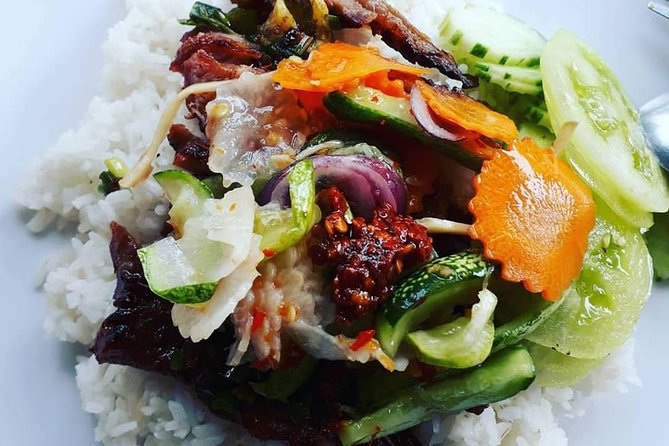
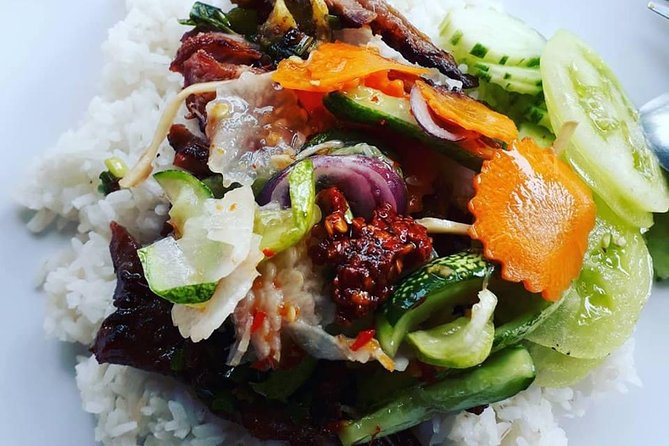
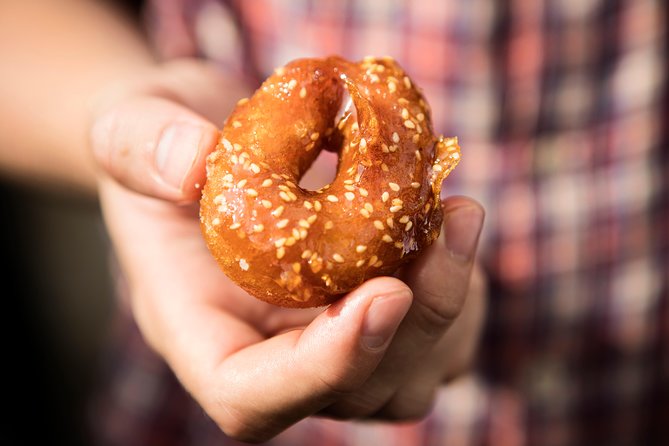
The tour includes a family-run street stall where you try what’s described as arguably the most famous of all Cambodian breakfasts.
I’m going to be careful here: the exact dish name isn’t listed in the information I was given. But the structure is clear enough to help you decide if it’s your kind of experience. This is the stop that tends to feel like a payoff. By this point you’ve had context, you’ve walked, and you know the guide has set you up to recognize what makes this dish “famous” in Cambodian daily life.
Also, this is where street format matters. Street stalls often don’t just cook food; they reflect how ingredients are sourced and how speed and taste are balanced. If you care about eating where locals actually eat—rather than a restaurant that happens to be “Cambodian-themed”—this part is the heart of the tour.
If you’re vegetarian (or traveling with someone who is), the tour notes Vego also available, which suggests you won’t be left out entirely. If vegetarian options matter a lot to you, I’d confirm at booking that the breakfast tastings align with your needs.



The final up-market breakfast: produce grown next to the table
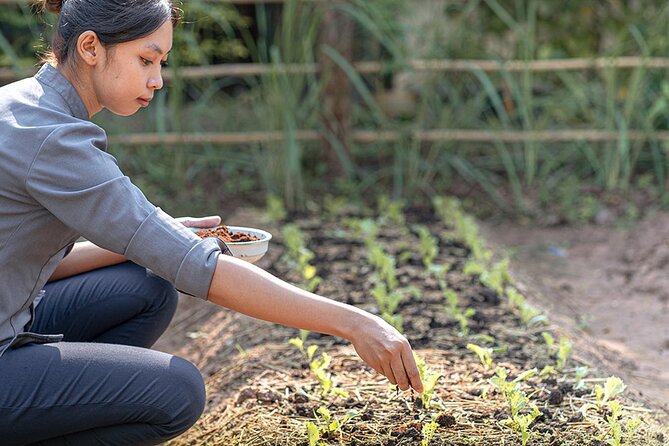
After the street and snack portion, the tour settles into a “final breakfast” in an up-market setting. The key detail here is the story around ingredients: you’re told that the produce is grown next to your table.
That’s a powerful closing contrast. Early morning street stops give you the texture of daily life. Then the final meal frames where Khmer cuisine is headed—less about changing the identity of the food, more about showing the next stage: locally grown produce, fresher ingredients, and a setting that elevates the meal without removing its local roots.
If you like your food with both a backstory and a clean plate, this ending is a smart way to round out the day. It also helps with pacing. After multiple tastings, you’ll likely appreciate the chance to slow down, sit, and really focus on the last meal.
Two surprises: the part you can’t plan around
At the end, there’s a special surprise, and the information says there are two actually. No other specifics are provided, which is exactly the point. A surprise at the end changes the feeling from “checklist tour” to “morning adventure.”
Because I don’t want to invent details, here’s what you can do instead: keep a little extra time in your head for the ending. Even if you have a second activity planned, don’t stack it too tightly right after the tour concludes. You’ll likely want a buffer for the final moments and whatever those two surprises turn out to be.
Price and value: is $45 worth it?
The price is $45.00 per person for about 3 hours. Based on what’s included in the morning flow—market learning, a pagoda walk, multiple breakfast tastings, and the final up-market meal with locally grown produce—this is the kind of tour that aims to be worth it through variety and context, not just volume.
Here’s how I’d think about value in real terms:
- You’re paying for guidance that ties ingredients to Khmer cuisine and history.
- You’re paying for access to multiple local eating spots, including a mother-and-daughter-run stall.
- You’re paying for a structured route that includes walking plus cultural stops, which is harder to assemble on your own without already knowing where to go.
Also, the tour is limited to 6 travelers. Small groups usually cost more, but in this case it matters because you’re learning in between tastings. If you’ve ever done a food tour where you can’t hear the guide, you’ll appreciate the size here.
One more timing note: it’s described as being booked on average about 34 days in advance. That’s not a guarantee, but it’s a hint that popular morning slots can fill up. If you’re set on this exact experience, booking ahead is a safe move.
Who this tour is perfect for (and who should skip it)
This tour fits best if you want a morning food-and-culture outing instead of a pure eat-til-you-drop plan. You’ll like it if:
- you’re curious about Khmer cuisine beyond the usual headlines,
- you enjoy walking and learning your way around a new place,
- you want breakfast that connects to history and everyday life.
It may not be the best fit if:
- you hate walking between short stops,
- you’re very picky and need extremely specific meal options (the info only broadly mentions Vego availability),
- you want a long, sit-down meal only—this is structured as a chain of tastings and stops.
Planning tips so your morning goes smoothly
You don’t need to overthink it, but a few basics help:
- Wear comfortable shoes for short walks and crowded market conditions.
- Come prepared to eat several breakfast bites, not one big plate.
- If you’re scheduling other activities later, give yourself breathing room for the ending, since there are two surprises.
- The tour requires good weather. If weather is poor, you should expect the operator to offer a different date or a full refund, so keep your day flexible if you can.
Should you book the Siem Reap Morning Culinary & Culture Tour?
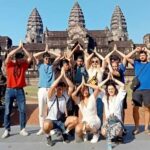
I’d book it if you’re looking for a smart way to use your morning in Siem Reap: you get food, walking, and a sense of place, all in a small group. The market-first start plus the pagoda walk means you’re not just tasting—you’re learning the threads that connect Khmer ingredients, daily life, and how history shows up in breakfast.
I’d hesitate only if you’re expecting a casual restaurant-hopping experience with no walking. This tour is designed as a route. If you can handle a morning walk and you want breakfast with meaning, it’s a strong pick at $45.
FAQ
What is the duration of the Siem Reap Morning Culinary & Culture Tour?
The tour lasts about 3 hours.
Where does the tour start?
It starts at Sombai Liqueur Stall @ Made in Cambodia Market (Achar Sva Street, Made in Cambodia Market).
What time does the tour begin?
The start time is 9:00 am.
How many people are in the group?
The tour has a maximum of 6 travelers.
What’s included in the experience?
You’ll visit a local market, take part in a guided mini city orientation and pagoda walk, stop at family-run street shops for breakfast favorites, and finish with a final breakfast in an up-market setting. A special surprise is included at the end (two surprises).
Is a vegetarian option available?
Yes, a Vego option is available.
What if the weather is bad?
The experience requires good weather. If it’s canceled due to poor weather, you’ll be offered a different date or a full refund.