REVIEW · SIEM REAP
Siem Reap Angkor Wat Sunrise or Sunset Explore The Temples +Guide
Book on Viator →Operated by Siem Reap Tour Trails · Bookable on Viator
Angkor at sunrise or sunset feels like a switch flips. I like the focused temple route and the fact that you get pickup plus an English-speaking guide to keep the day smooth. I also love how the stops move from the big headline sights to quieter carvings, so the crowds feel more manageable. One thing to plan for: the entrance fees aren’t included, and you’ll need decent weather for the light to cooperate.
This is a long-feeling day, but it’s organized like a good road trip: transport is handled, you’re kept moving, and you still get time to look closely at the stone details. The group size stays small, with up to 25 people, so you’re not stuck in a chaotic stampede.
In This Review
- Key highlights you’ll actually feel
- Sunrise or Sunset at Angkor Wat: why the timing matters
- Price and logistics: what $18 covers (and what it doesn’t)
- The ride and the rhythm of the day
- Stop 1: Angkor Wat at sunrise/sunset, without the chaos
- Stop 2: Banteay Kdei, the calmer “citadel of chambers”
- Stop 3: Ta Prohm and the jungle-temple effect
- Stop 4: Bayon Temple and its 54 towers of faces
- Stop 5: Tonle Om Gate, the south gate experience
- Group size, guide quality, and why it matters
- What to pack so the day feels good
- Who this tour suits best
- Should you book this tour?
- FAQ
- Is pickup included?
- How long is the tour?
- How many temples are visited?
- Are entrance fees included?
- Is food included?
- Is bottled water included?
- What language is the guide?
- Is mobile ticketing provided?
- What is the maximum group size?
- What happens if the weather is poor?
Key highlights you’ll actually feel
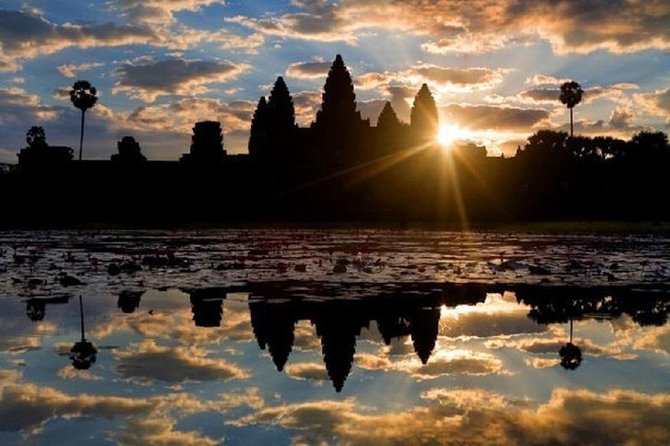
- Angkor Wat at the right light: sunrise/sunset timing makes the carvings and towers look dramatically different.
- English guide who can explain what you’re seeing: names like Prem and Chamrong come up for clear explanations.
- A smart mix of famous and quieter temples: Banteay Kdei adds calm when you want a breather.
- Ta Prohm’s photo-famous tree roots: huge roots, old stone, and a jungle-temple vibe (no special effects required).
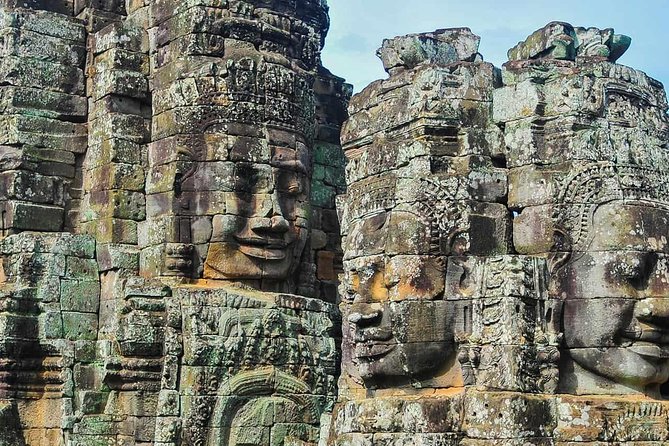
- Bayon’s face towers: 54 towers with repeating expressions that change as you walk around.
- Pickup, drop-off, and bottled water: for $18, you’re buying convenience as much as sightseeing.
Sunrise or Sunset at Angkor Wat: why the timing matters
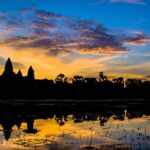
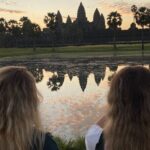
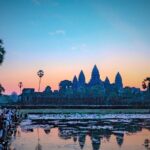
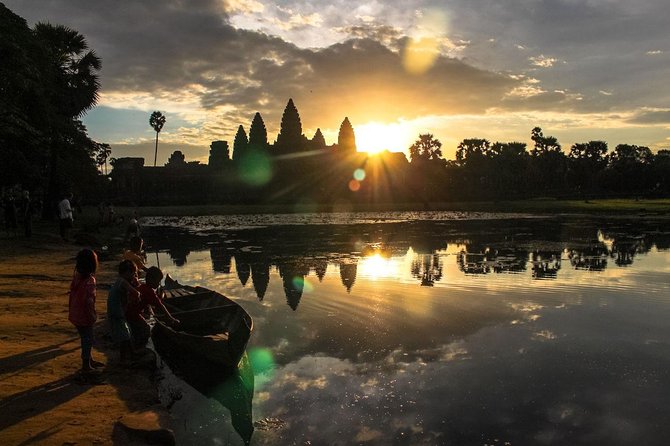
The magic at Angkor isn’t only the size of the temple. It’s the way the light travels across the galleries and up the towers. At sunrise, shadows stretch and then soften as the sky warms. At sunset, the stone can look more golden and the faces at Bayon-like stops feel more dramatic. Either way, you’ll start early (or later for sunset) and that’s the whole point.
I like that this tour is built around that moment. You’re not wandering in cold, confused darkness trying to figure out where the crowds will go. With hotel pickup and a guide, you can show up thinking about the view instead of the logistics.
One practical note: the experience depends on good weather. If it’s foggy, smoky, or raining, the light may not be what you hoped for. Your best move is to dress for weather swings and keep an open mind: the temples still work even when the sky is less photogenic.
You can also read our reviews of more guided tours in Siem Reap
Price and logistics: what $18 covers (and what it doesn’t)
Let’s talk value, because $18 sounds suspiciously low until you read the fine print. You’re paying for transport, a professional English-speaking guide, bottled water, and pickup/drop-off from your area. You’re also getting a mobile ticket, which helps with speed on the day.
What you do not get is the entrance fee for the Angkor Archaeological Park and each temple’s admission requirements. That’s “own expense,” so you’ll want to budget that extra amount before you arrive. Plan to bring cash or follow whatever payment method the ticket office uses that day.
Also note the day runs about 8.5 hours. That’s long enough that comfy shoes matter, even if you’re not hiking. And since the route includes multiple major stops, you’ll be spending less time lounging and more time walking, looking, and moving on.
The ride and the rhythm of the day
You’ll travel in an air-conditioned minibus. For Siem Reap heat, that’s a real quality-of-life feature, especially if you’re going out early for sunrise. The day has a clear start at Angkor Wat, then it continues through other temples inside the Angkor area.
Because it’s capped at about 25 people, you’re usually not stuck shoulder-to-shoulder like on the biggest group tours. You can actually hear your guide and follow along without playing human musical chairs.
Bring simple supplies that help you enjoy the slow moments:
- a hat or cap
- sunscreen and water patience
- a light layer for morning or evening air
- a small towel or tissue if it’s humid
Stop 1: Angkor Wat at sunrise/sunset, without the chaos
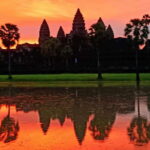
Angkor Wat is the obvious headline, but this first stop is more than postcard time. It’s where you get your bearings. Once you enter, you’re confronted with grand galleries, sacred sanctuaries, and intricate carvings that reward standing still for a minute. Even if you’ve seen photos, being there changes scale fast.
This tour starts with an early pickup from your Siem Reap hotel and then moves you to the Angkor Archaeological Park. You’ll purchase your entrance ticket first (not included), and then you’ll walk into Angkor Wat in the right light window.
What I like about starting here is orientation. You learn the temple layout from your guide, so later stops feel connected instead of random ruins. Also, the early timing usually makes it easier to move without constantly losing your view to a wall of people.
Possible drawback? If you hate crowds at all costs, sunrise may still feel busy. The upside is that it’s controlled and you’ll be there when the stone looks best.
Stop 2: Banteay Kdei, the calmer “citadel of chambers”
Banteay Kdei is built for people who like details more than hype. The name translates to something like citadel of chambers, and that idea fits what you’ll notice: calmer corridors, structured spaces, and carved surfaces that don’t demand a sprint to appreciate.
This is a late 12th-century Buddhist monastery, and it has a quieter pace compared with the bigger, busier targets. You’ll still get stonework that’s worth lingering over, but the atmosphere is more relaxed.
Why this stop matters on a day like this: it gives you a chance to reset your eyes. After the big draw of Angkor Wat, your brain gets overloaded by scale. Banteay Kdei lets you shift from “wow, huge” to “wow, these carvings are precise.”
If you’re the type who likes having one stop where you can slow down, this one is a strong choice.
You can also read our reviews of more evening experiences in Siem Reap

Stop 3: Ta Prohm and the jungle-temple effect
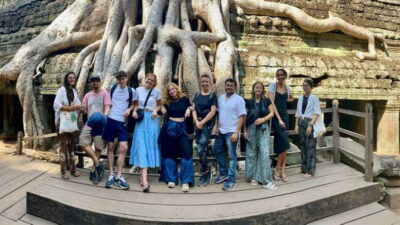
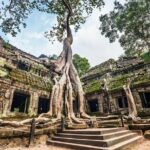
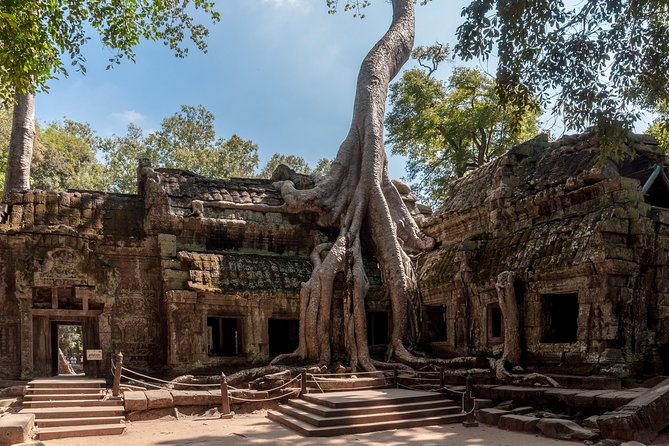
Ta Prohm is the temple you’ve probably seen online: giant tree roots wrapped over stone walls. The effect is famous for a reason. The roots don’t look staged; they look like time took over the building.
Here’s the useful thing your guide can do: help you read the scene so you know what you’re looking at. Ta Prohm is often photographed as a single icon, but the real payoff is watching how the roots frame doorways and corners. Walk a little instead of only shooting straight-on.
A key detail in your timing: the tour gives you about 2 hours at the Ta Prohm stop. That’s enough to see it from a couple of angles, not just a one-pass photo run.
Drawback to consider: because Ta Prohm is popular, the most photogenic spots can be busy. If you want fewer crowds for your personal shots, you’ll need to adjust your timing by a few minutes and let the flow move.
Stop 4: Bayon Temple and its 54 towers of faces
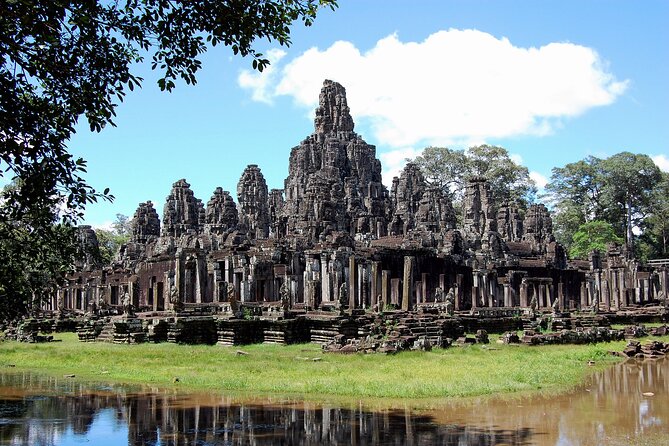
Bayon Temple is inside Angkor Thom and it’s unmistakable. The central feature is the set of 54 towers, each decorated with massive stone faces. The faces have that calm, half-smiling expression that makes you wonder if the temple is watching you back.
What I find most rewarding is the movement. When you walk around Bayon, the faces feel like they shift with you. That’s not magic, it’s geometry and placement, but it still hits emotionally because the repetition is so strong.
The carved scenes also add something practical: you start to see everyday life and historical moments worked into the stone, not just decorative patterns. It turns the visit from sightseeing into context, especially when your English-speaking guide connects the images to what you’re seeing.
This stop is about 2 hours, so don’t try to only sprint through. If you do, you miss the carvings that make Bayon more than a face wall.
Stop 5: Tonle Om Gate, the south gate experience
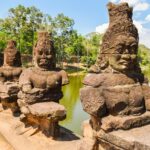
After Bayon, you get a shorter final landmark stop: Angkor Thom South Gate, also known as Tonle Om Gate. This is the grand entrance lined with statues of gods and demons, crowned with four giant stone faces.
Even with only about 30 minutes here, it’s a satisfying bookend. You finish the day with something bold and ceremonial, like a final scene rather than just a random parking lot stop.
If you’re tight on energy, you can still get the idea fast: look at the statues, notice the symmetry, then get your camera angle and move on. This isn’t the stop where you need a long meditation. It’s where you capture the entry vibe and close the loop.
Group size, guide quality, and why it matters
You can visit temples on your own, sure. But the guide is the difference between viewing ruins and understanding what you’re standing on.
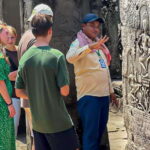
The guides on this tour have a reputation for being friendly and giving clear explanations in good English. Names that show up include Prem and Chamrong, with comments about strong history knowledge and easy-to-understand descriptions. That matters because Angkor isn’t one building. It’s a complex of changing spaces, and it helps to have someone translate the stone.
Also, the smoothness shows up in the basics: pickup on time, everything following the plan, and being easy to trust when you book online without back-and-forth stress.
In a day this long, “getting it together” is half the value.
What to pack so the day feels good
Even with bottled water included, you’re outdoors for hours. Angkor can shift from cool-to-hot fast, especially around sunrise. You’ll walk between sites, stand for views, and climb small amounts depending on the temple.
Bring:
- comfortable, worn-in shoes
- sun protection (hat, sunscreen)
- a light layer for early morning or evening
- a small bottle or extra water if you run through it fast
- cash for entrance fees, if needed
If you’re going for sunset instead of sunrise, the same principle applies: adjust clothing for the air temperature after dark and keep your comfort in mind.
Who this tour suits best
This tour is a great fit if you want:
- the big Angkor Water moment at sunrise or sunset
- a structured route that saves you time deciding what to do next
- English explanation that helps the carvings and layouts make sense
- transport included, so you don’t coordinate everything yourself
It’s also a good choice for couples and solo travelers who want company without going full crowd-control mode.
If you prefer total freedom to linger for long periods at only one or two temples, you might feel slightly rushed. The schedule is built for covering multiple sites within about 8.5 hours.
Should you book this tour?
I’d book it if you want a well-paced Angkor day with minimal fuss. The big selling points are the pickup and drop-off, the air-conditioned ride, and the chance to hit Angkor Wat at the right light with an English-speaking guide who can explain what’s in front of you.
I would think twice if you know you dislike waking up early, hate crowds completely, or you’re not willing to pay the separate entrance fees. Also, if you have zero flexibility for weather, remember the experience depends on conditions, and you may be offered another date or a refund if the sky won’t cooperate.
Overall, for $18, the value is less about the temples being free and more about how much effort this tour removes from your day.
FAQ
Is pickup included?
Yes. Pickup is offered, and the tour includes drop-off as well.
How long is the tour?
The duration is about 8 hours 30 minutes.
How many temples are visited?
The tour includes stops at Angkor Wat, Banteay Kdei, Ta Prohm, Bayon Temple, and Angkor Thom South Gate (Tonle Om Gate).
Are entrance fees included?
No. Entrance fees are not included and you pay them yourself.
Is food included?
No. Food is not included.
Is bottled water included?
Yes. Drinking water is included.
What language is the guide?
The tour includes a professional English-speaking tour guide.
Is mobile ticketing provided?
Yes. A mobile ticket is included.
What is the maximum group size?
The tour has a maximum of 25 travelers.
What happens if the weather is poor?
This experience requires good weather. If canceled due to poor weather, you’ll be offered a different date or a full refund.