REVIEW · SIEM REAP
Siem Reap: Angkor Wat Sunrise Explore The Most Iconic Temples
Book on Viator →Operated by Hellobird Tour · Bookable on Viator
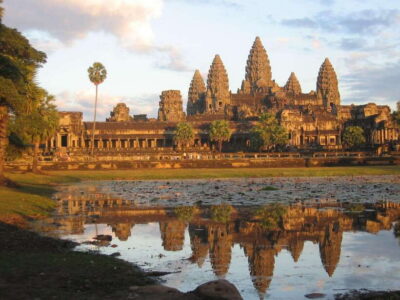
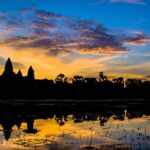
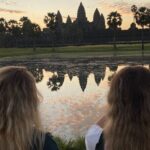
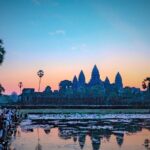
Sunrise over Angkor feels unreal at 4:30 a.m. The fun here is how the day is built around that early start, then keeps you moving through the big-name temples you’ve seen in photos—plus a couple of stops that usually get less attention.
I really like two things: hotel pickup and an air-conditioned ride that makes the whole pre-dawn scramble feel manageable, and the temple commentary from guides like Channoun and Nuon who explain what you’re looking at, including Khmer Empire context you’d likely miss if you just wander.
One possible drawback to weigh: the Angkor Wat entrance ticket isn’t included, and sunrise visibility can be affected by rain or cloud—so your best light may not always be guaranteed.
In This Review
- Quick hits before your sunrise run
- The 4:30 a.m. wake-up: how this tour actually works
- Pickup, transport, and the real size of the group
- Angkor Wat sunrise: timing, tickets, and what to focus on
- Banteay Kdei: the quieter stop that often pays off
- Ta Prohm’s tree roots: photos, yes, but also meaning
- Bayon and Angkor Thom: the 54 towers and those faces
- Tonle Om Gate (South Gate of Angkor Thom): the causeway moment
- Guide quality makes the difference: Channoun and Nuon as examples
- Price and what’s extra: is $26 good value?
- Weather and sunrise reality: how to prepare
- Who this tour fits (and who should consider alternatives)
- Should you book this Angkor Wat sunrise tour?
- FAQ
- What time does the tour start?
- How long is the tour?
- Does the tour include hotel pickup and drop-off?
- Is the Angkor Wat ticket included in the price?
- Are admission tickets for the other temples included?
- What temples are included in the itinerary?
- Does the tour have an English-speaking guide?
- Is transportation provided?
- Is drinking water provided?
- What group size should I expect?
Quick hits before your sunrise run
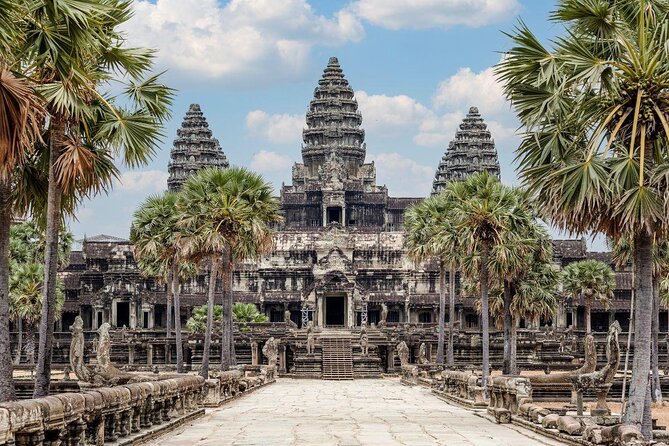
- 4:30 a.m. pickup gets you into the Angkor Archaeological Park while it’s still cool and calm.
- English-speaking guides can turn temple details into a story you’ll actually remember.
- A well-paced circuit: Angkor Wat (about 3 hours) plus Banteay Kdei, Ta Prohm, Bayon, and Tonle Om Gate.
- Air-conditioned transportation + water helps a lot on a long, hot day.
- Group size can reach the full max (up to 25), so it helps to be okay with some crowd flow.
- Rain won’t necessarily cancel the plan, and umbrellas have been provided in bad weather starts.
The 4:30 a.m. wake-up: how this tour actually works
Let’s be honest: waking up before dawn in Siem Reap is not subtle. But it’s also the whole point. Starting at 4:30 a.m. means you’re not arriving when the day-trippers and tour buses are already stacked. You get to see Angkor Wat when the light is softer and the site has a calmer rhythm.
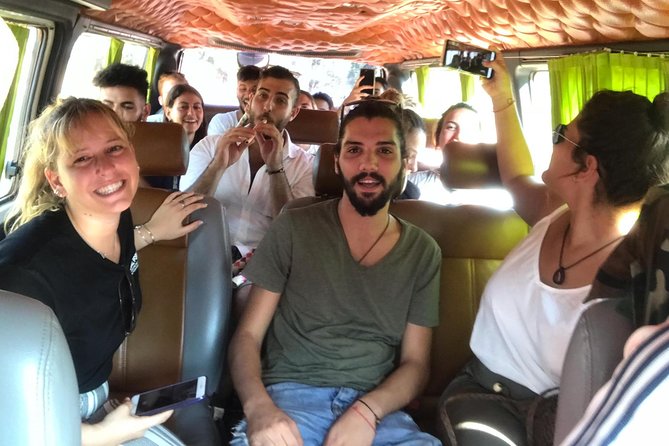
Also, this tour is built for comfort. I like that you’re picked up from your hotel and transported in an air-conditioned minibus. That matters because the day stretches long, and you’ll spend time walking around stone surfaces that get painfully hot once the sun climbs.
The “value” angle is clear too: for about $26 you’re paying for transport, guide help, and multiple major temple stops. The big thing you still need to budget for is the Angkor Wat admission ticket (more on that below).
You can also read our reviews of more tours and experiences in Siem Reap

Pickup, transport, and the real size of the group
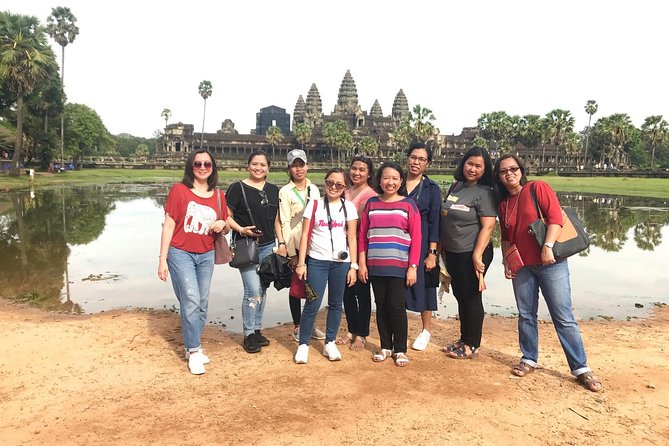
This experience includes pickup and drop-off, plus drinking water. That’s the practical foundation—no hunting for a meeting point at 5 a.m. with sleepy legs.
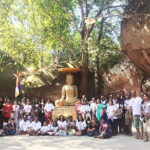
On group size, you should know what you’re signing up for: the tour has a maximum of 25 travelers. Most days may feel closer to a smaller group, but I’d plan your expectations around a busier flow—especially as you head into Angkor Wat. If you’re the type who wants total solitude at every corner, you’ll still find company here.
One detail worth mentioning: I’ve seen how operations can sometimes split groups across vehicles. If that happens, it can affect how much time you spend with the main guide in each moment. The good news is that the stops themselves are the main event; the guide is still there to help you connect the dots, but your best experience comes from being flexible.
Angkor Wat sunrise: timing, tickets, and what to focus on
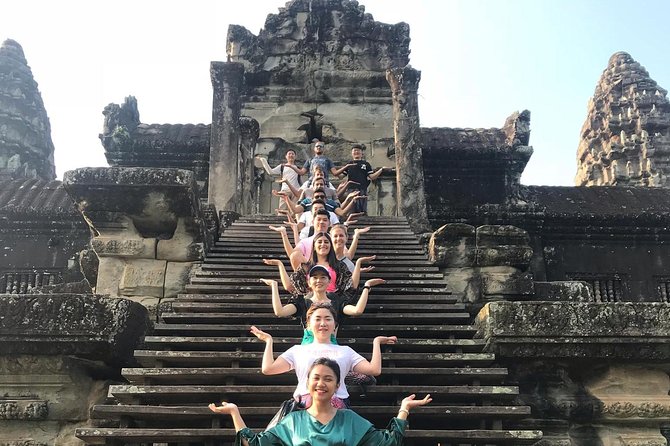
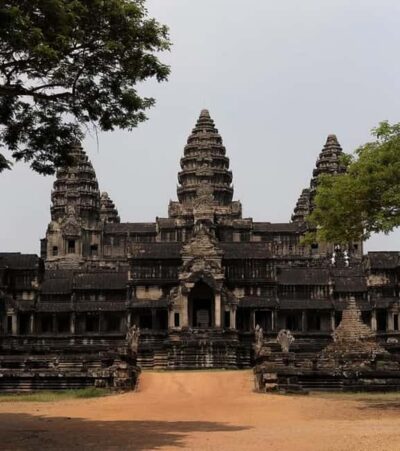
Angkor Wat is the reason most people choose this day. The tour schedules about 3 hours at Angkor Wat, and it starts with a hotel pickup, then travel to the Angkor Archaeological Park. Once you get there, you’ll handle the entrance ticket on your own—the tour does not include it.
So here’s how I’d play it for best results:
- Arrive early mentally. You’ll get sunrise energy, or at least the early-day quiet.
- Use your guide for context, not just photos. The guide’s explanations help you understand why the layout and carvings matter.
- If the sky is cloudy or rainy, adjust your goal from sunrise perfection to sunrise atmosphere. I’ve seen cases where rain soaked everyone and sunrise light didn’t fully show. The itinerary still moved forward, and umbrellas were provided in that kind of weather.
A 3-hour block at Angkor Wat is enough to see the major highlights without feeling like you’re sprinting nonstop. But it can also feel quick if your goal is deep wandering with long pause-and-stare sessions at every carving. If you’re a slow-explorer type, consider that you may want to come back later on your own for extra time.
Banteay Kdei: the quieter stop that often pays off
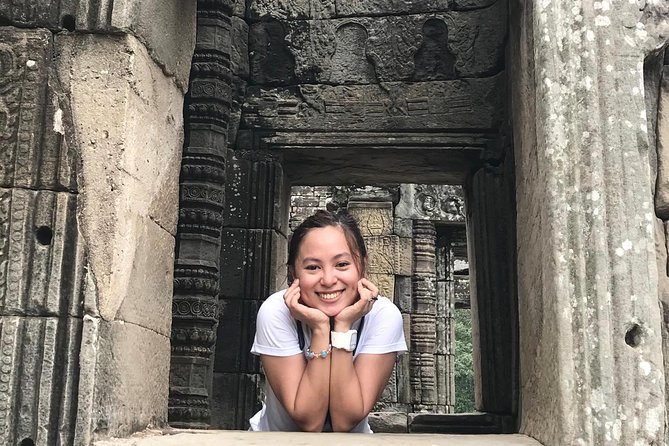
After Angkor Wat, the tour moves to Banteay Kdei, with about 1 hour scheduled here. This is one of those temples that’s easier to enjoy because you’re not chasing the same level of crowd attention.
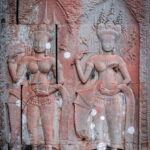
Banteay Kdei is described as the Citadel of Chambers, and it’s a late 12th-century Buddhist monastery. The charm is in the details: unique carvings and serene corridors. That combo is perfect if you want a break from the mega-famous, photo-heavy intensity of Angkor Wat.
Practical note: because it’s shorter, you’ll get more out of this stop if you slow down for a few moments—look at carvings, notice the corridor rhythm, and don’t treat it like a quick “check the box” stop. One hour sounds brief, but this temple benefits from careful looking rather than speed.
Ta Prohm’s tree roots: photos, yes, but also meaning
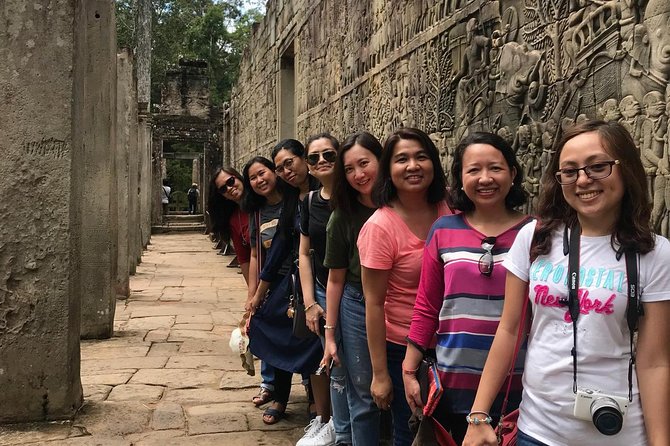
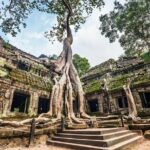
Next up is Ta Prohm, with about 2 hours scheduled. This is the temple most people picture instantly: massive tree roots wrapping around walls, giving that dramatic “jungle temple” effect.
The key detail here is the restoration status. Ta Prohm is known for being left largely unrestored, so the ruins look like they’re still being reclaimed by nature. That’s why the visuals work. It also means you’ll spend time in a temple that feels less cleaned-up and more raw—so you’ll notice textures and structural lines that can get lost when a place is heavily restored.
Here’s how to make Ta Prohm more than a photo stop: use the guide’s explanation about what you’re seeing. The best guides help you read the site instead of just seeing the roots as a background prop.
Drawback to watch for: because this is a photogenic temple, expect people—lots of people. Give yourself small goals. For example, pick a spot where the roots frame a doorway, then stick with it for a few minutes instead of continually moving to chase the perfect angle.

Bayon and Angkor Thom: the 54 towers and those faces
After Ta Prohm, you’ll reach Bayon Temple, in the middle of Angkor Thom. The tour gives about 1 hour here, and that’s honestly a good length for Bayon. It’s intense, but you don’t need a full half-day to appreciate its impact.
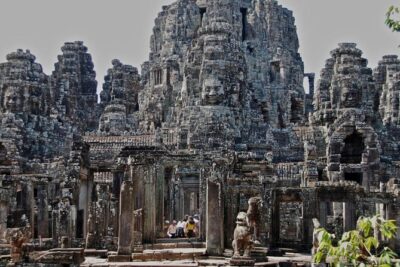
Bayon is known for its 54 towers, each adorned with four massive, serene faces of Avalokiteshvara. Even if you’ve only seen a few images online, this is one of those places where you immediately understand why it became iconic.
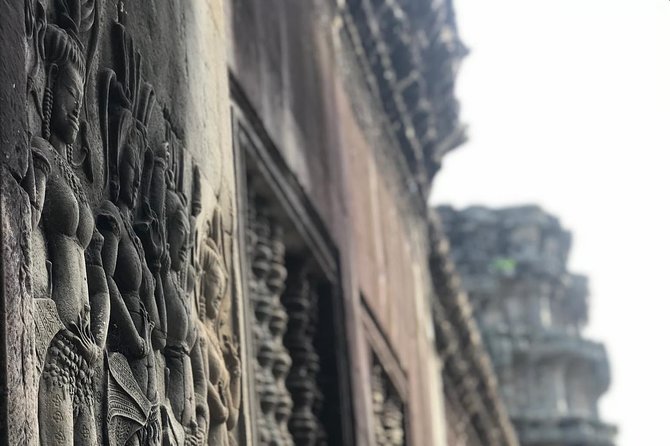
One of the most useful guide contributions here is interpretation. The tour description emphasizes that intricate carvings depict scenes of daily life and historical events. When you have someone explain how to read these carvings, Bayon turns from “pretty stone faces” into a document of how people once lived.
If you want to get the most out of the hour, do this: don’t spend it only photographing. Spend a little time watching how the faces change depending on where you stand. They can feel like they’re looking at you differently from different angles.
Tonle Om Gate (South Gate of Angkor Thom): the causeway moment
The last temple-style stop is the Tonle Om Gate, described as the South Gate of Angkor Thom. The tour also mentions a North Gate Bridge in the stop label, so don’t be alarmed if the wording looks mixed in schedules—what matters is you’re stopping at Tonle Om Gate and the causeway approach.
This is a dramatic entrance. It’s flanked by a causeway lined with statues of gods and demons, and the gate itself is crowned with four giant stone faces similar to the ones you’ve already seen at Bayon.
Why this matters: the Angkor experience can be very “temple-by-temple,” but the gate-causeway section gives you a sense of movement—how visitors and processions would have approached the city. Even if you’re tired by this point, this stop is worth focusing on, because it changes the feel of the day from pure architecture close-up to a bigger sense of layout.
Guide quality makes the difference: Channoun and Nuon as examples
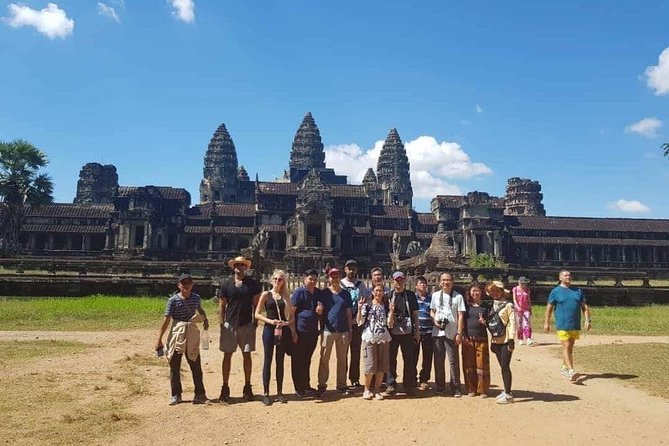
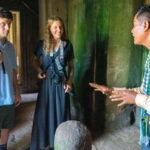
A big part of what I’d call the “success” of this tour is whether you get solid guiding. This tour includes an English-speaking guide, and I’ve seen two names come up: Channoun and Nuon.
What stands out is the way they tie the temples to a broader story—especially history of the Khmer Empire. That doesn’t mean you’ll get a lecture that slows the day down. It means you’ll have context as you walk: why certain carvings exist, what the sites represent, and what you’re looking at beyond the obvious.
If you’re the kind of traveler who normally reads a sign and moves on, a guide like this can make the temple time feel richer without adding a lot of extra effort on your part. You just listen, then look again with new awareness.
Price and what’s extra: is $26 good value?
At $26, this feels like a budget-friendly way to see a lot of Angkor’s essentials in one go. What you get for that price is meaningful: hotel pickup, drop-off, transport, English-speaking guiding, and drinking water.
What’s extra is equally important: meal is not included, and the Angkor Wat ticket is not included. Also, the itinerary notes admission tickets aren’t included as part of the base offering, which is something to plan for.
So your real cost depends on your choices:
- If you keep meals simple, your day stays budget-friendly.
- If you want a long meal break or a restaurant stop that doesn’t match your vibe, that’s where value can feel weaker.
One caution I’d take seriously: if you’re hoping for nonstop temple time, watch the day’s rhythm. I’ve heard about tours that spend more time around a restaurant than you’d want, so if you prefer to maximize stone-and-shadow time, plan to grab snacks quickly and keep moving when the group pauses.
Weather and sunrise reality: how to prepare
Angkor sunrise is weather-dependent. If the sky is clear, you’ll feel that special “I’m here” moment. If it rains or stays cloudy, the experience can still be worthwhile—but it shifts from sunrise drama to early-morning temple exploring.
In at least one rainy start, umbrellas were provided and the group still went out. That’s a good sign for resilience: the tour isn’t built on a perfect forecast. But you should still bring practical gear:
- A light rain layer if you have one
- Something comfortable for wet stone surfaces
- A plan for muddy shoes (Angkor roads can get messy fast)
If sunrise visibility is your top goal, keep your expectations flexible. Clouds can steal the show. They can’t steal the architecture.
Who this tour fits (and who should consider alternatives)
This is a strong option if you want a one-day Angkor “greatest hits” route without organizing transport, tickets, and temple sequencing yourself. It’s also a good fit if you like learning as you go—because the guide helps connect Khmer Empire themes to what you see.
It may not be ideal if:
- You want unlimited time at Angkor Wat. The schedule gives about 3 hours there, which is plenty for most people, but not for those who want a slow, deep, wandering day.
- You dislike any chance of longer breaks. The day is built around multiple stops, and there can be downtime for meals.
- You’re very sensitive to group dynamics. With a max group size of 25, you’ll move through busy areas with other visitors.
If you’re traveling with kids or you’re not interested in hauling yourself around on your own, the pickup-and-drop-off structure is a big plus. You’re not on a bike in the dark. You’re in a vehicle, then you walk temple circuits.
Should you book this Angkor Wat sunrise tour?
I’d book it if you want an organized, comfort-first day that hits the major temples and still gives you enough story to understand what you’re looking at. The mix of early timing, English guide support, and the temple lineup (Angkor Wat, Banteay Kdei, Ta Prohm, Bayon, Tonle Om Gate) makes it a solid value play at $26, especially since transport and water are included.
I’d think twice if sunrise is the only reason you’re coming and you’d be truly disappointed by cloudy mornings. Also factor in the extra ticket cost for Angkor Wat and plan your meal time.
If you can be flexible about the sky and you’re excited to see the temples with guidance, this is one of the more practical ways to do Angkor in a single day.
FAQ
What time does the tour start?
The start time is listed as 4:30 a.m.
How long is the tour?
The duration is about 8 hours.
Does the tour include hotel pickup and drop-off?
Yes. Pickup and drop-off are included.
Is the Angkor Wat ticket included in the price?
No. Angkor Wat admission is not included, and you buy tickets separately.
Are admission tickets for the other temples included?
The tour notes that admission tickets are not included, so you should expect to pay separately as required.
What temples are included in the itinerary?
The tour includes Angkor Wat, Banteay Kdei, Ta Prohm, Bayon, and Tonle Om Gate (South Gate of Angkor Thom).
Does the tour have an English-speaking guide?
Yes. The tour includes an English-speaking tour guide.
Is transportation provided?
Yes. Transportation is included, using an air-conditioned vehicle.
Is drinking water provided?
Yes. Drinking water is included.
What group size should I expect?
The experience is listed with a maximum of 25 travelers.