REVIEW · SIEM REAP
Full Day Angkor Wat Sunrise and Banteay Srei Tour
Book on Viator →Operated by Cambo Angkor Guide · Bookable on Viator
Sunrise at Angkor changes everything. This full-day Siem Reap tour strings together Angkor Wat sunrise and Khmer temple exploring, then adds the pink sandstone beauty of Banteay Srei and a look at village life in Preah Dak. You get a guided route early enough to see the temples in their calm, first-light mood. The big wins for me are the organized temple timing with photo-friendly viewpoints and the way the guide explains what you’re looking at while you walk.
I also like that the tour keeps the pace human: you’re not just dropped off and left to guess your way through corridors and stairs. That said, one drawback to plan for is the cost of temple entry—Angkor Pass tickets are not included, so your final total depends on the pass you buy.
In This Review
- Key points worth knowing before you go
- 4:30 am start: how this day actually works
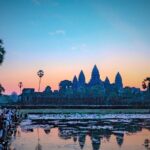
- Angkor Wat sunrise: seeing the silhouette before the crowds
- Walking the carvings: why the guide’s explanations matter
- Banteay Srei: the pink temple and what to watch for
- Preah Dak village: seeing daily life, not just monuments
- Transportation, comfort, and why small groups feel better
- Price and value: what you’re paying for (and what’s extra)
- Timing tips: how to get the most from sunrise to lunch
- Who this tour suits best
- Should you book Full Day Angkor Wat Sunrise and Banteay Srei?
- FAQ
- What time does the tour start?
- Where does the tour meet and where does it end?
- How long is the tour?
- Is breakfast included?
- Are Angkor Pass tickets included in the price?
- Is lunch included?
- What’s included in the tour package?
- Is pickup offered?
- What’s the maximum group size?
- What happens if weather is bad?
Key points worth knowing before you go
- 4:30 am start: You’ll be out before the crowds and heat fully kick in.
- Angkor Wat for about 3 hours: Enough time to see the key structures and carvings with guidance.
- Banteay Srei for about 5 hours total on the second half of the day: Pink temple focus plus village time.
- Preah Dak village + handicrafts: Not just temple photos—there’s a local craft element and lunch options.
- Small group (max 10 people): Easier movement and a more manageable schedule.
- Air-conditioned vehicle + bottled water included: Helpful when the day warms up after sunrise.
4:30 am start: how this day actually works
This is an early one. The tour begins at 4:30 am in Krong Siem Reap, and the return is around 2 pm. That timing matters because Angkor Wat at sunrise is a different experience than Angkor Wat later in the morning. Earlier usually means softer light, cooler temperatures, and fewer people funneling toward the same viewpoints.
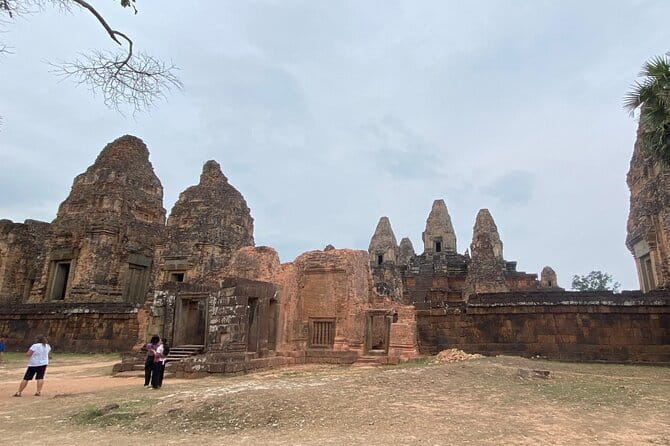
The day is built around two major temple stops. First you’ll head to Angkor Wat, where sunrise is the main event. Then you move on to Banteay Srei, often called the Pink Temple, and finish the outing with time in the Preah Dak area, including local handicrafts and a Cambodian lunch that your guide can point you toward.
I like this structure because it reduces the “temple fatigue” you get from bouncing around with no plan. You get a logical sequence: sunrise, guided temple highlights, a second temple with a very different look, then village life to reset your brain before the day ends.
You can also read our reviews of more tours and experiences in Siem Reap

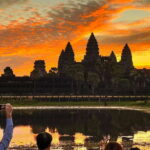
Angkor Wat sunrise: seeing the silhouette before the crowds
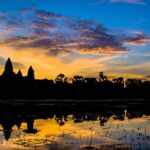
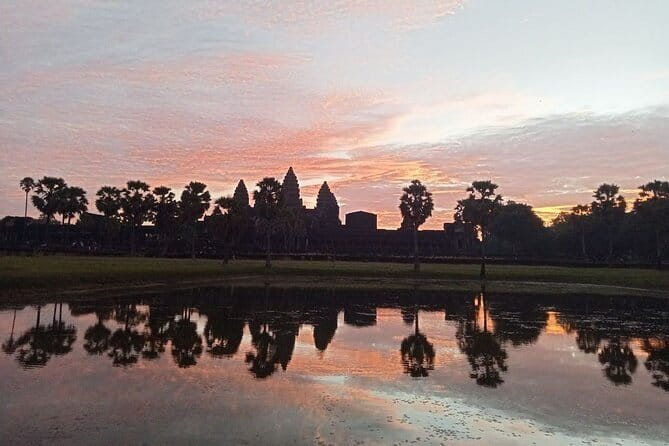
Angkor Wat is the headline, and sunrise is why. The schedule is set for you to witness the sky shift into color while the temple’s silhouette sharpens against it. When you arrive before the main throngs, you can actually see the geometry of the place instead of just chasing photos between elbows.
Your guide’s job here is more than pointing. They help you understand what you’re looking at, from the overall layout to the significance of the structures and the carvings you’ll pass along the way. Expect about 3 hours at Angkor Wat, which is a solid chunk. It’s long enough to take your time, slow down for details, and not feel rushed into a checklist.
One practical thing: sunrise mornings are when people forget basic comfort. Wear layers you can handle at dawn, and bring something simple for the light change. The tour gives bottled water, and the rest is on you. If you want photos without chaos, arriving with the schedule (not with a late start) is the cheat code.
Walking the carvings: why the guide’s explanations matter

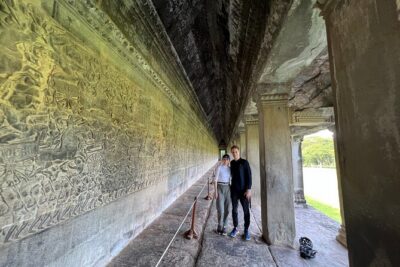
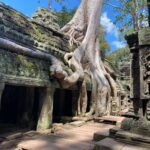
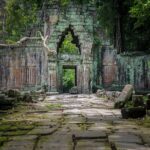
Angkor Wat is famous, but the magic is in the details. The temples are covered with intricate carvings, and if you’re not sure what you’re looking at, you can miss what makes them special.
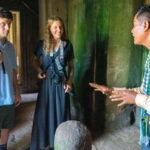
This tour includes a tour guide, and the feedback connected with this type of outing repeatedly emphasizes clarity and context. Guide profiles mentioned include people like Son (sometimes written as Sorm Son), who’s described as having very strong English and a knack for explaining both ancient and more recent history. Another name that comes up is Mr Khemrint, described as switching between professor-level historical explanation and a fun, relaxed teaching style. There’s also mention of a guide who spent 14 years as a monk, which helps explain why the tone can feel calm and thoughtful rather than rushed.
Even if your guide isn’t the specific person whose name you’ve heard, the pattern in the comments is consistent: you’re not just walking from doorway to doorway—you’re getting reasons. The best part is when your eyes start connecting the carving details to the story the guide is telling, so the place becomes more than a backdrop.
A small but meaningful tip: if the guide recommends certain photo spots or helps you time where you stand on the temple grounds, it usually pays off. You’ll spend less time in the busiest chokepoints and more time composing images with cleaner lines.
Banteay Srei: the pink temple and what to watch for
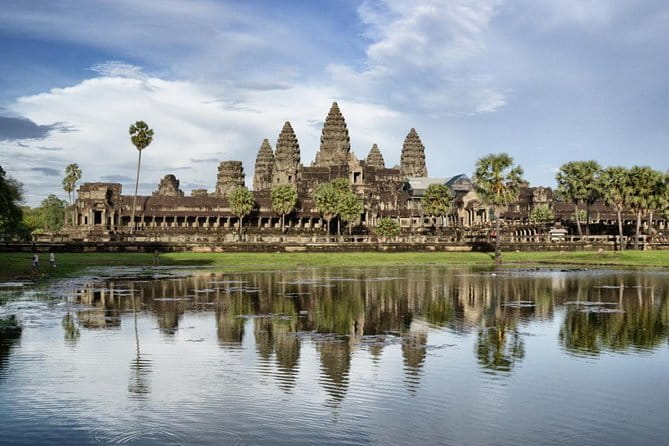
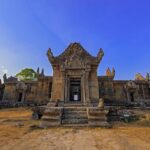
After Angkor Wat, you head to Banteay Srei, nicknamed the Citadel of Women and the Pink Temple. This temple feels different right away. The sandstone is famous for its pink hue, and the carvings are delicate—almost like they were meant for close attention rather than mass-distance viewing.
The tour keeps this part substantial. You don’t just get a quick glance. You spend time admiring the exquisite sandstone sculptures and moving through the site with guidance so you know what’s worth pausing for.
Here’s what I think is most valuable about Banteay Srei on a guided day: it’s the kind of place where small details reward you. If you’re there without context, you might treat it like another stop. With a guide, you can slow down and actually see the craftsmanship: the intricate carving work, the surfaces, and how the temple’s design creates a certain rhythm as you walk.
Also, the day’s temperature usually climbs after sunrise. Having a planned route with a vehicle between stops helps. You’re not trying to figure out logistics while you’re already tired.
Preah Dak village: seeing daily life, not just monuments
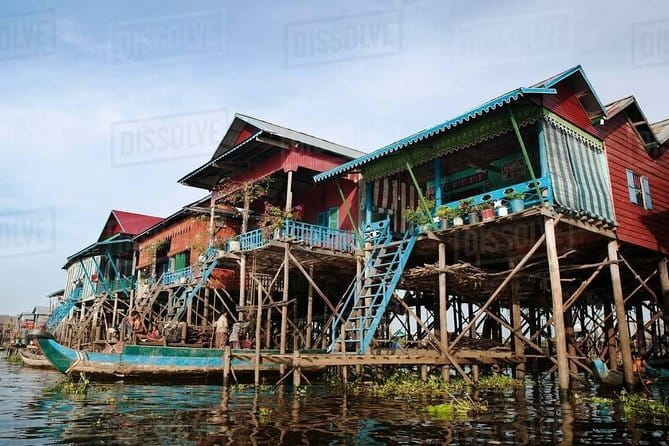
Most temple tours end at the last temple and call it a day. This one adds time in the village area of Preah Dak, which is where the trip turns from sightseeing into human-scale experience.
You’ll see daily life and get a chance to witness how traditional handicrafts are made. That matters because it gives you a contrast: you’re not just looking at ancient stone carvings—you’re also seeing the skills people use now. The tour includes time to watch the craft process and experience how locals carry on their routines.
Lunch is part of this village segment. Lunch is not included, but your guide can recommend places or suggest options if you want to try something specific. That’s a good setup, because it keeps the timing flexible while still keeping you from making random guesses about where to eat.
A practical note: village lunches can be simple, and menus can be limited. If you have strong dietary needs, it’s smart to think ahead and ask your guide what’s realistic before you commit.
You can also read our reviews of more tours and experiences in Siem Reap

Transportation, comfort, and why small groups feel better
The tour includes an air-conditioned vehicle and bottled water. That’s not a luxury detail in Cambodia; it’s a comfort detail. Morning starts are cool, but by mid-morning and after, you’ll feel the shift.
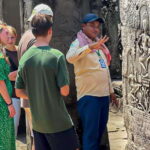
The group size is capped at 10 people, and that tends to matter more than you’d think. In a smaller group, your guide can pace the walk and adjust when someone needs a break. It’s also usually easier for your guide to manage timing around temple entrances and viewpoint flow.
This kind of tour is also a good fit if you want a smoother day without doing the math yourself. You’re not coordinating two separate temple visits and figuring out where you’ll eat afterward. You’re following a plan that hits the main beats.
Price and value: what you’re paying for (and what’s extra)
At $24.99 per person, this tour can be a strong value if you already plan to buy an Angkor Pass anyway. The included items are practical: tour guide, air-conditioned vehicle, and bottled water, plus you get a mobile ticket and pickup is offered.
The catch is important: breakfast, Angkor Pass tickets, and lunch are not included. So the real cost depends on what pass you purchase and what you choose to eat for lunch.
Here’s how I’d think about it: you’re paying for structure and expertise more than for entry fees. Temple entry costs money, but the guide’s ability to explain carvings, help with pacing, and point you toward effective timing is what makes a guided day worth it—especially when the early start and the route across multiple stops could otherwise feel overwhelming.
If you love history and details, paying for a guide tends to feel worth it quickly. If you prefer total freedom with zero structure, you might question whether you’ll use the guide’s insights enough to justify the guided cost. For many people, the sweet spot is exactly this format: a guided day that still leaves you plenty to explore within each stop.
Timing tips: how to get the most from sunrise to lunch
This is one of those days where your choices before you leave can change how the day feels.
- Arrive ready for dawn: You’re starting at 4:30 am. Layers help with temperature swings.
- Plan for the pass: Because Angkor Pass tickets are not included, make sure you’ve sorted that in advance. This prevents the day from feeling like a last-minute scramble.
- Bring a small bag for comfort: You’re walking enough that basic water and comfort matter. You’ll have bottled water from the tour, but your personal items matter too.
- Use the guide’s photo timing: The strongest feedback tied to guides like Son and Khemrint includes helping people find good spots and time where to be. That turns photos from luck into strategy.
- For lunch, go with guidance: Lunch isn’t included, but the guide can recommend options so you can eat something reliable without losing time.
If you’re traveling solo or you’re the cautious type, this sort of structured schedule can feel reassuring. The day is organized, the guide leads the movement, and you’re not bouncing between temple entrances on your own.
Who this tour suits best
This tour is a great match for you if you want:
- A sunrise Angkor experience without worrying about logistics.
- Guided context for carvings and temple meaning, not just a self-guided walk.
- A second temple that’s visually different right away: Banteay Srei.
- A break from monuments with Preah Dak village life and handicrafts.
It may be less ideal if you strongly dislike early starts, you want to spend most of your day wandering without guidance, or you know you’ll skip Banteay Srei and the village segment once you’ve done Angkor Wat.
One more thing: the tour requires good weather. If weather conditions are poor, you may be offered a different date or a full refund. That’s not a deal-breaker; it’s just part of planning for an outdoor sunrise day.
Should you book Full Day Angkor Wat Sunrise and Banteay Srei?
I’d book it if you want a well-paced day with two major temples and a village stop, and you like the idea of learning what you’re seeing rather than just taking photos. The price is attractive for what’s included, and the guide factor is the main reason the experience gets such high marks in name-specific feedback.
Skip this tour if you already plan to do sunrise on your own and you’d rather spend your time without a schedule. Also, keep in mind the extra costs for the Angkor Pass and lunch. If you budget for those up front, the day feels like good value.
If you can handle a 4:30 am wake-up call, you’ll get the best version of Angkor Wat and a second stop that doesn’t feel like repetition.
FAQ
What time does the tour start?
The tour starts at 4:30 am.
Where does the tour meet and where does it end?
It starts in Krong Siem Reap, Cambodia, and it ends back at the meeting point.
How long is the tour?
The duration is approximately 7 to 8 hours.
Is breakfast included?
No, breakfast is not included.
Are Angkor Pass tickets included in the price?
No, Angkor Pass tickets are not included.
Is lunch included?
No, lunch is not included, but your guide can recommend places or options.
What’s included in the tour package?
The package includes an air-conditioned vehicle, bottled water, and a tour guide.
Is pickup offered?
Yes, pickup is offered.
What’s the maximum group size?
The tour has a maximum of 10 people.
What happens if weather is bad?
This experience requires good weather. If it’s canceled due to poor weather, you’ll be offered a different date or a full refund.