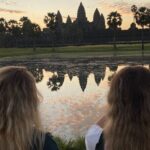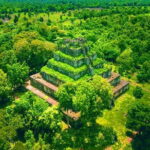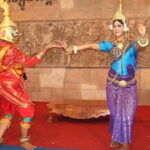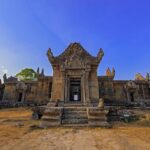
Three places in one long day—worth it. I love how this trip ties together Banteay Srei’s razor-fine carvings and the Phnom Kulen waterfall with a lesser-known temple at Beng Mealea. One thing to plan for: the price you see up front doesn’t include the two required entry passes, so your total day cost is closer to a full-day budget than a bargain half-day.
I like that the schedule is built around an early pickup (between 7:30 and 8:00 AM) and a small-group feel, capped at a maximum of 15 people. You get bottled water, small fresh towels, and an English-speaking guide who can explain what you’re seeing instead of just dropping you off.
The route also has a bit of walking and uneven ground, especially at temple sites. If you’re lower on mobility or energy, I’d steer you toward the private option (if available) rather than pushing it in a group.
In This Review
- Key highlights
- A One-Day Combo: Banteay Srei, Kulen Waterfall, Beng Mealea
- Getting There Comfortably: Pickup, Vehicle, and Timing
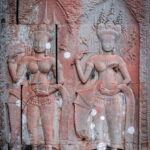
- The Temple Star: Banteay Srei’s Intricate Shiva Carvings
- Phnom Kulen’s Sacred Circuit: Reclining Buddha to the 1000 Lingas
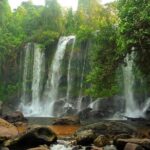
- Phnom Kulen Waterfall: Two Falls and a Swim Option
- The Temple That Feels Like Discovery: Beng Mealea
- Lunch Timing: When You Eat May Not Be When You Want
- The Human Side: Guides and Drivers Who Keep It Moving
- What the Tour Price Really Buys (and What It Doesn’t)
- Crowds, Season, and What You Can Expect on the Ground
- Who This Tour Fits Best
- Should You Book This Siem Reap Day Trip?
- FAQ
- Is pickup and drop-off included?
- What time does the tour start?
- How long is the tour?
- Do I need an Angkor Pass for Banteay Srei and Beng Mealea?
- How much is the Kulen Mountain entrance fee, and how do I pay?
- Is lunch included?
- What’s included in the tour price?
- How big is the group?
- Can I swim at the waterfall?
- What’s the cancellation policy?
Key highlights
- A three-stop day that skips the usual Angkor Wat-only loop, with Banteay Srei and Beng Mealea doing the heavy lifting.
- Kulen’s waterfall plus the “River of a Thousand Lingas” setting, so you get nature and sacred stone in one go.
- Small-group pacing (around 15 max) with hotel pickup and drop-off for an easy start.
- Cold relief on a hot day: bottled water and small fresh towels keep things comfortable.
- Cash-only Phnom Kulen entry (US$20) and an Angkor Pass requirement for Banteay Srei and Beng Mealea, so bring the right money.
- There’s time to swim if conditions allow, and changing rooms are available onsite.
A One-Day Combo: Banteay Srei, Kulen Waterfall, Beng Mealea
This is the kind of day trip that works well in Siem Reap because it gives you variety without the stress of planning three separate outings. You’ll start with a famed 10th-century temple (Banteay Srei), then shift from stone carvings to nature at Phnom Kulen, and finish at Beng Mealea—an overgrown, atmospheric temple that feels like you found it on your own.
I like the way the day moves geographically too. Instead of doing everything near the Angkor core, you head away from the busiest circuits. That means more breathing room at the temples that matter most here.
You can also read our reviews of more tours and experiences in Siem Reap.
Getting There Comfortably: Pickup, Vehicle, and Timing
Pickup is from your Siem Reap hotel between 7:30 and 8:00 AM in an air-conditioned vehicle. The goal is a smooth start before heat and crowds build up. You should expect a full day—about 9 to 10 hours—with time built in for travel between sites.
The ride matters more than people think. On days like this, your comfort affects your energy level. Having AC, plus bottled water and towels during the day, helps you stay in the game—especially if you plan to swim at Kulen.
The Temple Star: Banteay Srei’s Intricate Shiva Carvings
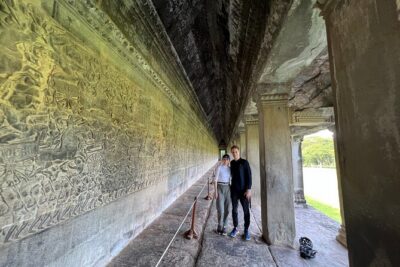
Banteay Srei is a 10th-century Cambodian temple dedicated to Shiva, and it’s famous for carvings that look almost too detailed to be stonework. It sits about 25 kilometers (15.5 miles) north of Angkor Wat, so you’re not stuck in the main Angkor crush.
Plan to spend about an hour here. That’s enough time to see the major carved areas without racing. If you care about craft and symbolism, Banteay Srei is one of those stops where a good guide pays off because carvings become stories instead of decoration.
What to know on cost: Banteay Srei requires an Angkor Pass, and the pass price in this tour context is $37 per person. It’s not included in the tour price, so factor that into your true day cost.
Phnom Kulen’s Sacred Circuit: Reclining Buddha to the 1000 Lingas
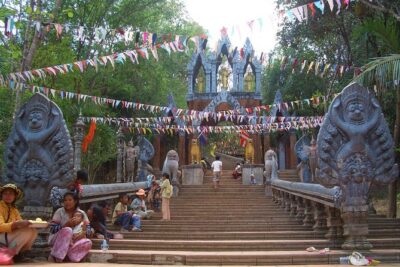
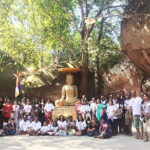
After Banteay Srei, the day shifts into Phnom Kulen territory—part temple, part pilgrimage landscape, and part nature break. One stop you’ll make is Preah Ang Thom, featuring an 8-meter (26 ft) tall reclining Buddha carved into a large natural sandstone boulder. A modern staircase is added to reach viewpoints and parts of the site.
You’ll also visit the 1000 Lingas area, carved into a stretch of riverbed bedrock. This is about 500 meters long, with linga carvings and yoni shapes, plus a larger Vishnu carving. Even if you’re not a religion nerd, it’s one of those places where the sheer density of carvings makes your brain go quiet for a minute.
Timing tip: Kulen stops can feel different depending on season. The tour notes that the beauty can vary—both the waterfall and the 1000 Lingas can look larger or smaller depending on when you go. So if you’re traveling in dry months, don’t expect the same water presence as in rainy season.
Phnom Kulen Waterfall: Two Falls and a Swim Option
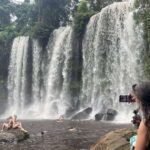
Phnom Kulen National Park includes two main waterfall areas. One is around 4–5 meters tall and roughly 25 meters wide during the rainy season. The other is taller—about 15–20 meters—and is typically the bigger draw.
You’ll have around 1.5 hours for the waterfall area. This is enough time to take photos, walk to viewpoints, and (if conditions allow) cool off. The tour also mentions that you can swim, and if you want to do it, bring a swimsuit and a towel. Changing rooms are available onsite, which is a genuine quality-of-life detail on a long day.
One practical caution: footwear matters here. Expect slippery patches near water and uneven ground from people going in and out. If you’re used to city walking shoes, consider something with grip.
The Temple That Feels Like Discovery: Beng Mealea
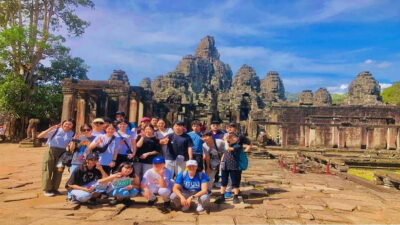
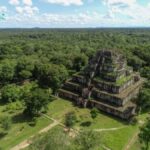
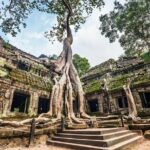
Beng Mealea sits about 40 kilometers east of Angkor Wat, and it’s one of those temples people remember because it’s less restored than the big-name sites. The result is a temple you can walk through where vines and fallen stone create an almost maze-like feeling.
You’ll spend about an hour here, and the value is simple: it feels different from the Angkor Wat complex. The tour notes that the temple is largely unrestored, which means your experience has more of that wander-and-explore vibe than a polished museum feel.
Cost note: Beng Mealea also needs an Angkor Pass ($37 per person). Again, not included in the tour price, so add it when you budget.
Lunch Timing: When You Eat May Not Be When You Want
Lunch is handled by a local restaurant near either Beng Mealea or Banteay Srei, depending on the timing. The big thing to know is that lunch may land later in the day.
That doesn’t have to be a dealbreaker. If you like to be proactive, bring a small snack of your own just in case the meal timing runs behind. Also, if you’re sensitive to spicy food, you’ll want to speak up early—Cambodian temple days can mean the meal choices are simple and hearty.
The Human Side: Guides and Drivers Who Keep It Moving
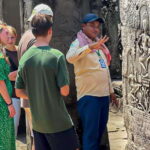
This tour leans on a guide and driver to make the long day work. You’ll have a professional English-speaking tour guide, plus bottled water and towels provided during the day.
From the guide names associated with past trips, you may run into people like So (credited for being very informative), Joe (also described as passionate about Cambodian history and culture), and drivers such as Pan and Trob (both praised for being friendly and helpful). I can’t guarantee who you’ll get, but the pattern is clear: you want someone who explains what you’re seeing, and this tour generally tries to deliver that.
Here’s the one style consideration I’d flag: at least one experience notes the guide had a habit of taking lots of photos, which can slow group pacing and make you feel a bit behind. My advice is to stay within a short visual distance of the group at each stop. If you want to photograph, do it fast—then regroup.
What the Tour Price Really Buys (and What It Doesn’t)
The tour price is $53 per person, and that base cost includes pickup/drop-off, air-conditioned transport, bottled water and fresh towels, a professional English-speaking guide, seasonal fruit tasting, and the sightseeing stops listed in the day.
But the big cost items are separate:
- Angkor Pass: required for Banteay Srei and Beng Mealea at $37 per person
- Phnom Kulen entrance fee: US$20, cash only (credit cards aren’t accepted)
- Lunch and personal expenses
So your realistic total for the major entries is roughly $110+ per person, before lunch. Is it still good value? Yes, if you want a guide for carving interpretation, a smooth transport plan, and a “three places in one day” framework that would take you a lot longer to coordinate yourself—especially if you’re juggling sites that require different passes.
It’s not the cheapest way to see the area. It is a convenient and time-efficient way to see temples and nature that you’d otherwise risk mixing up or underplanning.
Crowds, Season, and What You Can Expect on the Ground
The tour notes that these areas can be crowded, especially during Cambodian public holidays. If you’re traveling during a holiday period, go in with patience and the understanding that you’ll spend some time waiting your turn to see the most photographed spots.
Season is another variable. The tour specifically calls out that the waterfall and the 1000 Lingas may look different depending on the time of year. If you visit during wetter months, you’ll likely get more dramatic water flow. In drier months, the carved stone experience still works, but the waterfall may be less showy.
If you’re tempted to swim, treat it as a bonus. Conditions can change quickly in a national park setting.
Who This Tour Fits Best
This is a good match if you want a day that feels like a highlight reel, but with variety: one temple for carvings, one for spiritual rock and sacred symbolism, one for a nature payoff, and one “maze-in-the-jungle” style temple.
It’s also a great pick if you don’t want to piece together logistics across different ticket rules. Between the Angkor Pass requirements and the cash-only Phnom Kulen entry, a guided plan keeps things simple.
I’d skip (or consider private) if you have lower physical fitness levels. The tour specifically warns that the group tour isn’t ideal for everyone because the day can be physically demanding.
Should You Book This Siem Reap Day Trip?
Book it if you want a full-day, high-impact mix of temples and nature without dealing with ticket confusion and routing yourself. The best part is that you don’t just do Angkor Wat again—you see Banteay Srei, then move into Phnom Kulen’s reclining Buddha and 1000 Lingas, and finish at Beng Mealea, which tends to feel less crowded and more “found.”
Before you book, check your budget for the Angkor Pass ($37) and Kulen entry (US$20 cash-only). If you don’t want to handle cash or you’re tightly budgeted, look for a different option.
If you’re okay with a long day, some walking, and a later lunch possibility, this is a strong choice for one of the best ways to use a Siem Reap day.
FAQ
Is pickup and drop-off included?
Yes. The tour includes free pickup and drop-off at city hotels in Siem Reap.
What time does the tour start?
Pickup is scheduled between 7:30 AM and 8:00 AM from your hotel.
How long is the tour?
The duration is about 9 to 10 hours.
Do I need an Angkor Pass for Banteay Srei and Beng Mealea?
Yes. An Angkor Pass is required for Banteay Srei and Beng Mealea, and the cost listed is $37 USD per person.
How much is the Kulen Mountain entrance fee, and how do I pay?
The Kulen Mountain entrance fee is US$20 per person and is cash only. Credit cards are not accepted.
Is lunch included?
Lunch is not included. It’s planned at a local restaurant near either Beng Mealea or Banteay Srei depending on timing.
What’s included in the tour price?
Included items are bottled water and small fresh towels, professional English-speaking guide, sightseeing as specified, seasonal fruit testing, and transportation by air-conditioned vehicle.
How big is the group?
The group is limited to a small size, with a maximum of 15 travelers for this tour.
Can I swim at the waterfall?
You might be able to, and if you want to swim, bring a swimsuit and a towel. Changing rooms are available onsite.
What’s the cancellation policy?
You can cancel for a full refund up to 24 hours before the experience’s start time. If you cancel less than 24 hours before, the amount paid isn’t refunded.