REVIEW · SIEM REAP
Siem Reap Angkor Wat Sunrise Explore The Most Iconic Temples
Book on GetYourGuide →Operated by Khmer Bookingcom · Bookable on GetYourGuide
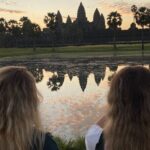
Get up for the first light. I love the Angkor Wat sunrise plan, especially using the western entrance so you can get photos with less of the later crush. The tour also runs in an air-conditioned minibus, which matters when you start so early.
Next, I like the way the route mixes the headline temples with quieter stops. Banteay Kdei gives you space to slow down, and Ta Prohm still delivers that dramatic jungle-temple look that people travel for.
One thing to consider: the day can run with a large group. When a single guide is coordinating for lots of people, pacing and Q&A can feel stretched, even if the guide is friendly and tries hard.
In This Review
- Key Highlights You’ll Actually Feel During the Day
- Sunrise at Angkor Wat: the early start that changes everything
- Walking the Angkor Wat interior: carvings, galleries, and the switch from Vishnu to Buddhism
- Banteay Kdei: the peaceful break from the biggest names
- Ta Prohm’s jungle effect: tree roots and an old-world ruin mood
- Bayon Temple and the 54 towers of faces
- Tonle Om Gate (South Gate of Angkor Thom): statues, demons, and four giant faces
- Guide style and group size: where the experience can speed up or drag
- Transportation, timing, and what’s not included in your $13
- Who this tour fits best (and who should look elsewhere)
- Should you book this Siem Reap sunrise temple day?
- FAQ
- What time is hotel pickup in Siem Reap?
- How long is the tour?
- When do you return to Siem Reap?
- What temples are included in the itinerary?
- Are temple tickets included in the price?
- Is a meal included?
- What’s included in the tour price?
- Is the guide available in English?
- Do I need to reserve in advance?
- What is the cancellation policy?
Key Highlights You’ll Actually Feel During the Day
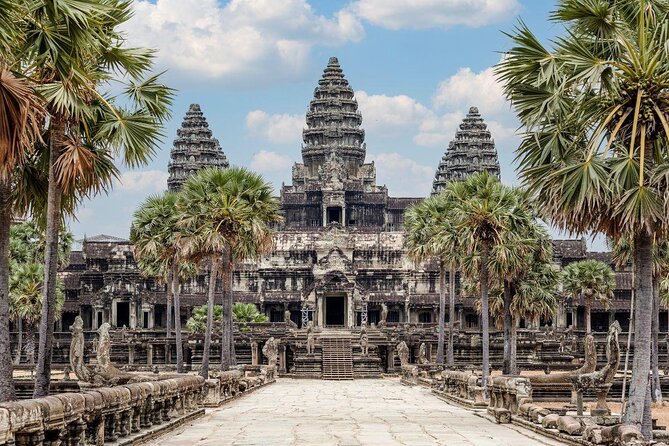
- Sunrise timing at Angkor Wat with a western-entrance approach for strong early-photo chances
- Angkor Wat interior focus on bas-reliefs, grand galleries, and the central sanctuary
- Banteay Kdei’s calmer rhythm in a Buddhist monastery setting with partially ruined sections
- Ta Prohm’s tree-root drama plus the authentic left-as-is jungle atmosphere
- Bayon’s face towers and Tonle Om Gate for two big photo moments in different styles
Sunrise at Angkor Wat: the early start that changes everything
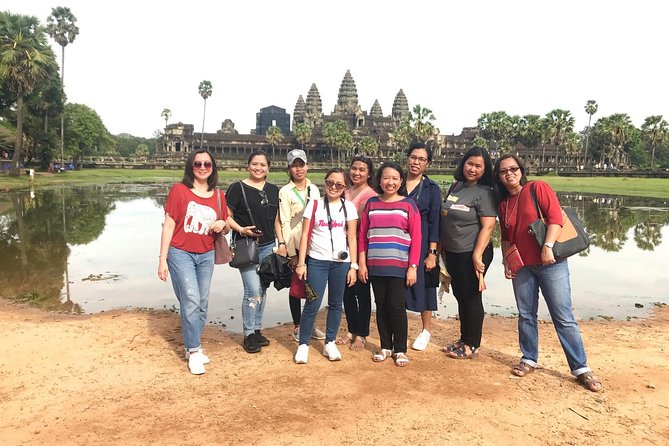
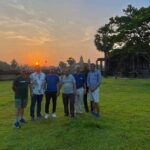
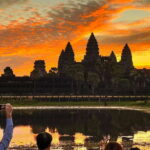
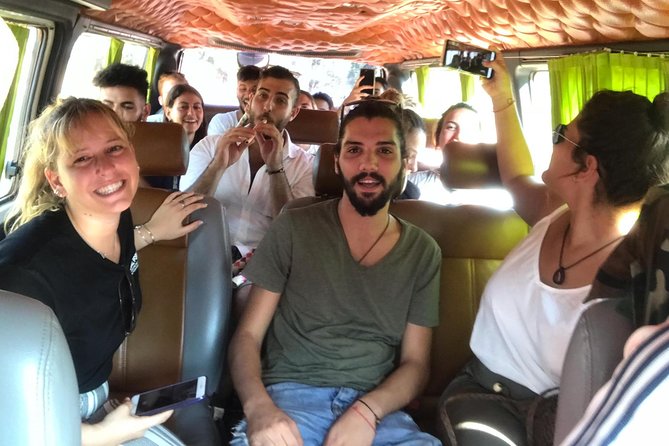
This is an 8-hour loop built around the first big moment: sunrise at Angkor Wat inside the Angkor Archaeological Park. You’re picked up from your hotel in Siem Reap City in the 4:20am–5:15am window, then ride out by air-conditioned minibus. It’s a long morning, but it’s also why the day works.
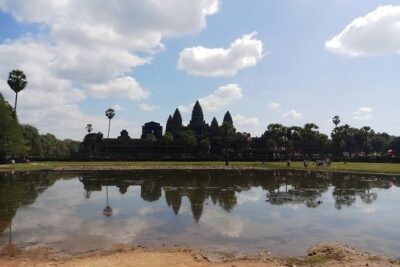
You’ll buy your temple tickets separately once you arrive (tickets are not included), then head toward a less-used route to reach Angkor Wat at sunrise. Watching the temple’s towers catch the light is the main event, and you’ll also get a photo window before the bigger wave of daytime visitors settles in.
Even if you’ve seen pictures before, Angkor Wat is hard to understand at first glance. The temple’s scale hits you once you’re there, and the details start rewarding your attention as the morning brightens—carvings, galleries, and those sacred-looking spaces that feel cut off from normal life.
You can also read our reviews of more tours and experiences in Siem Reap
Walking the Angkor Wat interior: carvings, galleries, and the switch from Vishnu to Buddhism
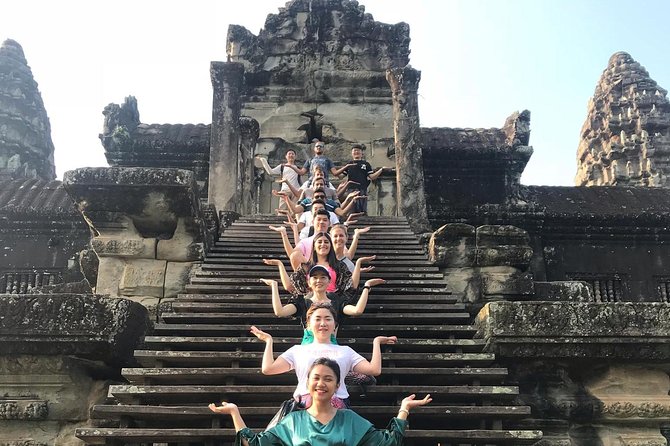
After sunrise photos, the tour moves into Angkor Wat interior. The guide-led walk centers on what makes Angkor Wat more than just a famous silhouette: intricate bas-reliefs, grand galleries, and the central sanctuary.
Here’s what I find useful for planning your mental checklist. Angkor Wat’s story is layered: it was originally built as a Hindu temple for Vishnu and later became a Buddhist site. That shift matters because it helps you read the temple’s symbolism instead of just admiring stonework.
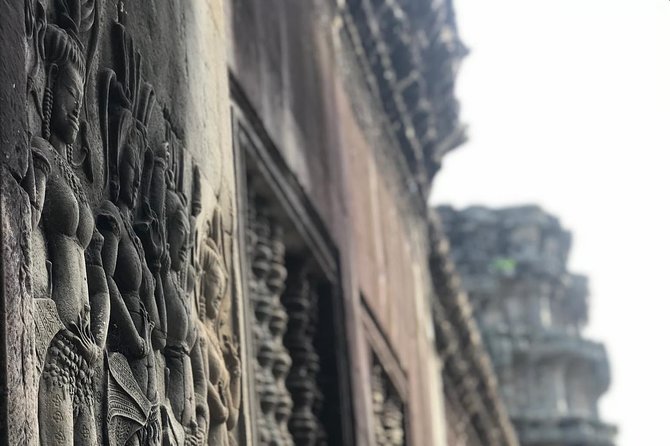
The bas-reliefs are the kind of thing you can either rush past or truly enjoy. This tour gives you time to stop and see what the carvings are doing across the galleries, and that changes the experience from scenery into understanding. You’ll also notice how the central sanctuary design creates a strong “you are inside something intentional” feeling.
Banteay Kdei: the peaceful break from the biggest names
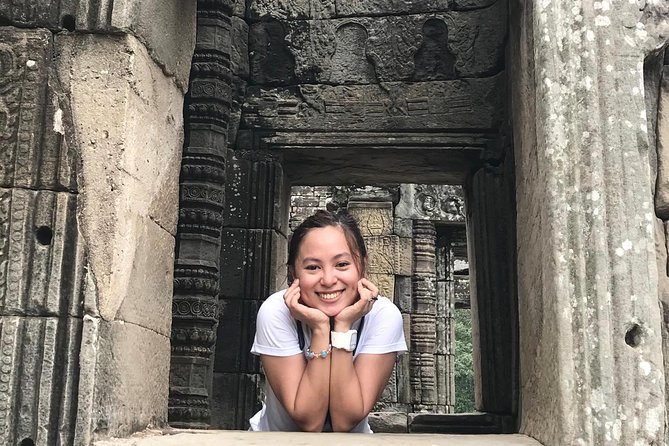
Next comes Banteay Kdei, which is quieter than the best-known temples on this circuit. The name translates as “Citadel of Chambers,” and that idea fits the vibe: corridors and chambers that feel designed for slow movement rather than fast tourism.
This temple dates to the late 12th century and is a Buddhist monastery. You’ll see unique carvings and serene passageways, but the most important part for most visitors is the partial ruins. It creates a calmer, slightly mysterious atmosphere—less of the perfectly staged look you can get elsewhere.
If your feet need a breather, this stop is where it can happen. The tour pace is still active (you’ll have guided time plus walking), but Banteay Kdei doesn’t ask you to sprint toward the next huge photo angle. It’s also a nice contrast right before Ta Prohm, which is all about drama and texture.
Ta Prohm’s jungle effect: tree roots and an old-world ruin mood
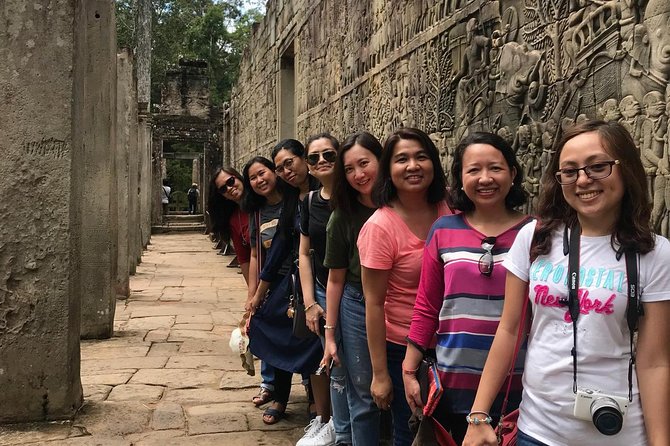
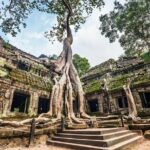
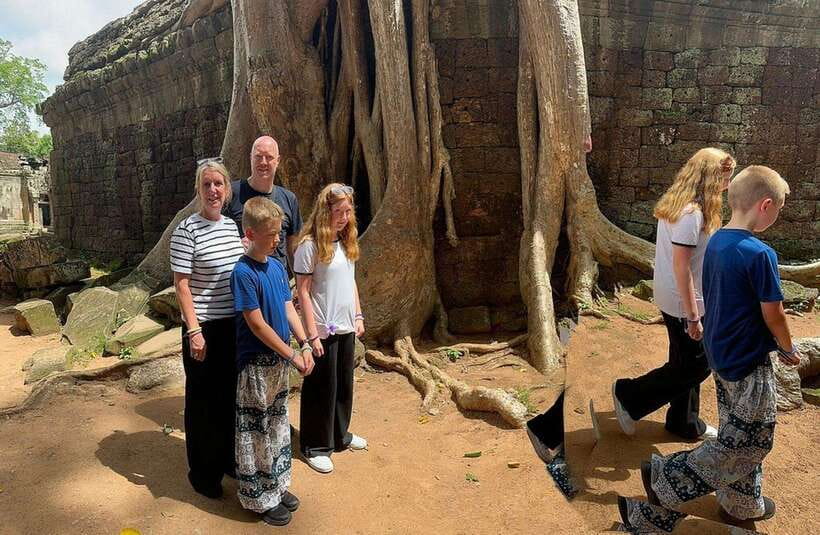
Then you’ll head to Ta Prohm, the temple famous for giant tree roots growing over the ruins. This is the stop that tends to win people over instantly, because it looks like nature and architecture have been forced into a single scene.
Ta Prohm is a 12th-century temple, and one reason it’s still so compelling is that it was left largely unrestored. That matters. You don’t just see broken stone—you feel the “stuck in time” mood that makes Ta Prohm unforgettable in person.
It also has pop-culture gravity. The temple became world-famous through the movie Tomb Raider, with Angelina Jolie. You don’t need to be a movie fan to appreciate the connection, though; the visual effect is strong enough on its own.
Practical tip from a planning angle: this is a great place to take your time, because you’ll want photos from several angles. The roots, the wall shapes, and the way light moves through the ruins all change the look, even within a short visit.
Bayon Temple and the 54 towers of faces
After Ta Prohm, the tour transitions into the center of Angkor Thom: Bayon Temple. This is where the “only at Angkor” feeling gets loud. Bayon is known for its 54 towers, each adorned with four massive stone faces of Avalokiteshvara—200+ faces in total.
One of the best parts of this stop is how the carvings work alongside the faces. You’ll see intricate carving scenes of daily life and historical battles, so the temple reads like a visual record, not just a collection of sculptures.
This is also a good moment to slow your thinking down. People often chase the faces for photos, which is fair, but the carvings around them give you a second layer to notice. If you’re into context, you’ll come away feeling like Bayon is telling you stories from multiple angles.


Tonle Om Gate (South Gate of Angkor Thom): statues, demons, and four giant faces
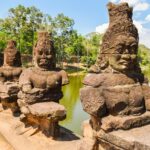
To wrap up the temple sequence, you’ll stop at Tonle Om Gate, also known as the South Gate of Angkor Thom. This is a grand entrance with a causeway lined with statues of gods and demons.
What you’ll remember here is the mix of scale and symbolism. The gate is crowned with four giant stone faces, similar to the faces you saw at Bayon, tying the two temples together visually while changing the setting from inner towers to an exterior “arrival” moment.
It’s a shorter stop (around 30 minutes walking time), but it’s a smart photo opportunity. You can get a last set of images that feels different from the dense, close-up temple ruins—and then you’re ready for the ride back.
Guide style and group size: where the experience can speed up or drag
A good English-speaking guide makes a huge difference at Angkor. On this tour, you’ll have an English guide, and the experience has earned praise for guides like Noun, who’s been described as very informative about Angkor Wat and good at pointing out spots for photos.
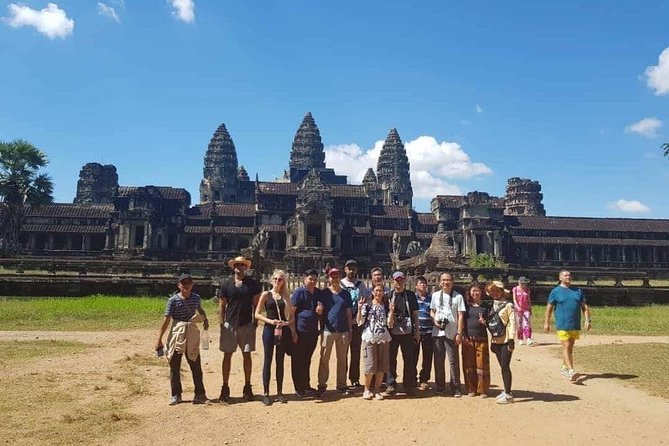
That said, group size matters. If you end up with a very large group, you may feel the logistics pressure: repeating information, coordinating returns, and managing everyone’s timing. The friendly energy doesn’t always fix the math of many people and one guide.
So here’s how I’d plan your approach:
- Ask key questions early in the day, not at the last stop.
- Expect the walking to be steady rather than leisurely.
- Keep your eye on the guide for timing, especially around sunrise and transitions.
If you like structure and you’re comfortable sharing space with a crowd, you’ll probably love the flow. If you prefer quiet, slow conversations at each ruin, you might find you have to work a bit harder to get that personal attention.
Transportation, timing, and what’s not included in your $13
This tour is priced at $13 per person for an 8-hour day, and the value mostly comes from what’s included: pickup and drop-off, an air-conditioned minibus, an English-speaking guide, and drinking water.
What’s not included is important. You’ll pay for temple tickets separately, and there’s no meal included. That means your day budget has two parts: the tour fee you pay upfront, plus the onsite ticket cost and whatever you eat during or after the 12:00–1:00pm return window.
Also, the timing is built around sunrise. You’ll be picked up early (between 4:20am and 5:15am) and typically get back around midday. That’s convenient if you want to continue exploring Siem Reap later in the day without losing your whole afternoon.
Who this tour fits best (and who should look elsewhere)
This experience is a great fit if you want a single, efficient day that covers the icons: Angkor Wat, Banteay Kdei, Ta Prohm, Bayon, and Tonle Om Gate. It’s especially good for first-timers who want to see both the “wow” temples and the calmer contrast spaces without planning transport.
It can also suit photographers who care about timing. Sunrise at Angkor Wat plus photo stops at Ta Prohm, Bayon, and Tonle Om Gate give you multiple chances to shoot, not just one.
It might be less ideal if you hate large groups or if you’re the type who likes long, uninterrupted breaks at each site. With bigger headcounts, the guide may have less time for custom questions. In that case, you might feel happier with a smaller group format elsewhere.
Should you book this Siem Reap sunrise temple day?
If you want an efficient, iconic tour that starts early and gives you the key temples in one pass, this is an easy yes. The biggest value is the combination of sunrise access planning, guided interpretation inside Angkor Wat, and a route that balances headline drama (Ta Prohm) with quieter atmosphere (Banteay Kdei).
I’d book it if:
- You’re visiting for the first time and want a structured day.
- You want sunrise photos and not just daytime temple shots.
- You’re okay paying for temple tickets separately and bringing your own meal plans.
I’d think twice if:
- You prefer small groups and lots of personal attention.
- You get stressed by crowded schedules and tight timing across multiple sites.
FAQ
What time is hotel pickup in Siem Reap?
Pickup is included from your Siem Reap City hotel between 4:20am and 5:15am.
How long is the tour?
The duration is listed as 8 hours.
When do you return to Siem Reap?
The tour ends between 12:00pm and 1:00pm.
What temples are included in the itinerary?
You’ll visit Angkor Wat, Banteay Kdei, Ta Prohm, Bayon Temple, and Tonle Om Gate (South Gate of Angkor Thom).
Are temple tickets included in the price?
No. Temple tickets are an own-expense item, and you purchase them after arrival.
Is a meal included?
No meal is included.
What’s included in the tour price?
Included items are an English-speaking tour guide, transportation by air-conditioned bus, drinking water, pick-up, and drop-off.
Is the guide available in English?
Yes, the tour guide is listed as English-speaking.
Do I need to reserve in advance?
Yes, you reserve now to secure a spot. You can also reserve and pay later according to the activity info.
What is the cancellation policy?
Free cancellation is available up to 24 hours in advance for a full refund.