REVIEW · SIEM REAP
Siem Reap: Angkor Wat Small-Group Day Tour
Book on GetYourGuide →Operated by Vamos Camboja Turismo · Bookable on GetYourGuide
Angkor without the crowds feels unreal. This small-group Angkor day trip (up to 6 people) keeps the pace calm and the explanations clear, so you actually understand what you’re seeing. Two big wins for me are the licensed guide focus on practical, spoken-in-your-language context and the time built in for photos instead of rushing through stonework like a checklist.
What also makes it work is the human side. Guides such as Reaksmey and Hong are specifically noted for being friendly, patient, and able to explain not just temples, but the surrounding Cambodian story and belief system in plain terms. Add air-conditioned comfort when your group is big enough, plus cold water and a cold towel for the heat, and the day feels easier than most Angkor schedules.
One thing to consider: even with a good plan, the midday sun can be rough. If you’re sensitive to heat, plan your shade breaks mentally and bring sun protection seriously, because some temple time happens during warmer hours.
In This Review
- Key things to know before you go
- Entering Angkor Thom at the South Gate, without feeling rushed
- Tuk-tuk comfort and the AC upgrade trick that’s worth paying attention to
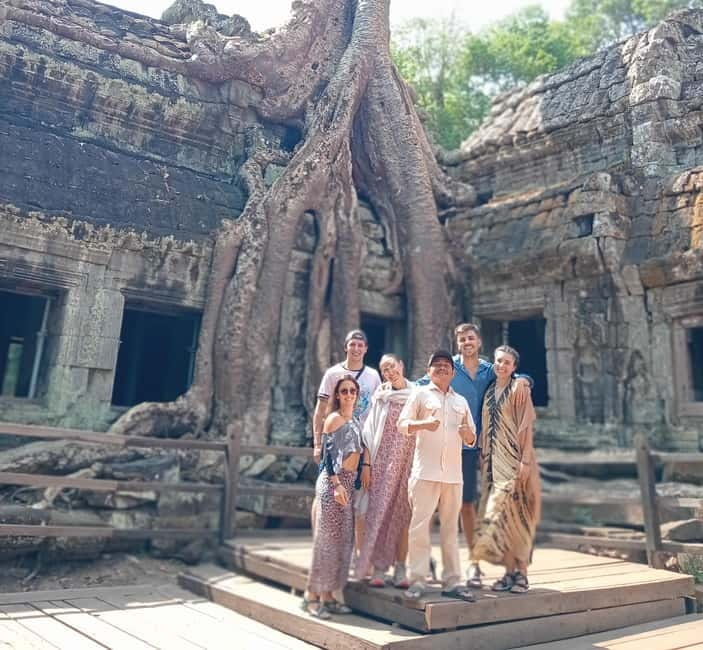
- Ta Prohm: the tree-root wow moment, with time to see the details
- From Bayon to the terrace viewpoints: smiles, elephants, and a strange name
- Victory Gate and the short photo stop that matters for your photos
- Baphuon and Srah Srang: two pauses in different moods
- Angkor Wat in the afternoon: why the timing feels smarter
- Price, ticket math, and the value of having your guide handle the day
- What to bring so you stay sane (and what Angkor asks you to wear)
- Who this small-group Angkor Wat day trip fits best
- Should you book this Angkor Wat small-group day tour?
- FAQ
- Is the Angkor Archaeological Park ticket included in the tour price?
- What time does hotel pickup happen, and when do you return?
- How big is the group on this tour?
- What languages are available for the guided tour?
- What transport do I use during the day?
- Is lunch included?
Key things to know before you go
- Max 6 people for a quieter, almost-private feel and more questions for your guide
- Licensed guide in your chosen language (English, Spanish, Portuguese, Italian, French, German, Japanese)
- Comfort perks included: tuk-tuk or air-conditioned van, plus cold water and a cold towel
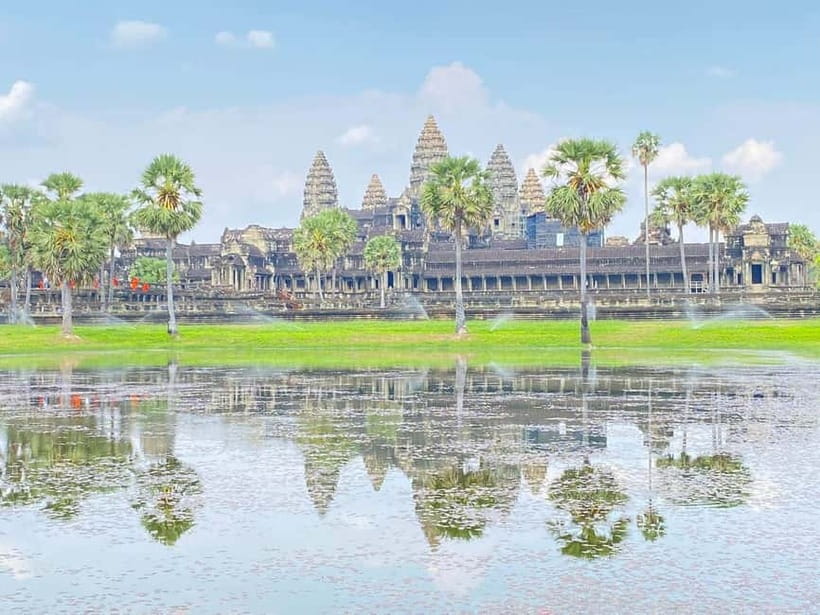
- You see the big hits in one day: South Gate, Bayon, Ta Prohm, and Angkor Wat
- Lunch isn’t included, but you’ll get a full hour break to eat nearby
- Angkor ticket is extra (US$37 per person for 1 day), though you skip the ticket line
Entering Angkor Thom at the South Gate, without feeling rushed
The day starts with hotel pickup around 08:30 to 09:00 in Siem Reap city, and you head into Angkor’s temple zone via the South Gate of Angkor Thom. This is a smart opener. You get oriented fast, and the scene is instantly memorable: massive stone faces that greet you as you cross into the ancient city.
From there, you’re not just walking from one ruin to the next. Your guide helps you read the place. For me, that’s the difference between seeing temples and actually understanding why they were built where they were. You get cultural explanations along the route, plus time for photos when it matters, not only when there’s no one around and the light is gone.
The overall structure also feels balanced. You don’t linger so long at any single stop that your energy crashes, and you don’t skip the major sights. It’s a day trip designed for a first-time Angkor visit, especially if you want depth but don’t want a marathon.
You can also read our reviews of more tours and experiences in Siem Reap.
Tuk-tuk comfort and the AC upgrade trick that’s worth paying attention to
Transport is where a lot of Angkor days either feel good—or turn into a sweat-fest. Here, the plan is straightforward:
- For 1–2 people, you ride in a tuk-tuk
- If the group reaches 3 or more, the whole group gets upgraded to an air-conditioned van at no extra cost
That AC upgrade isn’t a small detail. Angkor is hot, dusty, and bright, and your body pays for it. Having a cooler ride between temple stops gives you a chance to reset. You also get cold water and a cold towel during the day, which sounds basic until you’re doing temple walking under strong sun.
Practically, this matters for your comfort budget. You’re not paying extra for convenience upgrades, and you’re not stuck baking the whole time in open-air transport.
Ta Prohm: the tree-root wow moment, with time to see the details
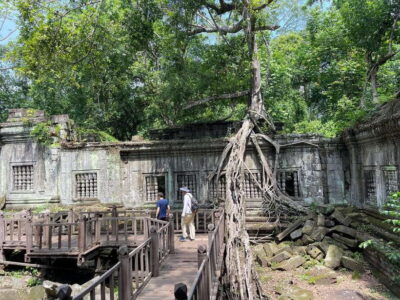
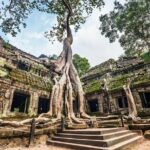
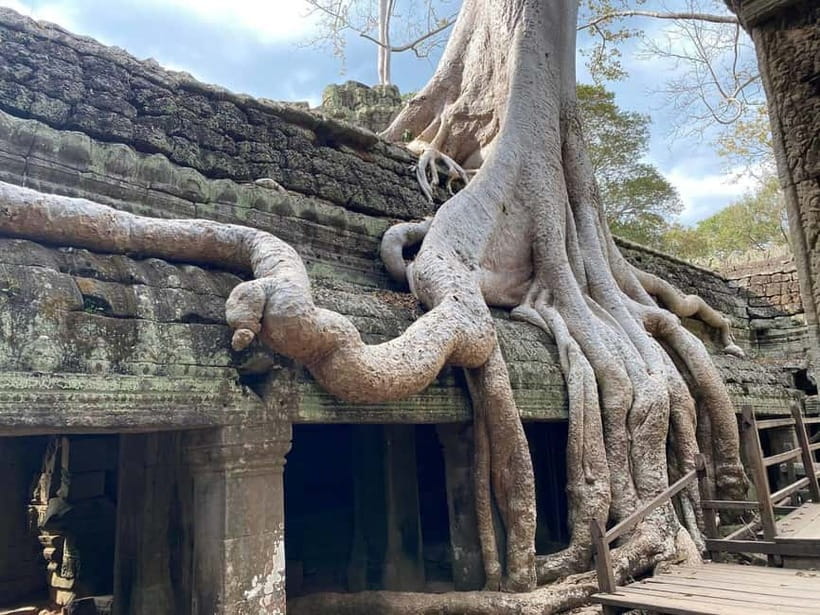
After starting in Angkor Thom, you move into Ta Prohm, one of the most famous temple settings in the world—because it looks like nature and stone are actively fighting each other. The massive tree roots weaving through walls can feel cinematic from a distance, but up close you notice the textures: worn steps, carved surfaces, and how the vegetation changes the way you walk through the space.
You’ll spend about one hour here with a guide. That timing is important. One hour gives you enough time to:
- follow the main sight lines your guide points out
- take your photos without sprinting
- ask simple questions like what you’re looking at and why the layout is the way it is
If you’re the type who likes to slow down and look at craftsmanship, Ta Prohm is where you’ll get your payoff.
From Bayon to the terrace viewpoints: smiles, elephants, and a strange name
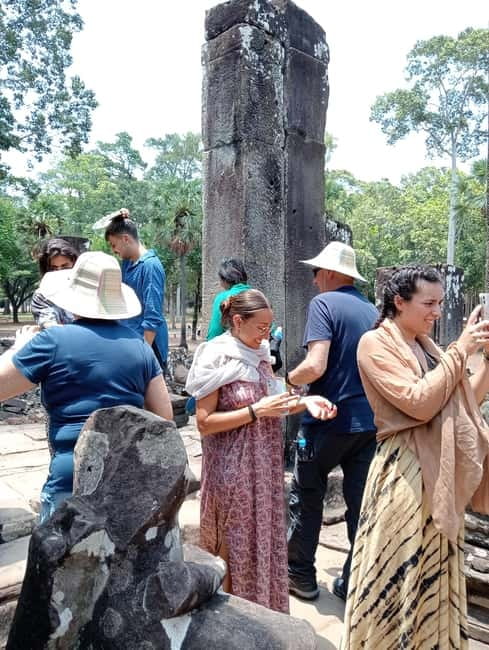
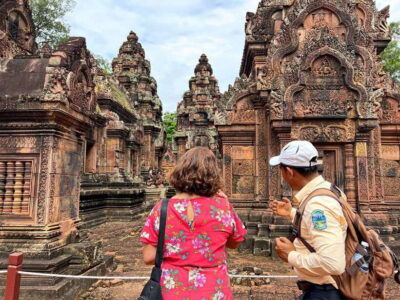
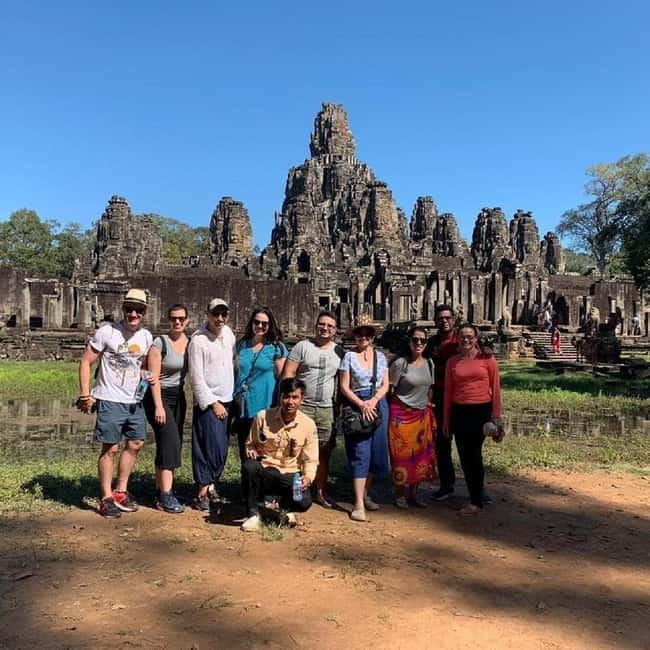
Your day returns to the Angkor Thom core with a guided walk through Bayon Temple and the surrounding areas. Bayon is known for the serene stone faces that appear across its towers. Up close, they’re not just decorative. They help you understand how the temple was meant to be seen—like a visual presence watching over the place.
Your time at Angkor Thom is about two hours, with stop-and-explain structure. You also visit:
- Terrace of the Elephants (about 20 minutes)
- Terrace of the Leper King (included as part of the terrace experience around this area)
Even if the names don’t tell you the full story, your guide can connect the symbolism to how power and ceremonies were staged at Angkor. The terraces are also useful photo points, because they give you a chance to step back, frame wider views, and reset before you move again.
One practical note: terraces mean steps and uneven footing. Wear shoes you’re comfortable walking on for a long stretch.
Victory Gate and the short photo stop that matters for your photos
You’ll also do a Victory Gate photo stop (around 15 minutes). It’s short, but that’s not necessarily bad. Short stops are useful in a full day because they let you collect a key image while still keeping the rest of your schedule workable.
If you want your photos to look less crowded and more intentional, treat this like your “quick composition” moment:
- get your camera ready early
- move a step or two away from the main path for a cleaner angle
- let your guide time the stop for the right flow

Baphuon and Srah Srang: two pauses in different moods
Next up is Baphuon with about 30 minutes of guided time. Baphuon doesn’t get as much internet attention as some other temples, but it’s a good stop for structure and context. It helps you understand the broader Angkor Thom complex beyond the most iconic faces.
Then you hit Srah Srang for a break and lunch time. You’ll have about one hour for this rest period, including time for lunch (lunch isn’t included in the tour price).
This break is a real advantage. Angkor walking can flatten your energy fast, and it’s hard to eat well when you’ve got temples in front of you. A dedicated lunch window helps you do the sensible thing: hydrate, cool down a bit, and refill before your final major temple.
A tip: since you’re asked to bring cash, plan to pay for lunch easily without digging around at a busy restaurant. Also, dress for the heat afterward. You’ll likely want your sunscreen reapplied at this point.
Angkor Wat in the afternoon: why the timing feels smarter
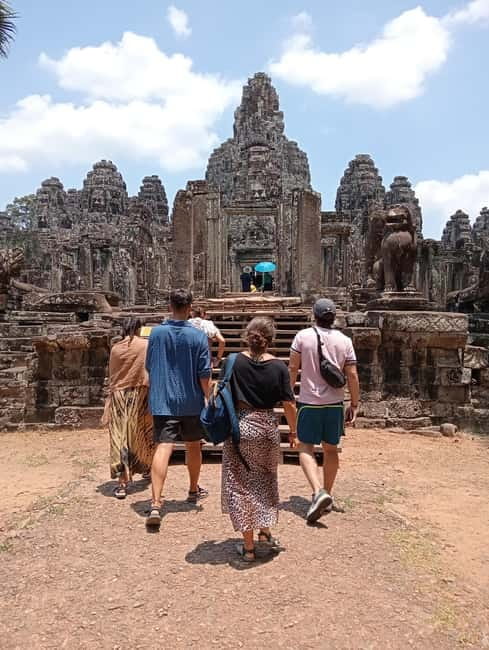
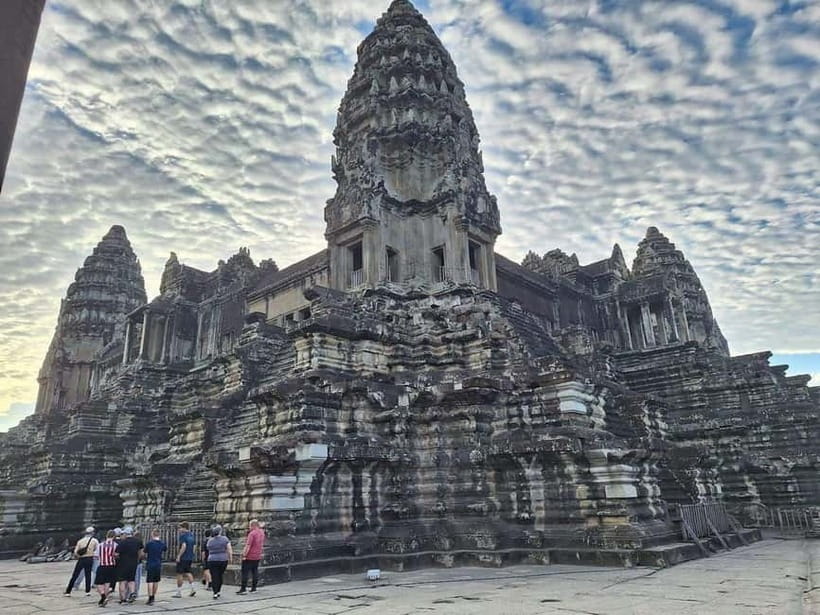
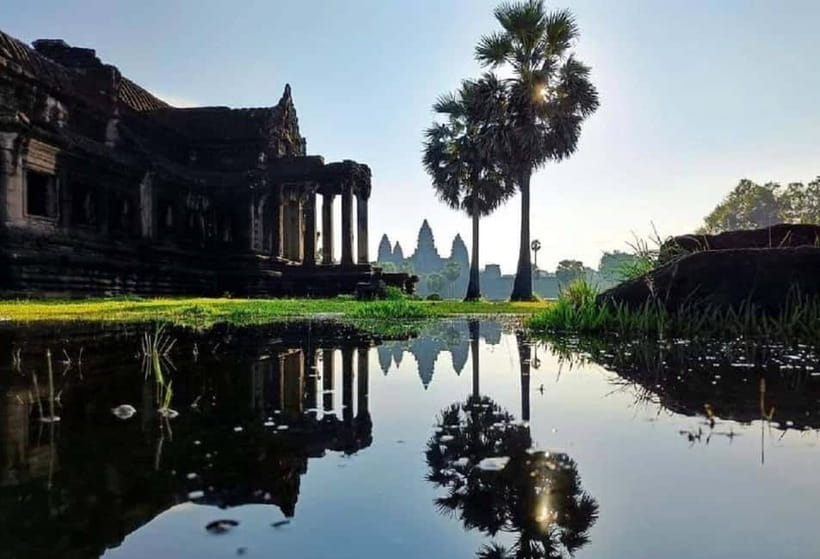
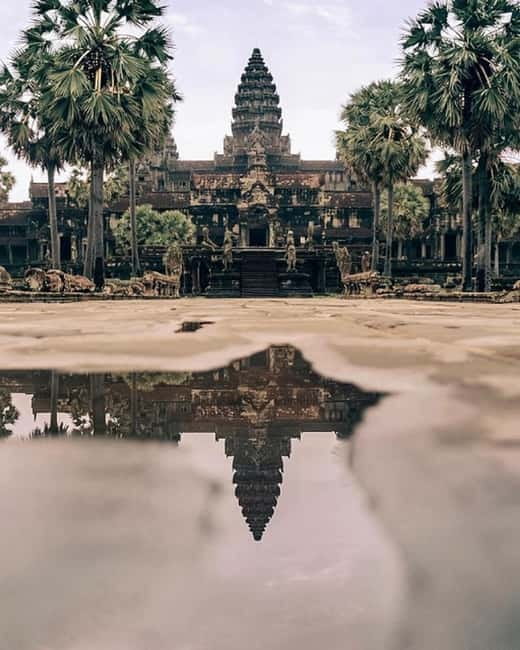
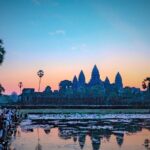
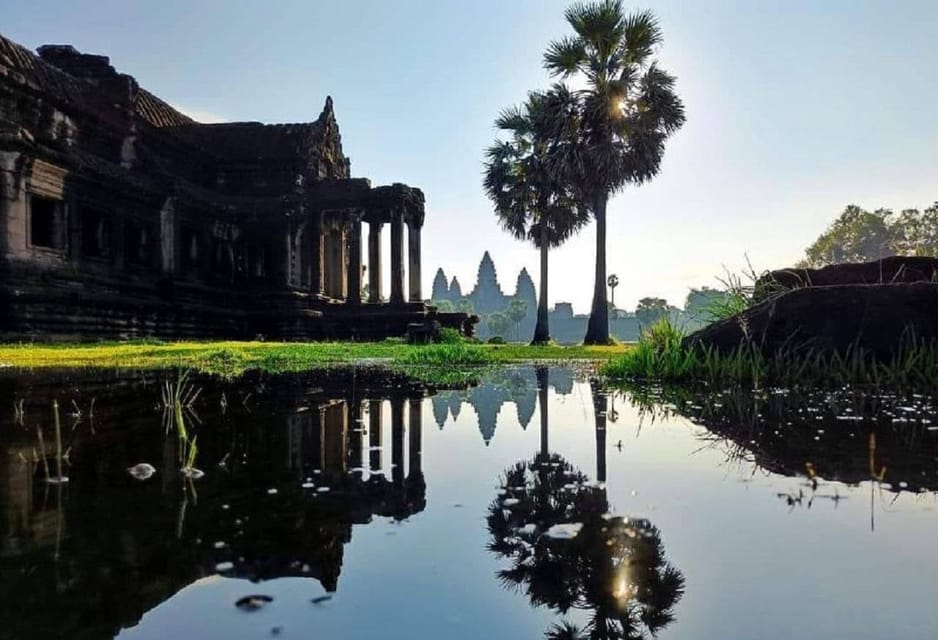
The day ends with Angkor Wat. You’ll have about two hours there with your guide, plus the chance to focus on art, history, and symbolism rather than just taking photos and leaving.
Why it feels smarter in the afternoon: your morning tends to be about orientation and impact (South Gate, Bayon, Ta Prohm). By the time you reach Angkor Wat, you’re better at recognizing patterns:
- how the temple’s design channels your movement
- how carvings and layout communicate meaning
- why certain views feel built for stillness
Angkor Wat is also the place where understanding your symbols pays off. A good guide helps you translate what you’re seeing—so it stops being just a big famous temple and becomes a readable monument.
It’s also a logical way to end your day. Finishing around 05:00 PM gives you enough time to return to your hotel without feeling like you’re being processed.
Price, ticket math, and the value of having your guide handle the day
At US$25 per person for an 8-hour small-group tour, the big question is: what’s extra, and what are you buying with that base price?
Here’s the cost reality you should plan for:
- The Angkor Archaeological Park entrance ticket is not included and costs US$37 per person for 1 day
- Lunch is not included
- The tour does include hotel pickup/drop-off, transport, guide, and cold water/cold towel
- You also get ticket line skipping (you still need the ticket, but the process is smoother)
So you’re looking at roughly US$62 per person before lunch, assuming the standard 1-day ticket. For most people, that’s still solid value because you’re paying for a guided, structured day with comfortable transport and fewer people.
Is it cheap? No. Is it fair for what you get? Yes—especially if you value:
- a licensed guide who can explain religious and cultural context
- a schedule that protects your energy
- small-group attention instead of being herded
Also, the price feels more reasonable when you remember Angkor day tours can easily become expensive once you add tickets, transport, and guide hours. Here, the base price covers a lot of the work behind the scenes.
What to bring so you stay sane (and what Angkor asks you to wear)
This tour is very weather- and clothing-dependent. Do yourself a favor and pack like you mean it:
Bring:
- comfortable shoes (you’ll walk)
- sunglasses and a hat
- sunscreen (and the data also asks for biodegradable sunscreen)
- camera
- insect repellent
- cash
Wear:
- comfortable clothes that respect the site
Avoid:
- shorts
- short skirts
- sleeveless shirts
That dress guidance isn’t just rules for the sake of it. It helps you stay comfortable in heat, and it keeps you from getting delayed at checkpoints.
Who this small-group Angkor Wat day trip fits best
This tour is a good match if you:
- want a first-time Angkor overview with major temples
- prefer a smaller group over crowded mass touring
- like having a guide translate what you’re seeing into understandable context
- care about comfort (air-conditioned van option, cold water, cold towel)
It’s not suitable if:
- you’re traveling with children under 12
- you use a wheelchair
- you’re over 95
Should you book this Angkor Wat small-group day tour?
I’d book it if you want a structured Angkor day that feels calm, not chaotic, and you care about understanding the temples rather than just collecting pictures. The small group up to 6, the guide languages, and the comfort touches (water and cold towel) make it a practical choice for most visitors.
But if you’re extremely heat-sensitive, go in with a plan for sun management and don’t expect every minute to feel cool. Also remember: the Angkor ticket and lunch are extra, so budget for them before you lock it in.
If you want a one-day “best of Angkor” experience with fewer people and clearer context, this is the kind of day trip that usually pays off.
FAQ
Is the Angkor Archaeological Park ticket included in the tour price?
No. The Angkor complex entrance ticket (US$37 per person for 1 day) is not included. You’ll need to buy it separately, though the tour helps you skip the ticket line process.
What time does hotel pickup happen, and when do you return?
Pickup is typically between 08:30 and 09:00 AM, and the tour finishes around 05:00 PM, returning you to your hotel in Siem Reap city.
How big is the group on this tour?
It’s a small-group experience with a maximum of 6 people, which keeps the day more relaxed and gives you more time with your guide.
What languages are available for the guided tour?
You can choose a live guide in English, Spanish, Portuguese, Italian, French, German, or Japanese.
What transport do I use during the day?
For 1–2 people, you ride in a tuk-tuk. If the group size reaches 3 or more, the tour upgrades everyone to an air-conditioned van. Cold water and a cold towel are included.
Is lunch included?
Lunch is not included. You’ll have a lunch break with about one hour on site to eat at a nearby restaurant.