REVIEW · SIEM REAP
Siem Reap: Angkor Wat, Angkor Thom, and Banteay Srei Tour
Book on GetYourGuide →Operated by Tour Guide Team Cambodia · Bookable on GetYourGuide
Three temples, hours of wonder, one efficient day. This private tour hits Angkor Wat and Angkor Thom with a licensed guide plus photo stops at the main hits like Ta Prohm. I love that you get guided context, not just sightseeing, and you also get extra attention to photo spots. One thing to plan for: it’s a long day of walking in heat, so comfortable shoes and sun protection are non-negotiable.
I also like how the guiding feels tailored inside a fixed route. Guides such as Tong and Seng are known for explaining temple layout and architecture clearly, pointing out good angles, and keeping the pacing fair with a private vehicle and driver like Long handling the logistics.
If you’re hoping for a super-relaxed pace, this may feel a bit packed. You’ll cover several temple zones in one day, with short breaks like lunch time, so it’s best if you’re okay moving from highlight to highlight.
In This Review
- Key highlights you’ll actually feel on the ground
- The route in a nutshell: a classic Angkor hits plan, with real guidance
- Pickup, van comfort, and why the private setup matters
- Angkor Wat: the main monument, explained while you walk
- South Gate into Angkor Thom: positioning yourself for the big reveal
- Bayon Temple: 200+ smiling faces, with help spotting what matters
- Short stops inside Angkor Thom: Baphuon, terraces, and quick photo moments
- Lunch and a break at Srah Srang: when the heat wins
- Ta Prohm: jungle roots and a movie-famous look
- Banteay Srei: red-pink carvings and the joy of fine details
- The optional culture stop: palm sugar village and local crafts
- Banteay Samre: a calmer 12th-century stop if it fits your timing
- Price and value: what $155 for up to 6 really buys
- Who this tour suits best (and who should tweak the plan)
- Practical tips so your day feels smooth
- Should you book this Angkor Wat, Angkor Thom, and Banteay Srei day trip?
- FAQ
- What’s included in the tour price?
- How long is the tour?
- What temples and sights are covered?
- Is this a private tour?
- Do I need to buy temple tickets separately?
- What language is the guide?
- Is it suitable for wheelchairs or pregnancy?
Key highlights you’ll actually feel on the ground
- Skip-the-line entry using a separate entrance, which saves time when temples are busy
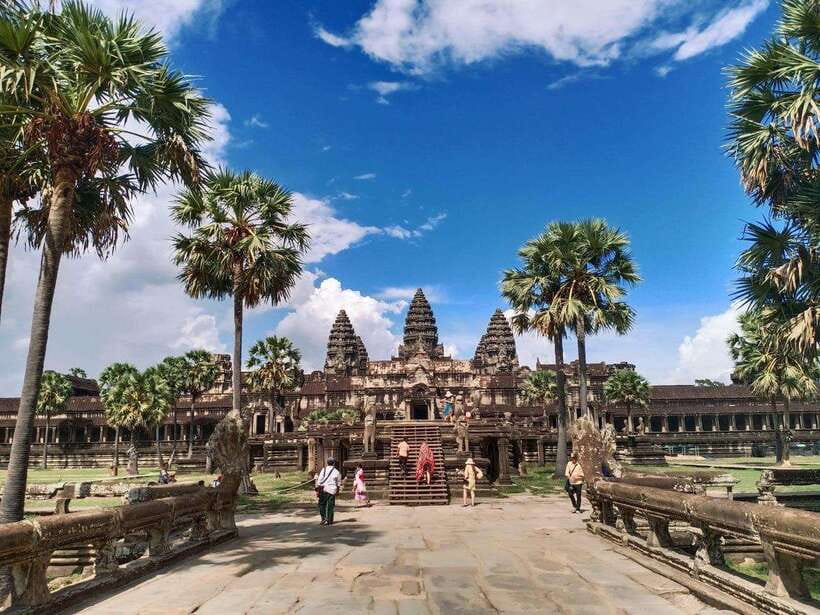
- Angkor Wat (2 hours) with a guided walk and photo stops, built by Suryavarman II in the 12th century
- Bayon Temple’s 200+ smiling stone faces at a comfortable one-hour visit, not a rushed drive-by
- Ta Prohm’s tree-root architecture plus the famous movie connection you can spot during the walk
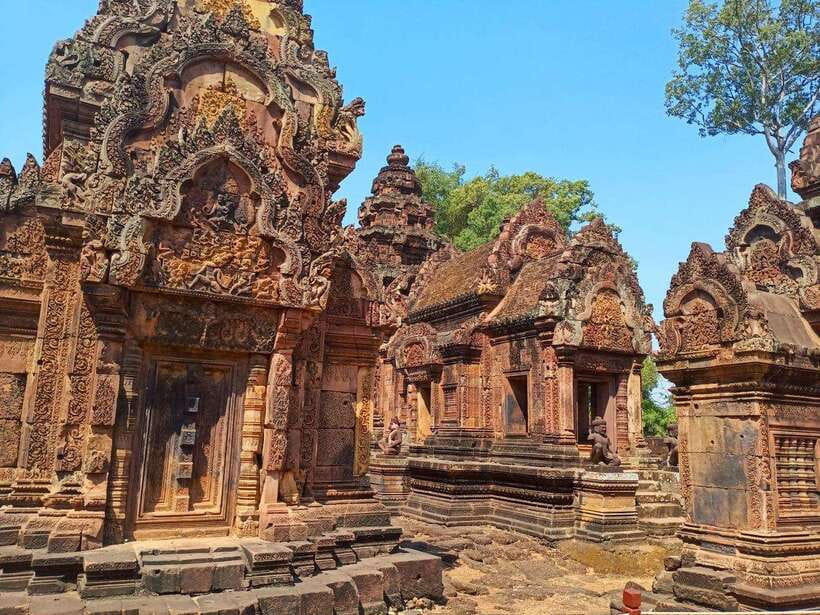
- Banteay Srei (1 hour) for the red-pink sandstone carvings that get praised as a “precious jewel” style of Khmer art
- A culture stop on the way back at a palm sugar village (plus optional local handicraft browsing)
The route in a nutshell: a classic Angkor hits plan, with real guidance
This is a full day built around three big targets—Angkor Wat, Angkor Thom, and Banteay Srei—plus the unforgettable in-between stops that make the day feel complete. You’re picked up in Krong Siem Reap and driven in an air-conditioned vehicle with a licensed driver. A licensed English-speaking guide walks you through the main structures, then you get time to explore and take photos on foot.
What makes the experience work is the order. You start with Angkor Wat, then work your way into the Angkor Thom complex (including Bayon), swing to Ta Prohm later, and finish with Banteay Srei—often the most rewarding for carving details because it’s not just scale, it’s precision.
If you’re visiting Angkor for the first time, this route gives you a strong “A to Z” feel. You see the grandeur, the symbolic face-towers, the jungle-temple look, and then the delicate craftsmanship that makes Banteay Srei worth the effort.
You can also read our reviews of more tours and experiences in Siem Reap.
Pickup, van comfort, and why the private setup matters
You’ll be collected from your hotel area in Krong Siem Reap and transferred by private air-conditioned vehicle. The schedule includes multiple short drives (for example, quick hops between temple zones), and that’s where private transport feels like a small luxury. You’re not stuck waiting for other groups, and the driver can usually position you for smoother access and parking.
This matters in Angkor because the day is mostly walking once you arrive. When you’re done with one temple, you want the next one to start fast. The tour includes cold bottled water, parking, gas, toll roads, and hotel pickup/drop-off—so you’re not trying to manage extra admin in the middle of your temple time.
You also get a real advantage from being a private group up to 6. That group size makes it easier for the guide to adjust pacing if you want longer at Bayon or if you’re spending extra time photographing the best stone faces.
Angkor Wat: the main monument, explained while you walk
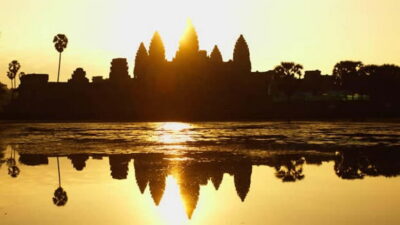
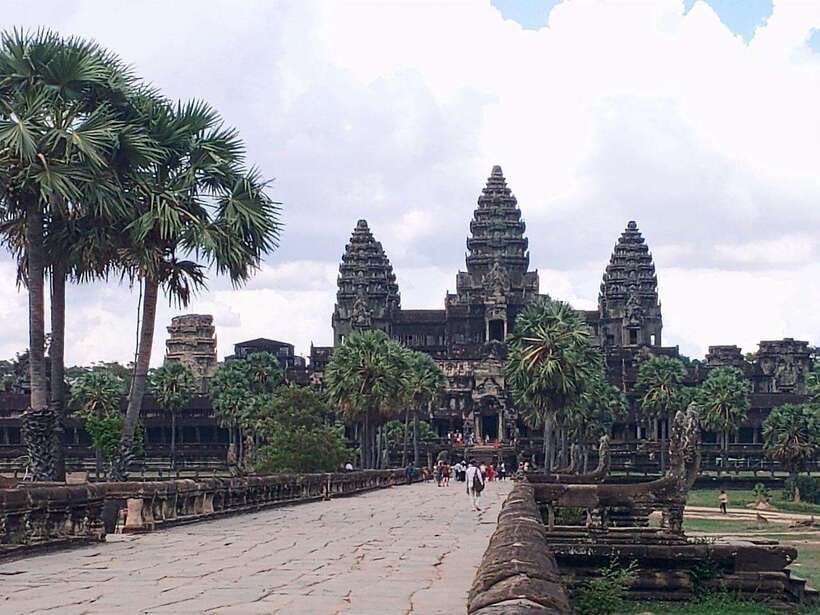
You start at Angkor Wat with about two hours that include photo stops, a guided tour, and time to stroll. This isn’t just the “big temple.” It’s the one that sets the tone for the whole Angkor complex.
Your guide frames it in a way that helps the architecture make sense. You’ll learn it’s a UNESCO World Heritage site listed in 1992, and you’ll get the key historical context: it was built in the 12th century under King Suryavarman II. The practical benefit of this explanation is that you stop seeing the site as random buildings. Instead, you start noticing how the layout and carvings connect to power, belief, and Khmer artistic style.
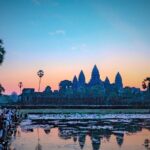
Photo-wise, you’ll get time to capture the views you’re likely picturing already—especially from the walkways and entry areas where the temple’s symmetry shows up best. If you’re sensitive to crowds, the tour’s separate entrance approach helps you get going with less waiting.
One note: two hours at Angkor Wat is enough to enjoy it without feeling frantic, but you’ll still want comfortable shoes, a hat, and sunscreen. The midday sun in Siem Reap can be intense even when the stones look cool.
South Gate into Angkor Thom: positioning yourself for the big reveal
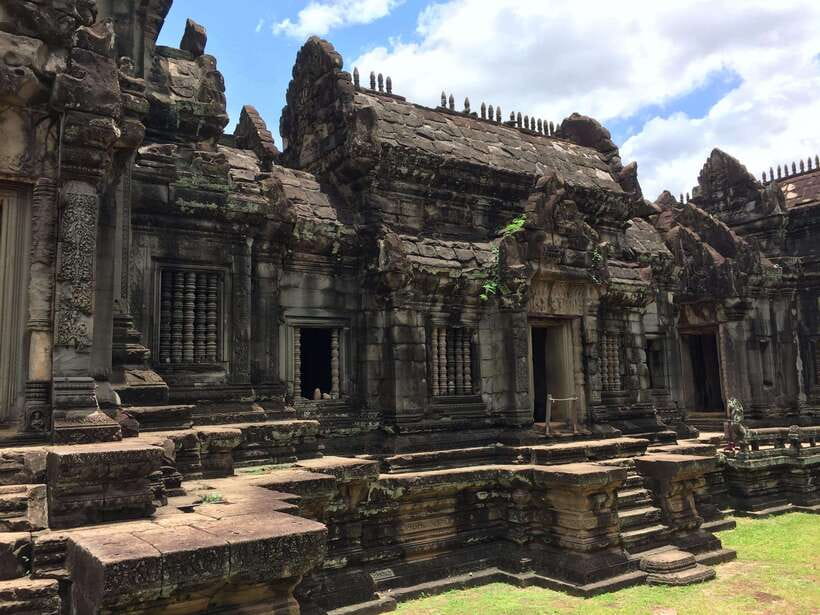
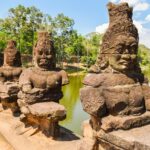
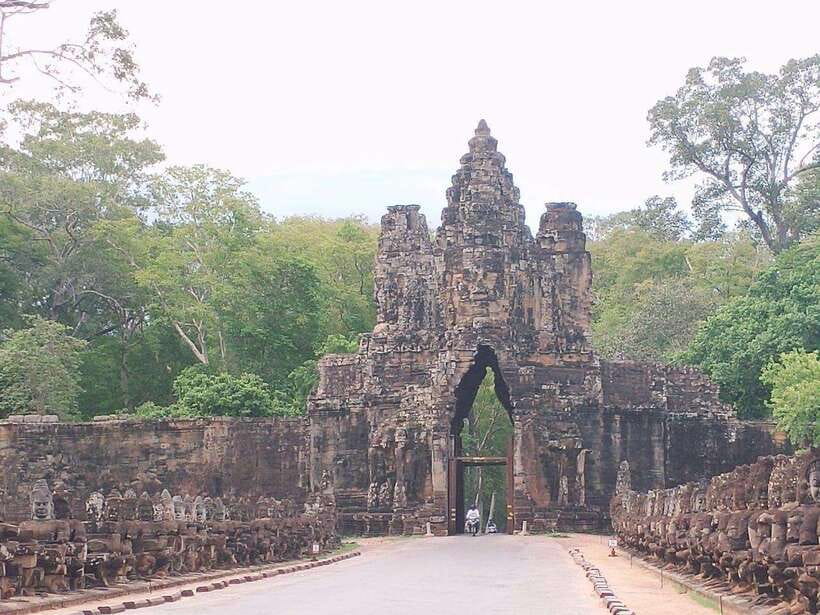
After Angkor Wat, you drive briefly and then stop at the Tonle Om Gate (Southern Gate) for photos and a short visit. This gate matters because it’s part of how Angkor Thom feels like a walled city rather than a single monument.
From here, the guide helps you orient your brain. Instead of thinking of separate temples, you start tracking how gates and walls guide movement through the complex. This is one of those small things that makes your photos better too, because you understand where you are relative to the main structures.
The stop is short—around 15 minutes—so think of it as your warm-up before the big face moments.
Bayon Temple: 200+ smiling faces, with help spotting what matters
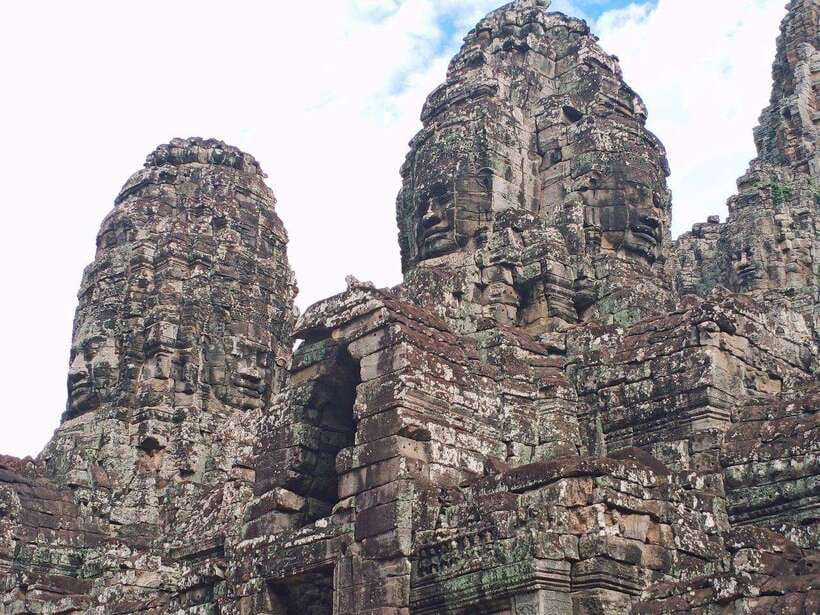
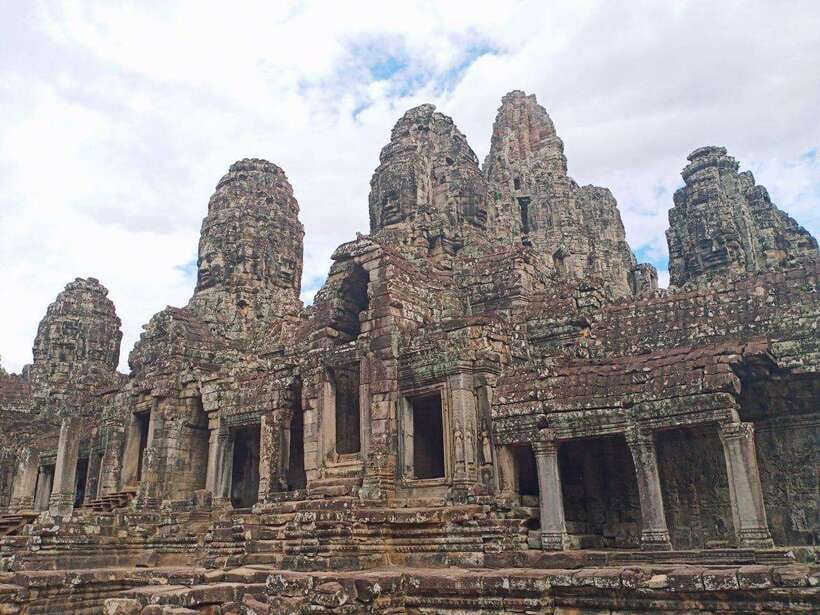
Next is Bayon Temple, with about one hour. This is where you see the giant stone faces for which Angkor Thom is famous—more than 200 smiling faces carved into the towers.
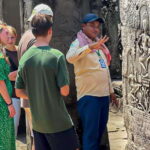
Here’s the value of a live guide: it’s easy to get “stuck” staring at the faces, but you can miss the details if you don’t know what to look for. Your guide explains the symbolism and helps connect the structure to Khmer religious ideas. Even if you don’t memorize every fact, you’ll walk away with a clearer sense of why those faces are the signature.
You also get a chance to choose your angles. Some photo spots feel obvious, but others take a minute to find. Having a guide who points out good viewpoints saves you time and frustration.
This is also the point in the day where you’ll feel the walking most. If you start to slow down, ask for a brief pause. The private format makes it easier to keep your energy for later stops like Ta Prohm and Banteay Srei.
Short stops inside Angkor Thom: Baphuon, terraces, and quick photo moments
The itinerary includes several shorter temple stops inside the broader Angkor Thom zone—Baphuon (about 15 minutes) plus additional photo stops (also around 15 minutes each) and quick walking segments. There’s also a stop at the Terrace of the Elephants (about 15 minutes) for photos and a guided look.
These are the stops that can feel optional on paper. But in practice, they help the story feel real. They connect the big “headline” structures to smaller monuments and show how the complex was designed as a working ceremonial city.
Don’t expect long exploration here. Expect short guided orientation and enough time to grab photos without feeling like you’re running late. If you’re the type who wants to linger, your best move is to spend your extra time at the stops that actually match your interests—usually Bayon for faces, and Ta Prohm for the jungle atmosphere.
Lunch and a break at Srah Srang: when the heat wins
Srah Srang is your break point, with about one hour including lunch time. Srah Srang is a water area in the Angkor region, and it works as a reset in the middle of the day when sun exposure is high.
The lunch you’ll get is included, but don’t expect a food destination. The upside is convenience: it keeps you from hunting down a restaurant mid-temple. The quality is described as good for the meal itself, even if the ambience isn’t the point.
Use the break like it’s meant to be used. Drink water, cool down, and take a moment to plan your priorities for the afternoon. Because once you leave lunch, the schedule ramps up again.
Ta Prohm: jungle roots and a movie-famous look
In the afternoon you head to Ta Prohm, one of the most atmospheric sites in the entire Angkor region. You get about one hour including photos, a guided tour, and walking time.
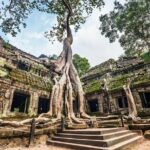
This temple is known for the tree roots that wrap around stone structures. The guide helps you see it as Khmer engineering and changing nature, not just a set piece. And yes, there’s a pop-culture angle: the film Lara Croft: Tomb Raider used the area, so you’ll likely spot why people connect the temple’s look to that imagery.
The best advice here is practical: slow down for photos. Ta Prohm looks dramatic from almost every angle, but the “money shots” usually require positioning yourself so roots, doorways, and stone textures line up.
It’s also a relief compared to the earlier stops. Angkor Wat and Bayon are about formal geometry and large-scale symbolism. Ta Prohm feels more like a conversation between stone and forest.
Banteay Srei: red-pink carvings and the joy of fine details
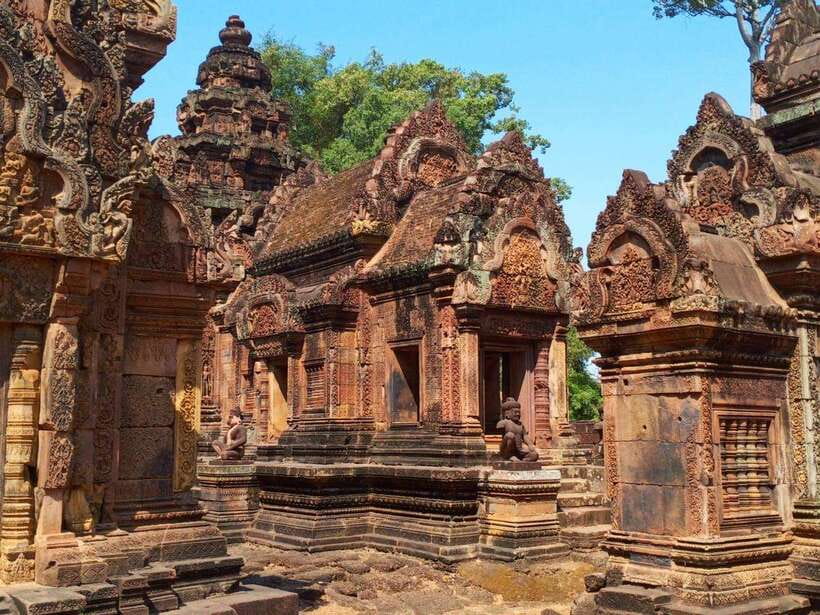
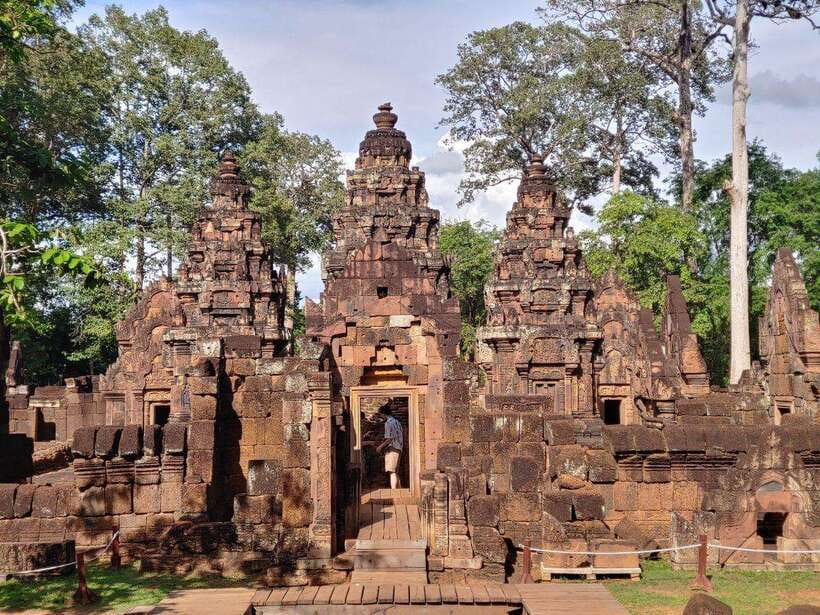
Next comes Banteay Srei—about one hour with photo stops, a guided tour, and walking time. This is one of the best places to slow your brain down and enjoy craftsmanship.
The guide takes you beyond the main temple clusters and toward a red-pink sandstone temple often described as a jewel of Khmer art. The difference you’ll feel right away is how much of the “wow” is in details: intricate carving work, elegant design, and ornamental precision that doesn’t read as quickly as Angkor Wat’s scale.
This temple is popular, and for good reason. When conditions are good (light, time of day, and your own energy), you can get that sense of looking at something delicate that survived chaos, wars, and looting over centuries.
The practical tip: bring your camera close and your feet ready. You’ll want to move slowly to catch the carving work. If you rush, you’ll miss why people call it special.
The optional culture stop: palm sugar village and local crafts
On the way back, you include a short visit to a palm sugar village and time for browsing local handicraft souvenirs. This is a smart add-on because it shifts your day from temples-only to everyday life in the region.
You’ll likely see how palm sugar is made and how local craft traditions connect to the economy today. Even if you don’t buy anything, it’s a useful reminder that Angkor is not the only story around it.
Tip: If you do shop, treat it like any small local market. Compare what you’re interested in and ask questions about materials and process. A guide can help you communicate.
Banteay Samre: a calmer 12th-century stop if it fits your timing
Your return route can also include a stop at Banteay Samre, built in the 12th century during the Angkor period. The highlight here is serenity—more quiet, less of the frantic photo-line vibe—and about 1.5 hours of guided time and walking.
This part of the day is great if you want contrast. After the face towers and jungle roots, Banteay Samre offers a gentler pace. You’ll also get a practical photo break where you’re not fighting to find angles between crowds.
Price and value: what $155 for up to 6 really buys
The price is $155 per group (up to 6) for a one-day private tour. That’s not a per-person deal like some group shuttles. It’s built for small groups and families who want a licensed guide, private transport, and a day that runs on your schedule.
What you get included:
- Private vehicle and driver
- Licensed English guide
- Cold water
- Parking, toll roads, and gas
- Hotel pickup and drop-off
What’s not included:
- Temple tickets
- Meals and drinks (lunch is handled within the tour day, but you should still plan spending based on how the package is structured)
- Personal expenses
The value calculation is simple: if you’re traveling with 3–6 people, the private format often ends up being comparable to paying for separate seats on less flexible tours—especially because you get skip-the-line access and a guide who stays with you all day. If you’re traveling solo or as a couple, the cost becomes more noticeable, but the payoff is still real: you can ask questions, adjust pacing, and spend your attention where it matters most to you.
Who this tour suits best (and who should tweak the plan)
This works best for:
- First-timers in Siem Reap who want a strong Angkor sampler in one day
- Small groups that want private guiding and photo-focused stops
- People who like learning as they walk—temple layout, architecture, and what those faces/roots/cuttings mean
It may not be ideal for:
- Anyone who hates walking in the sun
- Wheelchair users and pregnant women, since the tour is listed as not suitable for those needs
- Travelers who want a slow, unstructured day—this schedule is active and temple-heavy
Practical tips so your day feels smooth
Here’s what I’d pack mentally before you go:
- Wear comfortable walking shoes
- Bring a hat, sunscreen, and a camera
- Stay hydrated—bring a reusable water bottle even though cold water is included
- Dress modestly at temples (cover shoulders/knees if needed)
And one small mindset shift: in Angkor, the best photos often come after you stop trying to photograph everything at once. Let the guide point out the main angles, then take your time.
Should you book this Angkor Wat, Angkor Thom, and Banteay Srei day trip?
I’d book it if you want a practical, high-impact Angkor day that covers the big classics without wasting time. The private setup, licensed English guide, and skip-the-line advantage are real benefits. Plus, the balance between massive monuments (Angkor Wat, Bayon) and fine-detail temple art (Banteay Srei) makes the day feel complete rather than repetitive.
Skip booking (or consider a different format) if you’re easily exhausted by heat and long walks, or if you’d rather have fewer stops with longer free time. This tour is for people who like moving from highlight to highlight with a plan.
If you want the best day, aim to arrive well-rested, pack smart, and tell your guide what you care about most—faces, carvings, or the jungle look—so they can guide you to the right moments.
FAQ
What’s included in the tour price?
You get private transport in an air-conditioned vehicle, a licensed private driver, a licensed English guide, hotel pickup and drop-off, cold waters, toll roads, parking, gasoline, and travel insurance. Temple tickets and meals/drinks are not included.
How long is the tour?
It’s listed as a 1-day tour, covering the major sites across Angkor in one schedule.
What temples and sights are covered?
The tour focuses on Angkor Wat, Angkor Thom (including Bayon Temple and Tonle Om Gate/Southern Gate), Ta Prohm, Banteay Srei, and also Banteay Samre (with the itinerary noting time there). You also get a break at Srah Srang for lunch and a visit to a palm sugar village and handicraft souvenirs on the way back.
Is this a private tour?
Yes. It’s a private group with a maximum of up to 6 people.
Do I need to buy temple tickets separately?
Yes. Temple tickets are not included, so you’ll need to budget for them separately.
What language is the guide?
The tour includes a live English guide.
Is it suitable for wheelchairs or pregnancy?
No. The tour is listed as not suitable for pregnant women and not suitable for wheelchair users.