REVIEW · SIEM REAP
Private Tuk Tuk Tour to Angkor Wat and Small Circle with Two Extras
Book on Viator →Operated by Angkor-Travel Tours · Bookable on Viator
Angkor Wat is twice as good when you time it right. This private tuk tuk route in Siem Reap gets you to the temples early for morning light and again late for photo-friendly reflections. I also like the relaxed feel of a private car day, so you can spend a little longer on the carvings that catch your eye.
The main thing to consider is that the Angkor admission ticket is not included, so your real total cost is more than the tour price.
You’ll cover a big spread of classic sights and quieter stops in one long day (about 9 to 10 hours), starting around 7:00 am and ending back near your pickup area or a place you choose in central Siem Reap. If you want to learn why each site looks the way it does, this is a great format, especially with an English-speaking driver. One possible drawback: the day includes a stop at Wat Thmey, a memorial/killing field, so it’s emotionally heavy and not for everyone.
In This Review
- Key things that make this tour work so well
- How the East Gate start gives you better Angkor Wat photos
- Private tuk tuk pacing with English-speaking drivers (and real personality)
- Prasat Kravan, Bat Chum, and Srah Srang: the quieter carving stops early on
- Banteay Kdei and Ta Prohm: jungle atmosphere, but different kinds of chaos
- Ta Nei and Ta Keo: the “Indiana Jones” feeling and steep-stair reality
- Spean Thma bridge and the myth-carved temples Chau Say Tevoda and Thommanon
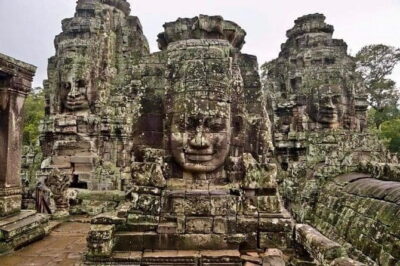
- Angkor Thom gates: Victory Gate climb, Bayon photo stop, and South Gate faces
- Late-day Angkor Wat reflections and the Wat Thmey memorial/killing field
- Price and ticket math: what $15 really becomes
- Tips for a 7:00 am start and a 9–10 hour temple day
- Should you book this private tuk tuk Angkor Wat + Small Circle tour?
- FAQ
- What time does the tour start in Siem Reap?
- How long is the tour?
- Is pickup included?
- Do I need to buy the Angkor ticket?
- What about lunch?
- Is bottled water provided?
- Is this a private tour or shared?
- Where will the tour end?
- Can I go at my own pace?
- Is cancellation free?
- Are tickets for each temple included?
Key things that make this tour work so well
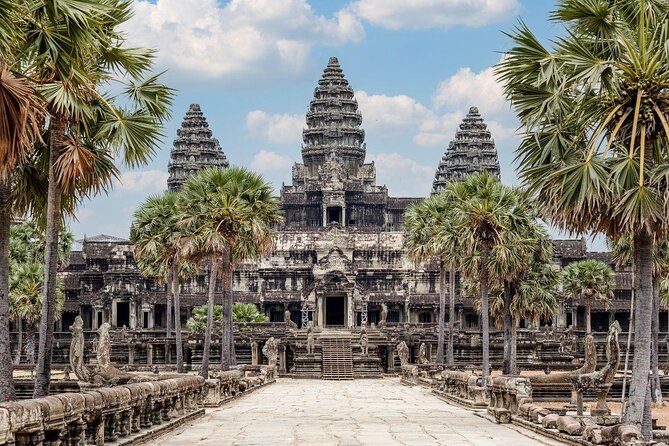
- Angkor Wat twice: East Gate in the morning, then back later for tower reflections
- Private tuk tuk pacing: you can linger without a big group bottleneck
- Small Circle plus extras: you’ll see both famous temples and lesser-visited ruins
- Jungle temple contrast: Ta Prohm’s strangle fig setting versus calmer, labyrinth-style Banteay Kdei
- Angkor Thom highlights: Victory Gate climb and South Gate statues for that big-face viewpoint
- Wat Thmey memorial stop: included for context, not just sightseeing
How the East Gate start gives you better Angkor Wat photos
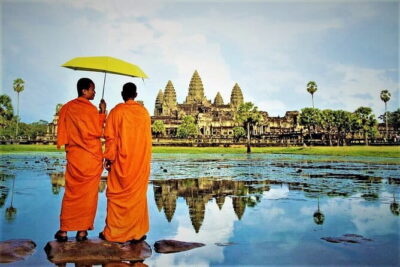
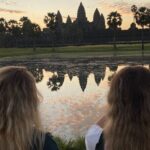
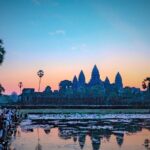
Starting your Angkor Wat day from the less-frequent East Gate is a smart move. Mornings usually mean softer light, fewer people in your frame, and that calm feeling you do not get when you roll up at the busiest moment of the day. You’ll see Angkor Wat’s iconic tower shapes and pond-edge viewpoints before the crowds fully arrive.
A big plus here is the route keeps the day’s classics in play. Even though you enter from the East side, the plan still sets you up for the most recognizable angles later, so you’re not sacrificing the famous look just to beat the morning rush. If your goal is photos with clean symmetry and less visual noise, this “early then late” structure is a win.
Plan for walking and standing in warm weather. You’ll be on and off multiple temple grounds, so bring a hat and water and expect a little sunburn risk even on cloudy days.
You can also read our reviews of more private tours in Siem Reap
Private tuk tuk pacing with English-speaking drivers (and real personality)
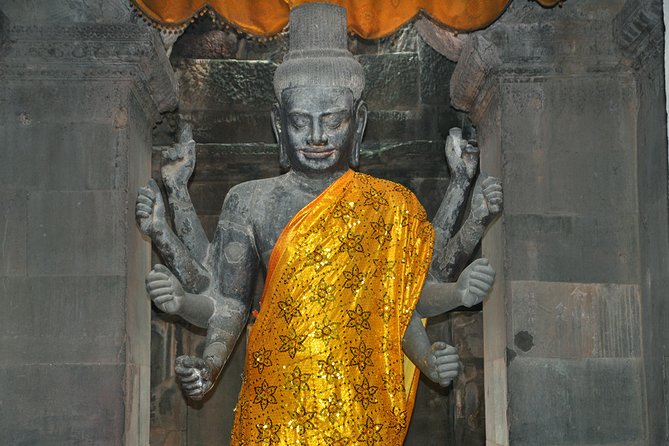
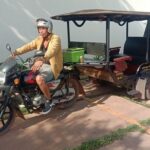
This is a private day by design. You ride in private transportation with an English-speaking driver, and the schedule is built around stopping where the light and the ruins matter most. That matters because Angkor isn’t just one monument. It’s a whole zone of temples spread out across different areas, and group touring can turn into hurry-up-and-queue.
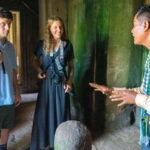
In the feedback, I saw a consistent theme: drivers who keep things friendly and move at the pace of the people in the vehicle. One guest mentioned driver Pin as welcoming, and another praised driver Sina for letting them continue at their own speed. I also saw names like Vannak (guide) and Kim (driver) tied to good explanations and a comfortable rhythm. Even small touches like cold drinking water are useful during a long day in the heat.
One practical note: in at least one case, the driver was not allowed to accompany the guest directly onto the temple sites. That’s normal for many temple areas. The result is simple: you follow the plan, listen to the explanation before you go in, then explore yourself (or with your guide’s direction) while the driver waits.
Prasat Kravan, Bat Chum, and Srah Srang: the quieter carving stops early on
After the morning Angkor Wat start, you’ll move through smaller sites that most people skip when they only chase the headline temples. These are short stops, but that’s the point: you get variety without turning the day into a long slog of one crowded place after another.
Prasat Kravan is a set of five towers in one line, with standout brick carvings. If you like archaeology details, this stop can feel surprisingly satisfying because it’s less about huge scale and more about how the builders used brick to create patterns and decoration.
Then Prasat Bat Chum adds another change of pace with three towers on a shared platform. Its reputation here is tied to large inscriptions, and the descriptions you’ll get help connect the temple story to shifting religious influence in Angkor over time.
Finally, Srah Srang is a picturesque artificial basin with animal sculptures. It’s not the huge reservoir type you might expect from the famous baray areas, but it’s still a good break from towering stone and a nice place to reset your eyes before the larger jungle-and-city day ahead.
If you’re short on patience, these stops might feel quick. If you enjoy seeing more than the usual top three, you’ll likely love them.
Banteay Kdei and Ta Prohm: jungle atmosphere, but different kinds of chaos
Next comes the part many people come to see: the jungle temples. This route does it in a way that highlights contrast.
At Banteay Kdei, you get the “smaller sister” vibe to Ta Prohm, but it’s still a big complex. The layout is described as labyrinth-like. The good news: you’re not left alone to guess your way around. With a private driver handling your timing, you can move at a comfortable pace and avoid the feeling of rushing between gates.
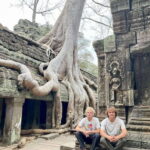
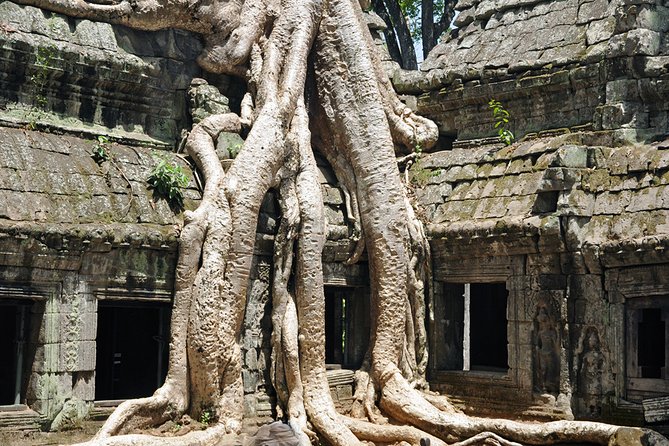
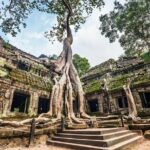
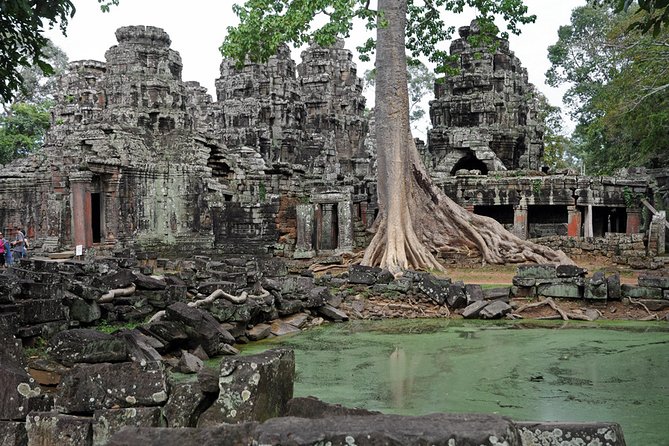
Then you hit Ta Prohm, the world-famous jungle temple. You’ll be surrounded by those massive strangle figs that wrap around structures, making the ruins look almost grown into the forest. This is one of the best spots for photos, and it’s also one of the best places to slow down just to take in the texture of the stone and roots.
If you’re the type who plans shots around themes, Ta Prohm also offers a natural setting for fun recreation-style photos, like staging scenes in front of the ruins. Just be respectful of any posted rules.
From a practical angle: jungle temples mean uneven ground and more humidity. Wear shoes with grip, and watch your footing near roots and raised stone.
Ta Nei and Ta Keo: the “Indiana Jones” feeling and steep-stair reality
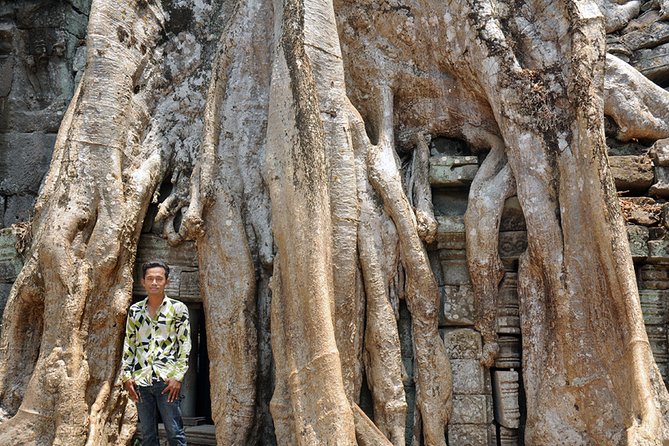
After Ta Prohm, Ta Nei is the kind of stop that many visitors miss. It’s described as hidden in the jungle and reachable on gravel roads, which is exactly why it feels different from the mainstream routes. The ruins can give you that Indiana Jones sense of discovery, because you’re less likely to find the same dense foot traffic.
Time-wise, it’s a shorter visit, so don’t expect an in-depth wander—do what you can in the time you have. If you like photographing in quieter ruins, Ta Nei is a strong match.
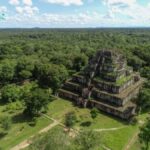
Then Ta Keo brings you back to grand structure. It’s a former state temple with the stepped pyramid form (an “artificial mountain” style). The stairs to the top platform are described as extraordinarily steep. That’s not a detail to ignore. If you’re climbing-in-the-heat sensitive, take your time and use the handholds when available.
The best way to enjoy Ta Keo is to think of it as a perspective temple. You’re not just looking at carvings; you’re seeing how the designers used height, angles, and layered platforms to create a sense of ascent.
Spean Thma bridge and the myth-carved temples Chau Say Tevoda and Thommanon
The mid-day shift continues with temples that are more about story and sculpture than sheer “wow” scale.
You’ll have a photo stop at Spean Thma, a stone bridge from the late Angkor period. It’s interesting because construction used carved stones taken from earlier temples. That means you’re not just looking at a bridge—you’re seeing how builders recycled and repurposed stonework across time as the region changed.
Next: Chau Say Tevoda. It’s described as a charming medium-sized temple with an impressive processional route and lots of pediment carvings showing mythological themes. This is a good stop if you like walking a short path and then slowing down to look at the carved scenes.
Thommanon acts like a sister to Chau Say Tevoda, with towers in a similar style. It also fits the Angkor Wat period look. In a day with many temples, these two stops help you understand recurring design language—how themes and styles repeat across different sites.
Angkor Thom gates: Victory Gate climb, Bayon photo stop, and South Gate faces
The day’s city highlights shift you into Angkor Thom. First up is Spean Thma earlier, then later you’ll move into the gate and face-tower rhythm.
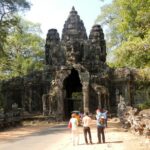
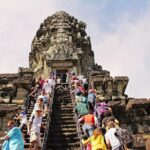
At the Victory Gate, you’ll get a short stop that still includes a climb to enjoy the view of the southern giant face tower. This is one of those “quick but satisfying” moments where even a short climb pays off with a big payoff photo angle.
Then Bayon Temple is handled as a photo stop. You’ll focus on the key central faces area without turning this into a long detour. That makes sense inside a 9 to 10 hour schedule, and it’s useful if you already know Bayon is one of your must-sees.
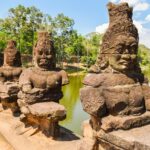
Finally comes Angkor Thom South Gate, which is one of the most iconic looks in the entire region. You’ll take your time at the face tower and at the railings formed by rows of giant statues depicting demons and gods. Those repeating figures are exactly the kind of detail you want a little time for, because a quick stop turns them into a blur.
If you’re going at a slower pace, this is a great place to do it. The route gives you time here for a reason.
Late-day Angkor Wat reflections and the Wat Thmey memorial/killing field
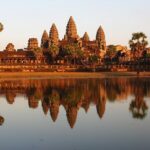
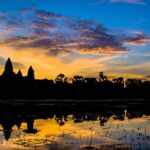
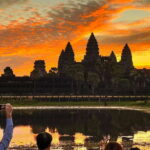
After all the moving pieces across Angkor Thom and the Small Circle sites, you end back at Angkor Wat again in the late afternoon. This timing is built around the classic “mirror” effect—towers reflected in the ponds and moats. Even if you’ve seen Angkor Wat once already, the second visit hits differently because the light shifts, shadows soften, and water reflections change the entire mood of the scene.
Then you’ll finish with Wat Thmey, a small memorial with a stupa for victims of the Khmer Rouge. There are photo boards with images of those who were killed here, and the grounds include a large prayer hall. It’s only a short visit, but it has weight. If you do not want your day to mix beauty with tragedy, be honest with yourself before booking.
I also appreciate that this tour doesn’t treat Angkor like a theme park only. It adds context at the end, when your eyes are tired and your brain can focus on meaning rather than stone shapes.
Price and ticket math: what $15 really becomes
The tour price is listed at $15.00 per person, with private transportation and an English-speaking driver included. That’s the part that feels like a bargain, especially because a private tuk tuk day in Siem Reap can often cost more when you add driver time and fuel.
But the Angkor ticket is not included. You’ll need an Angkor admission ticket valid for all temples, listed here as 1 day for $37 per person. Lunch is also not included.
So your real per-person total for the day is roughly:
- Tour: $15
- Angkor ticket: $37
- Lunch: not included (your call)
On the plus side, bottled water is included during the tour. That small cost helps when you’re out for nearly ten hours. If you’re comparing alternatives, the value is mainly that this is a full-day route with stops that mix famous and lesser-seen temples, without the hassle of coordinating transport between them yourself.
Tips for a 7:00 am start and a 9–10 hour temple day
This tour starts around 7:00 am, so it’s an early morning regardless of where you’re staying. You’ll likely want to eat something light right before pickup so you don’t crash later.
Wear practical clothing for heat and dust: breathable tops, long pants if you’re sensitive to sun, and shoes that handle uneven ground. Even “short” temple stops can involve stairs, thresholds, and cobblestone surfaces.
Also, plan your expectations. This isn’t one or two temples with endless time. It’s a packed circuit. The payoff is variety—morning Angkor Wat, multiple Small Circle sites, Angkor Thom gates, then Angkor Wat again at a better light angle.
If you want the most out of it, pick one or two places where you’ll slow down and do more looking (Ta Prohm is an easy choice, and South Gate is another). Everywhere else, you’ll enjoy seeing it, photographing it, and moving on.
Should you book this private tuk tuk Angkor Wat + Small Circle tour?
Book it if you want:
- Angkor Wat at both ends of the day for morning light and late-day reflections
- A private format where you can keep a comfortable pace
- A route that mixes major names with lesser-visited temples like Ta Nei and the smaller carved sites
- A final stop at Wat Thmey for context beyond postcard ruins
Skip it (or think twice) if:
- You prefer only cheerful, “just enjoy the views” sightseeing and would rather avoid memorial content
- You don’t want a long day with lots of walking, stairs, and heat
- You’re not willing to add the Angkor ticket cost on top of the tour price
If you’re the type who likes a plan but still wants flexibility, this is a strong match. The best part is the structure: early start, smart photo timing, and a finish that gives the day more meaning than just stone and statues.
FAQ
What time does the tour start in Siem Reap?
It starts at 7:00 am.
How long is the tour?
The duration is listed as 9 to 10 hours (approx.).
Is pickup included?
Yes. Pickup is offered, and the driver will start from Krong Siem Reap, Cambodia.
Do I need to buy the Angkor ticket?
Yes. The Angkor ticket is not included. The listing notes a 1-day ticket valid for all temples priced at $37 per person.
What about lunch?
Lunch is not included.
Is bottled water provided?
Yes. Bottled water is included, and there is free drinking water during the tour.
Is this a private tour or shared?
This is a private tour/activity, so only your group participates.
Where will the tour end?
Drop-off can be at your hotel or any point of your choice in central Siem Reap (town centre/markets area).
Can I go at my own pace?
Because it’s a private tour, you can usually move at your preferred speed. One guest specifically said the driver allowed them to proceed at their own pace.
Is cancellation free?
Yes, free cancellation is available. You can cancel up to 24 hours in advance for a full refund.
Are tickets for each temple included?
No. Temple admission is listed as not included at the stops. Only Wat Thmey (Killing Fields) is marked as free.