REVIEW · SIEM REAP
One Day Private Guide Tour of Angkor Thom, Bayon, Ta Phrom & Angkor Wat
Book on Viator →Operated by Global Travel & Tours Asia · Bookable on Viator
Nine hours, four temple highlights, one big story.
This private Angkor day starts early with Angkor Thom and ends with late-afternoon Angkor Wat, giving you a smarter shot at light, photos, and fewer complaints about the heat. You’ll roll through the Khmer heartland in one go, with a licensed English-speaking guide and a driver ready to keep things moving.
I love the guide-led pacing. You’re not just “walking and reading,” you’re getting help spotting what matters, including the Bayon’s 54 towers and more than 200 smiling faces. I also like the way the day is built around two comfortable blocks: a morning circuit through Angkor Thom, then a later push toward sunset at Angkor Wat.
One thing to plan for: lunch is on your own, and the temples mean plenty of walking and stairs. Bring good shoes, and don’t plan to sit too much if you want to see everything without rushing.
In This Review
- Key highlights you’ll actually notice
- How this private Angkor day is structured (and why it helps)
- Angkor Thom South Gate: your first big wow moment
- Bayon Temple: the smiling faces trick your brain (in a good way)
- Baphuon and the “re-opened” feeling
- The terraces of Jayavarman VII: power in stone relief
- Terrace of the Elephants
- Terrace of the Leper King
- Phimeanakas
- Ta Prohm’s dark gray sandstone mood (and why it deserves time)
- Angkor Wat at late afternoon: the sunset timing strategy works
- Price and value: what you’re paying for (and what you’re getting)
- What to bring for comfort (because temples are not seated activities)
- Who this tour fits best (and who might want something else)
- Should you book this private Angkor Thom and Angkor Wat tour?
- FAQ
- What time does the tour start?
- How long is the private tour?
- Is pickup available in Siem Reap?
- Is this tour private or shared with other groups?
- Which major temples are included?
- Are entrance tickets included?
- What’s included for transportation and the guide?
- Are meals included?
- Is water provided during the tour?
- Is free cancellation available?
Key highlights you’ll actually notice
- Private guide, licensed and English-speaking: great for history, meanings, and practical temple navigation.
- Angkor Thom first, Angkor Wat at the right time: morning temples, late-day sunset hours.
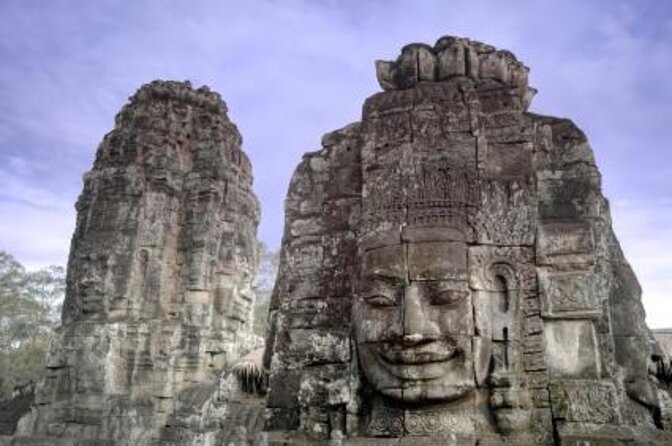
- Bayon’s face-towers: you’ll see them from different angles as you work your way through Angkor Thom.
- Ta Prohm’s dark gray sandstone mood: a slower, atmospheric stop compared with the big-picture monument views.
- Baphuon after restoration: a chance to see a key structure that recently reopened.
How this private Angkor day is structured (and why it helps)
This experience is a single-day, private route from Siem Reap that runs for about 9 hours. It includes a pickup, modern air-conditioned transport, and entrance fees inside the Angkor Archaeological Park single-day ticket.
The real value is the shape of the day. It’s not one long slog from 8:00am until sunset with no breathing room. You get a morning circuit through Angkor Thom, then a break for lunch, then a late-afternoon run that ends where Angkor Wat’s light is at its best. That matters because Angkor’s temples don’t care about your schedule, but your body does.
Also, you’re in a private setup, meaning your guide can slow down when a doorway relief catches your eye or speed up when you’re feeling good. You’re not glued to a mass group timeline.
You can also read our reviews of more guided tours in Siem Reap
Angkor Thom South Gate: your first big wow moment
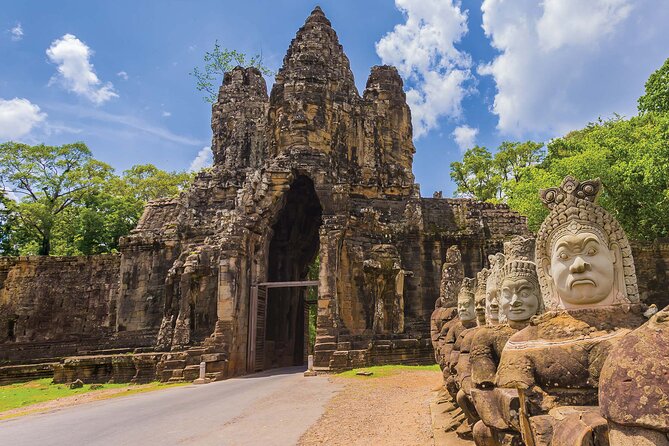
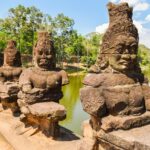
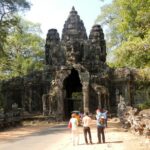
Angkor Thom feels like a fortress city the minute you arrive. The South Gate is your first stop, and it’s famous for massive statues depicting the churning of the ocean of milk. It’s not a “quick photo” kind of gateway. It’s a statement. The Khmer builders wanted visitors to feel like they were entering something monumental and myth-heavy.
Since the visit is scheduled early (45 minutes here), I like using this stop to get your bearings fast. Look at the gate first, then trace how the city pulls you inward. Angkor Thom is walled, and moving from gate to inner temples gives you that sense of stepping through layers of power.
Practical tip: start paying attention to orientation. Bayon later sits at the center of Angkor Thom, so getting your mental map right now makes the rest of the day easier. When your guide points out alignment and symbolism, the whole complex clicks faster.
Bayon Temple: the smiling faces trick your brain (in a good way)
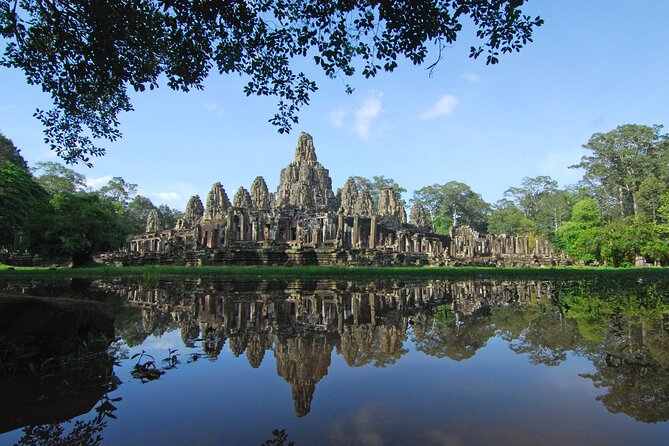
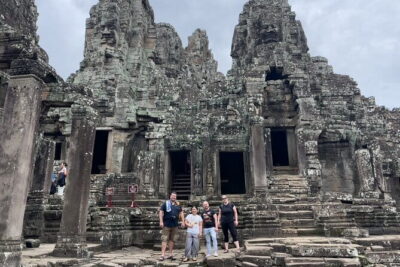
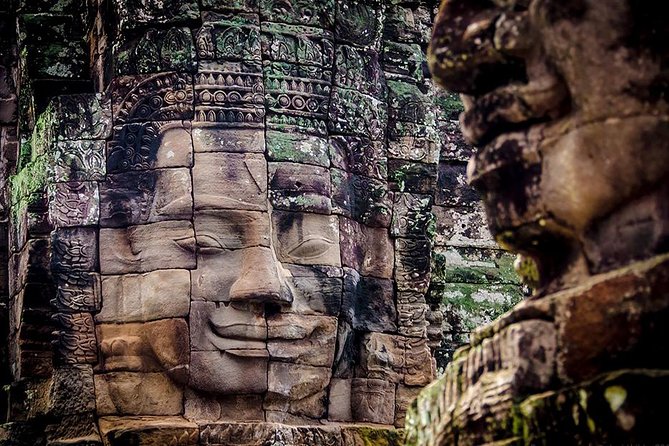
Bayon is the centerpiece of Angkor Thom, and the famous reason is simple: it’s decorated with 54 towers covered in over 200 smiling faces connected to Avolokitesvara. The effect is what you’d expect from that kind of repetition—strange, calm, watchful. The faces feel like they’re following you, even though you’re the one moving.
Your time here is about an hour, which is right. Too short and you feel like you only scratched the surface. Too long and you start seeing faces when what you really need is meaning and context. With a good guide, you’ll learn how the temple’s design makes faces visible from multiple directions as you progress through the structure.
The best way to enjoy Bayon is not to force one “main viewpoint” all the time. Instead, follow the route and let the faces change as you turn corners. Your eyes will start doing the work, and the temple stops feeling like one big backdrop.
Baphuon and the “re-opened” feeling
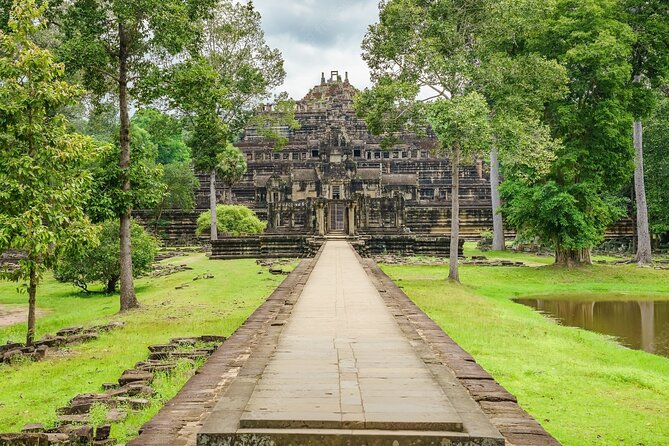
Next comes Baphuon, located in Angkor Thom northwest of Bayon. It’s a three-tiered temple mountain associated with the state temple concept under Udayadityavarman II. Even if you’re not chasing names, you’ll notice something else: the day keeps its momentum, with a focused 30-minute stop that’s long enough to see how Baphuon’s tiers shape the eye.
The standout detail from the tour overview is that Baphuon has recently reopened after years of restoration. That gives you an extra reason to care. Restoration changes how you read a site: edges look sharper, surfaces feel clearer, and you can better appreciate how the temple once fit into the broader design language of Angkor Thom.
At this point, I like taking a breath and letting your guide connect the dots between different parts of Angkor Thom. Baphuon helps you understand that the Khmer weren’t only building for “views.” They were building for ritual space, dynastic messaging, and a sense of cosmic order.
The terraces of Jayavarman VII: power in stone relief
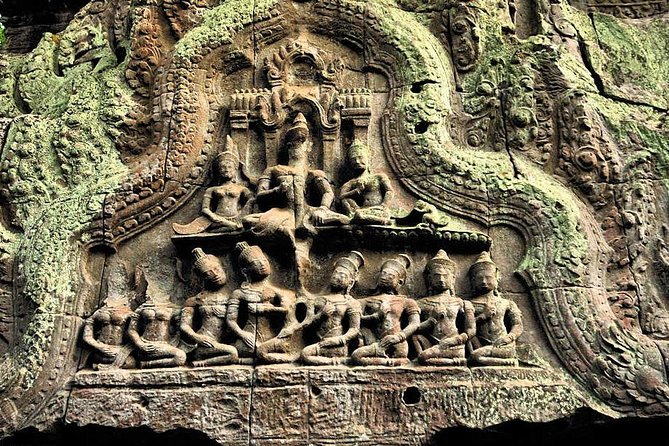
Angkor Thom isn’t just towers and doorways. Some of the most memorable moments come from the terraces—practical places that also carry political meaning.
You can also read our reviews of more private tours in Siem Reap
Terrace of the Elephants
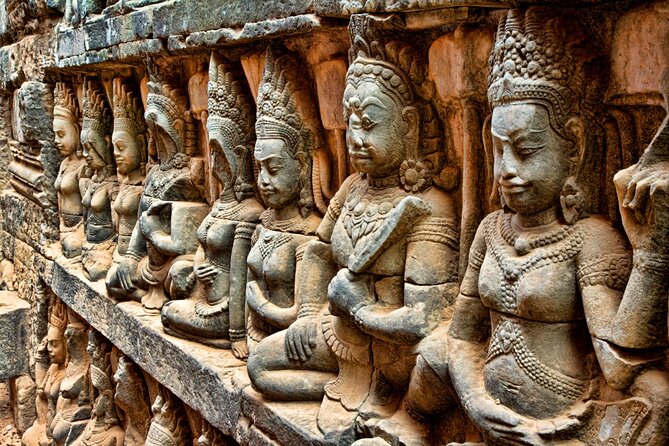
You’ll visit the Terrace of the Elephants for about 30 minutes. This terrace served as a platform for King Jayavarman VII to view his victorious returning army. That history isn’t abstract here. It gives context to why the terrace feels ceremonial and why it’s positioned the way it is.
If you enjoy reading architecture like evidence, this is one of your best stops. It shows how a ruler used public space to communicate strength and legitimacy.
Terrace of the Leper King
Then there’s the Terrace of the Leper King, also around 30 minutes. It was built in the Bayon style under Jayavarman VII, and its modern name is tied to its appearance. Even without getting lost in the story, the terrace is worth slowing down for because it’s a different kind of “what you’re seeing” moment—less about a skyline and more about texture, carving, and meaning.
Ask your guide what to look for. With the right explanation, these terraces stop feeling like side-quests.
Phimeanakas
Finally in this cluster is Phimeanakas, or Vimeanakas, a Hindu temple in the Khleang style from the late 10th century. It was built during the reign of Rajendravarman and completed by Suryavarman I. It’s described as a three-tiered temple in the information for this tour.
This stop is a good palate cleanser between bigger, more visually intense areas. It helps you remember that Angkor Thom wasn’t frozen in time—it includes Hindu temple ideas even as the broader Khmer story evolved.
Ta Prohm’s dark gray sandstone mood (and why it deserves time)
After Angkor Thom, you’ll head to Ta Phrom. You get about 2 hours here, and I’d treat that as the tour giving you a gift.
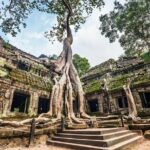
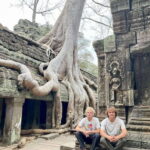
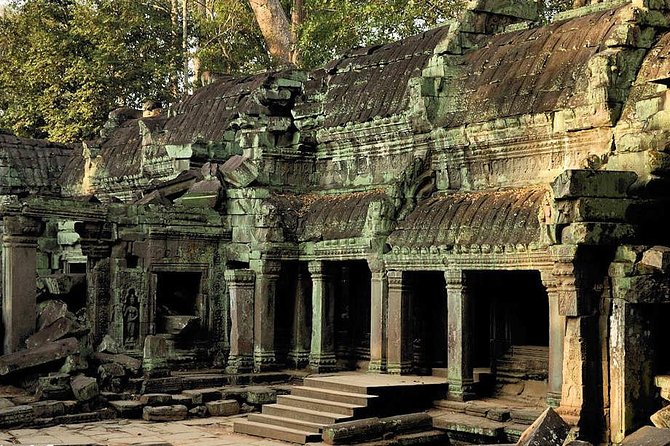
Ta Phrom was built in 1186 and dedicated to the mother of Jayavarman VII. The feel is described as reverent and mysterious, with dark gray sandstone towers and courtyards that create a very different atmosphere than the more structured “power center” temples in Angkor Thom.
This is the stop where you’ll likely want to slow your pace and let your guide’s storytelling set the tempo. A strong guide can make you notice the way the temple works as a monastery concept rather than just a famous photo scene. If you’ve heard of guides like Sim from previous Siem Reap tours, that style is exactly what helps here: calm explanations, historical clarity, and pointers on how to see without rushing.
Also, 2 hours is meaningful because Ta Phrom is one of those places where details matter. You don’t just look once. You move, you turn your head, and suddenly the mood changes.
Angkor Wat at late afternoon: the sunset timing strategy works
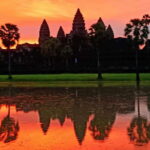
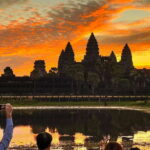
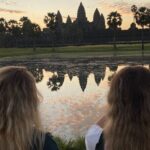
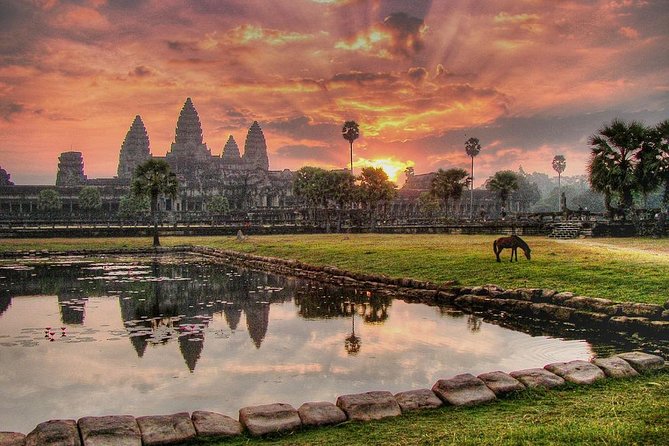
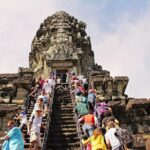
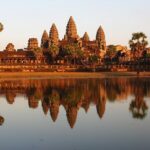
The day culminates with Angkor Wat for about 3 hours, after a break for lunch. This timing is practical. Angkor Wat is huge, and your brain needs time to adjust before the “wow” hits. The late afternoon window also helps with the lighting most people come for.
Angkor Wat is described as the funeral temple for King Suryavarman II. That detail matters because the site reads differently when you realize it was tied to a ruler’s spiritual legacy. It’s not only about scale. It’s about purpose.
At this hour, your guide’s job shifts from history lecture to real-world problem solving. One of the best things you can get from a guide is help with where to stand for photos and how to avoid the worst crowd pressure. With the schedule built around later hours, you’re already set up better than if you arrived midday.
Practical tip: bring water and keep breaks short. Three hours sounds like a lot, but Angkor Wat’s geometry encourages looping. You’ll naturally walk more than you think.
Price and value: what you’re paying for (and what you’re getting)
The price is $146.67 per person for a private day of four major temple hits across about 9 hours. That cost can feel high until you count the ingredients you usually pay for separately.
Here’s what’s explicitly included:
- Private transportation by modern air-conditioned vehicle
- Professional licensed English-speaking guide
- Entrance fees via the Angkor Archaeological Park single-day ticket ($37.00)
- Sightseeing as specified in the route
- 02 bottles of mineral water per person during sightseeing and transfers
- VAT and all taxes and service charge
- Mobile ticket
The smart part is that you’re buying a full-day solution, not just a guide walking next to you. Air-conditioned transport and the entrance fee inclusion are big value items in this region, especially for a day that covers multiple sites.
Lunch is not included, and neither are drinks during meals. So if you want a lower-budget day, plan to keep lunch simple and budget for whatever you choose. Also, personal insurance isn’t included.
One more angle: because this is private, you can adapt how you spend your time. If you’re photo-focused or explanation-focused, you’ll use the guide time more efficiently than you would on a group bus.
What to bring for comfort (because temples are not seated activities)
Even on a private tour, you’re still walking and climbing. That’s the nature of Angkor. Your best comfort upgrades are boring but effective.
Bring:
- Comfortable shoes with grip
- Sun protection (hat/sunglasses/sunscreen)
- A light layer for morning air
- Your own extra water if you tend to drink more than average
The tour includes two bottles of mineral water per person, which helps, but it may not be enough if you’re a heavy sweater. Since the tour is scheduled across morning and late afternoon, you’ll still face strong sun and heat.
Also plan for a rhythm shift. Morning temple circuits can feel like a nonstop visual workout. Ta Phrom slows the pace, then Angkor Wat finishes with a big monument feeling. If you pace yourself, the day feels full instead of exhausting.
Who this tour fits best (and who might want something else)
This tour is best for you if:
- You want maximum temple coverage in one day
- You like a guide who can explain what you’re looking at, not just point and walk
- You want private transport and timing, especially with an early start
- You care about Angkor Wat’s late-day lighting
It might not be the best fit if:
- You hate walking and stairs (some sections are not easy)
- You need a fully structured day with lunch included (here, lunch is on your own)
- You’re planning a super relaxed vacation pace
If you’re a first-timer to Angkor, this route is a solid way to see the main ideas of the Khmer temple tradition: city-gate power, Bayon face-towers, restored structures, terrace symbolism, Ta Phrom’s atmosphere, and Angkor Wat’s grand finale.
Should you book this private Angkor Thom and Angkor Wat tour?
Yes, if your priority is a well-paced Angkor day that covers the big names without leaving you to guess timing and order.
I’d especially book it if you value:
- Licensed English guide time for meaning, not only sightseeing
- A day split in a way that respects heat: morning temples, later Angkor Wat
- The specific mix of Angkor Thom sights plus Ta Phrom and Angkor Wat
Skip it only if you’re the type who wants a slower, more open-ended temple day with lots of free time. This is designed to move—just not in a frantic way.
FAQ
What time does the tour start?
The start time is 8:00am.
How long is the private tour?
The duration is about 9 hours.
Is pickup available in Siem Reap?
Yes, pickup is offered.
Is this tour private or shared with other groups?
It’s a private tour. Only your group participates.
Which major temples are included?
You’ll visit Angkor Thom, Bayon, Ta Phrom, and Angkor Wat, plus key stops within Angkor Thom (including the South Gate and several terraces).
Are entrance tickets included?
Yes. Admission to the temples in the Angkor Archaeological Park single-day ticket is included ($37.00).
What’s included for transportation and the guide?
You get private transportation by a modern air-conditioned vehicle and a professional licensed English-speaking guide.
Are meals included?
Lunch is not included. Drinks during meals are also not included.
Is water provided during the tour?
Yes. The tour includes 02 bottles of mineral water per person while sightseeing and during transfers.
Is free cancellation available?
Yes. You can cancel up to 24 hours before the experience starts for a full refund.