REVIEW · SIEM REAP
Full Day Angkor Park with Sunset by Tuk Tuk
Book on Viator →Operated by Journey Cambodia · Bookable on Viator
Tuk-tuk beats the heat around Angkor. This full-day circuit in Siem Reap links Angkor Thom, Ta Prohm, Angkor Wat, and a Pre Rup sunset using a motorised trolley tuk-tuk that keeps the day efficient. I especially like the licensed English-speaking guides who translate the stonework into stories you can actually picture, whether it’s Bayon’s city scenes or the fig trees chewing up Ta Prohm.
One key drawback: the temple pass isn’t included and runs $37 per person, paid directly at the sites. If you’re budgeting tight or don’t like surprise add-ons, that extra cost matters—especially on top of a 9-hour schedule starting at 9:00am.
In This Review
- Key highlights worth clocking before you go
- Trolley tuk-tuk routing: why this format feels easier
- Starting with Angkor Thom: the capital you can read in layers
- Bayon’s faces to Ta Prohm’s jungle: two very different temple moods
- Passing the Terrace of the Elephants and Banteay Kdei
- Angkor Wat at a human pace: what makes it feel special
- Pre Rup sunset: the payoff for sticking it out
- Price and logistics: what $41 really buys you
- What to pack so the day doesn’t hurt
- Who this tour suits best (and who might want to think twice)
- Should you book this Angkor Park full day with sunset by tuk-tuk?
- FAQ
- What time does the tour start?
- How long is the tour?
- Is pickup and drop-off included?
- Are temple entrance fees included in the $41 price?
- How much is the temple pass?
- What is the dress code?
- What should I bring for the day?
- What happens if weather is poor?
Key highlights worth clocking before you go
- Motorised trolley tuk-tuk ride across major temple zones, not just one corner of the park
- Private tour for your group with an English guide who keeps your stops connected
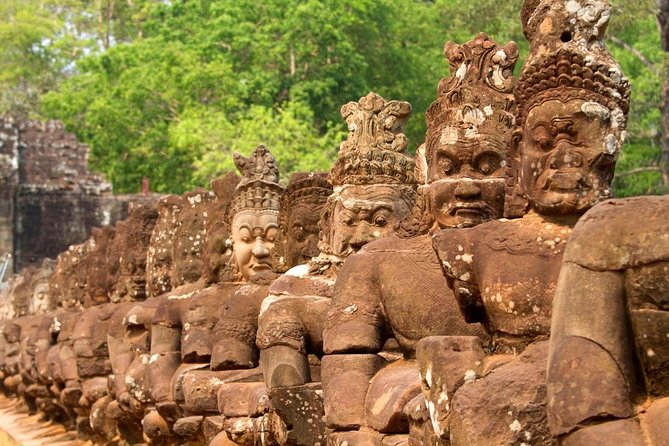
- Top Angkor anchors: Angkor Thom, Bayon, Ta Prohm, and Angkor Wat
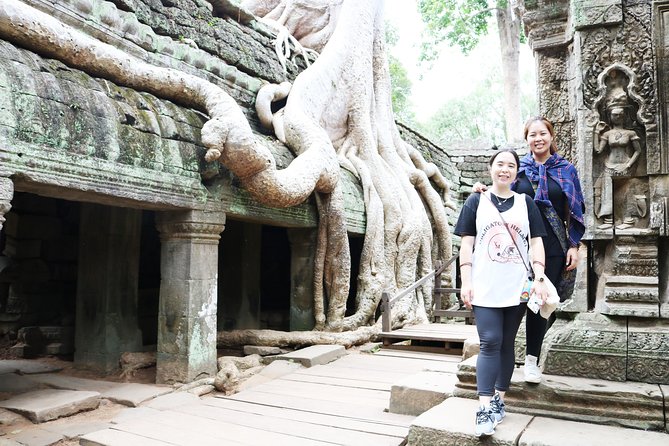
- Jungle-temple moment at Ta Prohm, where fig trees shape the ruins
- Sunset payoff at Pre Rup to close the day when the light turns magical
Trolley tuk-tuk routing: why this format feels easier
Angkor is spread out, and your biggest enemy isn’t just the heat—it’s time. This tour uses a motorised trolley tuk-tuk to move you between temple clusters, so you spend more hours seeing and less time waiting around or negotiating shorter rides all day.
The trolley also changes the feel of the day. You get brief transitions where you can cool down, regroup, and listen to your guide’s explanations before you enter the next site. That matters at Angkor, because the temples aren’t random stops; they’re connected by Khmer rule, royal ideology, and centuries of rebuilds.
Another practical win: hotel pickup and drop-off are included, plus mineral water. You’re not scrambling for transport when you’re already tired. And because the day is planned from the start (9:00am departure), you avoid the awkward “what do we do next?” problem that can happen when you travel independently.
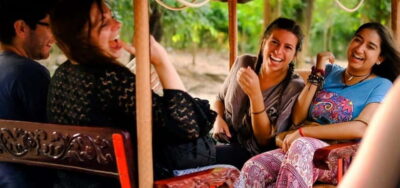
Small note on style: the tour is set up as private for your group. In practice, groups can still feel like a mini-community—one guide and one driver, one timeline—but you’re not mixed into a giant crowd.
You can also read our reviews of more evening experiences in Siem Reap

Starting with Angkor Thom: the capital you can read in layers
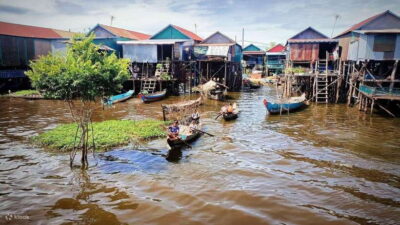
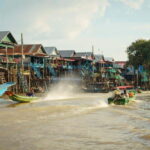
Your day begins after breakfast with a drive toward Angkor Thom, plus a stop at an untouched nearby village. The goal here isn’t just photos. It’s context. You’ll see day-to-day life near Angkor Thom before you hit the monumental stone city, which helps the whole complex land differently.
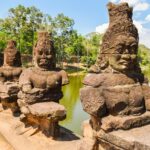
Then you step into Angkor Thom itself. This is where you start feeling the scale of the Khmer Empire’s urban mindset: wide spaces, strategic layouts, and temples meant to communicate power. A highlight is Bayon Temple, the famed site inside Angkor Thom where faces look out over the city plan. Walking through it, you get a strong sense of how the capital operated as a statement—religion fused with politics.
How long you stay matters. You’re given about two hours at each core stop in the main sequence, which is long enough to wander, pause, and let the guide connect the dots instead of rushing you like a bus tour.
What to watch for: Bayon is visually intense. If you try to treat it like a checklist, you’ll miss the “read it like a map” feeling. Give yourself time to look up, then look around, then listen to the guide again when the site clicks.
Bayon’s faces to Ta Prohm’s jungle: two very different temple moods
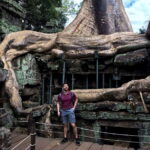
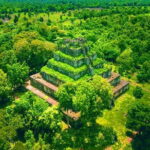
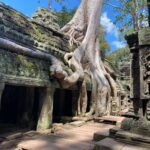
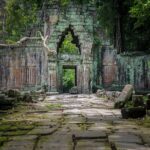
After Angkor Thom and Bayon, the tour shifts gears toward Ta Prohm. This is where Angkor shows its theatrical side. Ta Prohm is set in the middle of the jungle, and the ruins feel less like polished museum architecture and more like a living scene—especially with the famous fig trees that grow around and through the structures.
You’ll spend about two hours here, which is the right length for slow wandering. You can move at your own pace: inspect carvings, look for vantage points, and enjoy the odd feeling of being inside something partially reclaimed by nature. For many people, this is the emotional highlight of the day, because it’s different from the symmetrical “perfect geometry” you see elsewhere.
One practical heads-up: Ta Prohm can be humid and shaded in strange pockets. Wear comfortable shoes with real grip, and don’t rely on sandals unless you love slippery stone.
Also, there’s a smart flow to the day here: lunch happens around the Angkor Wat segment (you’ll have time to eat after Ta Prohm, with lunch arrangements not listed as included in the package details). That timing works because it breaks up the day before you switch from Ta Prohm’s jungle drama to Angkor Wat’s massive formal grandeur.
Passing the Terrace of the Elephants and Banteay Kdei
Between the big “must-see” anchors, you’ll also pass by other major sites—listed stops include the Terrace of the Elephants and Banteay Kdei. These are the kind of add-ons that make a guided route worthwhile.
Why? Because you start recognizing how Angkor’s complexes relate to each other: processional spaces, ceremonial zones, and satellite temple areas. Even if you don’t linger as long as you do at the main stops, seeing them from the route helps you build a mental map of the park.
This is especially useful if you’re the type who wants to understand why Angkor Wat is so central. Seeing a few surrounding sites makes it easier to connect the dots in your head when your guide explains the broader Khmer city system.
Angkor Wat at a human pace: what makes it feel special
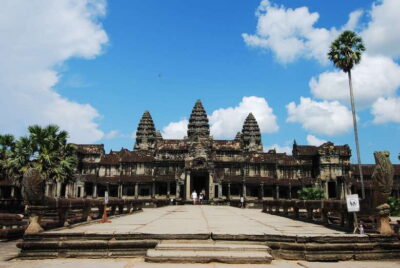
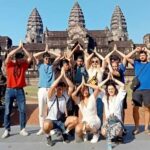
Angkor Wat is the main event, and the tour gives it time to breathe—about two hours. Your schedule also takes you to Angkor Wat from the eastern side, which can change the way you first experience the complex. Instead of arriving with your eyes already overloaded by crowds, you get a more gradual “oh wow” moment.
Angkor Wat is described as the world’s largest sacred building and an architectural masterpiece, built in the 12th century. That’s the kind of claim that can turn into empty hype if you don’t have someone translating what you’re looking at.
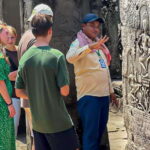
This tour’s value is that translation. Guides are repeatedly praised for clear English explanations at Angkor Wat and Angkor Thom. Names you may hear include Sak and Sok Chea, both noted for guiding with strong English and making the temple feel understandable rather than just impressive.
What you should do during your two-hour visit:
- Take one slow circuit first, without stopping to photograph everything.
- Then pick a few spots to linger—where symmetry, relief carvings, and sight lines create the “designed for worship and ceremony” feeling.
- Ask your guide to explain the symbolism in plain terms, not a memorization quiz.
Lunch break timing matters too. You’ll have a window to eat after Ta Prohm and before the rest of the afternoon momentum. Because lunch inclusion isn’t listed clearly as part of the package, plan to cover your own meal costs on site.
You can also read our reviews of more tours and experiences in Siem Reap
Pre Rup sunset: the payoff for sticking it out
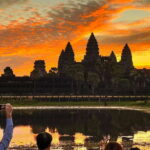
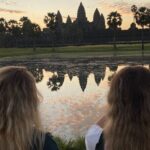
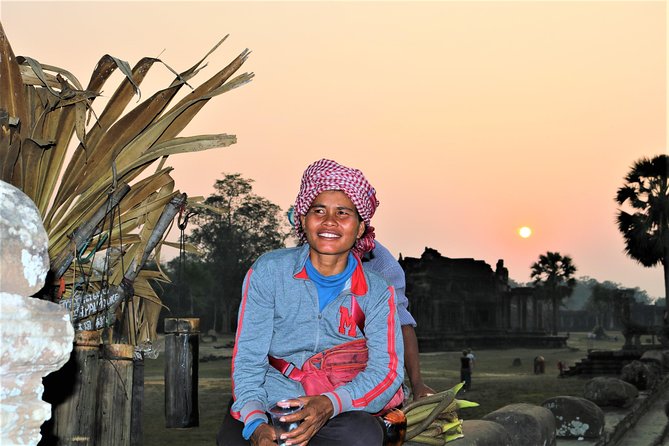
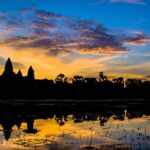
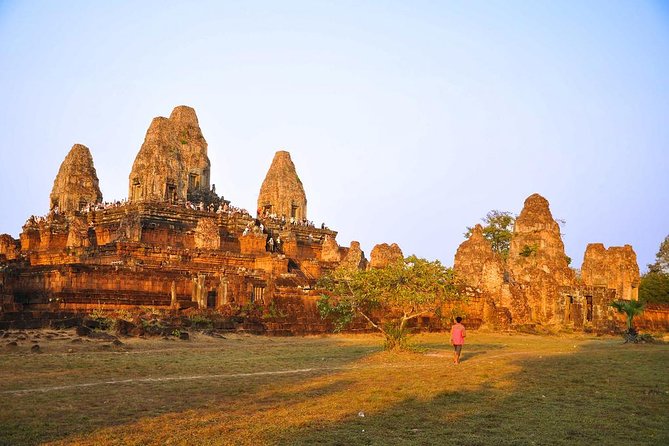
Most people love sunrise at Angkor. But sunset can be just as satisfying, especially when the day already gave you enough early intensity. This tour finishes with sunset at Pre Rup, which is your chance to slow down while the light changes across the ruins.
The value of ending here is simple: you get a calmer close after a long day of stone and walking. The sky shifts, shadows stretch, and the same temples you’ve been studying all day start looking different—less like monuments, more like places tied to daily weather and human timing.
If you’re thinking about comfort, this is where it pays to plan your kit. Wear your best hat, protect your eyes with sunglasses, and keep your camera ready but don’t miss the moment by constantly photographing. Sunset reward is best when you also just watch.
Price and logistics: what $41 really buys you
At $41 per person, this tour is priced as a guided route plus transport, not as an all-in temple package. The trade-off is that the temple pass is extra: $37 per person, paid directly at the sites. So your real spend depends on whether you’re already holding a pass (and the pass options you choose).
Here’s what you do get for the $41:
- Hotel pickup and drop-off
- Licensed English-speaking guide
- Motorised trolley tuk-tuk for the route
- Mineral water
- A mobile ticket
- Private setup restricted to your group, with group discounts mentioned as part of the offer
Given that transport around Angkor is a major cost driver and the temples have set entrance fees, this is a fairly straightforward value structure: pay for guidance and movement upfront, then pay official entry fees on the day.
My practical take: If you’re doing Angkor anyway, a guided, structured day is often worth it because it saves you time, reduces navigation stress, and helps you understand what you’re seeing instead of just collecting photos.
What to pack so the day doesn’t hurt
The tour details are clear about what you’ll need, and you should take them seriously. Angkor days can turn into a sweat-and-stairs test fast.
Bring:
- Comfortable walking shoes
- Sunglasses and a hat
- Camera (you’ll use it)
- Mosquito or insect repellent
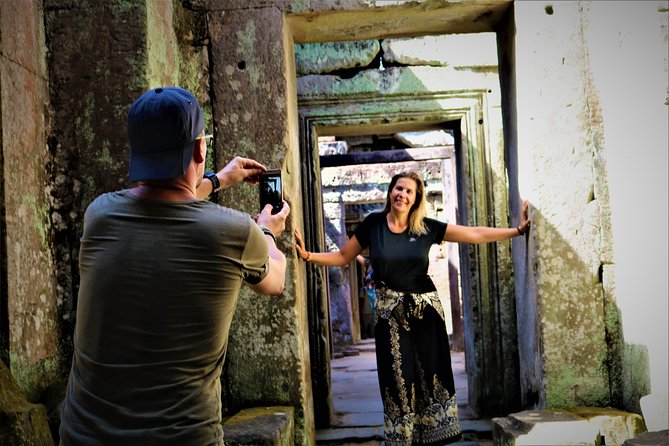
- A respectful outfit that covers shoulders and knees (shoulders need covering; a scarf works)
The dress code isn’t just for politeness. It also helps you stay comfortable when you’re in sun-exposed courtyards and moving between shaded areas.
Also: plan for a long day. It’s about 9 hours, starting at 9:00am. Even if each stop is only a couple hours, the transitions add up.
Who this tour suits best (and who might want to think twice)
This is a strong fit if you:
- Want a full-day Angkor route without handling transport planning yourself
- Like explanations that connect temples to Khmer history and symbolism
- Prefer a structured schedule that also ends with a sunset moment
It’s also a good match if you value human pacing. The stops aren’t rushed down to a token glance; you get enough time to wander and take in details.
Think twice if you:
- Don’t want to pay the temple pass extra on arrival
- Have mobility limits that make temple steps and uneven surfaces hard
- Expect everything to be fully “included” beyond entrance fees (lunch is described as a lunch time window, but meal costs aren’t clearly listed as included)
Should you book this Angkor Park full day with sunset by tuk-tuk?
If you want a guided Angkor day that blends major highlights and ends with Pre Rup sunset, I’d book it. The route format is practical, the guide-led explanations are a core part of the value, and the motorised trolley tuk-tuk helps you keep your energy for the temples instead of the logistics.
But do the math first: the headline price is $41, yet the temple pass is $37 per person. If you’re okay with that official add-on, this tour is a solid way to see Angkor Thom, Bayon, Ta Prohm, and Angkor Wat in one day without turning it into a chaotic self-guided scavenger hunt.
FAQ
What time does the tour start?
The tour starts at 9:00am.
How long is the tour?
The duration is approximately 9 hours.
Is pickup and drop-off included?
Yes. Hotel pickup and drop-off are included.
Are temple entrance fees included in the $41 price?
No. The entrance fee (temple pass) is not included.
How much is the temple pass?
The temple pass is $37.00 per person and must be paid directly to the sites.
What is the dress code?
You need respectful dress that covers your shoulders and knees. Shoulders must be covered (a scarf works). Knees must be covered too.
What should I bring for the day?
Bring sunglasses, a hat, a camera, comfortable walking shoes, and mosquito or insect repellent.
What happens if weather is poor?
This experience requires good weather. If it’s canceled due to poor weather, you’ll be offered a different date or a full refund.