Angkor Wat plus Tonlé Sap is a smart combo. I like how this tour pairs UNESCO temples with real-day lake life instead of keeping everything on stone. You’ll get an air-conditioned pickup, then a driver who helps you move efficiently through Angkor Archaeological Park before heading out to Kompong Phluk. One thing to consider: the Tonlé Sap part is water-level dependent, so you may not see an all-floating village look everywhere.
What I especially liked is the practical flow: you pay for your required Angkor Pass at the ticket office, then your day stays organized with a guided route through Angkor Wat, Angkor Thom’s South Gate, and the Bayon Temple. I also really valued the included comfort touches, like cool towels and the private boat experience on the Tonlé Sap. If you’re expecting the marketing-style idea of a fully floating town, go in with flexible expectations for what you’ll actually see on the water.
In This Review
- Key highlights at a glance
- Getting Started in Siem Reap: Pickup, Pass, and a Clean Start
- Angkor Wat: Why This Complex Still Sets the Standard
- Angkor Thom South Gate: Entering a Fortified City
- Bayon Temple: Khmer Temple Art at Human Scale
- Kompong Phluk on Tonlé Sap: Flooded Forests and Real Living
- Boat Ride Practical Tips: How to Stay Comfortable and Get Good Views
- Price and Value: What You’re Really Paying For
- The Timing Reality: A Full Day That Needs Energy Management
- Who Should Book This Tour (and Who Might Skip It)
- Should You Book This Angkor Wat and Tonlé Sap Private Day Tour?
- FAQ
- How long is the Angkor Wat and Tonlé Sap private day tour?
- Is pickup from a hotel included?
- Do I need to buy an Angkor Pass for entry?
- What part of the tour includes a boat ride?
- Is lunch included?
- What fees are not included in the advertised price?
- Is this tour private?
Key highlights at a glance
- Private transfer in an air-conditioned vehicle means less waiting and more control over your timing in Siem Reap
- Angkor Pass pickup at the Angkor Wat Ticket Office keeps you from scrambling for the required entry document
- Angkor Wat + Angkor Thom + Bayon hits three big stops without turning the day into a random temple shuffle
- Kompong Phluk boat ride on Tonlé Sap gives you flooded forest and village views from the water
- Private boat touring with an English-speaking driver guide helps you understand what you’re seeing as you go
Getting Started in Siem Reap: Pickup, Pass, and a Clean Start
Your day starts early, with pickup scheduled in the morning window of about 7:30–8:30am from your Siem Reap hotel. The vehicle is air-conditioned, which matters on a long temple-and-lake day in Cambodia. You’ll also feel the “private” advantage right away: it’s just your group, not a busy bus with constant regrouping.
One early moment you should plan for is the Angkor Pass requirement. At the Angkor Wat Ticket Office, you’ll pay and receive what you need for entry. This is a small step, but it’s the kind that saves time later if you’re traveling with a fixed schedule. For you, it also helps reduce stress, because the day is set up as a guided route rather than you trying to figure out logistics on the fly.
Tip for your comfort: wear something you can handle in heat and sun. You’ll be moving between major temple areas, with plenty of time outdoors before the lake portion. Also, bring a layer if you run cold on rides, since the car air-con can feel strong after walking in the sun.
You can also read our reviews of more private tours in Siem Reap
Angkor Wat: Why This Complex Still Sets the Standard
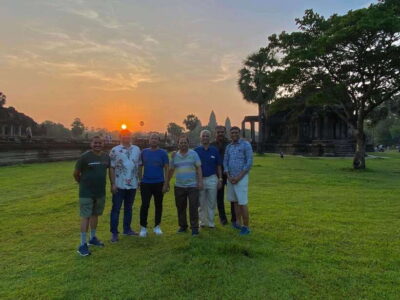
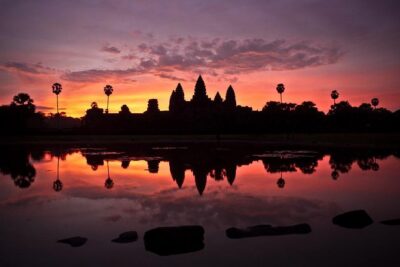
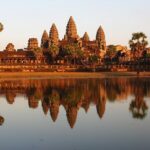
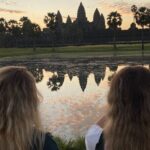
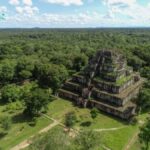
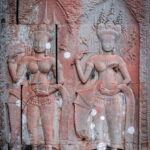
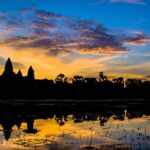
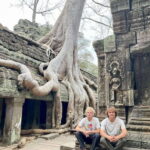
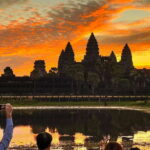
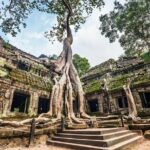
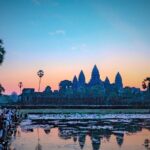
Angkor Wat is the kind of place that feels both monumental and strangely readable, especially when you have a guide to help you make sense of what you’re looking at. Built for King Suryavarman II in the early 12th century as his state temple and capital city, it’s considered the best-preserved temple at Angkor. That “preserved” part isn’t just marketing. It changes how you experience it: carvings and layout are easier to follow when so much has survived.
You’ll spend around 2 hours at Angkor Wat. That’s enough time to appreciate the overall design, spot details on the temple art, and still have room to pause without feeling rushed. If you only saw it briefly, you’d miss the slow-grab feeling that makes Angkor special: the way the temple’s art reads like stories, and the way the architecture guides your eyes.
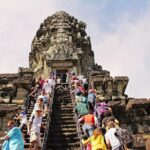
A practical consideration: even with a private setup, this is a major attraction zone. Expect crowds and adjust your strategy. If you like photos, be ready for bright midday glare. If you prefer details, look for moments when you can step away from the busiest paths and focus on carvings and walls.
You’ll also want to keep an eye on timing. Angkor Wat is stop one for a reason. You’ll get better energy for the rest of the day if you treat this as your main visual anchor and not just a quick photo stop.
Angkor Thom South Gate: Entering a Fortified City
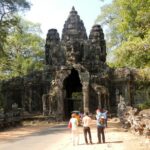
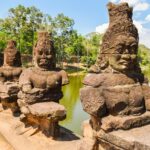
Next comes Angkor Thom South Gate, the entry to the fortified city of Angkor Thom. The city covers a large area—about 6 square miles (10 km²)—so having a route matters. This stop is shorter (around 20 minutes), but it’s a useful transition. It shifts you from the iconic grandeur of Angkor Wat to the feeling of a defensive, planned city.
The South Gate is monumental, and walking into it helps you understand that Angkor wasn’t just temples scattered in a forest. It was a whole urban system. For you, this is one of the best “context” moments in the day: it gives your temple experience a sense of scale and order.
If you’re sensitive to heat, take this stop efficiently. The causeway and gate areas are exposed. Short, focused time here is a smart trade-off since you’ll spend longer later at Bayon and then the day moves toward the lake.
Bayon Temple: Khmer Temple Art at Human Scale
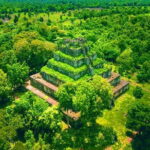
After the South Gate, you’ll head to Bayon Temple, where you get a more decorated, more detailed feel. Bayon is a richly decorated Khmer temple built in the late 12th or early 13th century as the state temple of King Jayavarman VII, who was a Mahayana Buddhist ruler.
You’ll spend about 1 hour here. That hour is important because Bayon rewards patient looking. The name “Bayon” might sound familiar, but what matters is what you do with the time. Instead of trying to see everything at once, let the art guide you—choose a few areas and linger. The decoration is what carries the experience.
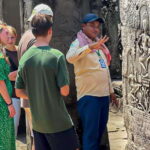
One value of having an English-speaking driver guide is interpretation. Even when you’re not reading everything on-site, you’ll get enough context to connect the temple’s role to the larger Angkor story. For many visitors, this is where the day stops feeling like checkboxes and starts feeling like understanding.
Practical note: Bayon is not the kind of place where you want to rush. If you push too hard through this hour, you’ll feel it later when you switch gears to a long drive and then boat time.
Kompong Phluk on Tonlé Sap: Flooded Forests and Real Living
The day changes texture after Bayon. You’ll take lunch on your own account, then drive about 45 minutes into the countryside to reach the quay. From there, you board a local boat for around a 1.5-hour ride to Tonlé Sap Lake.
This is the part of the tour that most clearly connects past and present. On the temple side, you’re looking at ancient stories recorded in art. On the lake side, you’re seeing how the water and floodplains still shape daily life—fishing, living spaces, and movement around flooded areas.
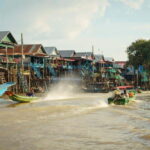
Now the big expectation point: Tonlé Sap is famous for its water-related housing, but what you see depends on water levels. One customer felt the wording about a floating village didn’t match what they experienced—more scattered floating houses than a totally floating town—while still describing the stilt village portion as beautiful and the temple visit as interesting. So here’s my advice to you: go for the lake ride and the flooded-forest atmosphere, not a single guaranteed look.
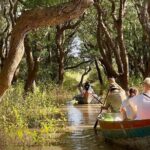
The “floating villages and flooded forests” framing is helpful. You’ll likely see a mix: parts that look more like stilted settlements and parts that feel more boat-adjacent. Whether it’s highly floating or more semi-flooded, the key value remains the same: you’re on the water, moving through the environment that drives life here.

Boat Ride Practical Tips: How to Stay Comfortable and Get Good Views
The boat portion is one of the best reasons to choose this specific tour. It isn’t just a drive-by. You’re out for about 1.5 hours, guided along the lake’s edge and into the floodplain environment.
To make the most of it:
- Bring sun protection. Even with cloud cover, you’re exposed out on water.
- Consider a light rain layer. Tropical weather can shift fast.
- Have your phone ready for shots, but don’t forget to look up. Many of the best moments are the wide views and the sense of the environment moving around you.
Since the tour includes cool towels during touring, you’ll get a comfort reset at some point in the day. Use that moment to rehydrate and adjust what you’re carrying. Also, if you get motion-sick, plan ahead. The data doesn’t mention any special motion support, so it’s on you to come prepared if you’re sensitive.
Finally, remember you’re interacting with a working lakeside environment. This is not a theme-park. Be respectful with your pace and your photos.
Price and Value: What You’re Really Paying For
The tour price is $40.00 per person, and the experience runs about 9 hours. At this level, you’re paying for a private day structure: hotel pickup and drop-off, an air-conditioned vehicle, and a private boat component. Those are the items that make a noticeable difference in comfort and time management, especially at Angkor where traffic and entry logistics can eat up your day.
But do the math carefully, because not everything is included. You’ll pay the required Angkor Pass at the ticket office. In addition, there’s a government tax and community development fee of $20.00 per person, which is listed as not included. Tips are also not included.
So the realistic “starting point” for your trip budget is closer to $60 per person before counting your Angkor Pass cost. That still can be good value if you want the private flow (not a shared group scramble) and you want a lake ride instead of a quick photo stop.
Here’s how I’d judge value for you: if you’re the type who hates waiting and wants a plan that makes sense hour-to-hour, this structure fits. If you’re traveling on a strict budget and you don’t care about private logistics, you might find cheaper options. Still, this one is strong for anyone who wants both temples and Tonlé Sap in a single day without stress.
The Timing Reality: A Full Day That Needs Energy Management
This is an all-day outing, roughly 9 hours, and it mixes intense sun walking with water time and driving. That means you should treat it like one continuous session, not separate attractions.
A few pacing ideas:
- Eat a proper breakfast before pickup. You won’t have much control over how the day unfolds.
- Use lunch as a real energy reset since it’s on your own account.
- Plan your best camera moment for either Angkor Wat’s most iconic views or Bayon’s detailed areas, and don’t try to split attention evenly across every stop.
Also, keep expectations realistic. Angkor can be tiring even when you do it right. If you try to “win” the day by covering every corner fast, you’ll likely feel cranky by the lake portion. If you go steady, the combination actually feels rewarding: temple art in the morning, living water culture later.
Who Should Book This Tour (and Who Might Skip It)
I think this tour is a good fit if you:
- Want private hotel pickup and drop-off rather than public transport logistics
- Like the idea of seeing Angkor Archaeological Park and also getting out to Tonlé Sap the same day
- Prefer guided context, especially for Bayon and the big layout transitions at Angkor Thom
You might skip or adjust expectations if:
- You specifically want a fully floating, Venice-style village with everything on water. Kompong Phluk can look different depending on conditions.
- You hate long days with multiple major stops. This one is packed from morning to evening.
Overall, it suits travelers who want a grounded look at Cambodia beyond temples alone.
Should You Book This Angkor Wat and Tonlé Sap Private Day Tour?
Book it if you want a one-day plan that hits the big Angkor landmarks and still makes room for Tonlé Sap’s living floodplain environment. The private transfer, English-speaking driver guide, and included comfort touches like cool towels make the day easier to handle, and the private boat time is the piece you can’t easily replicate on your own without effort.
Skip or reconsider if your top goal is a guaranteed, uniform floating-village experience. Water conditions can change what you see at Kompong Phluk. Still, even with that caveat, the boat ride and the stilt settlement atmosphere can be a memorable contrast to the temple world you just visited.
If you’re curious about how Cambodia connects its ancient art to everyday lake life, this is a solid way to do it in one shot.
FAQ
How long is the Angkor Wat and Tonlé Sap private day tour?
The tour lasts about 9 hours.
Is pickup from a hotel included?
Yes. Private pickup and drop-off from your hotel in Siem Reap is included.
Do I need to buy an Angkor Pass for entry?
Yes. You’ll go to the Angkor Wat Ticket Office to pay and get the Angkor Pass, which is required.
What part of the tour includes a boat ride?
You’ll board a local boat after traveling to the quay near Kompong Phluk, with about 1.5 hours on the water.
Is lunch included?
Lunch is not included. You’ll have lunch break time on your own account.
What fees are not included in the advertised price?
Not included are tips, travel insurance, and a government tax/community development fee of $20.00 per person. Angkor entry costs (your pass) are also not included.
Is this tour private?
Yes. It’s a private tour, so only your group participates.