REVIEW · SIEM REAP
Angkor Wat Sunrise, Banteay Srei, Bayon & Ta Prohm Temple
Book on GetYourGuide →Operated by Euro Khmer Voyages · Bookable on GetYourGuide
Seeing Angkor Wat at sunrise is a special kind of calm, and I like that this tour times it before the day rush. Banteay Srei’s pink-stone carvings and Ta Prohm’s jungle takeover are two of the most striking temple experiences in the whole Angkor area. One drawback to plan for: it’s an intense, warm day with plenty of walking between sites.
This is one of those tours that feels efficiently planned without being rushed. You’ll ride in an air-conditioned minivan, you’ll get fresh coconut juice and bottled water along the way, and you’ll also get cool towels that help you reset when you jump back into the van.
If you’re hoping to do zero walking, this probably isn’t your day. You’ll be on your feet for temple exploring, plus short strolls through corridors and viewpoints, and the ground can be uneven in places. Also, meals and the Angkor pass are extra, so you’ll want to budget for that early.
In This Review
- Key moments at a glance
- Sunrise at Angkor Wat before the day gets loud
- Banteay Srei: the pink-limestone temple where carvings do the talking
- Pre Rup’s 6 large towers: a mountain-temple view stop
- Ta Prohm: where the jungle takes back the corridors
- Bayon Temple: 54 towers and 200 smiling faces
- Price and logistics: what $80 really covers
- How the day feels: heat, walking, and tour rhythm
- Who should book this Angkor Wat sunrise tour
- Should you book Angkor Wat sunrise plus Banteay Srei, Ta Prohm, and Bayon?
- FAQ
- FAQ
- How long is the Angkor Wat sunrise, Banteay Srei, Ta Prohm, and Bayon tour?
- Where does the pickup happen?
- What time is sunrise included?
- What’s included in the tour price?
- Is the Angkor pass included?
- Are meals included?
- What temples do you visit?
- What should I bring?
- Is sportswear allowed?
- Is the tour suitable for pregnant women?
Key moments at a glance
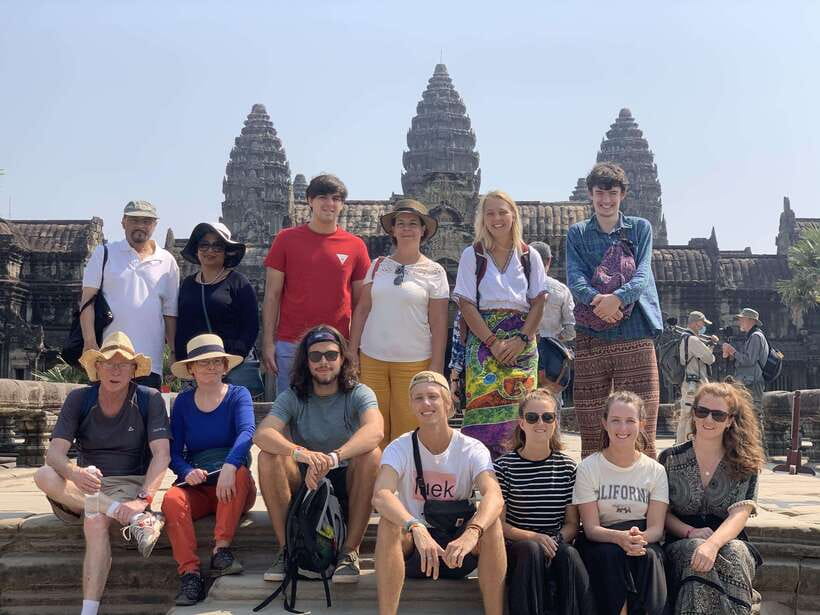
- Angkor Wat sunrise timing: see the world-famous silhouette before most buses arrive
- Banteay Srei’s pink limestone: famous for its ultra-fine, deep carvings
- Pre Rup’s mountain-tower view: look for the 6 large towers at the temple area
- Ta Prohm’s fig and silk-cotton trees: the jungle growing through stones is the point
- Bayon’s 54 towers and 200 smiling faces: a maze of faces all around you
Sunrise at Angkor Wat before the day gets loud
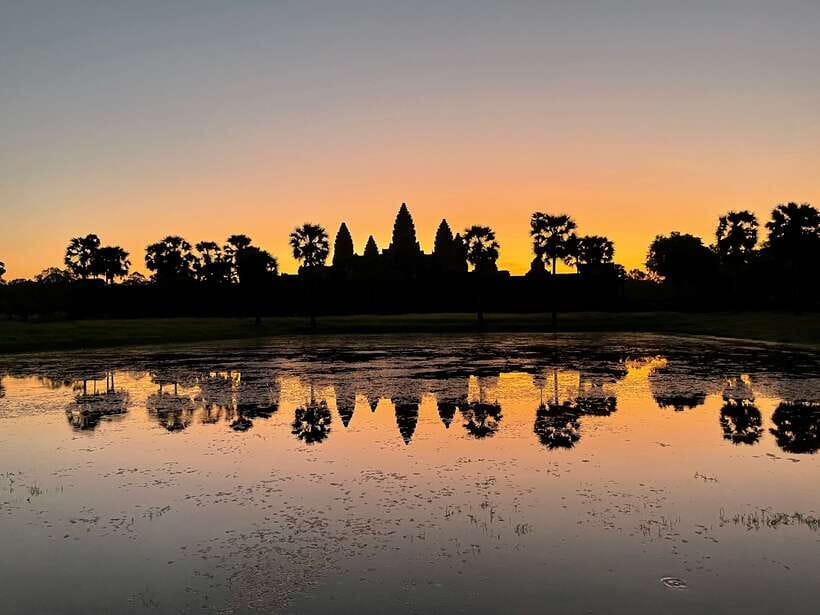
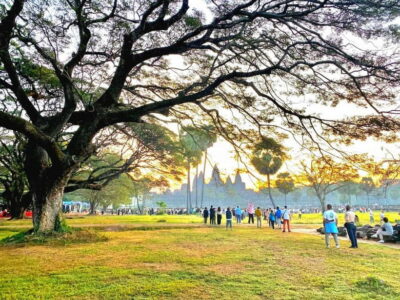
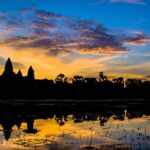
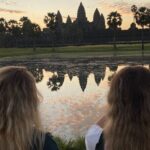
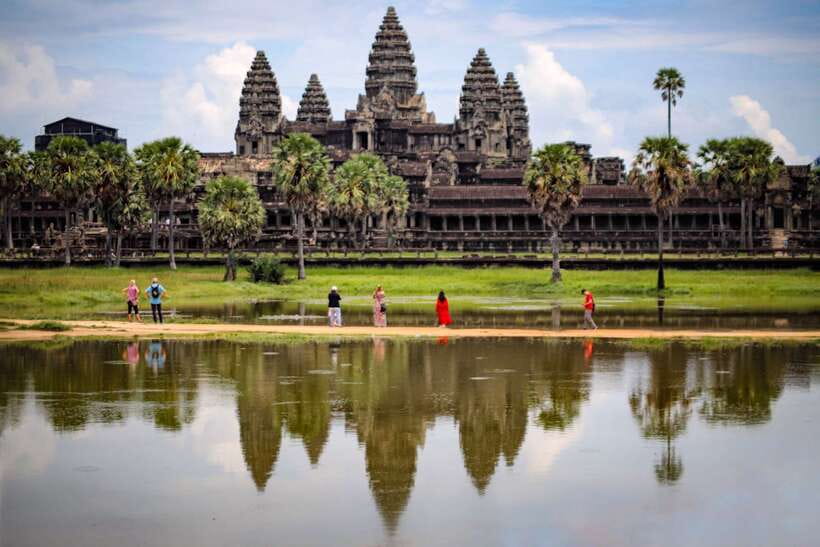
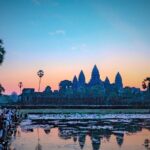
The day starts with pickup from your accommodation in Siem Reap, then a van ride to Angkor Wat timed for sunrise. This is the kind of start that pays off fast: Angkor Wat is the largest religious monument in the world, but at first light it feels less like a landmark and more like a place.
At the temple, you’re there long enough to actually enjoy the lighting shift. Mornings at Angkor can change the mood quickly, and sunrise gives you a better chance of seeing the scale without wall-to-wall crowds. Even if you’ve seen photos before, the first real look at the towers and carved stone from the early morning angle tends to hit harder than any screen.
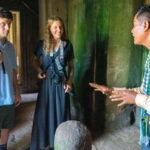
If you care about meaning, this is also where your guide’s job matters most. One English-speaking guide named Sinan was praised for explaining the highlights in a way that helps you connect what you’re seeing to what the ruins represent. I’d treat the sunrise like orientation for the rest of the day: ask questions, listen for the big themes, then later the details make more sense.
Practical note: sunrise means you’ll be awake early and moving in cool-but-chilly-to-warm conditions. Wear comfortable clothes you can layer, and bring shoes you trust.
You can also read our reviews of more tours and experiences in Siem Reap
Banteay Srei: the pink-limestone temple where carvings do the talking
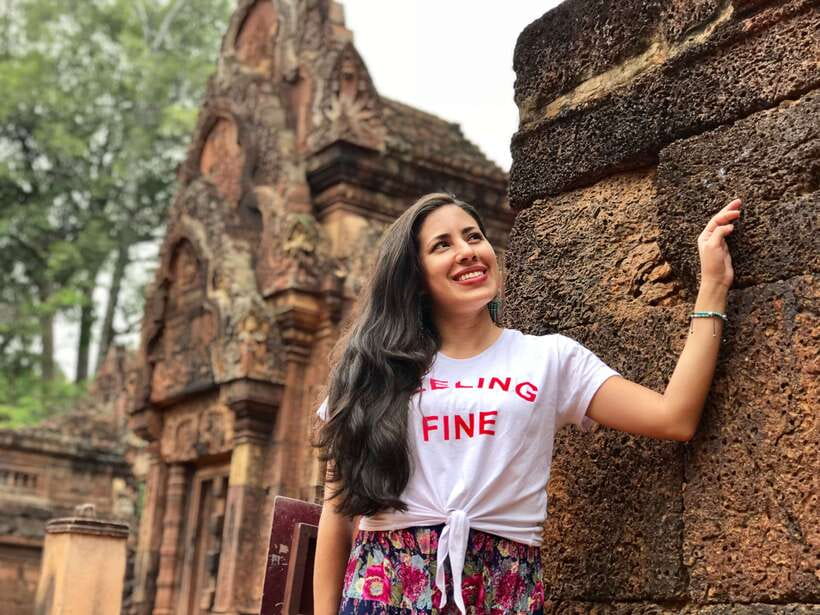
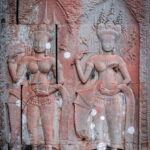
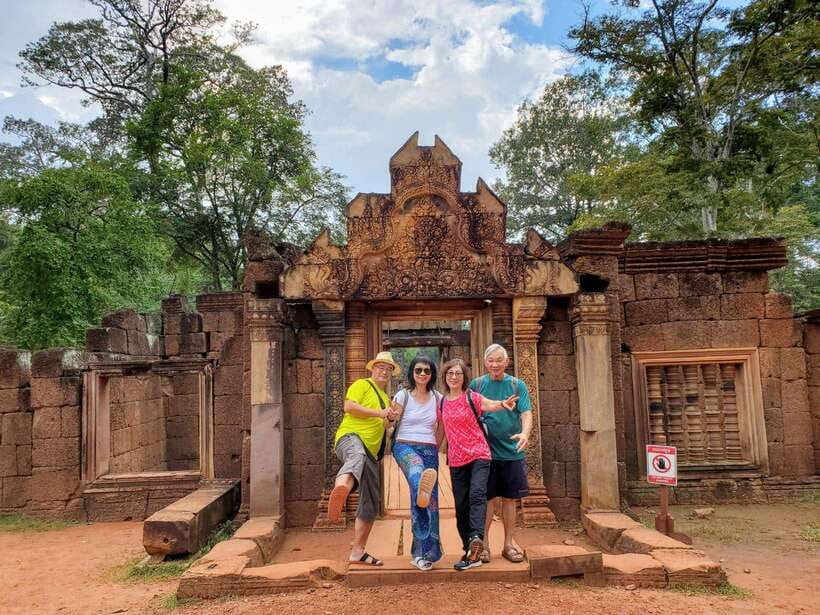
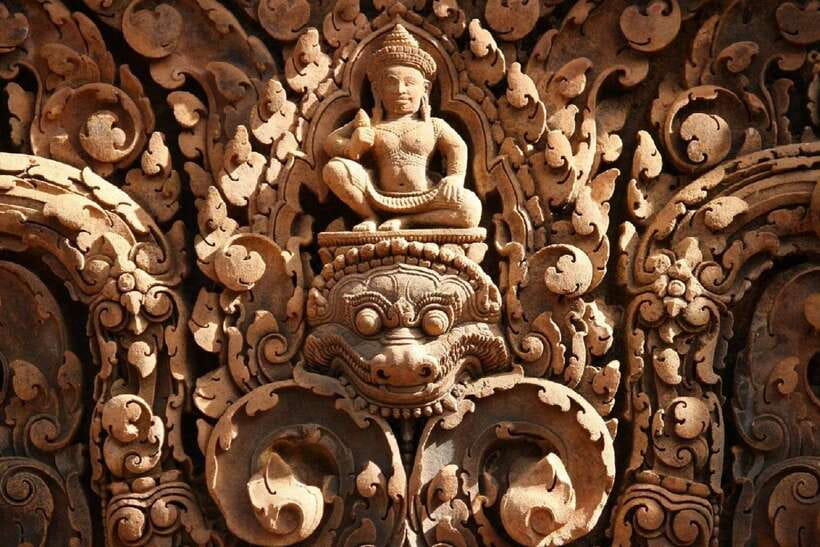
After Angkor Wat, the tour moves to Banteay Srei, the “pink sandstone” temple you hear about for a reason. The stone color is only the starting point. What makes this stop special is that the walls hold what the experience is really famous for: deep, intricate carvings that feel almost sculpted rather than painted on.
This temple is associated with King Rajendravarman V in the 10th century. That detail matters because it frames the feel of Banteay Srei. It’s not just about surviving towers—it’s about the fine craftsmanship. You’ll have time to explore, walk around, and really look at the stonework from different angles. Up close, the carvings can look like they’re playing with light, which is why the morning calm helps.
Banteay Srei also comes with a built-in break. There’s time for stretching, and there’s typically an opportunity to stop for shopping and sightseeing. That’s where you’ll see how tour days balance temple focus with the realities of a full route—especially in the heat.
One thing I appreciate about this tour’s pacing is that Banteay Srei doesn’t get treated like a quick photo stop. You get time to slow down enough to notice details. If you’re the type who loves turning a “wow, pretty” moment into an “okay, I get it” moment, this is one of the best stops on the whole day.
Pre Rup’s 6 large towers: a mountain-temple view stop
Between temple zones, the tour includes the Pre Rup temple area, where you can admire the 6 large towers of this mountain-temple style setting. This stop works well as a change of rhythm. After the dense carving focus of Banteay Srei, Pre Rup gives you something different: a clearer sense of temple layout and elevation.
In practical terms, this is also a good timing stop. Angkor temple days can blend together if you’re not careful, so a viewpoint-style moment helps your brain reset. Look for the towers from the right angle, then take a minute to understand how the layers of the temple area create that climb-your-eyes-up effect.
If you like skyline views, this is one to pay attention to instead of treating it as a transit stop.
Ta Prohm: where the jungle takes back the corridors
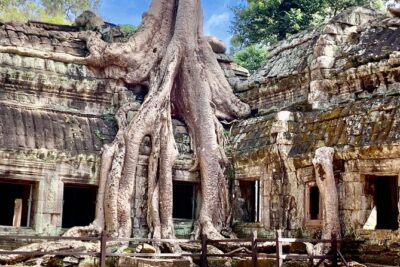
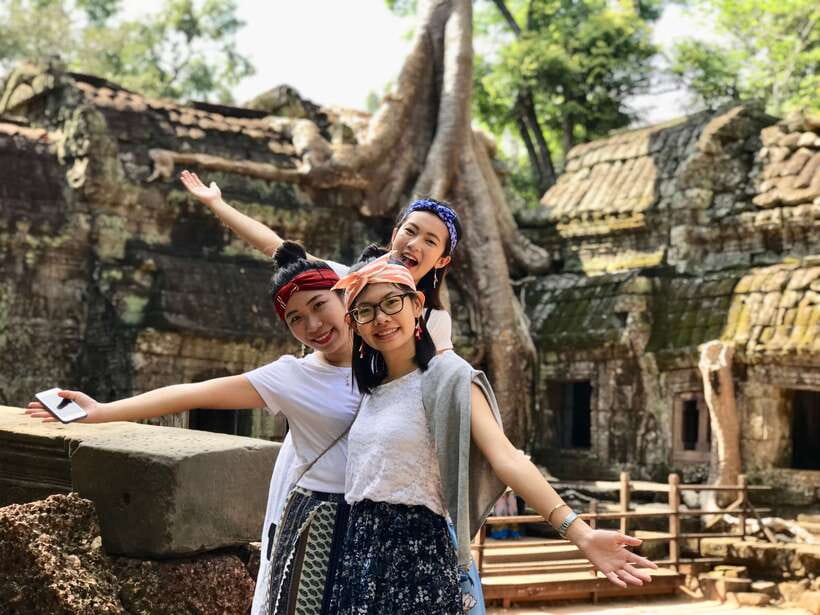
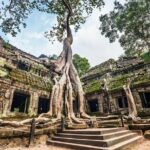
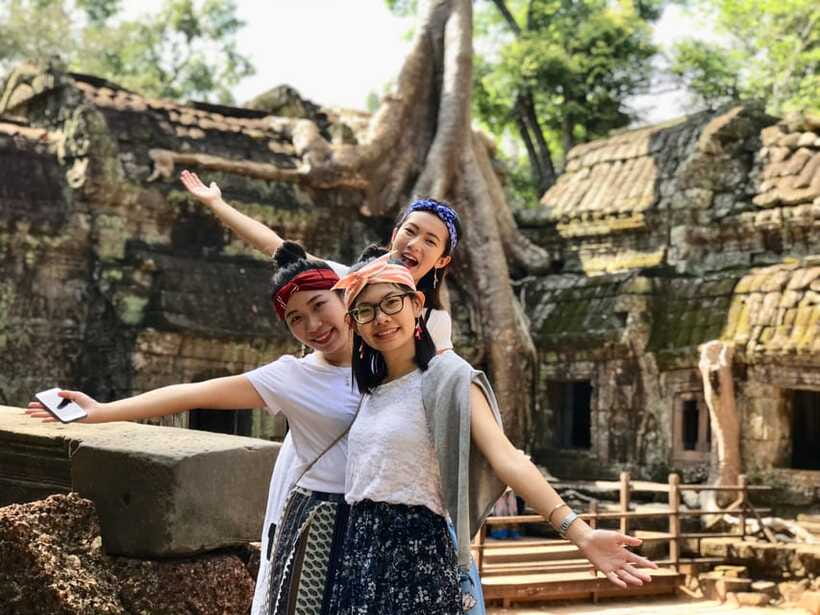
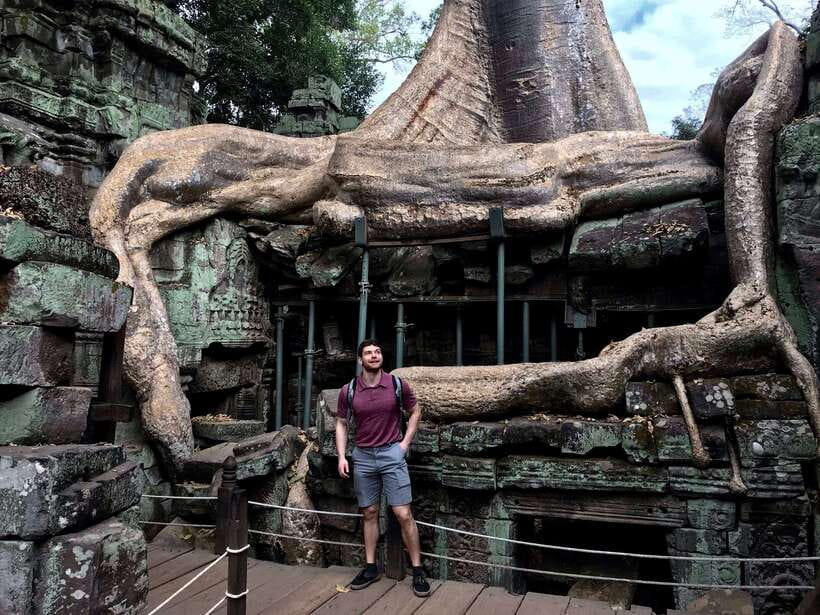
Then comes Ta Prohm, the temple best known for the sensation of the jungle pushing through everything. This is where the atmosphere shifts from carved surfaces to living chaos—think massive fig and silk-cotton trees growing from inside towers and corridors.
The “big trees” part is obvious the moment you see it. But what stays with you longer is how the temple becomes a framework for nature. Standing in the middle of that layout, you start to notice that the ruins aren’t cleanly isolated from the wild—they’re tangled into it, which is why Ta Prohm feels so cinematic.
You’ll have time to explore and walk the grounds. That walking matters here: Ta Prohm reads differently from each path. Some angles show the trees wrapping around stones; others show sightlines deeper into corridors, where you can see how the jungle has overtaken the monastic complex over time.
In the heat, this is also where those cool towels do their job. One review praised cooled towels after returning to the car, which can be the difference between still enjoying a temple visit and just surviving it. The van transportation is air-conditioned, and you’ll also have drinking water on hand—small things that keep the day comfortable enough to focus.
Bayon Temple: 54 towers and 200 smiling faces
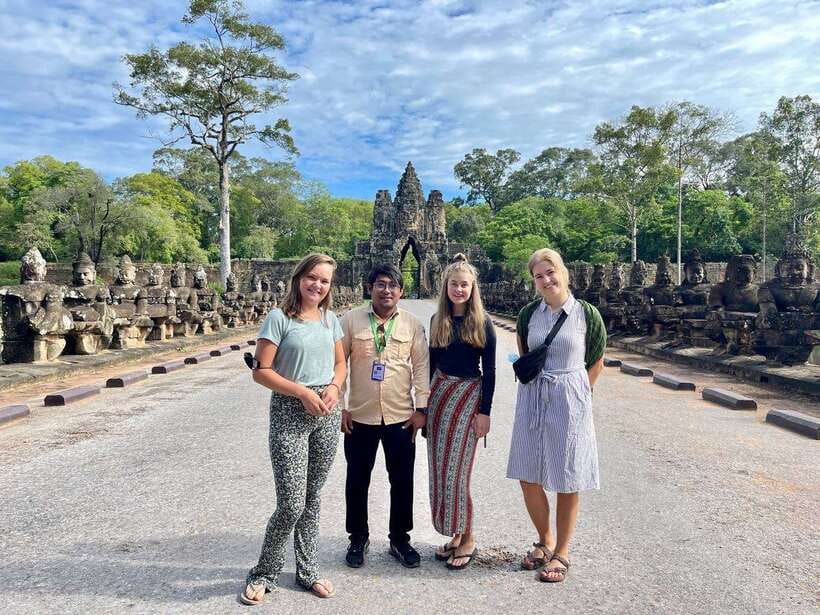
Bayon is the payoff for anyone who likes faces, symmetry, and the feeling that the temple is watching you back. Here the structure is topped with 54 towers, and the towers are decorated with 200 Buddha smiling faces.
This isn’t just one “main photo spot.” The faces appear as you move around, and that creates a kind of visual rhythm. Every time you change your angle, the pattern of faces changes, and the temple can feel like a living wall of expression rather than a single viewpoint.
You’ll visit Bayon with time for free exploring too. That free time is smart on a route like this because it lets you match Bayon to your pace. If you want to circle slower and look closely, do it. If you prefer photos and broad views, you can still get plenty without feeling trapped.
And this is where your guide’s explanations again help. Another English-speaking guide named Makara was praised for explaining Cambodia’s culture and history in a way that felt interesting and clear. Even with great signage, a good guide helps you connect the facial imagery and temple symbolism to what the Angkor sites were trying to express.
Price and logistics: what $80 really covers
The tour price is listed as $80 per person for 8 hours. On value, that’s one of the main reasons I’d consider booking it: it bundles transportation, an English-speaking guide, and comfort extras that make a long day more workable.
Included:
- Air-conditioned car/minivan
- Fresh coconut juice, plus drinking water
- Cool towel during the tour
- Fully vaccinated English-speaking tour guide
- Pickup and drop-off from your accommodation
Not included:
- Meals & drinks (budget about $8–$12 per person per meal)
- Angkor Pass: 1-day pass costs $37 per person
So your real all-in cost depends on how many meal breaks you take and whether you already have a pass. If you don’t have an Angkor pass, that $37 is the big add-on. Still, the $80 covers the heavy lift: getting you between multiple major sites with guidance, comfort, and a sunrise start that’s hard to replicate on your own without careful planning.
There’s also a practical upside to booking a day like this: you’re not coordinating multiple transfers across the temple circuit. The route is built to keep you moving, and the air-conditioned van helps you recover between stops.
How the day feels: heat, walking, and tour rhythm
This is an 8-hour temple day, which means you should expect a lot of short segments rather than one long hike. You’ll start early for sunrise, then shift into morning and midday exploration where temperatures can climb.
The tour works because it mixes intensity with recovery:
- You ride in an air-conditioned vehicle between sites
- You get water and a cool towel refresh
- You spend enough time at each place to actually see what makes it famous
Comfort items matter here. Wear comfortable shoes and clothes you’re okay getting dusty or sweaty. Sportswear is listed as not allowed, so keep it simple: breathable clothing and sturdy footwear.
If you’re sensitive to heat, you’ll want to be ready for midday. This tour is enjoyable when you treat it like a warm-weather outing: hydrate, slow down during the hottest parts, and use the break time when it’s offered.
Who should book this Angkor Wat sunrise tour
I think this tour is a strong fit if:
- You’re visiting Siem Reap for the first time and want a classic mix: Angkor Wat, Banteay Srei, Ta Prohm, Bayon
- You want sunrise at Angkor Wat without having to plan the timing yourself
- You like temples with clear contrasts: fine carvings, tower layouts, and then jungle growth
It’s less ideal if:
- You’re pregnant, since it’s listed as not suitable for pregnant women
- You want minimal walking, because you’ll be exploring each site on foot
If you’re a details person, the route makes sense because it keeps changing what you’re looking at: carving depth, tower geometry, and then organic jungle takeover. That variety prevents the day from feeling repetitive.
Also, the provider behind this experience is Euro Khmer Voyages, and the guides have been praised for explanations and responsiveness. If you have a specific interest and time allows, it’s worth asking if the guide can help accommodate a reasonable addition—the operation has shown flexibility with extra requests like the Land Mine Museum when asked.
Should you book Angkor Wat sunrise plus Banteay Srei, Ta Prohm, and Bayon?
Book it if you want the big Angkor hits in one day, with sunrise timing, an English-speaking guide, and comfort touches like coconut juice and cool towels. It’s especially good value if you don’t want to juggle tickets, passes, and transportation across multiple temples.
Pass on it if you’re mainly after a slow, relaxed day with minimal walking, or if you don’t want to handle the extra costs of meals and the $37 Angkor Pass.
FAQ
FAQ
How long is the Angkor Wat sunrise, Banteay Srei, Ta Prohm, and Bayon tour?
The duration is 8 hours.
Where does the pickup happen?
Pickup is included from your accommodation in Krong Siem Reap, Siem Reap Province. You’ll need to provide your hotel name, and you should wait in the hotel lobby 5 minutes before the tour start.
What time is sunrise included?
Sunrise at Angkor Wat is included as part of the tour, with the Angkor Wat visit and sunrise time built into the schedule.
What’s included in the tour price?
Transportation by air-conditioned car/minivan, a fully vaccinated English-speaking tour guide, fresh coconut juice, drinking water, and a cool towel.
Is the Angkor pass included?
No. The 1-day Angkor pass is not included, and it costs $37 per person per day.
Are meals included?
No. Meals & drinks are not included, and each meal costs around $8–$12 per person.
What temples do you visit?
You’ll see Angkor Wat (sunrise), Banteay Srei, the Pre Rup temple area, Ta Prohm, and Bayon.
What should I bring?
Bring comfortable shoes and comfortable clothes.
Is sportswear allowed?
Sportswear is listed as not allowed.
Is the tour suitable for pregnant women?
No, it is listed as not suitable for pregnant women.