REVIEW · SIEM REAP
Angkor Wat Small Circuit & Sunset Tour
Book on Viator →Operated by Angkor Doors · Bookable on Viator
One day can feel like a mini Angkor education. This small-circuit tour is built for people who want the big sights without the early sunrise alarm, with an easy start after breakfast and a sunset finish. You also get air-conditioned transport plus guided stops that keep the temples from turning into one long photo line.
What I really like is the focus on meaning, not just monuments. A good guide can connect Khmer history to what you’re seeing in front of you, including the stories and engravings you’d otherwise glance past. In this tour, you might get guides such as Vanna, who’s known for strong English and storytelling.
One thing to plan for: the tour price does not include the entrance ticket. The One Day Angkor Pass is extra at $37 per person, and you’ll want to budget time and money for that.
In This Review
- Key things to know before you go
- Why this small-circuit day works so well
- Price and what you’re really paying for
- What to wear, and how to set yourself up for an easy day
- Stop-by-stop: Angkor Wat, Banteay Kdei, and Ta Prohm
- Ta Keo’s short climb and why it’s worth the effort
- Angkor Thom at sunset: Victory Gate and the evening mood
- The guide makes the difference: Vanna and Pal Chen style
- Timing, heat, and how to survive a full circuit
- Who this tour is best for
- Should you book this Angkor Wat Small Circuit & Sunset Tour?
- FAQ
- What time does the tour start?
- How long is the tour?
- Is pickup offered?
- Is the tour price the full cost of visiting the temples?
- What is the entrance fee?
- What’s included in the $54 tour price?
- What temples are visited?
- Is sunrise part of this tour?
- Is lunch or other food included?
- What should I wear to enter the temples?
Key things to know before you go
- No sunrise needed: you start at 9:00 am and end with sunset views from Angkor Thom
- AC rides and cold water: you’ll travel in an air-conditioned car or minivan/minibus with bottled water provided
- A tight set of stops: Angkor Wat, Banteay Kdei, Ta Prohm, Ta Keo, then Angkor Thom
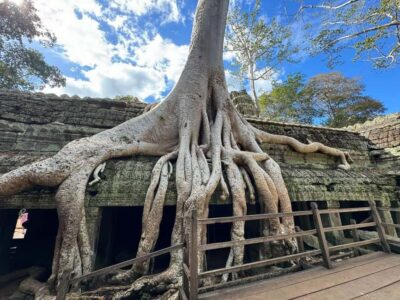
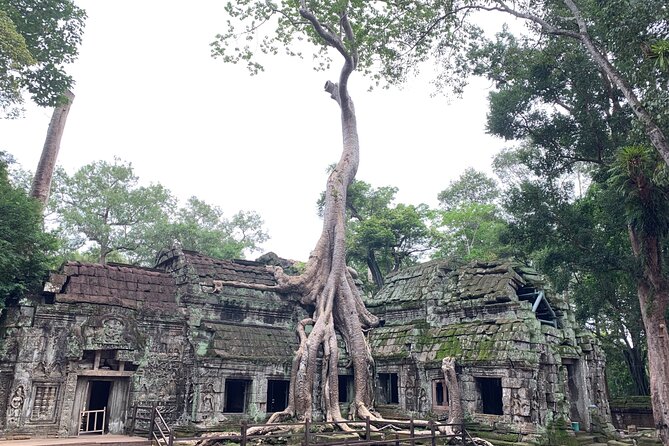
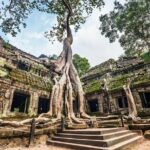
- Ta Prohm is the tree temple moment: you’ll see the famous trees growing through the stones
- Ta Keo includes a climb: it’s a short uphill effort for better views
- Temple dress code is strict: shoulders and knees must be covered
Why this small-circuit day works so well
Angkor can overwhelm you fast. The temples are stunning, but if you’re piecing everything together on your own, you’ll spend more energy on logistics than on the actual ruins. This tour’s big advantage is that it lays out a logical route across the Angkor Archaeological Park, with a manageable number of stops and enough time at each place to actually notice what makes each temple different.
You’ll get the classic hits—Angkor Wat first, then Ta Prohm—but you’re not trapped in a nonstop stampede. The schedule is long enough to feel full, yet it’s structured around distinct “chapters.” That matters because the temples aren’t just pretty. They’re religious and political statements from different eras of Khmer building, and a guided day makes those shifts easier to understand.
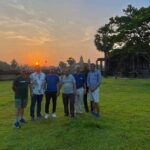
The sunset element at Angkor Thom also changes the tone of the day. Morning light is crisp and sharp on stone. Evening light turns it softer, more atmospheric, and often more photogenic. And because you’re not waking up at dawn for sunrise, you can actually enjoy the day instead of rationing energy.
You can also read our reviews of more evening experiences in Siem Reap
Price and what you’re really paying for
The tour is listed at $54 per person and lasts about 8 to 9 hours. On paper, that may look like a straightforward guided day. In practice, you’re paying for three things that add up quickly if you do them yourself: an English-speaking guide, air-conditioned transportation, and the simple comfort of cold bottled water.
Then there’s the separate cost you must account for: the One Day Angkor Pass at $37 per person. Since that entrance fee is not included, you should treat your total day cost as tour fee plus pass. If you’re already planning to visit multiple major sites anyway, this format still tends to be good value because the guide helps you get more out of each stop, instead of only checking boxes.
Also note that food isn’t included. Your day includes time after Ta Prohm where you can take a lunch break at your own expense. That’s normal in Angkor tours, but it’s worth planning for so you’re not stuck hungry while you’re deciding where to eat.
What to wear, and how to set yourself up for an easy day
This tour requires temple-appropriate clothing. You’ll need clothes that cover shoulders and knees, or you won’t be allowed access to the temples. This is one of those rules that’s easy to ignore—right up until it stops you at the entrance.
I suggest you come prepared in a way that won’t ruin your day:
- Wear lightweight layers that still cover your shoulders and knees.
- Expect humid heat during the daytime, especially between temple stops.
- Bring water habits in mind, even though cold bottled water is provided by the tour.
You’re also going to be walking and standing in sun and shade while waiting for timing at key viewpoints. The tour’s AC transportation helps a lot between temples, but once you’re outside, you’re still in the elements. Pack for daytime comfort, not just temple photos.
Stop-by-stop: Angkor Wat, Banteay Kdei, and Ta Prohm
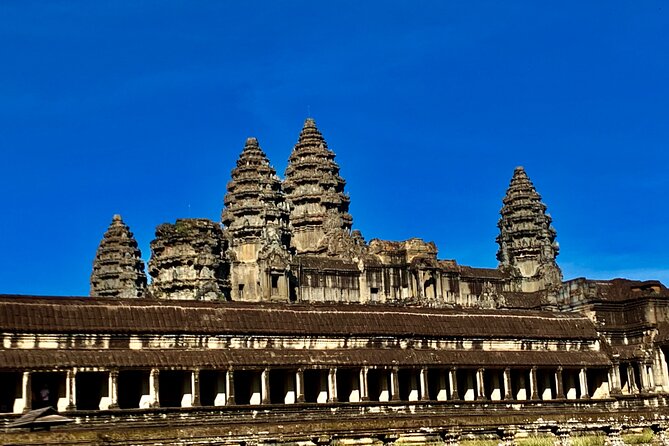
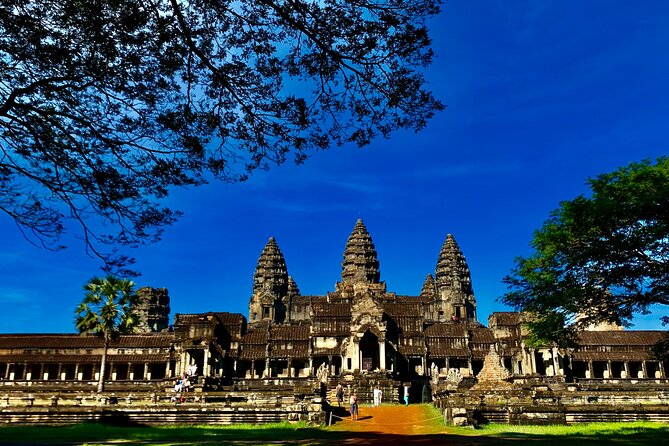
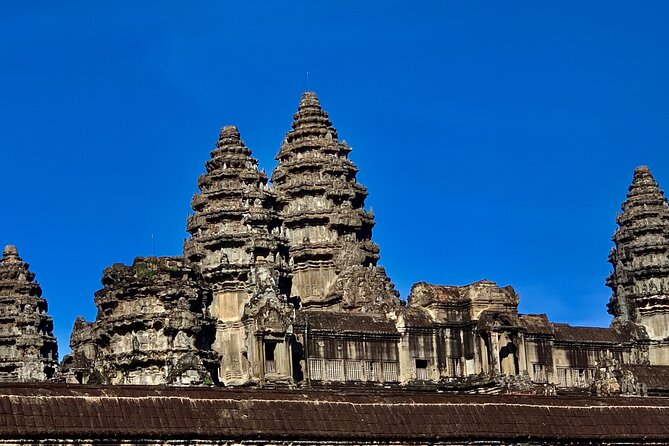
Your day starts with Angkor Wat, one of the most recognizable temple complexes in the world. You’ll spend about 2 hours exploring the vast grounds. Without a guide, Angkor Wat can feel like a masterpiece you can’t quite translate. With a guide, you can look at the layout and start understanding why it’s arranged the way it is and what the carvings and structures were meant to communicate.
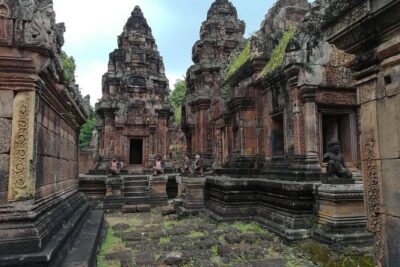
After Angkor Wat, you head to Banteay Kdei for about 30 minutes. This is a Buddhist temple built during King Jayavarman VII’s reign, with construction dated to the end of the 12th century. One of the advantages of visiting it as a mid-morning stop is that it often feels more peaceful than the busiest headline spots. It gives you a breather, while still keeping the temple-building story moving forward.
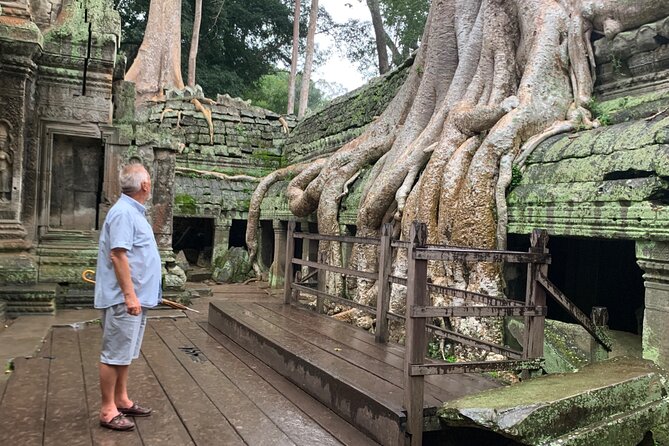
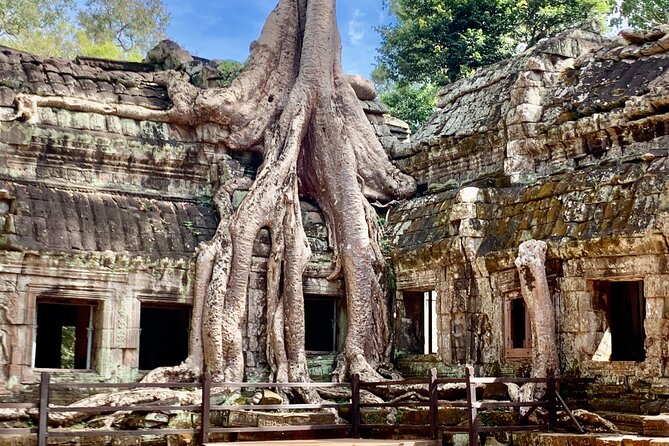
Then comes Ta Prohm for about 2 hours, and this is where the tour earns its reputation. Ta Prohm is famous as the Tomb Raider temple—not because you’re reenacting anything, but because the setting is so distinctive. You’ll see trees literally growing through the temple structures, which makes the ruins feel alive rather than frozen in time. The contrast between carved stone and living growth is a big part of why this stop hits so hard.
A practical note: the tour summary indicates there’s time around lunch after Ta Prohm. Plan on lunch being on your own. Use that window to refuel so your energy holds for the final stretch.
Ta Keo’s short climb and why it’s worth the effort
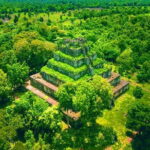
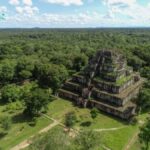
After Ta Prohm, you’ll continue to Ta Keo for about 20 minutes. This temple is known for the fact that you can climb up to view the surroundings. That short climb changes the experience from “looking at ruins” to “reading the place from above.”
Even if you’re not a big climber, this stop tends to be worth it because:
- The viewpoints give you a different scale of the site.
- It helps you connect what you saw on the ground with what the surrounding area looks like.
The time at Ta Keo is brief, so you won’t feel like you’re spending half your day on steps. Still, be mindful of heat and footing. It’s not a marathon, but temple stairs can be uneven.
Angkor Thom at sunset: Victory Gate and the evening mood
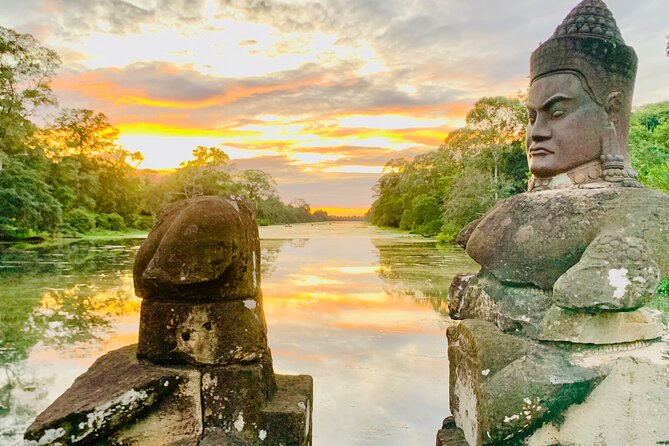
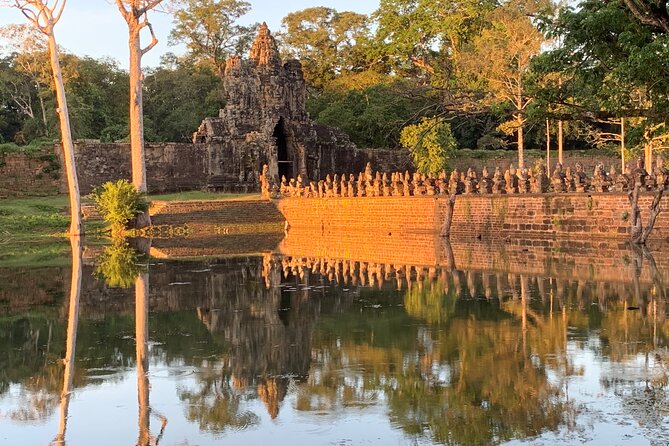
The final highlight is Angkor Thom, where you’ll explore about 2 hours and focus heavily on the sunset atmosphere. You enter the complex via the Victory Gate, which is a great start because it immediately frames Angkor Thom as an ancient city, not just a temple. The gate sets the tone: you’re moving into a larger world of walls, courtyards, and shrine points.
From there, the tour includes optional stops inside the Angkor Thom compound. Depending on timing and flow, you may see places such as Spean Thmor, Chau Say Tevoda, Thommanon, and areas like the Terrace of the Leper. The goal isn’t to race through everything—it’s to cover key highlights and still have time to land on the right moments for sunset views.
Here’s what you should watch for in this final section:
- How the stone surfaces look when the light softens.
- How details in the carvings and figures become easier to notice at different angles.
- How the mood changes when the day cools down.
Sunset at Angkor Thom is not just a photo opportunity. It’s when the whole circuit starts to feel complete, like you’ve moved from the grandeur of Angkor Wat into the living city feeling of Angkor Thom.
The guide makes the difference: Vanna and Pal Chen style
In Angkor, the difference between a good day and a great day often comes down to your guide. This tour promises an English-speaking tour guide, and that matters because Khmer temple art is full of cues. If you don’t know what you’re looking at, you’ll mostly see shapes. If you do, the stones start talking.
The guide experience can be especially strong. In past tours, people have highlighted Vanna for English skill and a deep approach to the meanings of engravings on temple walls, plus stories that connect personal context with historical context.
Another guide mentioned is Pal Chen, described as an ex-Buddhist monk. That kind of background can bring a calmer, more grounded tone to the temples—especially when you’re trying to understand why certain designs exist and what they were meant to communicate.
Even if you’re not a hardcore history person, a good guide helps you slow down at the right places. You stop treating each temple like a checklist and start noticing patterns across the day.
Timing, heat, and how to survive a full circuit
This is a long day—about 8 to 9 hours—so you’ll want to manage your energy. The plan is structured, but your body still has to keep up through walking, waiting, and sun.
A few practical strategies that help a lot:
- Stay hydrated even with bottled water provided; it doesn’t hurt to sip often.
- Plan for sweat and sunscreen as if you’re out all day, because you are.
- Wear comfortable shoes with good grip. Temple walkways can be dusty and uneven.
- Don’t underestimate the climb at Ta Keo. Even short climbs can feel tougher in the heat.
Also keep expectations realistic. This circuit includes several stops, so the goal is to give you meaningful time, not to turn the day into a slow museum tour. If you want maximum sitting time, you may find you’re on your feet more than you’d like. If you’re okay with active touring, you’ll likely feel like the day moves at a good pace.
Who this tour is best for
This tour is a strong fit if you want:
- The big-name temples without planning your own route
- An AC transport buffer between stops
- A guide who connects what you see to Khmer context
- Sunset views without needing to get up before dawn
It’s also a good choice for first-time Angkor visitors who want a “best-of” path that still includes distinct temples like Banteay Kdei and the tree-filled drama of Ta Prohm.
If you’re traveling with limited flexibility and you don’t want to wrestle with timing, a guided circuit reduces stress. And because it’s described as private in the sense that only your group participates, you can often expect a more controlled experience than the mass-schedules.
Should you book this Angkor Wat Small Circuit & Sunset Tour?
If you’re aiming for maximum Angkor value in one day, I think this is a smart booking. The combination of English guide, AC transport, and the clear arc from Angkor Wat to Ta Prohm, then ending with sunset at Angkor Thom, gives you a complete experience without the early wake-up scramble.
Two reasons to hesitate: the Angkor Pass cost is extra, and the dress code can catch you off guard if your clothing plan is sloppy. But those are easy fixes.
If you want a well-paced day that keeps the temples meaningful—and ends with a real sunset finish—this is the kind of tour you’ll feel good about booking.
FAQ
What time does the tour start?
The tour starts at 9:00 am.
How long is the tour?
It runs about 8 to 9 hours.
Is pickup offered?
Pickup is offered.
Is the tour price the full cost of visiting the temples?
No. The entrance ticket is not included. You’ll need the One Day Angkor Pass.
What is the entrance fee?
The One Day Angkor Pass is listed at $37.00 per person.
What’s included in the $54 tour price?
You get an English-speaking tour guide, air-conditioned transportation, and cold bottled water.
What temples are visited?
The tour includes Angkor Wat, Banteay Kdei, Ta Prohm, Ta Keo, and Angkor Thom.
Is sunrise part of this tour?
No. The tour focuses on starting after breakfast and ending with sunset views from Angkor Thom.
Is lunch or other food included?
No. Foods and drinks are not included.
What should I wear to enter the temples?
You need clothes that cover your shoulders and knees.