The best way to see Angkor is by pedal power. This private cycling adventure in Siem Reap takes you off the main roads and onto shaded trails, so the temples feel bigger and quieter as you pass through rainforest country and ancient routes. You’ll hit Angkor Wat, Bayon, and Ta Prohm, with plenty of stops that keep the day active rather than rushed.
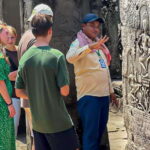
Two things I really like: first, the focus on crowd-free back trails, not just the usual straight-line temple loop. Second, the way the tour is guided by an English-speaking local who can connect Khmer Empire temple architecture to what you’re actually riding past, with names like Leap (enthusiastic, high-energy storyteller) and Sok (culture, nature, and adventure combo) showing up in past groups.
One possible drawback to plan for: the Angkor admission ticket and lunch aren’t included, and you do need moderate fitness for 25–40 km of cycling.
In This Review
- Key highlights to know before you book
- Why cycling changes Angkor Wat the moment you roll out
- Your day plan: pickup, ticket entry, and a steady stop rhythm
- Bike setup and what “moderate fitness” really means here
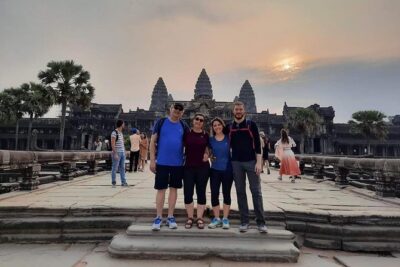
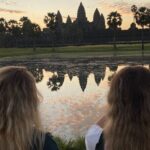
- Angkor Wat: the ticket step and the first major impression
- Ta Nei’s calmer stop near the East Baray area
- French Dam: a short break with surprisingly good payoff
- Bayon and Angkor Thom South Gate: faces, restoration, and pacing
- Ta Prohm: the “kingdom of trees” moment from the bike saddle
- Price and value: how $61.75 holds up when you add what’s not included
- Logistics you’ll actually care about on the day
- Who should book this Angkor jungle biking adventure?
- Should you book it or skip it?
- FAQ
- How long is the Angkor Jungle Biking Adventure?
- How far will I cycle?
- Is pickup and drop-off included?
- Do I need to buy Angkor admission tickets?
- Is lunch included?
- What’s included in the tour price?
- What’s the fitness level requirement?
- Is this a private tour?
- Are there any additional costs besides the tour price?
- What’s the cancellation policy?
Key highlights to know before you book
- Private tour with hotel pickup/drop-off so your day starts smoothly and ends without the hassle
- 25–40 km of riding on shaded jungle paths and quieter temple roads
- Major temples plus calmer stops like Ta Nei, French Dam, and Angkor Thom’s south gate
- English-speaking guide who explains what you’re seeing as you ride
- Bike, helmet, water, and snacks included, so you’re not juggling essentials mid-ride
Why cycling changes Angkor Wat the moment you roll out
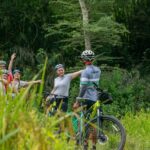
If you’re used to temple days that feel like a long line with a few quick photo breaks, this is a different rhythm. Cycling naturally slows you down in the best way. You can look around as you move, and you’re not always stuck at the pace of tour buses.
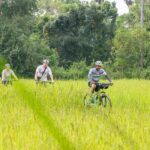
The route is built around getting you between 25–40 km on shaded paths, quiet roads, and old causeways away from the busiest streets. That matters because Angkor isn’t just stone. It’s stone in a living landscape—trees, humidity, birds, and the slow creep of vegetation back toward the ruins. From the bike saddle, you get that “how does this fit into the forest?” feeling that you usually miss when you’re just hopping in and out of a vehicle.
And because it’s a private guided tour, you’re not sharing the experience with strangers who keep wandering off at every stop. You can take your time at the places that grab you, and you’ll have a guide managing the flow.
You can also read our reviews of more cycling tours in Siem Reap
Your day plan: pickup, ticket entry, and a steady stop rhythm
The day starts with pickup from your hotel lobby. From there, you transfer to the starting point and then begin cycling toward Angkor Park.
Once you’re at Angkor Wat, the tour shifts into “temple mode,” but in an organized way. There’s a ticket counter step described as efficient and well-run, and that’s useful if you want to avoid chaos right when you arrive. After ticket entry, you settle into your longest temple block of the day.
Then the itinerary keeps you moving in a logical sequence:
- Angkor Wat (about 2 hours)
- Ta Nei (about 30 minutes)
- French Dam (about 19 minutes)
- Bayon (about 1 hour)
- Angkor Thom South Gate (about 30 minutes)
- Ta Prohm (about 1 hour)
You’ll notice it’s not a “see everything, everywhere, instantly” plan. It’s a set of stops with enough time to absorb details, plus riding segments that make the transitions part of the experience.
Bike setup and what “moderate fitness” really means here
This is cycling with a mountain bike and helmet provided, plus bottled water and snacks. That combination is practical. You’re not spending the day thinking about where your next drink is coming from.
The big physical factor is the total distance: 25–40 km across jungle trails and quiet temple roads. You’ll want to be comfortable riding for stretches, then stopping, then riding again. The tour is described as requiring moderate physical fitness, which usually translates to: you don’t need to be a racer, but you should feel okay for repeated pedaling and some uneven surfaces.
Also, because it’s private, your group’s pace can matter. If you’re traveling with family or anyone who needs a slower cadence, this kind of guided setup helps more than an all-in-one bus tour.
Angkor Wat: the ticket step and the first major impression
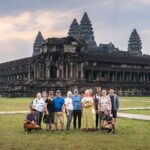
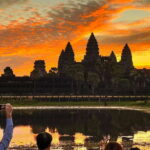
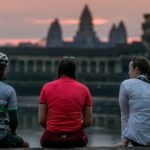
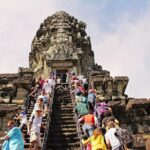
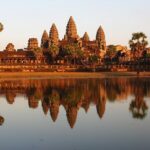
Angkor Wat is the headline, and the tour treats it like one. You get about two hours at the site, plus help from your guide for the Angkor admission ticket purchase at the entrance of Angkor Park.
Angkor Wat is described as:
- the largest monument in the Angkor group
- the best preserved
- an architectural masterpiece with careful balance, proportions, and reliefs and sculpture
You don’t just rush through it. With a bike-based day, the surrounding sense of place tends to stick with you more. Even before you get lost in carvings and viewpoints, you’re arriving as someone who has already been riding through the temple area’s atmosphere—not just walking in on a random schedule.
Practical note: admission is not included, so your day cost won’t end at the tour price. Your guide assists with buying the ticket at the entrance, which is a real time-saver.
Ta Nei’s calmer stop near the East Baray area
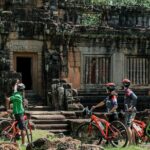
After Angkor Wat, the tour moves to Ta Nei, a late 12th-century stone temple. It’s tied to the reign of King Jayavarman VII and was dedicated to the Buddha. The location is described as being near the northwest corner of the East Baray, a large holy reservoir.
Why I like this stop: Ta Nei doesn’t feel like the “main stage” temple. It’s the kind of place where you can spot shapes and stonework without the same crush of movement. At about 30 minutes, it’s long enough to feel the temple’s character, but short enough to keep you ready for the next riding stretch.
This is also where a good guide earns their keep. When you understand what the site is connected to—Jayavarman VII and the reservoir area—it stops being just another set of towers. You start seeing the temple as part of a larger system.
You can also read our reviews of more private tours in Siem Reap
French Dam: a short break with surprisingly good payoff
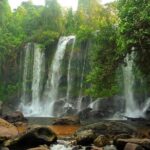
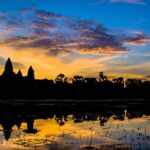
French Dam is listed as a viewing stop with big trees and water sounds. It’s only about 19 minutes, but that’s exactly the point. This is a break from full-on temple viewing, timed like a reset.
The description is simple but effective: you get a nice view, and you can hear the water mixing with bird sounds. That might sound like a small detail, but it changes the texture of the day. After stone, then riding, then another stone stop—this kind of nature pause helps you notice the environment again.
It’s also useful if your group needs a quick mental recharge before Bayon and Angkor Thom.
Bayon and Angkor Thom South Gate: faces, restoration, and pacing
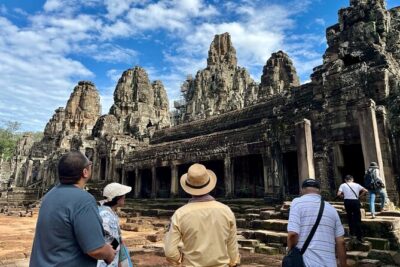
Next comes Bayon Temple (about 1 hour). Bayon is described as being built nearly 100 years after Angkor Wat. It sits at the center of a royal city, and the timing and location help explain why it feels so important even when you’re comparing it to the earlier grandeur of Angkor Wat.
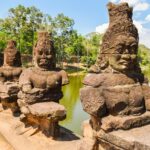
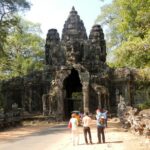
Then you ride to Angkor Thom South Gate (about 30 minutes). This south gate is highlighted as popular because it has been fully restored and many of the heads remain in place.
Here’s the practical value of how this is scheduled: you get Bayon long enough to take it in, then you move to the south gate without losing momentum. On a bike day, that pacing can feel more satisfying than spending the whole day bouncing between distant corners.
Ta Prohm: the “kingdom of trees” moment from the bike saddle
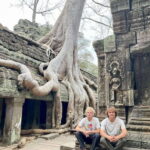
Ta Prohm is the final big temple stop at about 1 hour. It’s described as the kingdom of the Trees, and it’s famous here for being left mostly untouched by archaeologists, except for clearing a path for visitors and structural strengthening to stave off further deterioration.
What I like about finishing with Ta Prohm is the contrast. Earlier stops are about major temple identity—Angkor Wat’s masterpiece status, Bayon’s later royal city presence, and Ta Nei’s specific historical link to Jayavarman VII. Ta Prohm brings the experience back to the forest.
From the bike saddle, you’re also more likely to notice the approach—the way the temple and trees feel like part of the same scene. If you’re someone who likes your sightseeing to have a story you can feel, Ta Prohm is where the day clicks.
Price and value: how $61.75 holds up when you add what’s not included
At $61.75 per person, this tour’s value comes from what’s bundled. You’re getting:
- hotel pickup and drop-off
- English-speaking cycling guide
- mountain bike and helmet
- bottled water and snacks
That’s a lot of cost usually hidden in separate arrangements on other tours.
What’s not included:
- Angkor admission ticket (your guide helps you purchase it)
- lunch, which you pay for yourself (local restaurant meals are listed as $3–$10 per dish)
- tips for the guide
If you’re budgeting, don’t just compare to another “temple visit.” Compare to the cost of a guide plus transportation plus a bike plus snacks and water. When you add those pieces up, the price starts to look less like a bargain and more like a straightforward way to get a full active day without extra hassle.
Also, group discounts are mentioned, which can make the total even better if you’re traveling with friends.
Logistics you’ll actually care about on the day
This is listed as a private tour/activity, meaning only your group participates. For families, couples, or small groups who don’t want to wait for slower walkers or move at the pace of a larger crowd, that privacy is worth something.
It also includes mobile ticket as a feature, plus your guide assists with the Angkor ticket at the entrance. That combination helps you avoid the usual confusion when multiple people are trying to figure out entry steps at the same time.
One more practical point: the tour includes bottled water and snacks, but lunch is on your own. Build your schedule so you don’t end the day hungry without a plan.
Who should book this Angkor jungle biking adventure?
This tour fits best if you want:
- a temple day that includes real movement, not just walking from stop to stop
- a quiet-feeling route through back trails and jungle paths
- the chance to spend real time at iconic sites like Angkor Wat, Bayon, and Ta Prohm, while also seeing smaller stops like Ta Nei
It also suits travelers who like a guide who can make the history feel tied to place. Guides named Leap and Sok show up in past groups as enthusiastic and energetic, with strong storytelling and a clear focus on connecting what you’re riding past to Khmer Empire context and temple architecture.
If you have zero interest in biking 25–40 km, or you want a mostly gentle sightseeing day, you might prefer a vehicle-based temple route. But if you’re the type who gets a better travel memory from motion than from stillness, this is a great match.
Should you book it or skip it?
I’d book it if you want Angkor to feel active and personal, with back trails and a plan that balances big-name temples with calmer, shorter stops. The included bike, helmet, water, and snacks are practical, and the private format keeps the day from feeling crowded or chaotic.
I’d think twice if your budget depends on everything being included, because tickets and lunch are extra, and you’ll want to factor that in. Also be honest about your fitness: moderate cycling is part of the deal, not an optional bonus.
FAQ
How long is the Angkor Jungle Biking Adventure?
It runs about 7 to 8 hours.
How far will I cycle?
You’ll ride approximately 25–40 km.
Is pickup and drop-off included?
Yes. Pickup and drop-off from your hotel are included.
Do I need to buy Angkor admission tickets?
Yes. Admission is not included, and your guide will assist you in purchasing the ticket at the entrance of Angkor Park.
Is lunch included?
No. Lunch is not included, and you can eat at local restaurants at your own expense (listed as $3–$10 per dish).
What’s included in the tour price?
Included items are English-speaking guide, mountain bike and helmet, bottled water, and snacks, plus hotel pickup/drop-off.
What’s the fitness level requirement?
The tour is recommended for travelers with a moderate physical fitness level.
Is this a private tour?
Yes. It’s private, so only your group participates.
Are there any additional costs besides the tour price?
Yes. You should budget for Angkor admission tickets, lunch, and tips for the guide.
What’s the cancellation policy?
You can cancel for a full refund up to 24 hours before the experience’s start time.