REVIEW · SIEM REAP
Siem Reap: Angkor Wat Small-Group Day Tour and Sunset
Book on GetYourGuide →Operated by BREKSA TRAVEL · Bookable on GetYourGuide
Angkor does not do half measures. This 10-hour small-group day tour strings together the big hitters—Angkor Thom, Ta Prohm, Angkor Wat, plus a Phnom Bakheng sunset—so you get the full visual story without wasting time between sites. You’ll also stop in a local area around Preah Dak, where palm-sugar making is part of the day, not just temple photos.
What I like most is how the tour keeps you comfortable while covering a lot of ground. You get A/C transport, hotel pickup, and practical extras like cold water and towels. The second big win is the guide approach: people mention guides like Mony, Makara, Saroun, and Jan for clear explanations, plus humor, and even helping with photos.
One consideration: this is a full day in the heat, with temple climbing and walking—so it may be a hard fit if you struggle with long days. The dress rules also matter (no short skirts; keep knees and shoulders covered), and you still need to arrange the Angkor pass in advance.
In This Review
- Key things to know before you go
- A Full-Day Angkor Route That Actually Makes Sense
- Morning: Angkor Pass, South Gate, Bayon Faces, and the Royal Terraces
- Angkor Thom: the “Great Royal City” feeling
- Terrace of Elephants and the royal complex
- A heat-smart rhythm
- Ta Prohm and Preah Dak: Jungle Roots, Then Palm Sugar Lessons
- Ta Prohm: why the atmosphere matters
- Lunch, then a real local stop
- Angkor Wat in the Afternoon: Vishnu, Bas-Reliefs, and Moat Views
- What you should look for at Angkor Wat
- Why a guide matters here
- Phnom Bakheng Sunset Climb: The Finale You Plan Around
- Value, Price, and Comfort: Is This a Good Deal?
- Who this tour suits best
- Practical Tips That Make the Day Easier
- Should You Book This Angkor Small-Group Day Tour?
- FAQ
- What time is hotel pickup?
- Is the Angkor pass included in the tour price?
- How long is the tour?
- What temples are included?
- Do you stop at a local market or village?
- Is lunch included, and can it be vegetarian?
- What’s included for comfort during the day?
- What is the sunset plan?
- What should I bring and wear?
- Is the tour suitable for children or seniors?
Key things to know before you go
- Small group size (up to 14): easier pacing and more space for questions and photos.
- Pass-first morning flow: you’ll head to get the Angkor pass before most temple time starts.
- Angkor Thom highlights: South Gate, Bayon faces, Terrace of Elephants, Phimeanakas, Terrace of Leper King, and Baphoun.
- Ta Prohm in original jungle mood: big roots and overgrowth, used as a film backdrop.
- Local lunch plus village stop: a meal at a local restaurant, then Phum Preah Dak for palm cake and palm sugar making.
- Sunset at Phnom Bakheng: a climb that turns the whole day into a timed finale.
A Full-Day Angkor Route That Actually Makes Sense
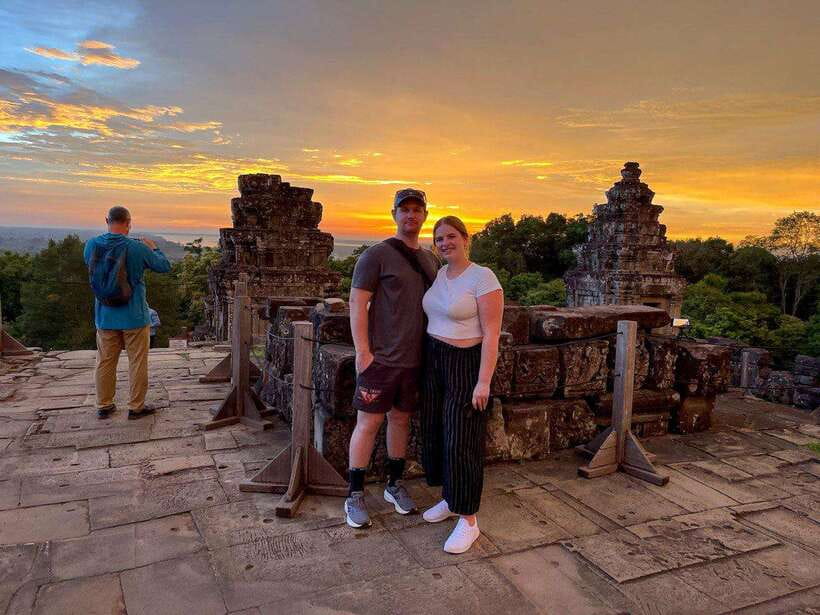
This tour works because it’s built like a story, not a checklist. You start with the walled kingdom feel of Angkor Thom, then shift into the tangled atmosphere of Ta Prohm, and finish with Angkor Wat—the place most people came for. Finally, you cap it with sunset from Phnom Bakheng, where the temples and jungle start looking like a living postcard.
The schedule is also practical for one-day timing. Hotel pickup happens in the morning window (between 8:00 and 8:30 a.m.), and the day is designed so you’re moving while sites are opening and before the worst crowd pressure hits. Guides can also adjust pacing around conditions like light and heat, which matters when you’re climbing and walking for hours.
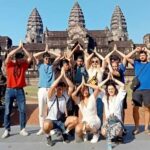
One more thing: you’re not just dropped off. The tour includes a professional English-speaking guide and a driver, so you can understand what you’re seeing—why certain carvings exist, what the symbols mean, and how the temple layouts connect. People repeatedly praise guides for clear explanations and for being fun to travel with, including photo-friendly help.
You can also read our reviews of more evening experiences in Siem Reap
Morning: Angkor Pass, South Gate, Bayon Faces, and the Royal Terraces
The morning starts efficiently. After pickup, the first step is securing the Angkor pass (not included in the base price). If you already have your pass, you save time; if not, you’ll purchase it first so you don’t miss the temple portion.
Angkor Thom: the “Great Royal City” feeling
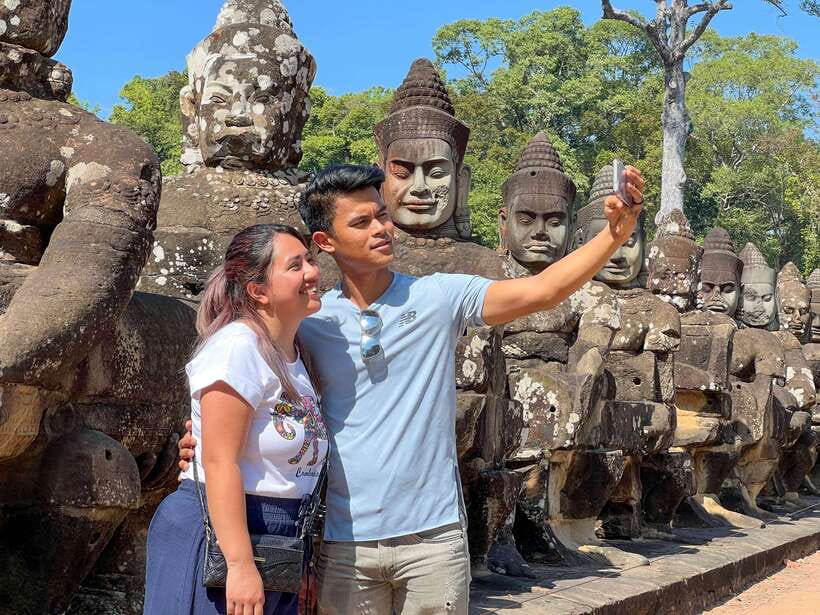
You’ll head into Angkor Thom, the 12th-century fortified city built by King Jayavarman VII. At the South Gate, look for the large statue of Avalokiteshvara—the kind of detail that shows up in pop-culture imagination, including the Tomb Raider connection people bring up.
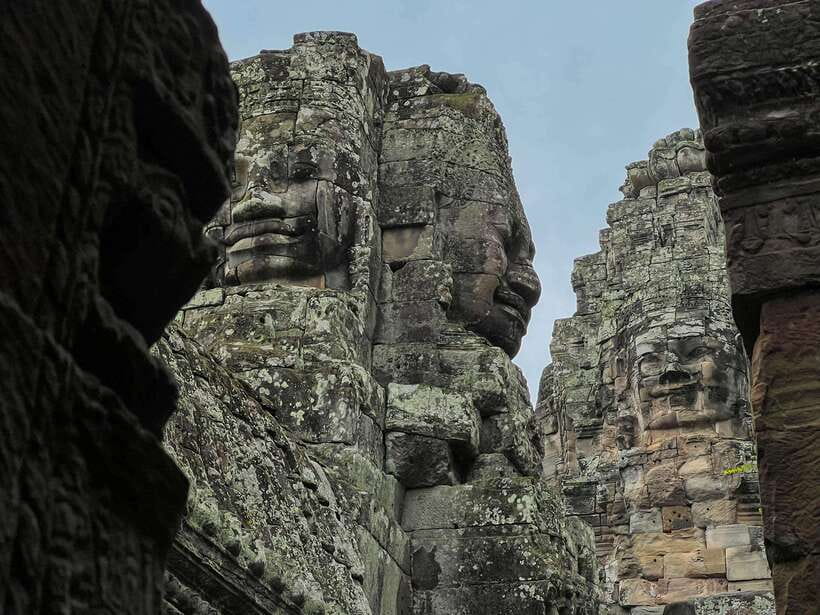
Then comes Bayon, the temple that stops most first-timers in their tracks. It’s a Buddhist-style site with hundreds of stone faces. The faces aren’t just decoration. They’re part of the temple’s identity, and with a guide explaining the layout, it’s easier to understand why the building feels so “watchful” when you’re in the courtyards.
Terrace of Elephants and the royal complex
Next you’ll walk through the royal and ceremonial spaces inside Angkor Thom, including:
- Terrace of Elephants, tied to palace-era storytelling and royal display
- Phimeanakas
- Terrace of Leper King
- Baphoun temple, described here as the largest Hindu temple in Angkor Thom
This set is worth it because the terraces and surrounding structures show how power expressed itself at Angkor. If you only see Angkor Wat, you miss how the broader complex functioned as a political and spiritual stage.
A heat-smart rhythm
Your time inside temples is balanced with transport breaks. Reviews repeatedly mention things like cold towels and steady water supply, and that can make a difference when it’s hot enough to feel relentless. If you get a guide like Mony or Saroun, you’ll likely feel that extra attention—one of the common themes is keeping the day manageable while still hitting the key stops.
Ta Prohm and Preah Dak: Jungle Roots, Then Palm Sugar Lessons
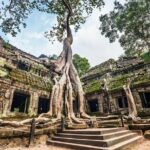
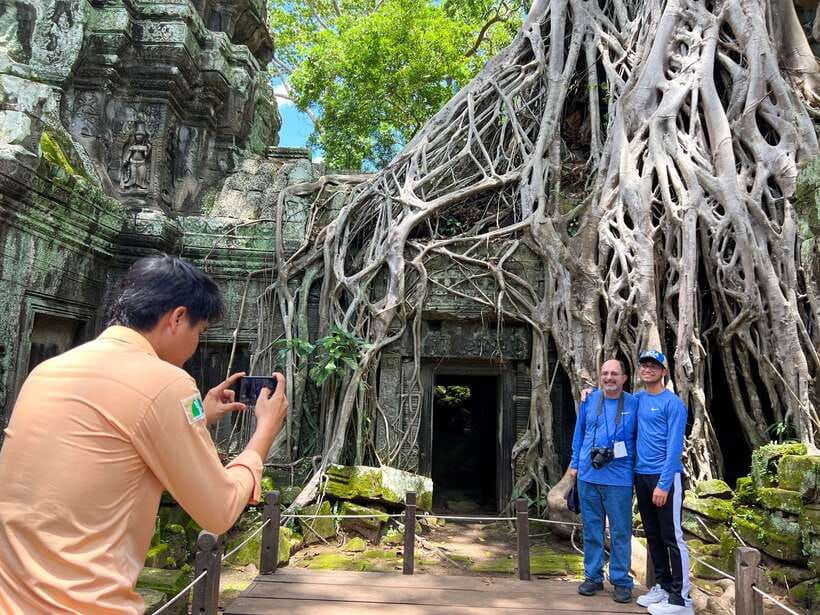
After Angkor Thom, the route changes mood fast. You drive to Ta Prohm, the famous jungle temple kept in an original state with major tree growth and huge roots swallowing parts of the stone. This is one of those sites where the “ruin” doesn’t feel empty. It feels alive.
Ta Prohm: why the atmosphere matters
Ta Prohm is also tied to film—people often mention Tomb Raider—but the real value is how you experience time. The roots create natural framing, and the stonework becomes part of a moving ecosystem. With a guide pointing out what to look for, you’re more likely to notice patterns in carvings and construction rather than only the dramatic visuals.
Lunch, then a real local stop
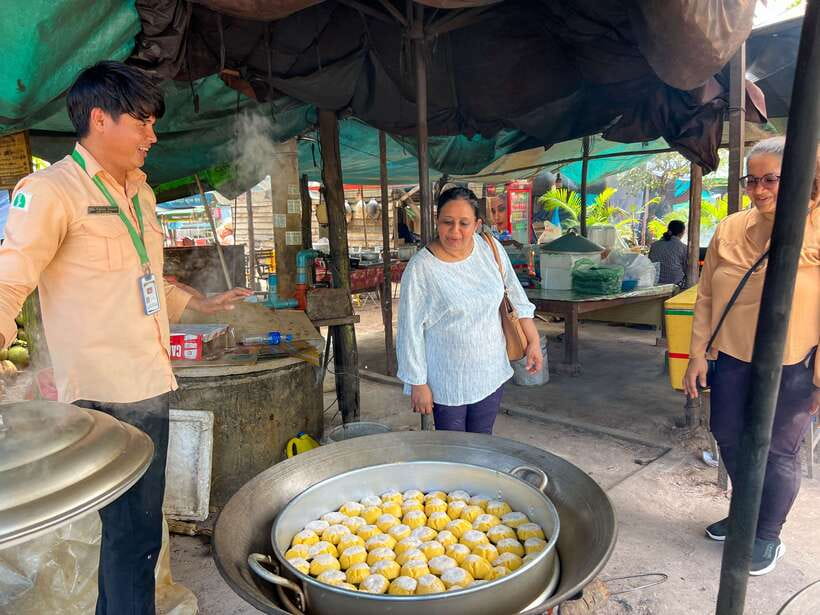
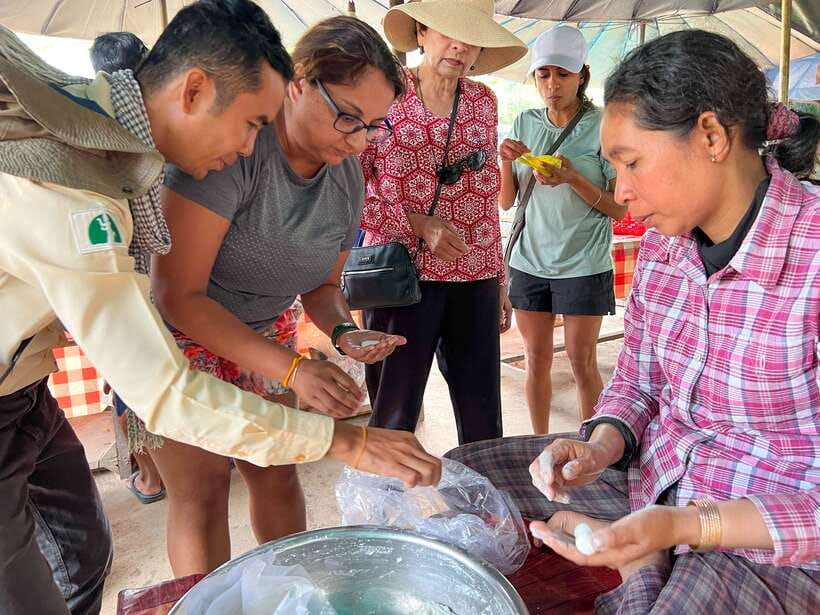
You’ll have lunch at a local restaurant, cooked by a local chief, with a vegetarian option if you tell the operator ahead of time. After lunch, you head to Phum Preah Dak, an authentic village stop.
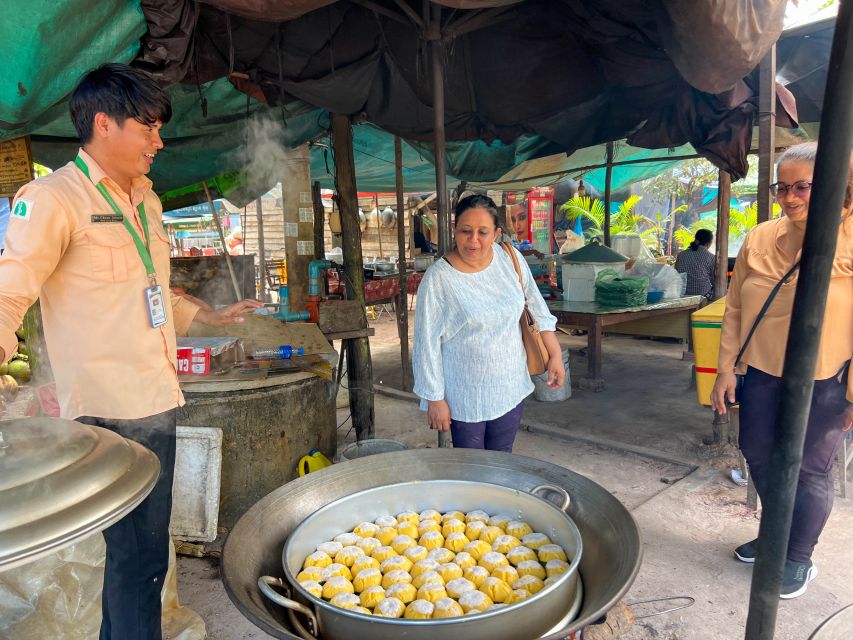
This is the most “Cambodia beyond temples” part of the day. You can watch and learn how locals make palm cake and palm sugar. It’s not a long production show; it’s more like meeting the process behind something you’d usually buy wrapped and boxed. If you like travel that adds texture—smells, tastes, and everyday craft—this is a great fit.
Angkor Wat in the Afternoon: Vishnu, Bas-Reliefs, and Moat Views
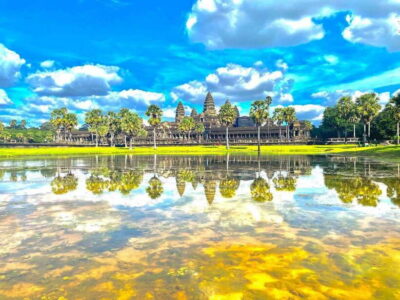
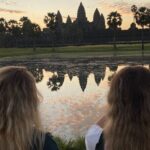
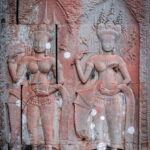
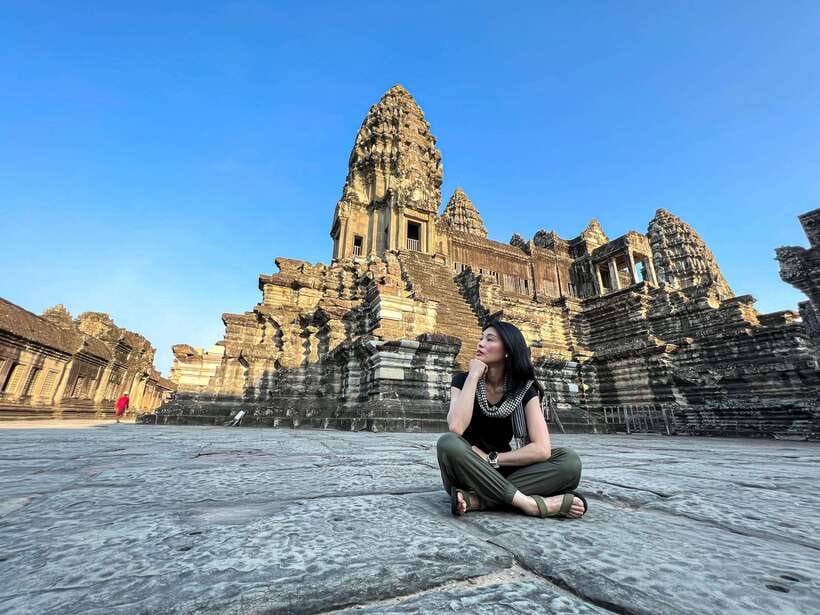
In the afternoon, you get to Angkor Wat, the largest sacred building on the planet and an icon of Khmer civilization. It’s dedicated to the Hindu god Vishnu, and the sheer density of decoration is the point—this isn’t temple art spaced out for visitors. The walls and galleries are covered in carving detail.
What you should look for at Angkor Wat
Here’s how I’d frame the highlights you’ll likely focus on during your visit:
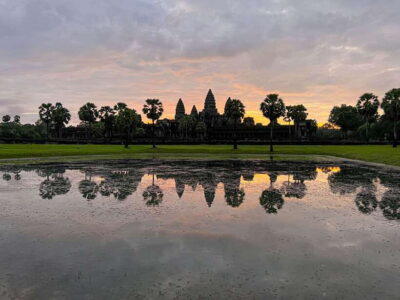
- The giant moat around the complex, which shapes how you enter and view the main temple
- The five towers, tied to the Cambodian flag motif
- The longest bas-relief in the world, a major reason Angkor Wat is such a repeat-visit magnet
Also, because you’re going later in the day, light can change how the stone reads. Shade helps for photos, and you’re more likely to feel the place’s scale rather than just sprint through it.
Why a guide matters here
Angkor Wat can overwhelm you if you don’t have a thread to follow. With someone leading, you’ll get context fast: how the complex is laid out, what the carvings represent, and why certain sections are worth the extra steps. Reviews frequently mention guides being great photographers too—so if you want clean angles without awkward guesswork, this tour format helps.
Phnom Bakheng Sunset Climb: The Finale You Plan Around
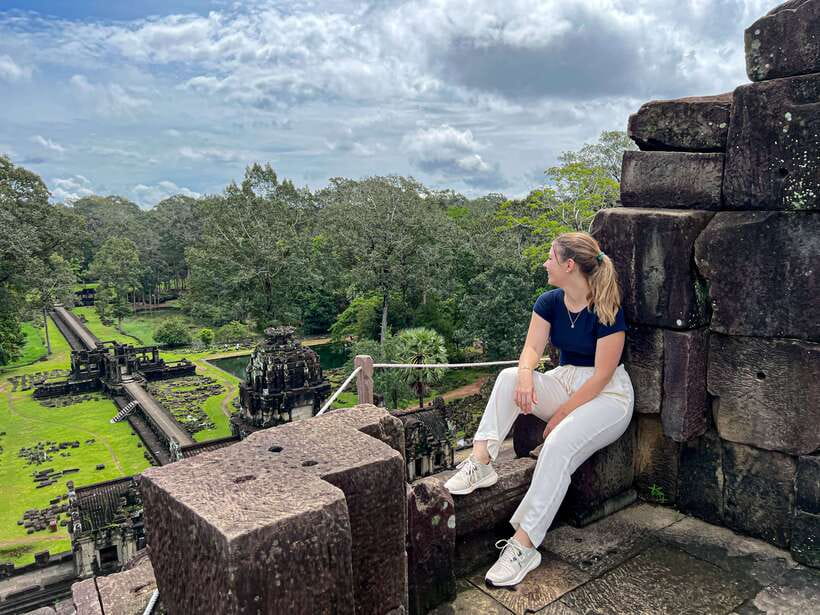
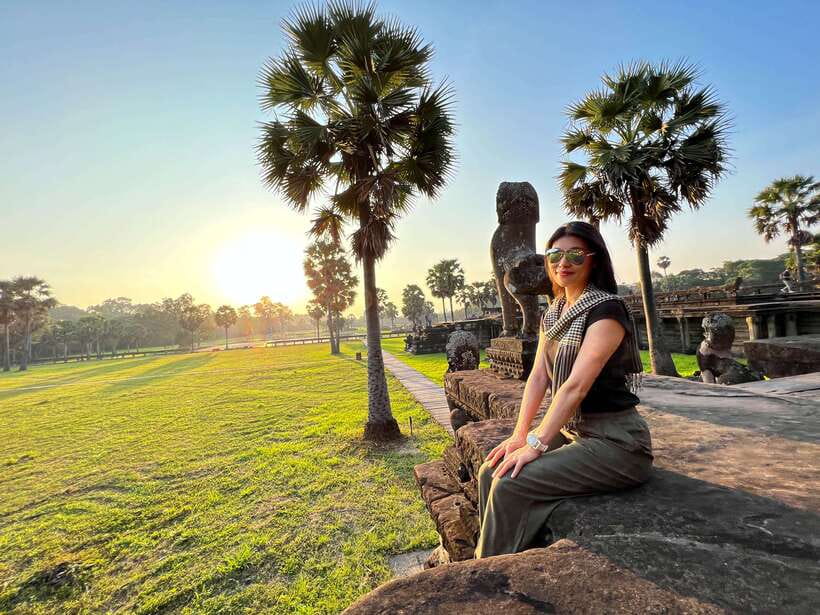
The day ends with sunset from Phnom Bakheng mountain. This is where your timing matters and where the tour earns its name. The climb takes effort, but it’s also a payoff moment: you’re moving from bright temple walls to a skyline view with jungle texture filling the background.
Sunset here also changes the way Angkor feels. In daylight, carvings show their edges. At sunset, you start seeing depth—layers of trees, temple silhouettes, and the long geometry of the complex. People often describe guides as keeping things smooth when timing is tight, and that’s important because sunset moments are short.
One caution: bring the right clothing and expect uneven steps. Wear supportive shoes. If your legs get tired easily, this final climb is the piece you’d want to consider first.
Value, Price, and Comfort: Is This a Good Deal?
The tour price is listed as $28 per person, with Angkor pass at $37 per person not included. So the real starting point for most people becomes $65 total, depending on your pass arrangement.
Is that good value? For a one-day hit of Angkor Thom + Ta Prohm + Angkor Wat + a village stop, plus hotel pickup/drop-off, English guide, A/C transport, bottled water, towels, and lunch, it stacks up well—especially if you want a schedule that doesn’t collapse into chaos.
Where you get extra value is in how the tour is managed. Reviews are consistent about comfort upgrades like ice-cold towels and plenty of water, plus guides who explain clearly and help with photo spots. Names that come up often include Mony, Makara, Saroun, Sutin, Veasna, and Sam Ath, with praise for humor, patience, and the ability to keep the day organized even when conditions shift.
Who this tour suits best
This is a strong match if you want:
- One full day covering the main Angkor sights
- A guide-led experience where explanations are part of the value
- A sunset moment, not just a rushed photo stop
It may not be ideal if you:
- Don’t do well with long walks and heat
- Need a very relaxed pace
- Are traveling with someone who doesn’t meet the stated comfort range (the tour is not suitable for children under 10, and it notes people over 70 may be a poor fit)
Practical Tips That Make the Day Easier
Before you go, pack like you’re doing outdoor work, not a museum visit. The tour recommends:
- Sunglasses
- Sun hat
- Umbrella
- Sunscreen
- Insect repellent
- A camera if you want to take advantage of photo guidance
Dress rules matter here. You should plan for covered knees and shoulders and avoid short skirts. This isn’t just to follow instructions—it keeps you comfortable while moving through hot, dusty areas and temple entrances.
Also, wear shoes you can trust. Several comments emphasize comfort for walking, and with a sunset climb involved, your feet will be your limiting factor before anything else.
Should You Book This Angkor Small-Group Day Tour?
If your goal is a structured, high-value Angkor day without the stress of coordinating everything yourself, I’d book it. The combination of Angkor Thom, Ta Prohm, Angkor Wat, and sunset at Phnom Bakheng is the classic Angkor arc, and the included village stop at Phum Preah Dak adds a Cambodia layer that most temple-only days skip.
I’d think twice only if you want a slow, minimalist day or you’re sensitive to heat and climbing. This is a full day. Bring sun protection, good shoes, and a patient mindset, and you’ll get a lot out of it.
If you want the most comfortable experience, aim for the small-group cap (up to 14). That size tends to keep the day personal, especially when the guide is helping you time photo stops and explain what you’re seeing in plain language.
FAQ
What time is hotel pickup?
Pickup is included, and it usually happens between 8:00 a.m. and 8:30 a.m. Please wait in the hotel lobby about 10 minutes before your scheduled pickup time.
Is the Angkor pass included in the tour price?
No. The Angkor temple pass costs $37 per person and is not included. You are required to have it before the tour starts.
How long is the tour?
The tour runs for about 10 hours.
What temples are included?
You’ll visit Angkor Wat, Angkor Thom (including Bayon, Baphoun, and the Terrace of Elephants, plus Phimeanakas and the Terrace of Leper King), and Ta Prohm.
Do you stop at a local market or village?
Yes. You’ll visit a local market area and the village of Phum Preah Dak, where you can learn about making palm cake and palm sugar.
Is lunch included, and can it be vegetarian?
Lunch is included, and there is a vegetarian option. Let the operator know in advance if you want vegetarian food.
What’s included for comfort during the day?
The tour includes bottled water and towels, plus transportation with A/C.
What is the sunset plan?
You’ll watch the sunset from the top of Bakheng mountain (Phnom Bakheng) and then you’ll be transferred back to your hotel.
What should I bring and wear?
Bring sunglasses, sun hat, umbrella, sunscreen, and insect repellent (camera is useful too). You should keep knees and shoulders covered; short skirts are not allowed.
Is the tour suitable for children or seniors?
Children under 10 are not suitable for the small-group option. The tour also notes that people over 70 may not be a good fit.