REVIEW · SIEM REAP
Seat-In-Coach: Small Circuit tour with Sunrise at Angkor Wat
Book on GetYourGuide →Operated by Angkor T.K. Travel & Tours · Bookable on GetYourGuide
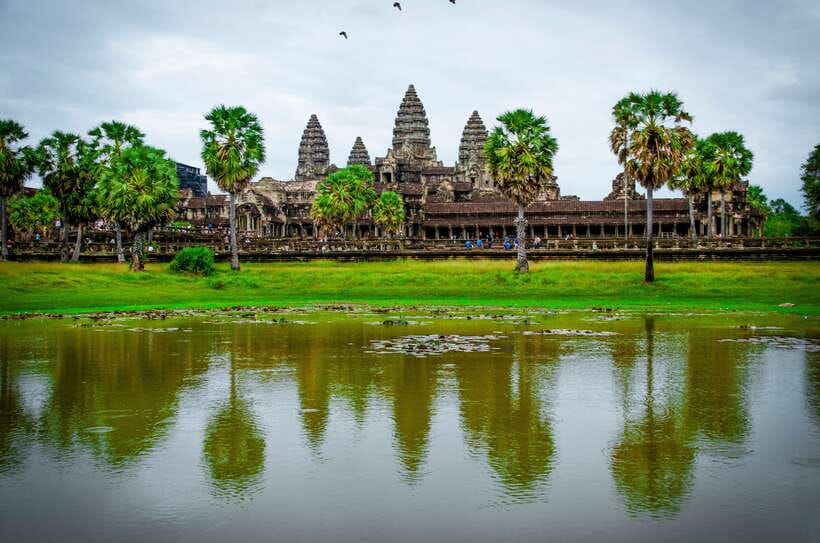
You’ll start before dawn. This Angkor Wat sunrise circuit strings together the biggest hits: Angkor Wat, Bayon’s face towers, and Ta Prohm’s jungle ruins.
I like the early timing that helps you catch the light, plus the way the tour keeps moving without turning your morning into a long slog. One drawback to plan for: the temple pass is extra (and the sites are strict about dress, so bring the right clothes).
In This Review
- Key Things You’ll Notice on This Sunrise Circuit
- Getting to Angkor Wat Before the World Wakes Up
- Temple Pass and Dress Code: The Details That Can Trip You Up
- Angkor Wat at First Light: What You’re Actually Paying For
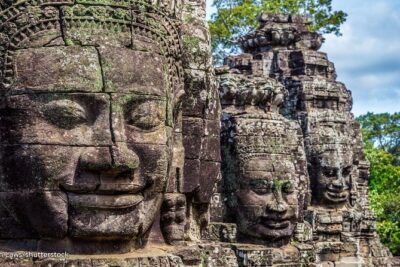
- Angkor Thom and Bayon’s 216 Stone Faces
- Ta Prohm: Jungle Vines, Tomb Raider Echoes
- How the Tour Pace Works From Sunrise to Noon
- Price and Value: $30 Tour Plus the Temple Pass
- Practical Tips That Make Sunrise Tours Work Better
- Should You Book This Angkor Wat Sunrise Circuit?
- FAQ
- What time does pickup happen for this Angkor Wat sunrise tour?
- How long is the tour?
- Which temples are included in the visit?
- Is the Angkor Temple Pass included in the price?
- What is included in the tour besides the guide?
- What language is the guide?
- What should I wear to enter the temples?
- Is there free cancellation?
Key Things You’ll Notice on This Sunrise Circuit
- Pickup window is 4:20–5:00 AM, so you’re truly building your day around the sky, not a late start
- Angkor Wat first, then Angkor Thom and Bayon with the full 216 faces count
- Ta Prohm stops the pace with jungle-vine drama, including the Tomb Raider familiarity
- Small-circuit, personal feel, and guides often help with photo angles and timing
- You finish at 12:00 PM, which means you get your afternoon back in Siem Reap
Getting to Angkor Wat Before the World Wakes Up
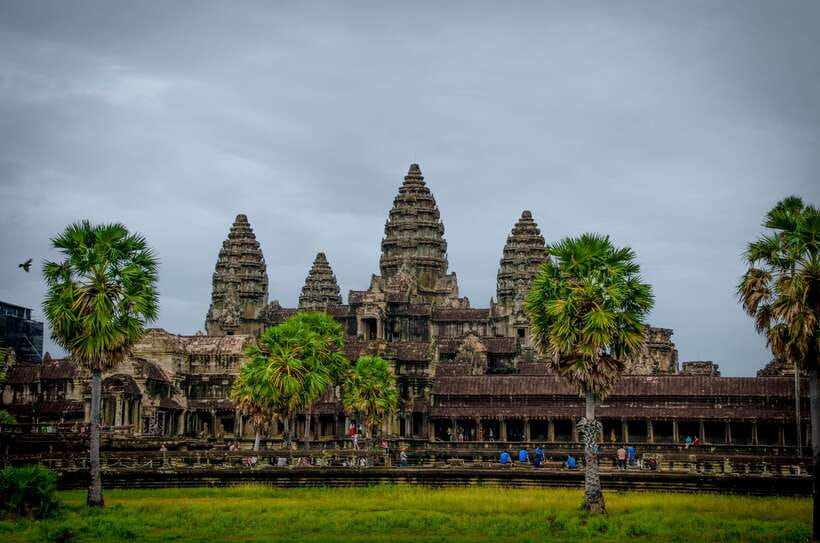
This tour is built around an early pickup from your hotel lobby, typically between 4:20 AM and 5:00 AM. That means you’ll trade a normal morning sleep-in for the best part of Angkor: quiet, cooler air, and that pre-crowd sense that you’re arriving on purpose.
Transportation is by mini van or tour bus, and the ride matters more than you might think. At these hours, you want to be with a group that leaves on time. You’ll also get a refreshment drink and a cold towel, which is a simple touch but it helps when you step out into damp morning air.
A big part of the experience is mental, not just visual. The early start sets you up to see Angkor Wat as a living place, not just a postcard. You’re moving from dark streets to stone towers while everything feels newly revealed.
You can also read our reviews of more tours and experiences in Siem Reap


Temple Pass and Dress Code: The Details That Can Trip You Up
The tour price is $30 per person, but the Angkor Temple Pass is not included. The pass is listed separately at $37 per person. In practice, that means your real total cost is closer to the sum of both. If you’re comparing options, don’t only compare the headline tour fee.
Plan your outfit before you go. For Angkor temple entry, you need:
- Long pants that cover the knee
- A shirt that covers the shoulders
This is not negotiable, and it’s the kind of rule that can ruin your morning if you show up in shorts and a tank top. Bring a light layer you can live in during hot hours later.
One more practical note: sunrise means your photos will start with low light and end with bright glare. If you rely on camera settings or want to swap lenses, you’ll be happier if your bag stays simple and reachable.
Angkor Wat at First Light: What You’re Actually Paying For
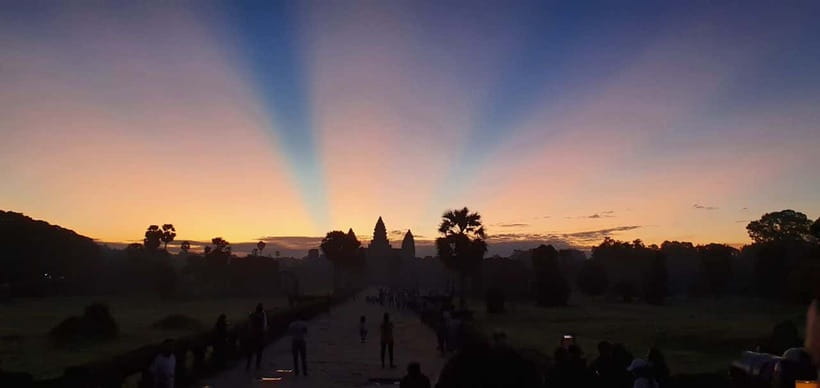
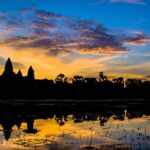
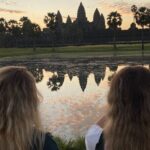
The main event is sunrise at Angkor Wat, the most ancient and respected temple complex in the Angkor area. Angkor Wat was built in the first half of the 12th century by King Suryavarman II, and that history shows up in the structure. Even if you only know the site from photos, seeing it in person is different because the scale is overwhelming in a good way. The towers rise over you, and the symmetry hits harder when you’re standing inside the geometry.
This tour’s value is that it gets you there at the right moment. Angkor Wat doesn’t look like itself at midnight. It also doesn’t feel calm at mid-morning. The sweet spot is early light plus manageable crowd pressure.
You’ll enter with your guide after you purchase your temple pass. Then it’s time for temple time: walking, taking it in, and trying to understand how the place was designed to guide your eyes. The guide’s job here isn’t just to narrate. It’s to help you find the viewing areas that make the sunrise feel worth the alarm clock.
You’ll also get a sense of why Angkor Wat is so famous for balance and composition. At sunrise, those lines seem to line up with the sky. Later, during the same day, you’ll notice the stones and shadows change and the mood goes from gentle to harsh.
Angkor Thom and Bayon’s 216 Stone Faces
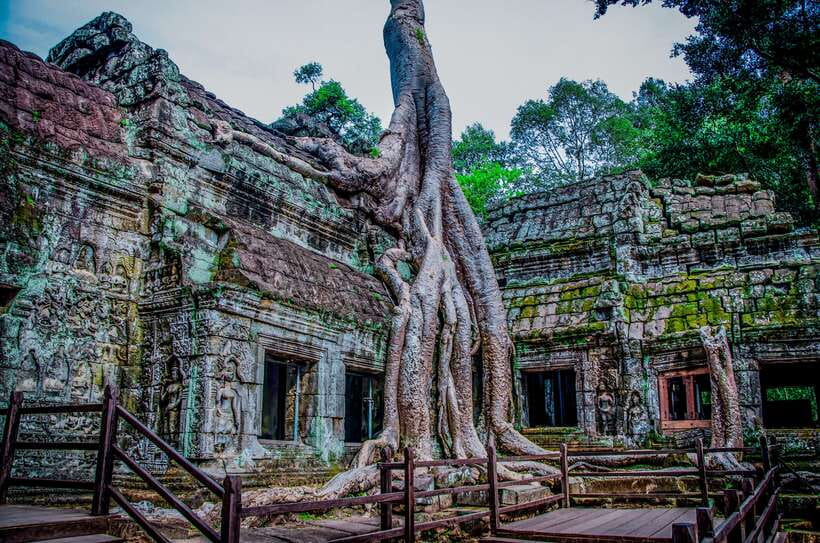
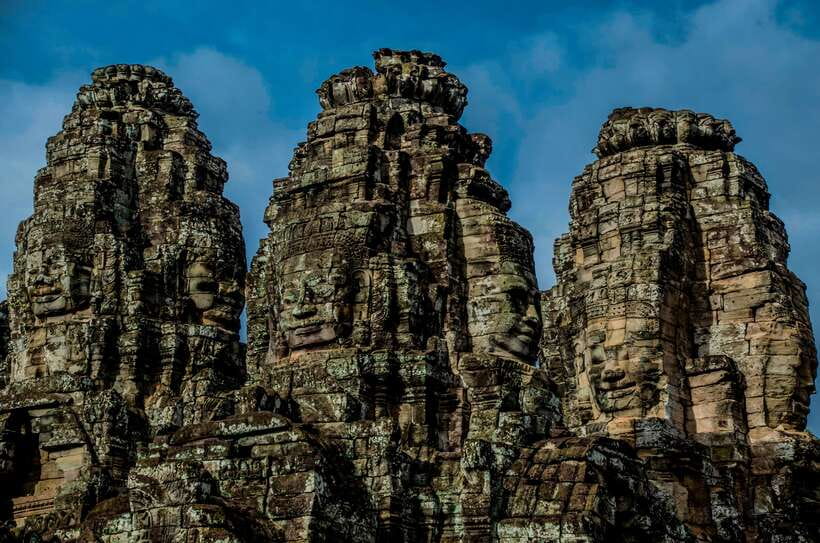
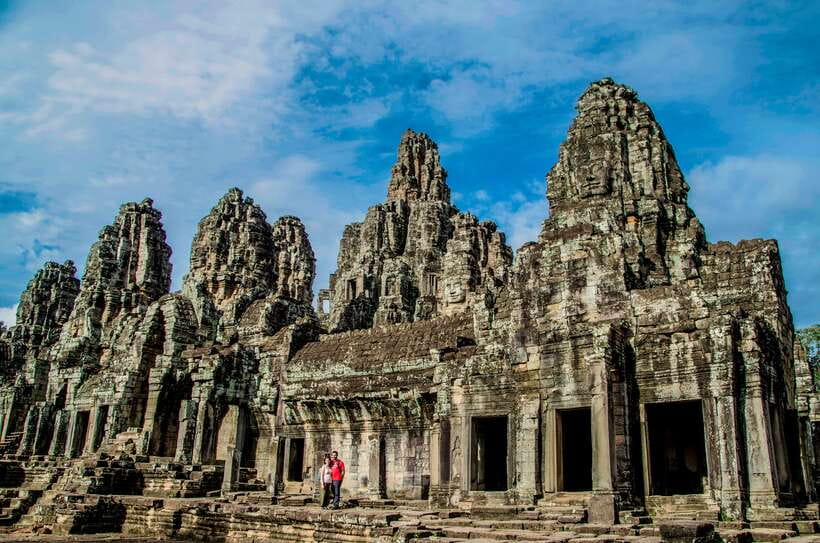
After Angkor Wat, the itinerary moves into the Angkor Thom complex, and your next key stop is Bayon. Bayon was built in the latter part of the 12th century by King Jayavarman VII, and it’s instantly recognizable because of the giant stone faces carved into the towers.
Here’s the detail you’ll want to keep in your head while you walk: Bayon has 54 towers with 4 faces on each tower, making 216 faces in total. It’s one thing to hear the number. It’s another to look up and feel how many directions those expressions seem to watch you from.
What I like about Bayon is that it’s not just a single view. You keep getting new angles as you circle, and the faces feel different depending on where the light hits. It’s also a crowd magnet, so your guide’s timing helps. If you arrive when the tour group flow is still settling, you can spend more moments looking, rather than only posing.
Also, this is a stop where a good guide can keep it from becoming a checklist. Some guides focus on the religious and historical side, while others keep things light and practical. Either way, the stone work does most of the talking.
Ta Prohm: Jungle Vines, Tomb Raider Echoes
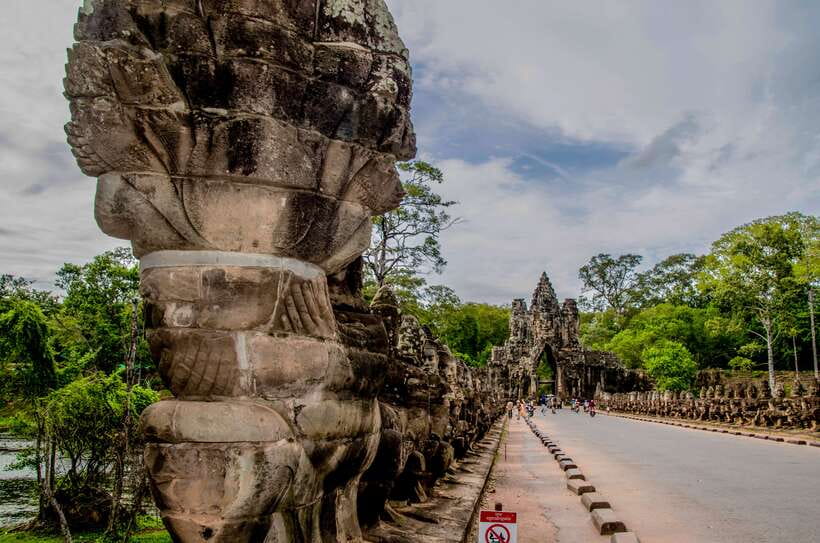
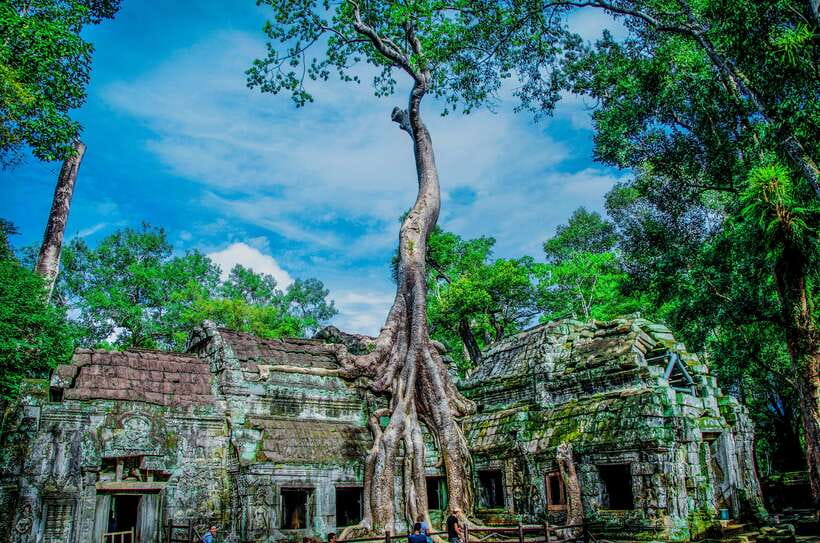
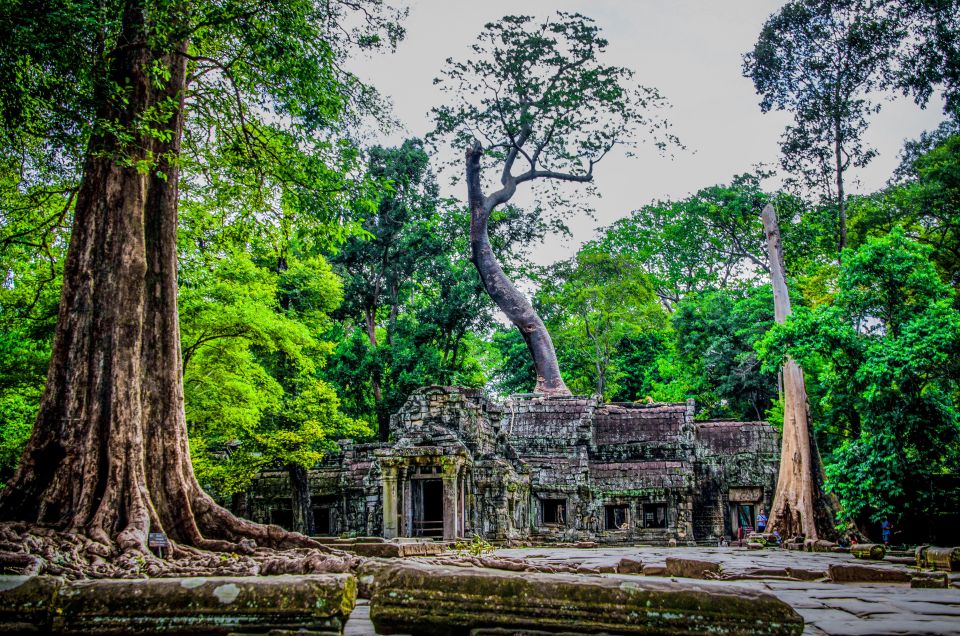
Next up is Ta Prohm, often called the jungle temple because its stone structures are entwined with vines and roots. This is the stop many people recognize from Angelina Jolie’s Tomb Raider scene. Even if you don’t care about the movie, Ta Prohm has a strange beauty: it looks half reclaimed by nature, half preserved by human stubbornness.
What you’ll feel here is contrast. Bayon is geometric and face-focused. Ta Prohm feels messy in a controlled way. You’ll be walking through a site where the setting is part of the design, and you’ll spend a lot of time glancing upward, sideways, and occasionally back at a frame you didn’t notice five minutes earlier.
The main drawback is that Ta Prohm is exposed and hot. The experience is worth it, but don’t underestimate how tiring it can be when the morning turns into midday light. Your drink and cold towel help, but you’ll still want to pace yourself and take short breaks when you can.



How the Tour Pace Works From Sunrise to Noon
The tour runs for 7 hours, with pickup early and a finish at 12:00 PM, followed by a transfer back to your hotel. That time window is why this circuit works. You get the big names—Angkor Wat, Bayon, Ta Prohm—without spending a full day doing slow wandering.
The pace is action packed by design. You’ll likely get:
- a guided approach to the major areas
- enough time at each temple to look around and take photos
- room to step away from the flow when you find a calmer corner
From past guest feedback, guides like Touch, Phylom (also seen as Phyrom Hoeum), SoK, and Kim are often praised for photo timing and finding good viewpoints. Even when guides keep explanations shorter, the best ones still make your photos better by steering you toward better angles and less congested sight lines.
There is a trade-off. Some people want more background and deeper storytelling; others prefer quick context and more independent time. If you’re the type who wants long lectures about symbolism, you might find the guidance more practical than academic.
And English can be a factor. A few comments point out that some guides communicate more easily than others. If you’re counting on very detailed explanations, you may want to ask a couple of direct questions during the day and see how it lands.
Price and Value: $30 Tour Plus the Temple Pass
Let’s do the math the honest way. The tour is $30 per person, and the one-day Angkor Temple Pass is $37. So you’re effectively paying about $67 total per person for the sunrise circuit entry and guided morning.
That’s not cheap in absolute terms, but for Angkor it’s reasonable because you’re buying three things:
- early access timing (the hardest part to DIY well)
- transport across multiple temple zones
- an English-speaking guide who can reduce confusion and help you plan your views
If you try to do this on your own, you still pay for the pass, and you still have to figure out transportation and sunrise logistics. You can DIY, but sunrise at Angkor is where timing mistakes cost you the experience. This tour sells you the correct sequence.
Also, you’ll spend less energy coordinating. With a tight circuit, you focus on what’s in front of you instead of what’s in your phone.
If flexibility matters, the booking is offered with free cancellation up to 24 hours in advance and a reserve now & pay later option. That’s useful if you’re still checking weather or adjusting your Siem Reap schedule.
Practical Tips That Make Sunrise Tours Work Better
These are small things that can quietly improve your morning:
- Wear layers. Pickup is before sunrise, and mornings can feel cooler than mid-day. Bring something you can peel off later.
- Stick to the dress code early. Don’t plan to improvise near the entrance. Long pants and shoulder coverage are required.
- Plan for crowds at Bayon and Ta Prohm. Those are famous stops, so you’ll want your guide to help you move around the biggest flow.
- Take photos in bursts. Angkor isn’t a single photo spot. You’ll have better results if you do short shooting sessions and then step back to look.
- Bring extra water thinking ahead. The tour includes a drink, but the temples get hot fast once sunrise turns into full light.
If you’re serious about photos, pick a couple of moments you want to nail: one at sunrise, one for Bayon’s face towers, and one for Ta Prohm’s vine framing. The tour timing is built to help with these targets.
Should You Book This Angkor Wat Sunrise Circuit?
I’d book this if you want a high-value morning that hits Angkor Wat, Bayon, and Ta Prohm without wasting your day. The early pickup, the structured flow, and the photo-friendly timing make it a strong choice for first-timers and for people with limited time in Siem Reap.
You might skip or reconsider if:
- you’re deeply focused on long, detailed temple lectures
- you hate very early starts
- you’re trying to keep costs ultra-low after factoring in the $37 temple pass
For most people, this is a smart way to do Angkor in one go: not rushed enough to feel pointless, and structured enough that you’re not guessing your way through sunrise.
FAQ
What time does pickup happen for this Angkor Wat sunrise tour?
Pickup is from your hotel lobby between 4:20 AM and 5:00 AM.
How long is the tour?
The tour lasts 7 hours.
Which temples are included in the visit?
The tour includes Angkor Wat, the Angkor Thom complex (including Bayon), and Ta Prohm.
Is the Angkor Temple Pass included in the price?
No. The Angkor Temple Pass is not included. The listed price is $37 per person.
What is included in the tour besides the guide?
You get mini van or tour bus transportation, an English-speaking guide, plus a refreshment drink and cold towel.
What language is the guide?
The guide is English-speaking.
What should I wear to enter the temples?
You need long pants covering the knee and a shirt covering the shoulders.
Is there free cancellation?
Yes. There is free cancellation up to 24 hours in advance for a full refund.