REVIEW · SIEM REAP
Private Day Trip to Angkor Temples with Expert Guide
Book on Viator →Operated by Guide Chauffeur Cambodge · Bookable on Viator
Angkor is easier with the right guide. This private Siem Reap day trip is built for people who want the big moments without the hassle: sunrise at Angkor Wat and a dedicated guide who can explain what you’re seeing as you go. The best part is that the visit feels paced for real humans, not factory timing, and the guiding style matters a lot when you’re walking through centuries of stone.
I also like that the day hits three temples with enough time to notice details—Angkor Wat, Bayon, then Ta Prohm—so you’re not just rushing for photos. One thing to keep in mind: temple admission fees are not included and you’ll need to plan for the temple ticket cost per person on top of the tour price.
In This Review
- Key highlights at a glance
- Private Angkor temples: why “expert” matters more than you think
- Price and value: what you’re paying for
- The rhythm of the day: 8:30 start and a tight, sensible route
- Stop 1: Angkor Wat at sunrise, and the Vishnu-to-Buddha story
- Stop 2: Bayon in Angkor Thom, with time to actually notice faces
- Stop 3: Ta Prohm and the living drama of kapok and strangler figs
- Getting around smoothly: air-conditioned mini van and included parking
- What the guide brings: pacing, teaching, and flexible scheduling
- Who should book this private Angkor temples day?
- Should you book this private Angkor temples tour?
- FAQ
- FAQ
- How long is the private Angkor temples day trip?
- Is pickup included from Siem Reap?
- Which temples are included in the visit?
- Are temple admission tickets included in the price?
- Is this a private tour or shared group?
- What is the cancellation policy?
Key highlights at a glance
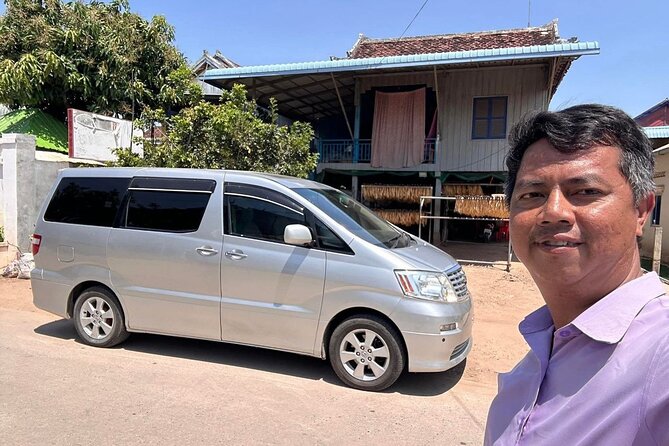
- Private mini van with air-conditioning and parking included, so you stay comfortable between sites
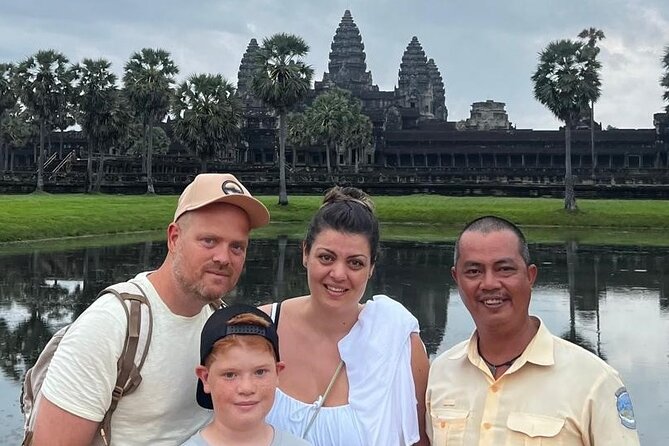
- Expert guide support (including friendly, punctual guiding from Toma) that keeps the day clear and simple
- Angkor Wat at sunrise plus context for what you’re looking at
- Angkor Thom stop at Bayon with time to slow down and read the carvings
- Ta Prohm’s famous roots with a focused chunk of time in the jungle-surrounded ruins
- Temple tickets cost extra (plan $37 per person), since they’re not included
Private Angkor temples: why “expert” matters more than you think
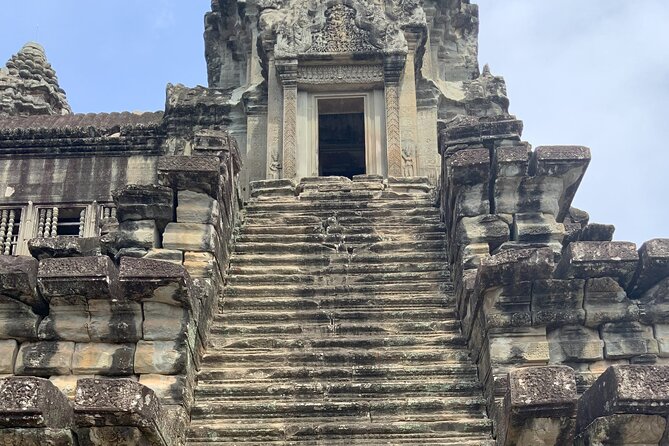
Angkor can feel overwhelming fast. Big gates. Crowds. Signs pointing everywhere. If you show up cold, you end up scanning for the next highlight and missing the meaning of what’s in front of you.
That’s why I’m a fan of this private format. You’re not stuck behind a group chant or waiting for someone to catch up. With your own guide and a mini private van, you get a clean flow through the day, and you can ask questions as you move. The human part matters just as much as the sites themselves.
The guidance from Toma stands out in the way it’s described: punctual, smiling, and genuinely flexible when schedules shift or pacing needs to change. You also get the benefit of someone who can translate the site into plain language—especially helpful when the temples are tied to Khmer kings, changing religious beliefs, and architectural choices that don’t always make sense at first glance.
You can also read our reviews of more guided tours in Siem Reap


Price and value: what you’re paying for
At $129 per person for about 5 hours 30 minutes, you’re paying for three things: private transport, a guide, and a structured temple route. That’s usually where the value lives in Angkor—time saved and confusion avoided.
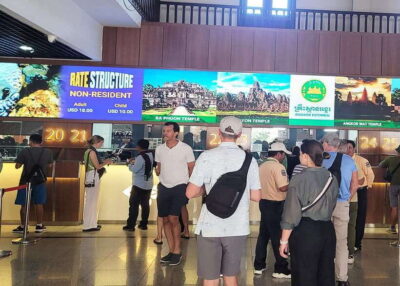
Here’s the catch that affects your total budget: temple fees are not included. The tour lists a temple ticket cost of $37 per person, so your day’s total will be the tour price plus that admission amount.
Is that still a fair deal? In my view, yes—because the alternative is typically either:
- doing it independently and paying more for transport/time losses, or
- joining a shared group and losing control of pace and questions.
Private doesn’t just mean comfort. It often means fewer headaches and a better match between what you want to see and how fast you want to see it.
The rhythm of the day: 8:30 start and a tight, sensible route
The tour starts at 8:30 am. That timing matters because sunrise is mentioned for Angkor Wat, and the day is structured to make that early-morning moment count. Instead of showing up late and treating sunrise as a myth, you’re set up to get the best light and a calmer approach.
You also get a clear schedule by stop:
- Angkor Wat: 2 hours
- Bayon Temple: 2 hours
- Ta Prohm: 1 hour 30 minutes
That adds up to about 5.5 hours on site. It’s long enough to actually look, not long enough to fully burn out. The “consideration” here is practical: it’s a compact day, so you’ll want comfortable shoes and the mindset that this is a walking and standing-focused visit, not a sit-and-sip excursion.
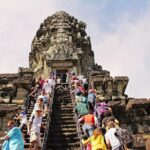
Stop 1: Angkor Wat at sunrise, and the Vishnu-to-Buddha story
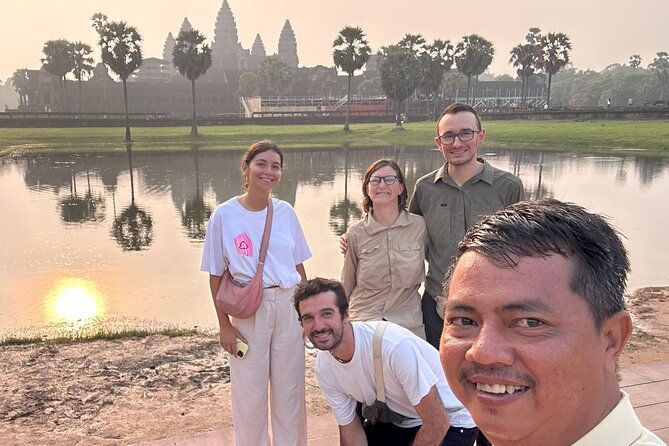
Angkor Wat is the headline temple, and the schedule gives it the respect it deserves with 2 hours on site. You’ll spend time looking at the massive religious complex that’s often described as a greatest monument of its kind. More importantly, the guide is there to put the temple into context so you can read it instead of just admire it.
Key context you’ll want to know before you go:
- It was originally built in the early 12th century by King Suryavarman II
- It began as a Hindu temple dedicated to Vishnu
- Later, it was transformed into a Buddhist temple
That sequence is one of the best “why this place looks the way it does” explanations. If you keep that in your head as you look at carvings and sacred layout, the temple stops feeling like random symbolism.
You’ll also get sunrise as a focal moment. Even if you’ve seen photos before, the combination of early light and scale can recalibrate your expectations. It’s not just pretty; it helps you understand why this place became the central symbol of Khmer civilization.
One practical note: admission ticket is not included. So you’ll want to arrive ready to handle the temple entry process once you’re there.
Stop 2: Bayon in Angkor Thom, with time to actually notice faces
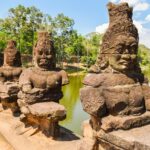
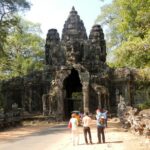
From Angkor Wat you move into Angkor Thom, and the second stop is Bayon Temple, located in its center. You get about 2 hours here, which is a smart allocation. Bayon isn’t only famous for visuals—it’s famous for pattern. If you rush, you miss the way the carvings repeat and build meaning.
Bayon was built at the end of the 12th century by King Jayavarman VII. The temple is especially known for its iconic faces. With a guide, you’re more likely to understand what you’re seeing beyond “cool sculptures.”
A private guide also helps here because Bayon is a place where you might want to:
- linger at specific viewpoints
- ask what a certain section is showing
- slow down if the light or your route choices make certain features easier to see
The best version of Bayon is the one where you stop chasing angles and start noticing details. Two hours makes that possible.
As with Angkor Wat, admission ticket is not included, so again: budget for the temple fee.
You can also read our reviews of more private tours in Siem Reap



Stop 3: Ta Prohm and the living drama of kapok and strangler figs
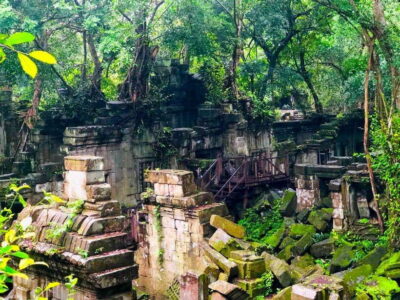
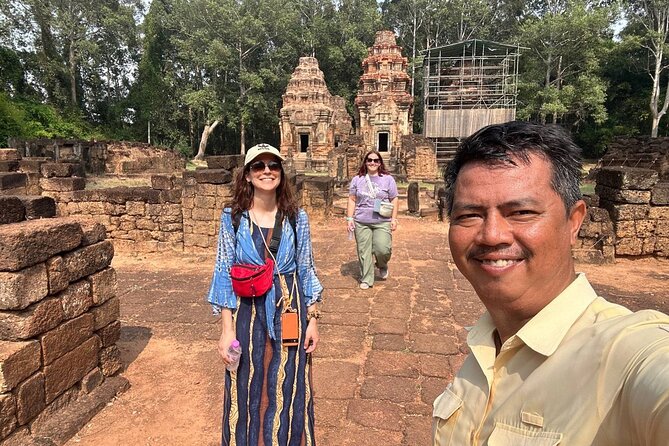
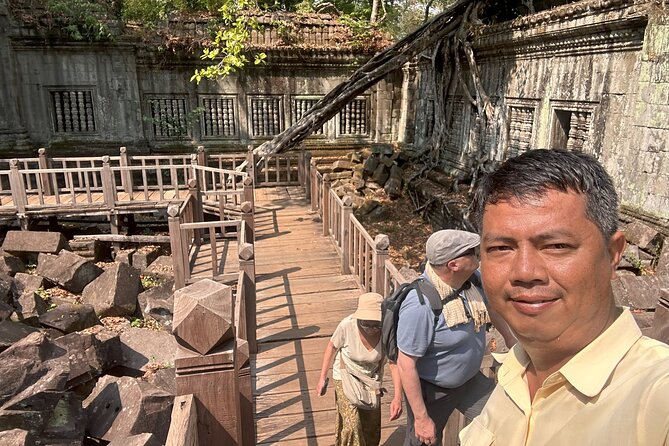
The last stop is Ta Prohm, known for the way large tree roots have grown into the ruins. This is the temple people recognize instantly, because the roots feel like the temple is being reclaimed by nature.
In the tour description, the focus is specifically on huge roots from kapokier and strangler fig trees. That matters because it’s not just a spooky aesthetic. It’s the real botanical story behind the look you see in photos: roots don’t politely attach; they move through spaces, press into structures, and transform the ruin over time.
You get 1 hour 30 minutes here. That’s a good amount of time because Ta Prohm can easily eat up more if you’re not careful. The danger is staying too long in one area and losing momentum for the rest of the day. This time window keeps you in “look, breathe, move on” mode.
Also, Ta Prohm’s setting can change your experience depending on light and weather. If the light is good, those roots pop. If it’s busier, your guide’s pacing becomes even more important—so you still get the feel of the jungle-surrounded ruins without wasting hours on congestion.
Getting around smoothly: air-conditioned mini van and included parking
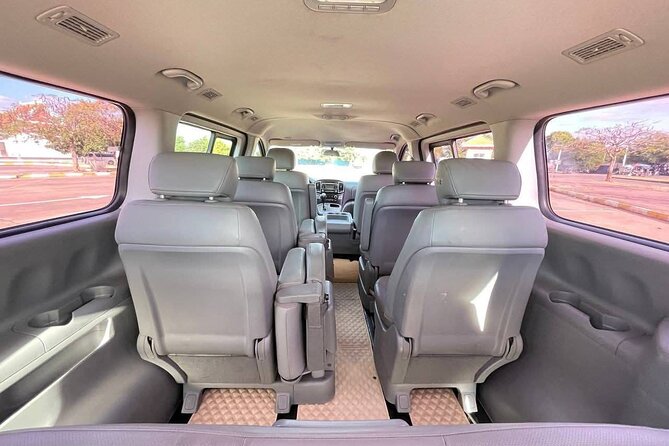
Transport can make or break Angkor plans. This one includes an air-conditioned mini private van plus parking, so you’re not stuck negotiating the most inconvenient parts of the day.
Pickup is offered, and that helps a lot in Siem Reap. In a place where timings can get messy, starting with pickup reduces your risk of being late or scrambling. Mobile ticket is listed as a feature too, which typically means less paper to manage during a day full of logistics.
If you’re traveling with family or in a small group, private transport is also where the stress drops. You’re not waiting for anyone to find a meeting point or re-checking a group list while the morning gets older.
What the guide brings: pacing, teaching, and flexible scheduling

Angkor temples are old enough to have their own moods. One day a site feels crowded and fast. Another day it feels slower. A private guide is the advantage that lets you respond to reality instead of forcing your plan to match a timetable.
The guidance described for Toma is consistent:
- Punctual start
- Smiling and caring attitude
- Ability to adapt to your pace
- Willingness to handle schedule changes
That last part is underrated. If you discover you want a slower Bayon moment or you want extra time at Angkor Wat, a guide who can flex helps you get a day that fits you instead of a day that fits the schedule.
One practical consideration from a past guest note: the guide asked for a deposit via Western Union, which can feel unsettling at first. I can’t judge any payment setup from here, but I’d treat this as a reminder to confirm payment methods and deposit details clearly before you commit.
Who should book this private Angkor temples day?
This tour is a great fit if you want:
- a private experience where your group stays together
- expert explanations tied to what you’re seeing
- a structured day that still allows pacing changes
- sunrise at Angkor Wat plus two other major temples in one go
It may not be ideal if:
- you want a very low-cost option (temple tickets add $37 per person)
- you prefer completely self-guided visits with no guide interpretation
- you dislike tight timing and want long breaks between stops
For couples, families, and small groups, it’s a strong value because the private van and guide reduce friction. For first-timers to Angkor, the teaching component can also make your photos mean something later.
Should you book this private Angkor temples tour?
I’d book it if you want an efficient, guided day with the major temples in the right order and enough time to notice details. The price looks reasonable once you consider you’re buying a guide plus private air-conditioned transport for a half-day route—then you add the temple fee on top.
If you’re on the fence, here’s the simple decision rule I use:
- If you want help understanding what you’re looking at, book this.
- If you only want photos and don’t care about context, you might prefer a cheaper or self-guided option.
Either way, budget the temple ticket, plan comfortable walking shoes, and treat the day like a real temple circuit—because that’s what it is.
FAQ
FAQ
How long is the private Angkor temples day trip?
It runs for about 5 hours 30 minutes.
Is pickup included from Siem Reap?
Pickup is offered. The tour includes an air-conditioned mini private van.
Which temples are included in the visit?
You visit Angkor Wat, Bayon Temple, and Ta Prohm.
Are temple admission tickets included in the price?
No. Temple fees are not included. The temple ticket is listed as $37 per person.
Is this a private tour or shared group?
It’s private. Only your group participates.
What is the cancellation policy?
You can cancel for a full refund if you cancel at least 24 hours before the experience’s start time. If you cancel within 24 hours of the start time, the amount paid is not refunded.