REVIEW · SIEM REAP
Full Day to Banteay Srei, Kulen National Park and Beng Mealea
Book on Viator →Operated by The Fin Travel & Tours · Bookable on Viator
One mountain day, two very different temple worlds. You start with Banteay Srei’s razor-fine carvings, then head to Phnom Kulen for sacred river carvings and a big reclining Buddha, before ending at the jungle-grabbed ruins of Beng Mealea. It’s the kind of route that makes you see Khmer temple culture from two angles: careful craftsmanship and time-left-alone nature.
What I like most is the English-first guiding and the way the day mixes stories about Cambodian beliefs with what you’re actually standing in front of. You also get the practical comfort of an air-conditioned ride plus bottled water, which matters when you’re away from Siem Reap for most of the day. One consideration: the headline price is $50, but temple/park fees for Banteay Srei/Beng Mealea and Kulen are not included, so your day can cost more than you first expect.
In This Review
- Key Highlights You’ll Care About
- A Long Day of Temples and Sacred Water on Kulen
- Meeting Point, Pickup, and the Value of a Private Day
- Banteay Srei: The 10th-Century Lady Temple
- Phnom Kulen National Park: 1000 Lingas and Wat Preah Ang Thom
- The River of 1000 Lingas
- Wat Preah Ang Thom: the reclining Buddha
- Waterfalls, Optional Lunch, and a Midafternoon Reset
- Nature trails toward Beng Mealea
- Beng Mealea: Suryavarman II and the Temple Left to Nature
- Price and Tickets: What This Day Really Costs
- Who This Tour Suits (and Who Might Skip It)
- Should You Book This Full-Day Banteay Srei, Kulen, and Beng Mealea Tour?
- FAQ
- FAQ
- How long is the tour?
- Is pickup included?
- What’s included in the price?
- Are entrance tickets included?
- How much does lunch cost?
- Who guides the tour?
Key Highlights You’ll Care About
- Private group experience: it’s just your group on the day, not a big shuffle with strangers.
- Phnom Kulen’s 1000 Lingas: carved symbols in a riverbed—oddly moving and very different from the Angkor-area temples.
- Wat Preah Ang Thom: a major mountain-top monastery stop with an enormous reclining Buddha.
- Beng Mealea’s untouched feel: ruins plus parasite vegetation that makes the site feel raw, not polished.
- Long but well-paced stops: short visits timed to keep you moving without feeling rushed all day.
- Guide strength matters: Fin (and sometimes a driver-guide like Nak) brings strong English and cultural context, not just facts.
A Long Day of Temples and Sacred Water on Kulen
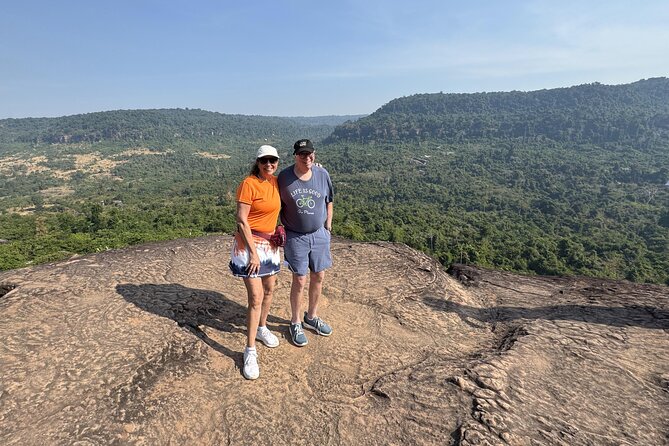
This is a full-day loop that works because it changes pace often. You’re not spending the entire day in one place, staring at one monument from one angle. Instead, you bounce between carved temple masterpieces, sacred religious sites, and nature areas where locals actually relax and gather.
The timing is built around your attention span. You start early enough to get traction, then you move from Banteay Srei into Phnom Kulen. After that, you get a break with the waterfall area and picnic options, then you head down toward Beng Mealea in the early afternoon. If you like structure in a day trip—so you don’t waste hours deciding—you’ll likely appreciate this rhythm.
Also, the day is more than sightseeing. The route is set up to connect religion, kings, and the landscape. Phnom Kulen is tied to Hindu symbols and sacred river carvings, then you go to a monastery with the reclining Buddha, and then you finish with a king-era temple that feels like it grew its own story after being left largely to nature.
You can also read our reviews of more tours and experiences in Siem Reap
Meeting Point, Pickup, and the Value of a Private Day
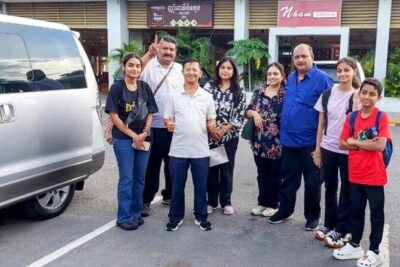
You’ll meet at Brown Coffee Treeline, right by the Wat Bo Road area (Street 23 corner with Street Achar Sva). Pickup is offered, and you ride in an air-conditioned vehicle with bottled water. That sounds basic, but for this kind of itinerary it’s not small.
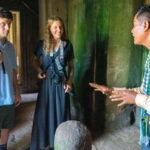
Why it matters: a day like this has enough driving that comfort reduces crankiness. And because it’s private, you can ask questions that actually fit what you’re seeing. One review highlighted how Fin’s fluent English coverage went beyond dates into Cambodian society, politics, economics, and culture—basically the stuff that helps temple stories make sense, not just sound impressive.
There’s also a practical upside to the group setup. Even though it can be booked as a private tour, the price structure lists group discounts and mobile ticket handling. Translation: you’re not stuck with a complicated paper chase.
Banteay Srei: The 10th-Century Lady Temple
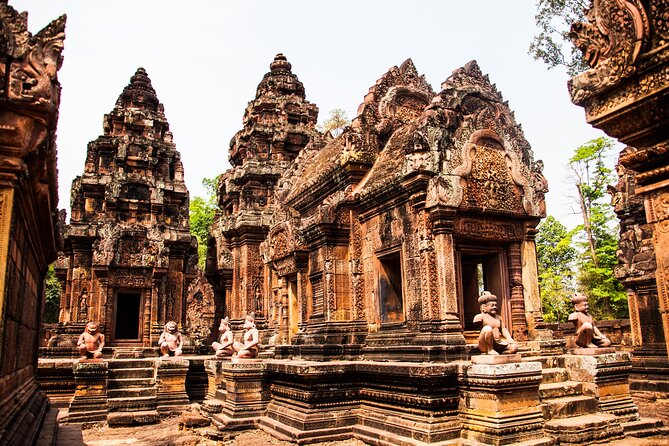
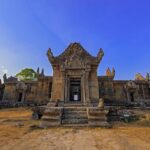
Banteay Srei is famous for a reason: it’s often described as a temple of fine, deep carving. The day starts here right after breakfast, driving out through Siem Reap’s countryside.
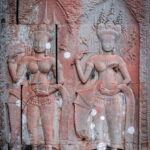
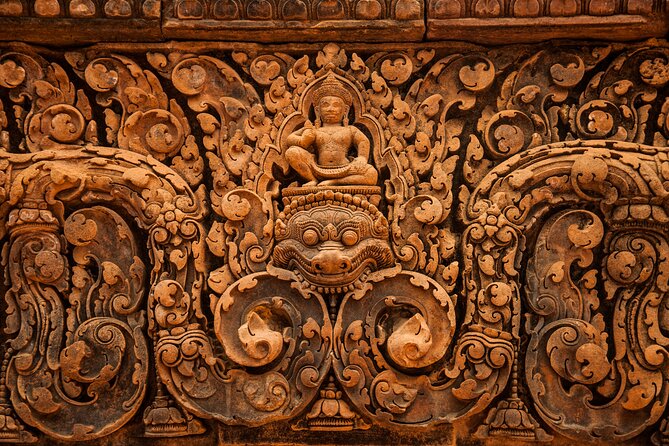
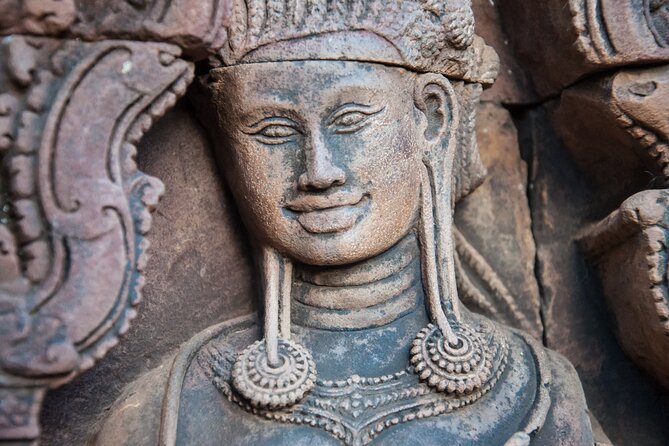
This stop is short—around 45 minutes—but it’s the kind of temple that rewards looking slowly. The “lady temple” nickname comes up a lot because the carvings have a delicacy that feels almost like sculpture work. You’ll likely want to focus on details: the way the stone surface is cut, and the way the temple’s ornamentation communicates religious meaning.
One thing to plan for: ticket costs. The itinerary schedule may mark some admissions as free, but the pricing details clearly list an Angkor admission ticket requirement for Banteay Srei (and also Beng Mealea). So even though the stop itself might feel straightforward, your budget should include that temple pass.
What’s the payoff? It’s a clean opening act. Before you hit Phnom Kulen and its sacred river symbols, you start with temple craft that’s visually precise, which helps your eyes adjust for the rest of the day.
Phnom Kulen National Park: 1000 Lingas and Wat Preah Ang Thom
Phnom Kulen is about an hour from Siem Reap, and once you’re there, the experience shifts from temple buildings to sacred places with a spiritual pulse.
The River of 1000 Lingas
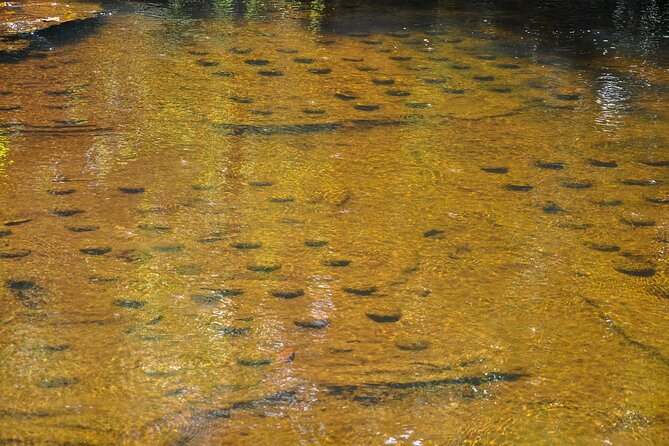
You start at the river area tied to the 1000 Lingas, described as a sacred site with Hindu gods and phallus symbols carved into the riverbed. This is one of those stops that’s harder to summarize than to feel. Even if you don’t know the full symbolic system, the setting makes the meaning land: it’s not a museum artifact behind glass. It’s a working landscape tied to belief.
Plan to stand a bit, look, and take your time. The carvings are part of the riverbed itself, so it’s not like you can step back and get a single “perfect” photo frame. The payoff is that you get closer to how Hindu symbolism used in Khmer areas can be tied to place, not only architecture.
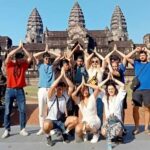
Wat Preah Ang Thom: the reclining Buddha
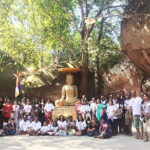
From there, you head to Preah Ang Thom, a mountain-top monastery with an enormous reclining Buddha. This is your cultural bridge stop. The reclining Buddha isn’t just a visual moment; it’s your chance to hear how local belief connects temple spaces to daily life and spiritual practice.
The stop is listed at about 45 minutes, which is probably about right. Mountain-top sites can feel tiring in the sun, and you’re not meant to treat this like a long hike. The goal is to see it, understand what it represents, and keep your energy for the next phase: the waterfall area.
One more budget note: Kulen National Park admission is listed as not included, so add that to the total cost of your day.
Waterfalls, Optional Lunch, and a Midafternoon Reset
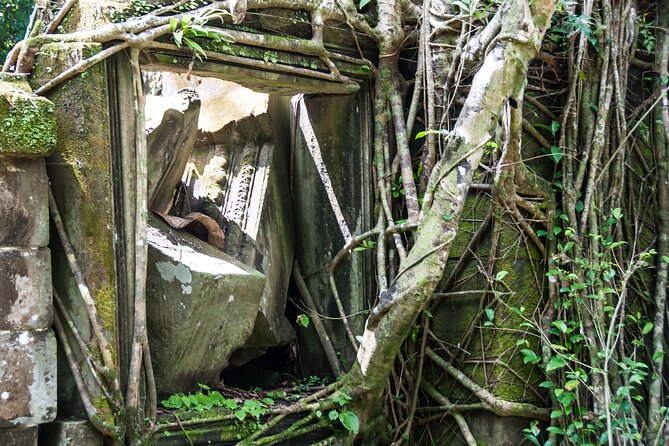
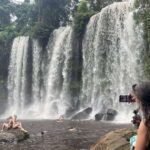
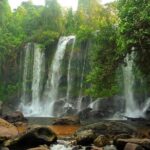
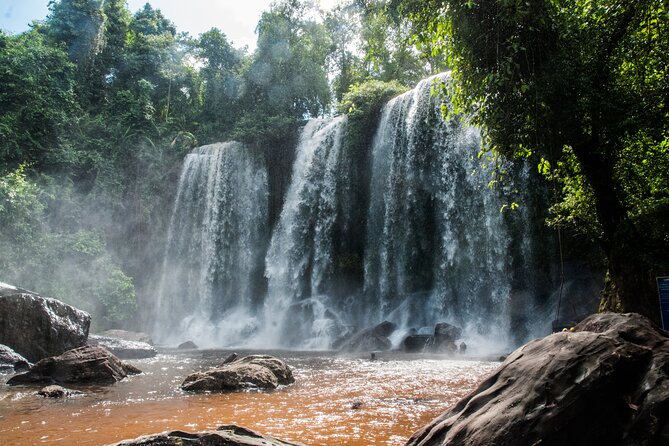
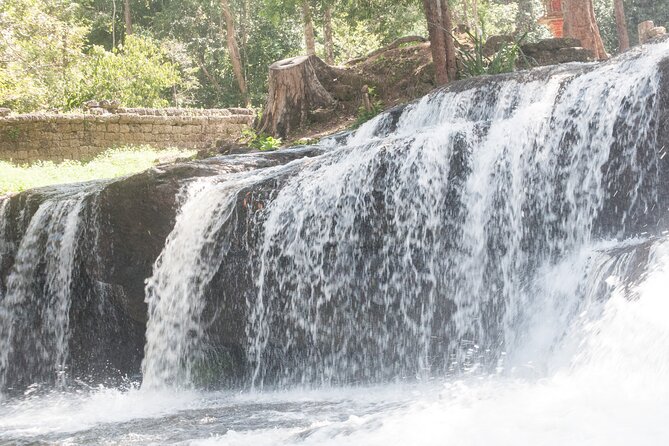
After the mountain-top stop, you reach the Phnom Kulen Waterfall area. This is where the itinerary becomes more human and less ceremonial. There’s time to enjoy the waterfall zone, and the schedule includes the option of swimming and a picnic lunch.
Lunch costs are listed separately, around $5 to $7 per person, and picnic lunch is also mentioned as optional ($4 to $6). If you don’t plan to swim, you can still use this as a reset: shade, a break from temples, and a chance to watch how locals spend their downtime together.
Why this stop is valuable even if you’re not a swimmer: after carvings and temple learning, you’ll feel it in your body. A nature break gives you an easier mindset for Beng Mealea later, because you’re about to switch from “crafted” to “ruins taken back by plants.”
Nature trails toward Beng Mealea
Around 2:30 PM, you continue with the drive and then a nature-trail segment (about one hour) as you head toward Beng Mealea. The itinerary describes it as moving down along beautiful roads and plantation areas within Kulen National Park.
Even though it’s not a full trek day, this part helps break up the transition. Beng Mealea works best when you approach it with a bit of calm. The more you arrive in a rushed, overheated state, the harder it is to appreciate how haunting the ruins feel.
Beng Mealea: Suryavarman II and the Temple Left to Nature
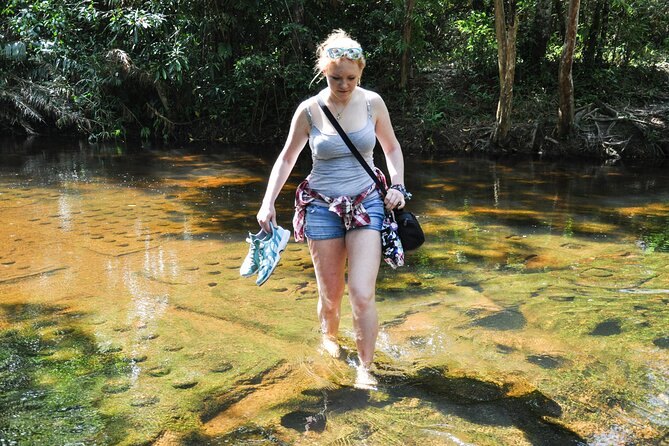
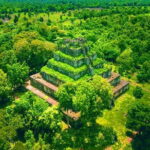
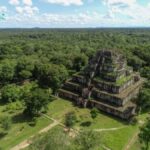
Beng Mealea is the finale, and it’s a different kind of Khmer temple experience. You’re exploring Prasat Beng Mealea, dated to the early 12th century reign of King Suryavarman II, a period also associated with Angkor Wat.
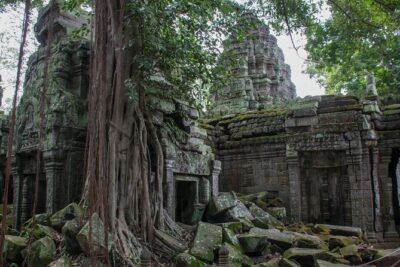
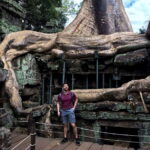
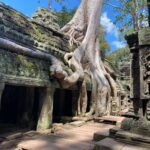
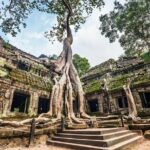
Here’s the key detail that makes Beng Mealea special: it’s described as the only temple still preserved in its natural state, untouched in a way by archaeologists. That matters because the site isn’t restored into a clean, obvious shape. It’s ruined, and parasite trees (the itinerary uses that phrase) grow all over it, creating an endless impression for visitors.
What you’ll feel on-site:
- The ruins don’t sit “quietly.” The vegetation creates texture and randomness, so you end up walking through fragments, not through polished rooms.
- The same stonework that looks like collapse from one angle can look like deliberate design from another.
- The setting forces slower looking. You can’t just “tour” Beng Mealea like a checklist temple.
The stop is about one hour, so you’ll want to use that time actively. If you’re the type who likes to wander a little within safe, open areas, this is the place. It’s also where your guide’s context becomes useful again. When you understand the king and the time period, the ruins stop being just “cool jungle rocks” and become part of a coherent story about Khmer expansion.
And yes, tickets matter again. The pricing details flag Angkor admission for Beng Mealea, so you’ll want your pass ready.
Price and Tickets: What This Day Really Costs
The tour price is $50 per person. For that, you get an English-speaking guide (Fin is named), air-conditioned transportation, bottled water, and a private group setup.
But this itinerary is not a “temples-only” budget day because admissions aren’t included across the board. You should plan on adding:
- Angkor admission ticket for Banteay Srei and Beng Mealea (listed as $37 per person)
- Kulen National Park admission (listed as $20 per person)
So your likely total lands well above $50 once you add those required entries. Lunch is also extra (about $5–$7 per person), and there’s an optional picnic cost range at the waterfall area.
Is it still good value? In my view, yes—if you care about guided context. For a price that looks low at first, you’re getting a full routing day with a guide who can connect cultural dots and not only point at stones. If you’re the DIY type with limited interest in explanations, you might feel the extra ticket costs more sharply.
Who This Tour Suits (and Who Might Skip It)
This is a strong fit if you want a structured day that combines:
- multiple sacred sites (river symbolism, mountain monastery, temple ruins)
- a guide who can explain Cambodian culture in fluent English
- comfort on the road (A/C vehicle and bottled water)
- a mix of temple density and nature breathing space (waterfall + picnic option)
I’d also say it’s worth considering if you like contrast. Banteay Srei offers precision carving, Kulen gives you sacred symbolism in a living setting, and Beng Mealea finishes with time-worn ruins taken over by greenery.
Who might not love it? If you dislike driving and want only one location, you might find this day too packed. Also, if your budget is tight and you don’t want to pay for multiple admissions, you’ll probably feel the ticket add-ons.
Should You Book This Full-Day Banteay Srei, Kulen, and Beng Mealea Tour?
Book it if you want an organized, private day that covers the big “wow” moments across three connected areas—without you having to plan the order, interpret the sites, or worry about comfort on the road.
I’d skip it if you’re trying to keep the total cost low or you prefer long museum-style pacing at one site instead of a move-every-few-stops itinerary. And if you care mainly about photos, you’ll still get plenty of dramatic visuals, but the real advantage here is the way the guide connects meaning to what you’re seeing.
If you’re in that sweet spot—temples plus stories, sacred sites plus a little nature rest—this route is one of the more satisfying full-day combinations from Siem Reap.
FAQ
FAQ
How long is the tour?
It runs about 9 to 10 hours.
Is pickup included?
Pickup is offered, and the tour ends back at the meeting point.
What’s included in the price?
An English-speaking guide, an air-conditioned vehicle, and bottled water are included.
Are entrance tickets included?
No. Angkor admission for Banteay Srei and Beng Mealea is listed as not included ($37 per person), and Kulen National Park admission is also not included ($20 per person).
How much does lunch cost?
Lunch is not included and costs around $5 to $7 per person. There’s also an optional picnic lunch at the waterfall area.
Who guides the tour?
The tour is conducted by Fin (noted for 20+ years in guiding and excellent English). A driver-guide like Nak is also mentioned in the provided feedback.