REVIEW · SIEM REAP
Full-Day private Tour in Lost City & Angkor Wat from Siem Reap
Book on Viator →Operated by Journey2 Angkor · Bookable on Viator
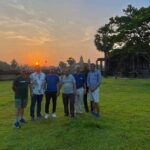
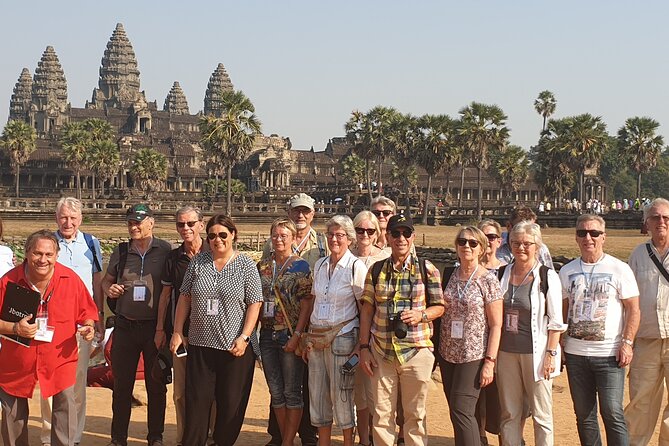
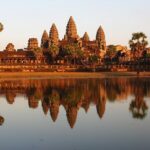
Angkor, but with less stress. I like how this private day trip runs in a comfortable vehicle with hotel pickup, so you’re not waiting around in traffic. I love starting Angkor Wat from the eastern side, where the stonework and jungle paths feel more personal than the usual rush.
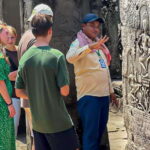
What really makes it work is the pace and the storytelling. I like having an English-speaking guide to connect the bas-reliefs to Khmer kings and daily life, instead of just looking at carvings and hoping it all clicks. The route also aims to beat the worst heat and crowds with a mix of longer temple time and shorter stops in the quieter corners of Angkor Thom.
One drawback to plan for: Angkor Wat admission isn’t included. Also, for sacred areas you’ll need clothes that cover knees and shoulders, which can feel warm in Siem Reap midday—bring light layers you can still adjust fast.
In This Review
- Key things that make this tour worth your time
- A Private Angkor Day Loop That Respects Your Pace
- Angkor Wat From the Eastern Side: Bas-Reliefs and Jungle Paths
- South Gate and Bayon: The Faces of Angkor Thom
- Baphuon and the Royal Buildings You’ll Miss Without a Guide
- Terrace of Elephants and Leper King: Ceremonies in Stone
- Two Brief Extra Stops in Angkor Thom (and Why They Matter)
- Ta Prohm Jungle Temple and Lunch Near the Ruins
- Photo, Heat, and Dress Rules That Keep the Day Smooth
- Price and Value: $30 Plus What You Need to Budget
- Who This Tour Suits Best
- Should You Book This Lost City & Angkor Wat Private Tour?
- FAQ
- Do I get hotel pickup and drop-off?
- Is the tour fully private?
- What’s included in the $30 price?
- Do I need to buy temple tickets?
- What should I wear for the temples?
- Can I cancel for a full refund?
Key things that make this tour worth your time
- Eastern-side Angkor Wat entry with a quieter approach and plenty of walking on temple grounds
- English-speaking guide who explains bas-reliefs, myths, and what you’re actually looking at
- Angkor Thom highlights without a stampede: South Gate, Bayon’s faces, Bayon’s two-story bas-relief story
- Royal-architecture stops like Phimeanakas plus the Terrace of Elephants and Terrace of the Leper King
- Ta Prohm with that famous tree-through-stone feel, plus a lunch break nearby
- Mobile ticket for temple entry and an Angkor Wat admission fee you’ll need to budget separately
A Private Angkor Day Loop That Respects Your Pace
This is an 8-hour private tour from Siem Reap, built around one big idea: see the key temples with a guide, but keep the day from feeling like a conveyor belt. Your vehicle picks you up at your hotel and brings you back at the end, which matters a lot here because the distances inside the Angkor area add up when you’re hopping around on your own.
You also get the benefit of “private” in a practical way, not just a marketing term. It’s just your group, so you can slow down at the bas-reliefs, pause for shade, or switch the order slightly if your energy dips (and it often does, especially when humidity hits).
You can also read our reviews of more city tours in Siem Reap

Angkor Wat From the Eastern Side: Bas-Reliefs and Jungle Paths
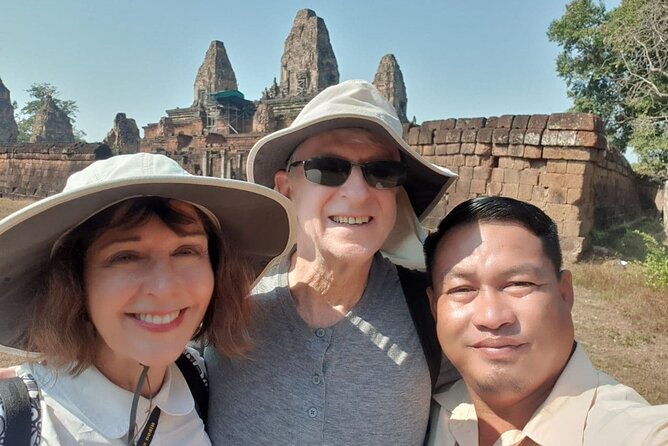
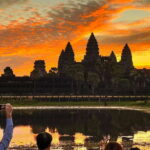
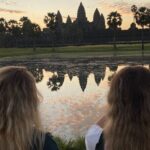
Angkor Wat is the anchor of any Angkor day, and this route starts you at the less busy eastern side. That choice changes the vibe immediately. Instead of entering from the typical angles people remember from photos, you get a more gradual arrival through temple grounds.
Once inside, you spend time walking on foot and moving through jungle paths toward pool areas—including the North ancient library pool zone mentioned in the tour. You’re not rushing past it. The point is to let the space breathe, so carvings and layout feel connected rather than random.
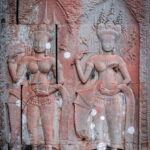
Then comes the main payoff: the bas-reliefs. Your guide points out history, myths, and stories carved into the stone. One detail worth paying attention to is that the bas-reliefs here are described as the longest stretch of bas-relief carvings in the world. Even if you don’t measure it, you’ll feel the scale once you realize how much narrative runs along the walls.
If you’re the type who likes “why does this matter?” then you’ll enjoy the way your guide links the carvings to Khmer beliefs and royal themes. If you’re purely a photo person, you’ll still get good picture moments—but having context keeps your shots from turning into just more temples in the folder.
Watch-out for timing: Angkor Wat admission is not included, so you’ll want to handle the e-ticket link ahead of time days in advance. And wear breathable clothes that you can keep respectful—some sacred spaces require clothes covering knees and shoulders.
South Gate and Bayon: The Faces of Angkor Thom
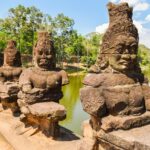
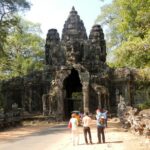
After Angkor Wat, you head into Angkor Thom, and the day shifts from wide temple views to dense, story-packed city scenes. The first big stop is the South Gate, one of the five gates of Angkor Thom. It’s flanked by 54 stone figures on each side, which gives you something to study up close while you catch your breath.
Even if you’ve seen gate photos before, this is the kind of place that makes the scale feel real. The tour notes that at its height, Angkor Thom had a population over a million and covered more area than London—an eye-opening fact when you’re standing at an entrance built for movement and control.
Next is Bayon Temple, the fan favorite for a reason. The standout is the multitude of serene, smiling faces on the towers—more than 200 enormous faces. The guide’s job here is to keep it from becoming a simple “look up and shoot” moment.
What I like about Bayon on a guided route is that the carvings come with structure. The temple has two sets of bas-reliefs: outer-wall panels tied to historical events and everyday scenes, and inner-gallery panels that focus more on mythological events. That makes the place feel layered, not repetitive.
Possible drawback: Bayon can be busy, and you’ll still want smart heat habits—shade breaks and water matter. The tour’s emphasis on avoiding the worst crowds helps, but it doesn’t turn the day into a private bubble.
Baphuon and the Royal Buildings You’ll Miss Without a Guide
Bayon is visually loud, but Angkor Thom also holds quieter drama in the form of royal temples and ceremonial architecture. This tour includes Baphuon Temple, described as a three-tiered temple mountain built in the mid-11th century. It sits northwest of Bayon and connects to the Royal Palace area.
What makes Baphuon memorable is the way it reads as power. The tour notes its base dimensions—about 120 meters by 100 meters—and the height detail: 34 meters tall without its tower, with a possible total around 50 meters with the missing tower. Even if you’re not a measurement nerd, those numbers help you understand why the structure feels heavy and ceremonial rather than delicate.
There’s also an interesting historical note mentioned in the tour: an envoy’s description compares Bayon to a Tower of Gold and Baphuon to a Tower of Bronze. That kind of comparison gives you a mental image that’s easier to remember later when you’re trying to separate the temples in your head.
Then you move to Phimeanakas (also spelled Vimeanakas) inside the walled Royal Palace enclosure. The tour describes it as a celestial temple, shaped as three-tier pyramids and connected to the Hindu temple tradition. It points out the timeline elements: built end of the 10th century during Rajendravarman (941–968) and completed by Suryavarman I.
If you care about Khmer religion and architecture, this stop helps you see that Angkor isn’t one style—it’s a system that changed over time and blended ideas. You’ll notice the guide is steering you away from treating each temple as a random sightseeing stop and toward seeing how they fit into a larger royal complex.
Terrace of Elephants and Leper King: Ceremonies in Stone
This part of the day is where your “wow, look at that” turns into “wait, that had a job.” The tour includes two major terraces from the reign of King Jayavarman VII.
First up: the Terrace of the Elephants. It’s described as a 350-meter-long reviewing stand used for public ceremonies and as a base for the king’s grand audience. Some local Khmer residents call it the Ancient Khmer Stadium, which is a great reminder that these were spaces for people, not just worship.
Then comes the Terrace of the Leper King—a name that comes from a later sculpture discovery. The tour says the U-shaped structure is thought by some to have been used as a royal cremation site, built in the 13th century under Jayavarman VII. The modern name is tied to a 15th-century sculpture found there, showing Yama, the Hindu god of death.
I like these terraces because they change how you “see” Angkor. When you understand that they were built for ceremonies and royal display, you start noticing perspective—where a crowd would have stood, where the king would have been positioned, and how the architecture framed the event.
You can also read our reviews of more private tours in Siem Reap
Two Brief Extra Stops in Angkor Thom (and Why They Matter)
This tour includes short additional moments inside Angkor Thom—brief “secret” or off-route stops. One is described as a hidden gem, and another as a secret stop, each lasting about 10 minutes.
They’re short on purpose. The value is that they break you out of the rigid big-temple rhythm and give you a chance for a calmer photo angle or a less crowded viewpoint. If you’ve ever done Angkor self-guided, you know how easy it is to miss the places that make the ruins feel lived-in by time rather than by tour groups.
Don’t expect these extra stops to replace the main temples. Think of them as bonus seasoning: small, quick, and often more photogenic than the plain walk-through areas.
Ta Prohm Jungle Temple and Lunch Near the Ruins
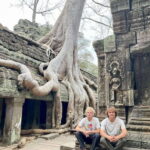
Then you get to the temple that defines the Angkor “jungle drama” look: Ta Prohm. The tour calls it the jungle-enveloped Ta Prohm, also known as the Tomb Raider temple. What makes it special is that it’s described as being in the condition it was found, with trees growing through and around the structures.
The tour also emphasizes why it’s so popular: the combination of ruins, trees, and jungle surroundings is extremely atmospheric. UNESCO also comes up in the tour notes: Ta Prohm was inscribed in 1992. Another helpful detail is that Ta Prohm served as a religious temple connected to the Ancient Khmer University during the 12th and 13th centuries—so it isn’t just scenery. It’s a place that once functioned in learning and worship.
You’ll also enjoy lunch with cold drinks at a restaurant near the temple. I like that because it’s not a rushed, generic stop far from the action. It keeps you fed and hydrated without yanking you across the region.
Photo, Heat, and Dress Rules That Keep the Day Smooth
Angkor is a walking day. Even with a vehicle, you’re on foot among stone, steps, uneven paths, and wide areas where shade can be limited.
The tour’s practical guidance is clear:
- Bring flat shoes that are comfortable for lots of walking.
- For some sacred areas, plan for clothes that cover knees and shoulders.
- Wear breathable layers so you can adjust quickly when the sun shifts.
- Use the tour’s structure to catch fewer crowd pockets and spend more time where your guide slows down.
Also, the tour includes bottled water. That sounds small until you’re standing in humidity with a temple you don’t want to rush. Cold water plus a guide who can spot shade spots is a low-cost upgrade to your whole day.
Photo-wise, you’ll get photo opportunities, and the route choices—like the eastern-side entrance to Angkor Wat—tend to help. You’ll still see other people, but you’ll have more room to frame your shots without feeling pushed.
Price and Value: $30 Plus What You Need to Budget
The listed price is $30.00 per person for an approx. 8-hour private experience, with hotel pickup/drop-off, an English-speaking guide, a private vehicle, and bottled water included.
That’s strong value compared to many “big sights” tours, mainly because you’re paying for access, narration, and transportation all in one package. The private part matters here: Angkor is tiring, and the day gets easier when you’re not managing routes, tickets, and meeting points.
The catch is the obvious one: Angkor Wat admission is not included. You’ll need to buy that separately, using the e-ticket link your guide provides days in advance. So when you budget, treat the $30 as the tour cost, then add the Angkor Wat temple ticket.
The tour also lists group discounts. If you’re traveling with friends or family and can book together, you may get a better per-person deal than if everyone books separately.
Who This Tour Suits Best
This tour fits best if you want a guided Angkor day that doesn’t feel like speed sightseeing. It’s a good match for:
- Couples or small groups who want private pacing
- History-minded visitors who enjoy bas-reliefs, myths, and Khmer royal context
- People who’d rather avoid major crowd surges and heat spikes when possible
- Anyone who likes having an easy lunch plan near the temples
It may be less ideal if you want a purely self-guided day with full control over every route change. The private nature gives flexibility, but the structure is still a loop through key sites.
One more note: the tour’s best ingredient is the guide experience. Names like Rith and Sim show up in high praise for being flexible and for explaining the history in a way that helps you move at your own pace. That’s exactly what you want on day tours where humidity and stairs can drain attention.
Should You Book This Lost City & Angkor Wat Private Tour?
If you’re choosing between “see the big temples” and “actually understand them,” I’d lean toward booking this. The value is in the combination: eastern-side Angkor Wat, Bayon’s faces with guided context, the royal terraces that explain ceremonies, and Ta Prohm’s jungle mood—all done with hotel pickup and a driver.
Book it if your priority is a smoother, better-paced day where the guide helps you connect carvings to meaning. Think twice only if you already have Angkor Wat tickets sorted and you prefer to wander without structure, because you’ll be happiest when you let the guide set the rhythm.
FAQ
Do I get hotel pickup and drop-off?
Yes. The tour includes hotel pickup and drop-off in Siem Reap, plus a private comfortable vehicle.
Is the tour fully private?
It is. The tour is described as private, and only your group will participate.
What’s included in the $30 price?
Included are an English speaking tour guide, a private comfortable vehicle, hotel pickup and drop-off, and bottled water.
Do I need to buy temple tickets?
Yes for Angkor Wat. The Angkor Wat admission fee is not included. Other listed stops have admission marked as free, and the guide will send a link to purchase an e-ticket days in advance.
What should I wear for the temples?
You’ll need clothes that cover knees and shoulders to enter some sacred places. The tour also advises flat shoes that are comfortable for walking.
Can I cancel for a full refund?
You can cancel for a full refund up to 24 hours in advance of the experience start time.