Quiet Angkor days beat the tour-rush. The Grand Circuit is designed for a calmer feel by reaching more remote temples, and it’s paired with Banteay Srei, famous for delicate pink-sandstone carvings. You get that mix of big iconic structures and smaller, more intimate Khmer sights—without spending all day on the busiest main route.
I like the pacing here: most stops are around an hour, with more time allocated to the standout carving temples, so you can actually slow down and look. I also like the comfort package—pickup and drop-off, an air-conditioned vehicle, and cold drinking water—so you’re not cooking in a hot van between sites.
One consideration: admission isn’t included, and the Angkor Pass fee listed here is $37 per person (under of the Angkor Pass). Also, 6 to 8 hours is a solid chunk of time, so plan for heat, walking, and a camera-ready mindset.
In This Review
- Key highlights at a glance
- Grand Circuit vs. the main loop: why this route feels calmer
- Price and logistics: what you’re actually paying for
- Comfort that matters in Siem Reap heat
- Preah Khan: a royal temple with a maze-like feel
- Neak Pean: the circular island temple pause
- Ta Som: that tree-entwined gate moment
- Eastern Mebon: five towers and tiered enclosures
- Banteay Samre: layered enclosures and a slower walk
- Banteay Srei: pink sandstone craftsmanship and the Citadel nickname
- How the guide changes what you notice (hello, Mr. K)
- Angkor Pass and admission planning without stress
- Who this tour fits best
- Should you book the Angkor Grand Circuit & Banteay Srei?
- FAQ
- How long is the Angkor Grand Circuit & Banteay Srei tour?
- What’s included in the tour price?
- Is the Angkor admission fee included?
- Does the tour include a mobile ticket?
- Are meals included?
- Is pickup offered?
- Is this a private tour?
- How many people are on the tour?
- What’s the cancellation policy?
- Is this tour suitable for most travelers?
Key highlights at a glance
- Grand Circuit temples for a calmer, less rushed visit than the main loop
- Banteay Srei’s pink sandstone and pinpoint-detail carving that feels different from the big complexes
- Ta Som’s tree-entwined gate, a photo magnet with a very “how is this still standing?” vibe
- Neak Pean’s island setting on Jayatataka Baray for a quieter, scenic pause
- A/C transport plus cold water, which matters on long temple days
- Mr. K-style guidance (when available): attentive, organized, and tuned to good timing for what you want to see
Grand Circuit vs. the main loop: why this route feels calmer
Angkor can go from awe to overwhelm fast—crowds, heat, and everyone funneling toward the same famous viewpoints. The Grand Circuit approach helps you avoid some of that pressure by taking you farther into the park’s network of temples.
That matters because Angkor is best when you can actually take in the details: carvings worn smooth by time, doorways that frame the sky, and the way the forest edges press against stone. On the main circuit, you often see a temple first and then scramble to the next photo spot. On the Grand Circuit style of day, you’re more likely to slow down and notice how each site is laid out.
You also get a nice variety of temple types. Some are Hindu, some reflect Buddhist worship traditions, and they all share that Khmer design language—laterite and sandstone, enclosures, axial paths, and water features tied to spiritual symbolism. This is not a straight line of Instagram icons. It’s a route built for contrast.
And then you tack on Banteay Srei at the end, which is a game-changer. This smaller temple has a different scale and character than the big showpieces. It’s often the day’s emotional payoff: you go from wide ruins to tiny precision.
You can also read our reviews of more tours and experiences in Siem Reap.

Price and logistics: what you’re actually paying for
The tour price is $50 per person, and that includes several things that add real value at Angkor: an English speaking tour guide, pickup & drop-off, an air-conditioned vehicle, and cold drinking water.
What’s not included: admission fee (the listed Angkor Pass value here is $37 per person, under of the Angkor Pass). Some stops in the day’s program are shown as free admission, but you should still budget for the pass because at least one stop is clearly marked as not included.
So the practical way to think about value is this:
- You’re paying for transportation, a guide who helps you interpret what you’re seeing, and comfort for a long day.
- You’re still paying temple entry through the pass/admission process.
If you’re traveling with people who prefer a clear plan, this tour format is often cheaper than paying for separate tuk-tuk hopping plus a guide at each point. It’s also simpler than trying to stitch together a route on your own when you want the Grand Circuit’s remote temples.
One more plus: the day is set up as private (only your group). That means less waiting around for strangers to catch up, and it’s usually easier to keep a good pace.
Comfort that matters in Siem Reap heat
Even with a good plan, temple days can wear you out. This experience addresses the usual pain points:
- Pickup and drop-off means you’re not solving logistics in the morning.
- An A/C vehicle helps during the in-between stretches.
- Cold drinking water is included, which sounds basic until you’re already sweating through your shirt.
This kind of comfort doesn’t just feel nice. It changes how you experience Angkor. When you’re not completely drained in transit, you can spend more time at each temple doing the fun part: looking closely, not rushing.
Preah Khan: a royal temple with a maze-like feel
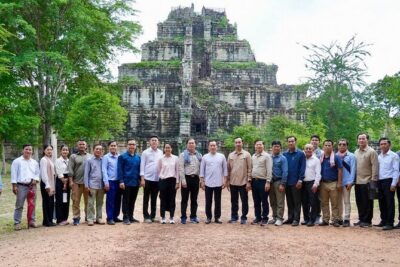
Your first major stop is Preah Khan, a 12th-century temple built for King Jayavarman VII to honor his father. It’s located northeast of Angkor Thom, near the Jayatataka baray area.
What makes Preah Khan worth your attention is the way it feels layered. These are not just single structures; it’s a temple complex with a sense of movement. You get that impression of corridors and courtyards that pull you inward. If you’ve been focusing mostly on the famous Angkor Wat-style “centerpiece” layouts, Preah Khan often feels like a different mood—more connected to everyday movement through temple space.
A practical note: admission at this stop is marked as not included, so treat Preah Khan as the one that may require your Angkor Pass planning.
Neak Pean: the circular island temple pause
Next comes Neak Pean, set on an artificial island within Jayatataka Baray. It’s associated with Preah Khan’s era, and it includes a Buddhist temple on the circular island.
Neak Pean is the kind of stop that helps you reset. After walking through bigger complex areas, you arrive at something more contained and scenic. Even if you’re not a big “water symbolism” person, the location does the work: you feel like you stepped into a quieter pocket of Angkor.
It’s listed with free admission, which is always a small bonus in a ticketed place. Use the time here to slow down—this is a temple where you’ll appreciate the framing and the stillness more than you’ll appreciate racing for the next tower.
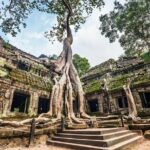
Ta Som: that tree-entwined gate moment
Ta Som is a small temple built in the late 12th century for King Jayavarman VII. It sits just east of Neak Pean.
This is one of those Angkor sights that people talk about for a reason: the tree-entwined gate is dramatic and very specific. The roots and stone relationship looks almost impossible, like the structure is holding its breath while the jungle grows anyway.
Why this stop works on a Grand Circuit day:
- It’s close enough to your previous site to keep the flow smooth.
- It gives you a different visual story than the more purely architectural temples.
Ta Som is also marked as free admission here. That makes it a great place to spend your camera time without feeling like you’re burning budget.
Eastern Mebon: five towers and tiered enclosures
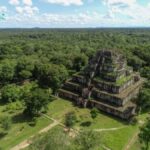
Then you’ll visit Eastern Mebon, with five towers arranged like the numbers on a die, sitting atop a base with three tiers. The whole scene is surrounded by three enclosures.
Eastern Mebon sounds technical, but seeing it is more emotional than math. The symmetry gives the site a calm rhythm. When you look at it from the right angle, you get that “designed order” feel that Khmer temple planning is so good at.
It’s listed as free admission, which gives you room to focus on comprehension instead of worrying about tickets at each step. Use the time to look for how the enclosures shape your view and how the towers relate to the central idea of the temple.
Banteay Samre: layered enclosures and a slower walk
Your next stop is Banteay Samré, located about 400 meters east of the East Baray area. It’s an early 12th-century Hindu temple connected to the reigns of Suryavarman II and Yasovarman II.
Banteay Samré can feel quieter than the famous headline sites. That’s a good thing. It lets you notice the temple’s layers—how one enclosure leads to another and how the structure sits within its landscape.
This is one of the longer stops on the day (it’s listed for about two hours), which signals that the visit isn’t meant to be a drive-by. You’ll have time to walk, interpret, and pause without feeling like you’re constantly checking the clock.
And as with several other stops, it’s marked as free admission in the tour details.
Banteay Srei: pink sandstone craftsmanship and the Citadel nickname
Now for the star finish: Banteay Srei. It’s a 10th-century Hindu temple dedicated to Shiva, located near Phnom Dei, about 25 km northeast of the main temple group.
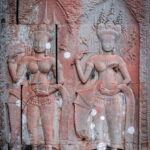
This is where the Angkor experience changes from big scale to fine craft. Banteay Srei is known for its intricate, 3D carvings made in a soft, pinkish sandstone. It’s also relatively small compared to many other Angkor temples.
Two details make it especially interesting:
1) It’s often called the jewel of Khmer art, because the craftsmanship is so detailed.
2) It’s sometimes linked to the nickname Citadel of the Women, reflecting the delicacy of the work.
The fact that it was commissioned not by a king but by a Brahman courtier adds another layer to the story. It feels less like a royal mega-project and more like a commission driven by personal devotion and taste.
This stop is listed for about two hours and marked as free admission here. Even with free admission, treat your time as valuable. This is a temple where you’ll enjoy taking a slower loop, looking up at carvings, and then stepping back to see the overall composition.
How the guide changes what you notice (hello, Mr. K)
One of the best parts of this type of tour is how interpretation makes the ruins click.
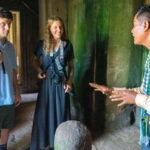
In the reviews data you provided, Mr. K shows up as a standout: informative and attentive, with a good sense of which temples matter most to you and what time of day works well. He also shares ideas about the area beyond the temples, which can turn a day of stone into a fuller picture of Cambodia.
Even if you don’t get the same guide, the format is designed for guidance, not just transport. Look for someone who can point out:
- what to look for in the carvings,
- why the layout matters,
- and how different temple styles fit together across the circuit.
That’s where you get value beyond sightseeing.
Angkor Pass and admission planning without stress
Admission can feel confusing at Angkor because temples have different rules and timing. Here’s the clean way to plan using the info you have:
- Your tour price is $50 and includes guide, A/C vehicle, pickup/drop-off, and cold water.
- Admission fee isn’t included, and the Angkor Pass fee listed here is $37 per person.
- In the tour’s stop notes, several sites are marked as free admission (like Neak Pean, Ta Som, Eastern Mebon, Banteay Samre, and Banteay Srei), while Preah Khan is noted as not included.
So don’t assume every stop is ticket-free just because some are marked free. Plan for at least the $37 Angkor Pass cost, then let the day’s free entries reduce your total effort on the ground.
Who this tour fits best
This is a great fit if:
- you want the Grand Circuit because you prefer quieter spaces and less crowd pressure,
- you care about seeing Banteay Srei’s carving details (not just sweeping views),
- you appreciate a guide who can help you pick what to focus on.
It may be less ideal if:
- you want a short, ultra-light half day,
- you dislike walking between temple areas for 6 to 8 hours,
- you’re on a tight schedule where spending time on multiple sites feels like too much.
Because it’s a private tour for your group, it’s also a strong choice for couples and small parties who want a more controlled pace than group buses.
Should you book the Angkor Grand Circuit & Banteay Srei?
I’d book it if you want Angkor that feels thoughtful, not frantic. The Grand Circuit route gives you a calmer tempo, and ending with Banteay Srei is a smart move because it delivers craftsmanship you don’t get at every stop.
Do it especially if comfort matters to you. The included A/C vehicle and cold water help you stay present. And if you can get a guide like Mr. K, you’re likely to come away understanding more than just what the temples look like.
Skip or reconsider if you’re only interested in the single most famous Angkor icons and you want minimal time on other sites. This tour is built for variety and closer looking, not just hitting the top photo targets.
FAQ
How long is the Angkor Grand Circuit & Banteay Srei tour?
It runs for about 6 to 8 hours.
What’s included in the tour price?
The tour includes an English speaking tour guide, pickup and drop-off, an air-conditioned vehicle, and cold drinking water.
Is the Angkor admission fee included?
No. Admission fee is not included, and the listed Angkor Pass cost here is $37 per person.
Does the tour include a mobile ticket?
Yes, a mobile ticket is included.
Are meals included?
No meal details are included in the provided tour information.
Is pickup offered?
Yes, pickup and drop-off are included.
Is this a private tour?
Yes. It’s listed as private, with only your group participating.
How many people are on the tour?
The details provided don’t give a max group size, but it is private for your group.
What’s the cancellation policy?
Free cancellation is available, and you can cancel up to 24 hours in advance for a full refund.
Is this tour suitable for most travelers?
Yes, it’s listed that most travelers can participate.