REVIEW · SIEM REAP
Private Full-Day Angkor Temple and Sunset Viewing with Lunch
Book on Viator →Operated by Bravo Indochina Tours · Bookable on Viator
One temple day can change your whole trip. This private Angkor tour pairs big-name ruins with sunset viewing at Pre Rup, plus a local lunch and hotel pickup. You also get a personal guide to make sense of what you’re seeing, from Ta Prohm’s tree-root takeover to the faces of Bayon.
I especially like two things: the freedom of a true private vehicle and guide that can set the pace for your group, and the way the day balances the classic highlights with time to actually look. I also like that your plan includes a proper lunch stop, so you’re not running on heat and sugar.
One thing to watch: you’ll be walking on uneven ground and climbing steps at several temples, and the sunset portion may involve extra effort (and sometimes weather can affect what you see).
In This Review
- Key Takeaways Before You Go
- How This Private Angkor Day Really Plays
- Price and What You’re Getting Value For
- The 9:00 AM Flow: Angkor Wat to Ta Prohm to Sunset
- Angkor Wat: The Morning “Anchor” Stop
- Angkor Thom and Bayon: Faces, Geometry, and Crowd Smarts
- Ta Prohm: Where Trees Take Over
- Lunch at a Local Restaurant: Fuel Without the Guesswork
- Pre Rup Sunset: The Finale With Real Trade-Offs
- Guide Quality: Where the Day Is Won or Lost
- Practical Tips That Make Angkor Much Easier
- Who This Tour Is Best For
- Should You Book This Angkor Tour?
- FAQ
- What time does the tour start?
- How long is the experience?
- Does this include hotel pickup and drop-off?
- Is the temple admission ticket included?
- What’s included with the price?
- Are drinks included?
- Will we see Pre Rup at sunset?
- What dress code do I need to follow?
- Are dietary requirements handled?
- Is this really private?
Key Takeaways Before You Go
- Private group, private car: hotel pickup and drop-off from Siem Reap, not a cattle-car circuit.
- Angkor Wat + Ta Prohm + Angkor Thom: the biggest hits are in one day with a guide to connect the dots.
- Pre Rup sunset is built in: the schedule ends with a viewing, so you’re not rushing to grab tickets and go it alone.
- Lunch is included: a real meal breaks up the long day in the Khmer heat.
- Dress for temples, not comfort theater: covered shoulders/chest and covered knees are required.
- Physical pace matters: steep steps and climbing come with the ticket.
How This Private Angkor Day Really Plays
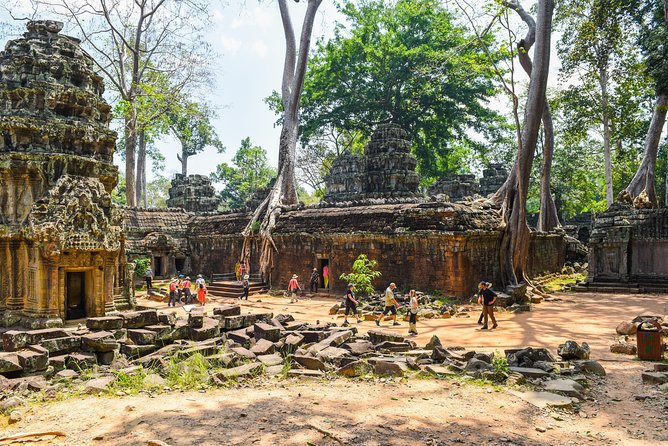
This tour is designed for people who want Angkor to feel like a story, not a stamp-collecting checklist. You start in the morning with a hotel pickup, then ride in a private vehicle into the Angkor Archaeological Park. The itinerary is structured around the major sites most people travel here for: Angkor Wat, Angkor Thom (with Bayon), Ta Prohm, and finally Pre Rup for sunset viewing.
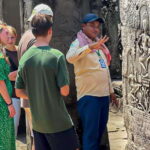
What makes the day work is that it’s not just “go there, take photo, move on.” A good guide will explain why these stones were built, how the Khmer Empire used them, and what you’re looking at when the trees start eating the walls at Ta Prohm. In fact, many praised guides (from Ly to Nino to Sam) are singled out for storytelling-style explanations and for answering real questions without rushing you out of the best viewpoints.
The day is also practical: lunch is included, and the tour is timed to fit a full day (about 8 hours). That said, you’re still doing a lot of walking. If your mobility is limited, you’ll want to plan on breaks and an honest talk at the start about what you can handle.
You can also read our reviews of more private tours in Siem Reap
Price and What You’re Getting Value For
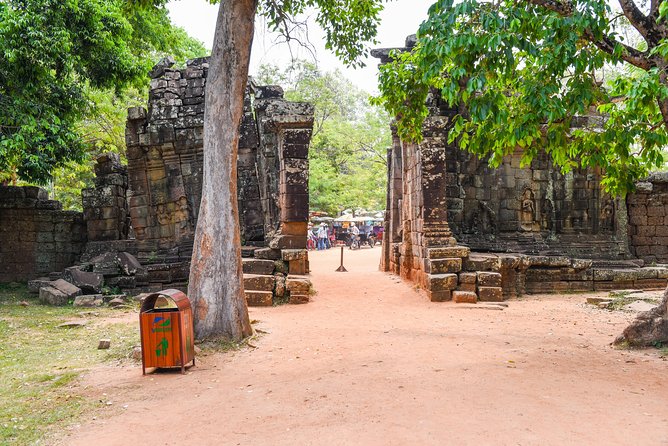
At $67.69 per person, the value depends on how you’ll use the day.
Here’s what you get for that price:
- Hotel pickup and drop-off
- Transport in a private vehicle
- A private guide for the sightseeing stops
- Lunch
- Sunset viewing at Pre Rup
What’s not included:
- Temple admission (single-day ticket) is not included, and you’ll need to budget for that separately.
- Drinks aren’t included.
- There can be a surcharge for Spanish or German guides.
So you’re paying for convenience and guidance more than for entrance fees. If you’re the kind of traveler who likes to know what you’re looking at (and who appreciates a guide who can steer you around crowds), this tends to feel worth it. If you’re mainly chasing photos and you don’t care about explanations, you may question the price.
The best case is simple: you end up with a guide who keeps you moving smartly, helps with stairs if needed, and gives you context so Angkor Wat doesn’t just blur into a bunch of carvings.
The 9:00 AM Flow: Angkor Wat to Ta Prohm to Sunset
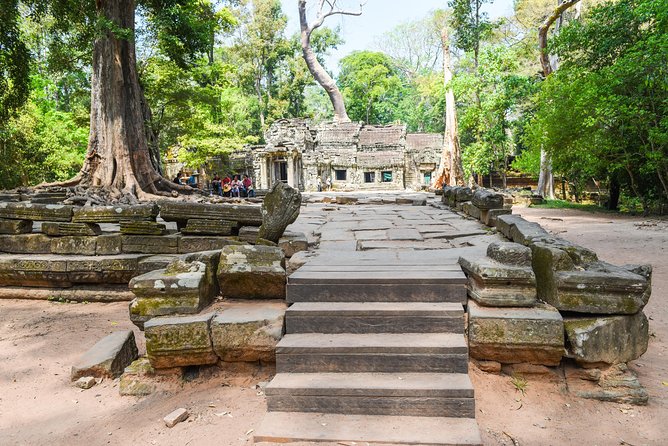
The schedule starts at 9:00 am. From there, the day typically feels like three phases:
1) Morning highlights and orientation
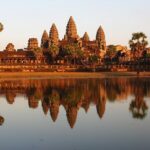
You begin with Angkor Wat, the big “wow” temple. It’s a long morning block, and many people like starting here because the air is cooler and the light is easier for photography.
2) Cambodia’s dramatic ruin story
Next comes Angkor Thom and Bayon, then Ta Prohm. This is where you see Angkor not only as architecture, but as a living collision between humans and nature.
3) Pre Rup sunset finale
You finish with sunset viewing at Pre Rup. This is the part that can be smooth or frustrating depending on weather and stamina, because sunset viewing often means you’ll stand, wait, and climb at least some.
A common theme in the strongest experiences is pacing. Guides who are praised (for example Rein Horn, Sith, Ouen, Khis, Wooti, Se Vannsak, and Mickey) are often described as patient with photo-taking and willing to adjust routes so you spend less time stuck in the densest lines. That makes a huge difference here, because queues and heat can drain your mood faster than jet lag.
Angkor Wat: The Morning “Anchor” Stop
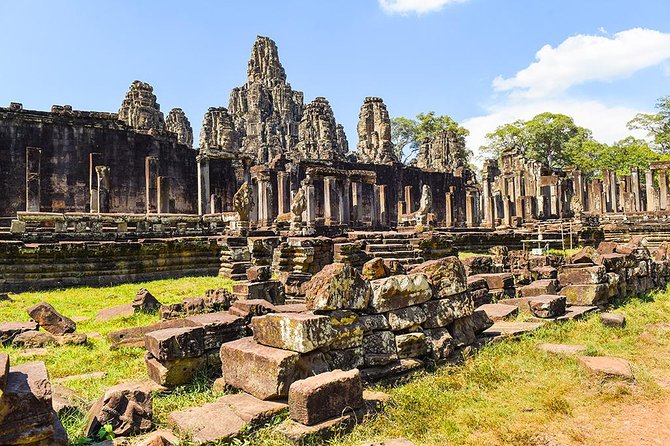
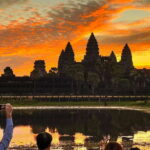
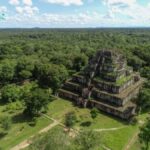
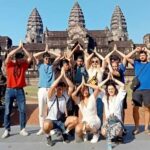
Angkor Wat is the logical first stop. Even if you’ve seen photos a thousand times, being there in person hits differently because of scale and symmetry. The structure is also easier to understand with a guide, since they can point out what to notice: where your eye should travel, what details mean, and why the layout matters.
This morning block is often where people feel the biggest payoff. It’s also where you’ll want the most attention to practical comfort. Several guides and experiences stress that some areas involve tall stairs and steep steps. Bring shoes you trust, not “nice sandals” shoes.
A practical tip: if you care about photos, ask your guide when the best angles are likely to be. Many praised guides are described as taking photos for the group and being very patient while you frame shots.
If you’re mobility-limited, you should know that parts of Angkor Wat can be physically demanding. Some experiences note that guides helped people manage stairs and stayed mindful of comfort and shade. That kind of support can turn a stressful morning into a memorable one.
Angkor Thom and Bayon: Faces, Geometry, and Crowd Smarts
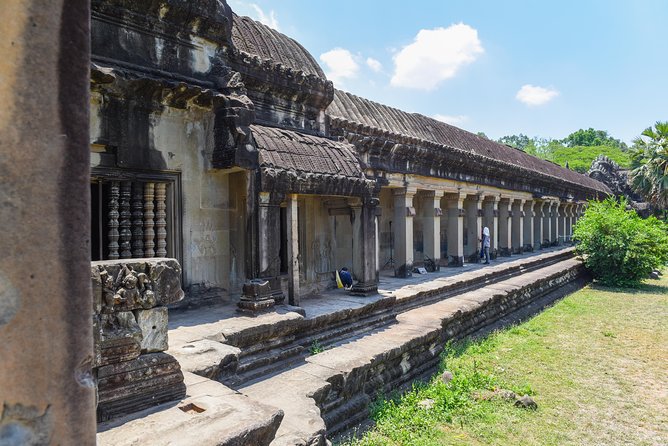
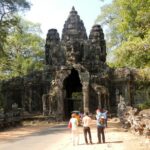
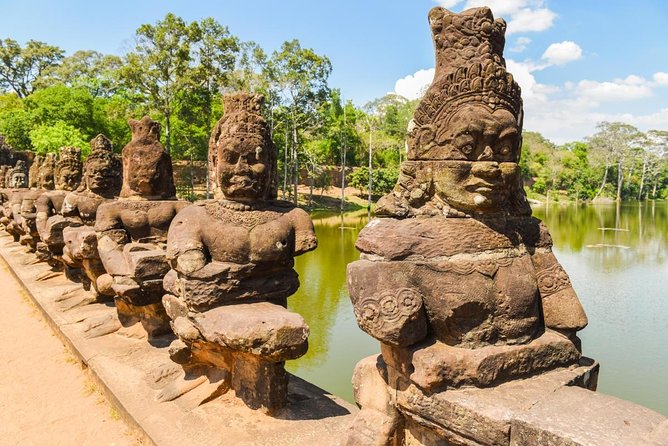
After Angkor Wat, the day shifts to Angkor Thom and Bayon. This is where you start noticing the site as a complex city-space rather than one temple you walk through quickly.
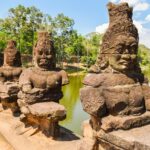
Bayon is the famous one for the giant stone faces. What I like about this stop on a guided private day is that you don’t just see faces; you learn how the carvings connect to the temple’s function and to Khmer-era symbolism. A great guide also helps you understand how to approach viewpoints so you get both the dramatic front-and-center views and the smaller details you might miss if you rush.
Crowds matter here. More than one highly rated experience mentions the value of smart routing. For example, one memorable approach described with a guide took a reverse route to reduce crowd jostling at Ta Prohm, and similar thinking often applies across Angkor Thom as well: you want to avoid walking through peak congestion if possible.
A balanced note: not every guide experience is perfect. Some accounts describe days where the visit felt rushed or where explanation time was cut short. If that worries you, the best strategy is to set expectations early with your guide: you want time at viewpoints, you want explanation, and you want the sunset part to stay on schedule.
You can also read our reviews of more tours and experiences in Siem Reap
Ta Prohm: Where Trees Take Over
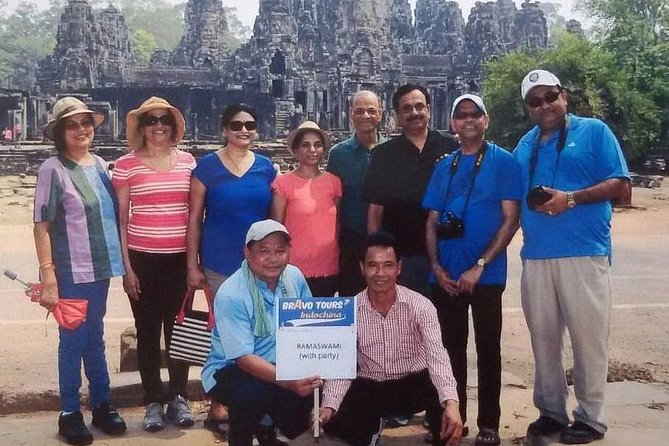
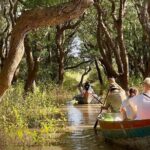
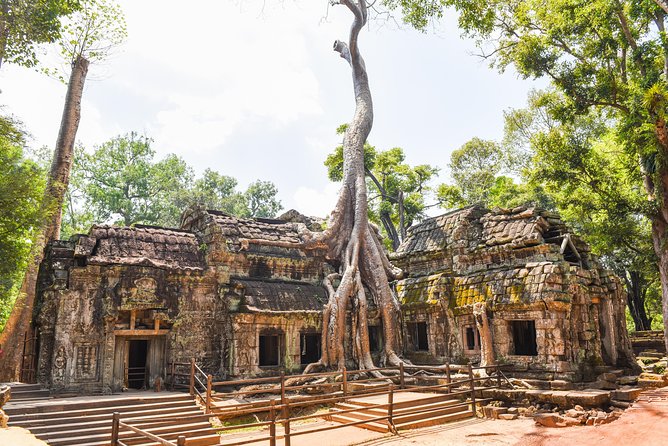
Ta Prohm is the “how is this real” stop. The trees and roots gripping the stones can look staged in photos. Up close, it looks like the site is still mid-transformation. The visual contrast is strong: delicate vines pulling through massive stone blocks, and a temple that reads like both ruin and sanctuary.
This is usually a high point for many people because it feels cinematic without being fake. A good guide helps by explaining what you’re seeing and what that kind of preservation means for the site’s look today.
Also, Ta Prohm often brings long stretches of walking. The heat and humidity can hit hard. Some experiences highlight the value of frequent water and small pauses, so if you run hot easily, talk about what breaks you’ll need and when.
Lunch at a Local Restaurant: Fuel Without the Guesswork
Lunch is included, and that matters more than it sounds. A long temple day in Cambodia can turn into a dehydration spiral if lunch is delayed or mediocre.
Most included lunches on tours like this are what you’d expect: simple, filling, and built to keep you moving. Still, the standout experiences praise lunch as decent or even surprisingly good. And the bigger value is timing and ease. You don’t have to figure out where to eat once you’re already tired and sweating.
If you have dietary needs, you should advise them at booking. The tour data specifically says you should share dietary requirements in advance, which is what you want for a day with limited flexibility.
Also remember: drinks aren’t included, so if you drink a lot of water or want juice or soft drinks, plan to pay separately.
Pre Rup Sunset: The Finale With Real Trade-Offs
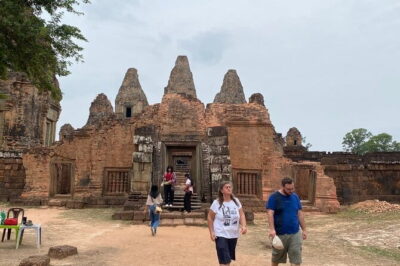
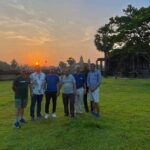
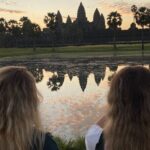
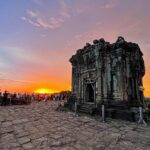
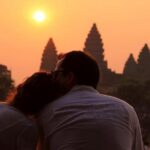
The day ends with sunset viewing at Pre Rup Temple. Sunset at Angkor sites is popular for a reason. The light softens the stone, the sky gives you color, and the moment feels slower than the earlier temple rushing.
But there’s a trade-off: Pre Rup can require extra walking and possibly more climbing. Some experiences describe skipping the sunset because the group was exhausted or because the climb felt too much. Others say the sunset was stunning, with lines that were shorter than expected.
Weather is also a factor. Some days may not deliver the sunset view people hoped for, even if the plan is intact. If you’re booking specifically for the sunset, it’s wise to accept that the Khmer skies have their own ideas sometimes.
Practical move: ask your guide at the start whether the sunset portion will remain on the schedule no matter what. In the best scenarios, guides stay flexible but committed to the plan. In a worst-case scenario, some accounts describe the sunset being missed due to issues like weather, route changes, or timing pressure. You can’t control the sky, but you can control how clearly the sunset is treated as part of the core itinerary.
Guide Quality: Where the Day Is Won or Lost
This tour is only as smooth as the human running it. On paper, it’s private. In real life, the biggest difference tends to be the guide’s style and respect for your time.
Here are patterns from strong experiences:
- Guides are praised for explaining temples in a story style, not just repeating facts.
- Guides are patient with photos and questions.
- Guides help with stairs and mobility, including finding shade and taking a route with less crowd friction.
- Drivers and guides keep the group hydrated and comfortable, with mentions of ice-cold water and even wet towels in some cases.
- Guides sometimes get proactive about timing, like steering you to better photo spots even when you’re waiting in lines.
Specific named examples that came through in the strongest write-ups include Ly, Nino, Sam, Rein Horn, Sith, Wooti, Se Vannsak, Khis, Ouen, Mr Horm, Joe, Hong, and Mickey. The common thread isn’t who they are; it’s how they work with people.
Now the balanced side:
- A few accounts describe issues like rushing, shortcuts on stops, or pushy detours into shopping spots.
- Some mention timing problems like delays at the start or the guide not showing up.
- One bad experience described a guide being unpleasant around dress code, which matters because Angkor rules are real and enforced.
So how do you protect yourself? Ask questions before you commit to meet-the-guide vagueness. At pickup, confirm the stops and confirm sunset timing. If you feel the guide is trying to shortcut, politely but firmly tie them back to the day you booked.
Practical Tips That Make Angkor Much Easier
You don’t need special gear. You do need basics.
1) Dress code
Expect rules: covered shoulders/chest and covered knees. Plan clothing that breathes. Avoid the last-minute scramble at the entrance.
2) Shoes
Some temples have steep steps. Several accounts directly mention steep stairs, and a few mention hiking shoes as a must. If your feet hate you, your brain won’t enjoy the ruins.
3) Water and heat
Bring a plan for hydration. Even when water is provided on tour, you should still anticipate long, sweaty time outdoors.
4) Sun protection
Sunscreen is smart. People also mention stamina and the need for breaks.
5) Timing expectations
The day is about 8 hours, and it can feel longer once you factor in heat, bathroom breaks, and queue time. A private guide helps, but it doesn’t erase physics.
6) Moderate physical fitness
The tour requires moderate fitness. That’s not a scare tactic. It’s your heads-up that you’ll be walking and climbing.
Who This Tour Is Best For
This is a great fit if you want:
- A private day with hotel pickup
- Expert guidance so the temples feel meaningful
- A plan that includes both the classics and a sunset finale
It’s especially suitable for people who value flexibility. Many praised private experiences mention that a private format lets families and mixed-ability groups slow down, take shade breaks, and focus on what matters most to them.
It may be less ideal if:
- You strongly dislike climbing stairs
- You’re hoping for a low-effort sightseeing day
- You’re booking only for sunset and can’t tolerate weather changes
If you’re traveling with older relatives or someone with mobility issues, pay attention to how the guide handles stairs and shade. When it’s done well, it’s a big quality-of-life upgrade.
Should You Book This Angkor Tour?
I’d book it if you want a structured, private Angkor day with lunch included and a built-in shot at Pre Rup sunset. The private vehicle and personal guide format is where the value usually shows up, especially if you care about explanations and pacing rather than rushing.
I wouldn’t book if you’re trying to avoid stairs and long outdoor walking, or if sunset is the only thing that matters and you’re not willing to accept weather as a wild card.
Best approach: confirm the temple admission is extra so you budget correctly, wear your temple-compliant outfit, and talk to your guide on pickup about the pace and the sunset. Done right, this is one of the most satisfying ways to experience Angkor in a single day without feeling like you’re glued to a schedule.
FAQ
What time does the tour start?
The tour starts at 9:00 am.
How long is the experience?
It runs for about 8 hours.
Does this include hotel pickup and drop-off?
Yes. Pickup and drop-off from Siem Reap are included.
Is the temple admission ticket included?
No. The tour does not include the single-day temple ticket.
What’s included with the price?
You get private transport, lunch, sightseeing as specified, and sunset viewing.
Are drinks included?
No. Drinks are not included.
Will we see Pre Rup at sunset?
Yes, sunset viewing at Pre Rup Temple is included as part of the itinerary.
What dress code do I need to follow?
Plan for covered shoulders and chest and covered knees.
Are dietary requirements handled?
Yes. You should advise dietary requirements at booking.
Is this really private?
Yes. It’s described as a private tour/activity, and only your group participates.