REVIEW · SIEM REAP
Classic Angkor Wat Sunrise or Sunset Private and Small GroupTour
Book on Viator →Operated by MyProGuide Cambodia · Bookable on Viator
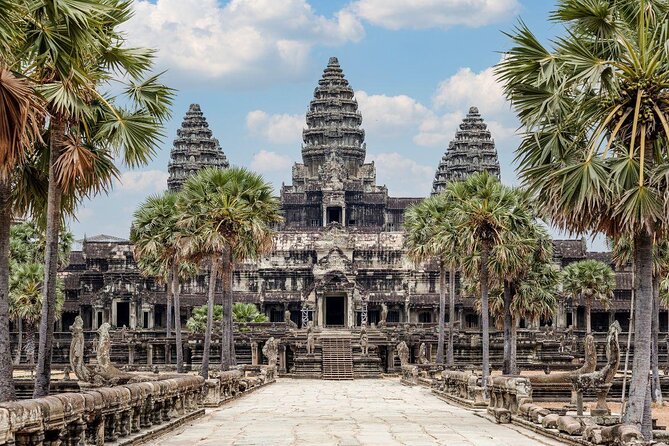
Golden light hits Angkor in hours, not days. This classic Angkor Wat sunrise or sunset experience strings together the big names plus a couple of quieter stops, with a professional English-speaking guide and an air-conditioned vehicle. You’ll visit Angkor Wat, Ta Prohm, Ta Nei, and Bayon, then (depending on your option) enjoy a major viewpoint moment at Phnom Bakheng.
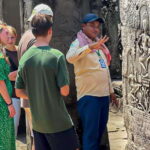
I especially like the small-group size (up to 15), which keeps the day feeling manageable rather than chaotic. And I really like the English-speaking guide—in past bookings, the guide Tola stood out for being friendly, passionate about Angkor Wat history, and even helping with great photo moments.
One thing to plan for: the price you see does not cover temple admissions. Angkor Wat admission is listed separately (USD 37 per person), and you’ll also need clothing that covers shoulders and knees.
In This Review
- Key things to know before you go
- Why This Classic Angkor Tour Works for an 8–9 Hour Day
- Price and Value: The Real Cost of Seeing Angkor Wat
- Pickup, AC Comfort, and the Human Touch
- Angkor Wat: 1.5 Hours That Start the Story
- Ta Prohm: The Trees, the Stone, and the Photo Wins
- Ta Nei and Bayon: Two Temples, Two Moods
- Phnom Bakheng Sunset Viewpoint: Where the Day Peaks
- What to Wear and Bring (So the Day Feels Easy)
- Timing, Walking Pace, and the Small-Group Advantage
- Who This Tour Suits Best
- Should You Book This Angkor Wat Sunrise or Sunset Tour?
- FAQ
- How long is the tour?
- Is pickup and drop-off included?
- Is this a private tour?
- Are temple admission fees included?
- How much is the Angkor Wat admission fee?
- What temples and sites are included?
- Can I choose a sunrise or sunset experience?
- What does the tour include besides the guide?
- What should I wear to the temples?
- Is there free cancellation?
Key things to know before you go
- Up to 15 people keeps the pace human and the conversations easy.
- Sunrise or sunset focus means you’re not just sightseeing in daylight.
- Professional English guide (like Tola) adds context and photo help.
- Air-conditioned van + water and towels make the long temple day easier.
- Tickets are separate so budget for the Angkor Wat admission fee.
- Dress code required: shoulders and knees covered.
Why This Classic Angkor Tour Works for an 8–9 Hour Day
Angkor is one of those places where timing matters. The stone temples read better when you can see details—carvings, faces, and those dramatic tree roots at Ta Prohm—and this tour is built to keep you moving without rushing you like a checklist.
The biggest win is how the itinerary mixes famous sights with stops that give you different angles on the same civilization. You start at Angkor Wat, then shift to Ta Prohm, then to the monastic-style Ta Nei, and finally to Bayon inside Angkor Thom. That flow helps you understand how the sites relate, not just what they look like.
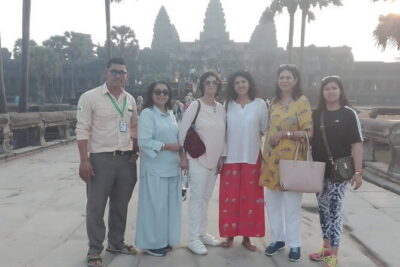
And because it’s set up as a private and small-group day (not a bus parade), you’re more likely to get questions answered as you walk. I like that you’re in good hands with a guide who can explain what you’re seeing in plain language, then let you enjoy the views.
You can also read our reviews of more private tours in Siem Reap

Price and Value: The Real Cost of Seeing Angkor Wat
Let’s do the numbers in a way that won’t surprise you later. The tour price is $14.40 per person, but temple admission is not included. Angkor Wat admission is listed at USD 37 per person.
So you should expect your total to be roughly $51.40 per person before personal expenses. That’s still a reasonable deal if you compare it to what you’re buying: a professional English guide, an air-conditioned vehicle, pickup and drop-off, plus cold water and towels.
You’re also paying for time management. A good guide helps you spend more minutes looking and less time figuring out where to go next. For sunrise or sunset options, that’s extra valuable because you can’t easily wing those lighting moments.
My advice: budget for the Angkor Wat ticket upfront, and keep a little extra cash for seasonal fruit or souvenirs if you want them.
Pickup, AC Comfort, and the Human Touch

This tour includes hotel pickup and drop-off, and that alone saves time in Siem Reap. You don’t have to negotiate transport between temple zones while the clock is ticking toward sunrise or sunset.
You’ll ride in an air-conditioned vehicle. One review highlighted that the minivan felt roomy and comfortable, and towels were part of the comfort kit during the day. That kind of practical support matters at Angkor, because even when the weather is pleasant, you’ll still be walking on uneven surfaces for hours.
The guide experience is where the day really earns its keep. In one of the standout reviews, Tola was called out for being very nice, passionate about Angkor Wat history, and a great photographer. Even if you don’t care about photography, it usually translates into better framing and smarter timing at each stop.
Angkor Wat: 1.5 Hours That Start the Story
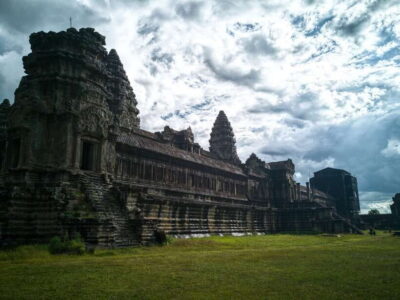
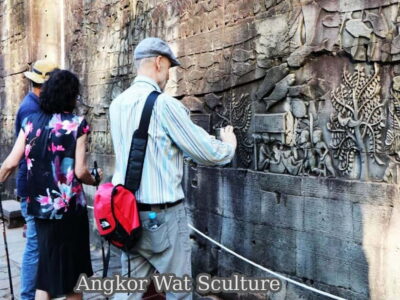
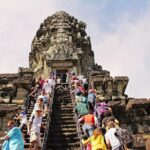
Angkor Wat is the headline, and this tour gives it about 1 hour 30 minutes. That’s enough time to take in the overall layout, focus on key areas, and still pause for details rather than speeding past everything.
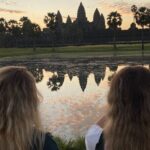
With the sunrise or sunset concept, the lighting changes the feel of the carvings and the contrast on stone. Sunrise tends to bring softer shadows and that early, quieter atmosphere. Sunset shifts the mood—darker sky tones and warmer colors on the structures.
Either way, your guide’s role is big. You’ll get context as you walk, not just a map of where to stand. I like tours that help you understand why certain elements are where they are, so the place feels meaningful instead of purely visual.
Practical note: admission is separate. If you’re traveling with a group, make sure you know exactly how your tickets will be handled so you don’t lose time at the entrance.
Ta Prohm: The Trees, the Stone, and the Photo Wins
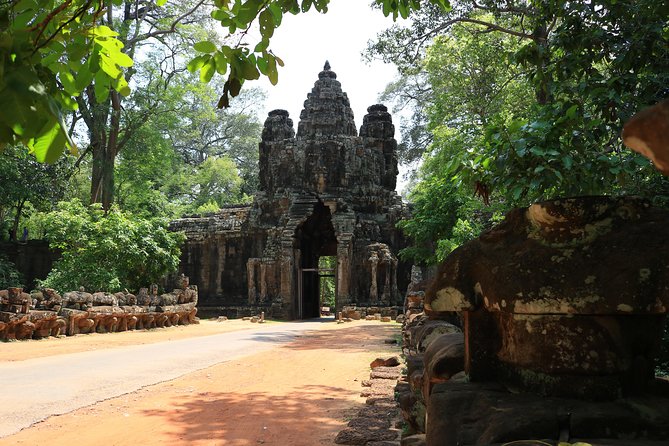
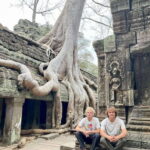
Ta Prohm is the stop most people recognize instantly, thanks to those dramatic tree roots that wrap into the ruins. This tour schedules about 1 hour here, which is a good chunk for walking the main paths, spotting carvings, and taking a breather in the shade.
The value of having a guide is that Ta Prohm isn’t only a photo backdrop. With the right explanation, you start noticing how the architecture holds up against nature, and you better understand what kind of temple environment this was built for.
This is also one of the easiest places to feel lost because there’s so much to look at from every angle. A guide helps you pace your route so you don’t spend the whole hour staring at one section while other areas pass you by.
And yes, this is one of those temples where you’ll probably want to take photos more than once. One review specifically praised the guide’s photography help, so if that’s your thing, ask for timing tips while you’re there.
You can also read our reviews of more evening experiences in Siem Reap





Ta Nei and Bayon: Two Temples, Two Moods
After Ta Prohm, you’ll head to Ta Nei. This stop is scheduled for about 1 hour and it has a different feel. Ta Nei is described as having a monastic complex-style setup, which makes it a nice contrast to the more famous, more widely discussed temples.
If you like your history explained in approachable terms, Ta Nei works well because it’s easier to read as a place that supported religious life rather than only a monument designed to be looked at from far away. You’ll get a chance to slow down and notice how the complex is arranged and how the walking routes guide you through it.
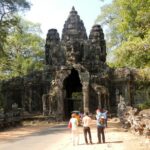
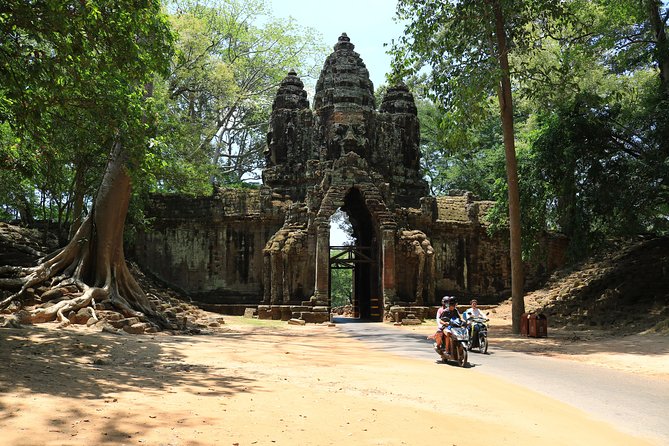
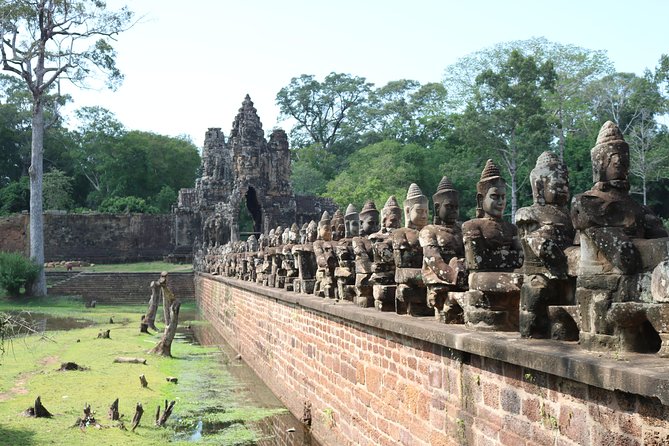
Then comes Bayon Temple, about 1 hour. Bayon sits within the Angkor Thom area and is famous for the 12th-century Buddhist temple with those iconic faces. The faces can look playful from a distance, but up close they feel more intense—stone expressions shaped by time and weather.
Here’s why I like this pairing: Ta Nei helps you understand the setting and purpose; Bayon gives you the signature visual power. Together, they make your day feel like more than a lineup of attractions.
Phnom Bakheng Sunset Viewpoint: Where the Day Peaks
If you choose the sunset option, you’ll end with Phnom Bakheng. The time set aside is about 1 hour, and the payoff is the panoramic view during sunset.
This is the moment where the whole day clicks. You’ve seen the temples up close, and now you get the wider picture: the way the temple zones sit in relation to the horizon and how the light transforms the stone and sky.
Even if you’re not a sunset person, it helps to plan around the light. The sunset window gives you a reason to arrive prepared and stay patient. Bring a calm attitude—viewpoints can have their busy moments—and let your guide handle the timing so you spend your effort where it counts.
If you pick the sunrise option instead, the big light moment shifts to Angkor Wat. The point is the same: you’re not just walking through ruins, you’re catching the sky-changing view that makes Angkor feel almost unreal.
What to Wear and Bring (So the Day Feels Easy)
Angkor is comfortable in concept, but physical in practice. You’ll be on your feet for hours, often on uneven stone and paths. Wear casual clothes and comfortable shoes with good grip.
There’s also a specific dress code: your cloth have to cover the shoulders and knee. So plan ahead. A light layer helps too, since temples are open-air and the sun can be strong.
Bring small cash if you want seasonal fruit or souvenirs. You don’t need to turn this into a shopping trip, but it’s nice to have the option without hunting for ATMs mid-day.
The tour includes cold water and towels, which is a big help during a hot walk. Still, I’d treat this like a full-day adventure: carry what you need personally, especially if you’re someone who gets thirsty or wants extra sun protection.
Also keep in mind that this experience requires good weather. If conditions are poor, you’ll be offered a different date or a full refund, so don’t panic if the sky isn’t cooperating at the start.
Timing, Walking Pace, and the Small-Group Advantage
The schedule is tight enough to cover the main temples without turning into a sprint. You’ll spend about 1 hour 30 minutes at Angkor Wat, then around 1 hour at Ta Prohm, Ta Nei, and Bayon, and about 1 hour at Phnom Bakheng on the sunset-style day. That structure keeps your energy stable.
Small group size matters here. With a max of 15 travelers, you’ll feel the difference on paths—less waiting, fewer bottlenecks, and more room for the guide to check in with your questions. It also makes it easier to capture photos because people aren’t constantly cutting in and out of your space.
The air-conditioned vehicle reduces fatigue between temple zones. Even a short ride helps, because you’re going from open sun to stone shade and back again. I like that the tour gives you that reset so you can enjoy each stop instead of just surviving the day.
Who This Tour Suits Best
This is a strong match if you want a guided Angkor day that still feels personal. You’ll likely enjoy it if you:
- want English commentary that helps you understand what you’re looking at
- prefer a small group over a big bus
- care about seeing Angkor in the right light through a sunrise or sunset option
- appreciate practical comfort like AC transport, water, and towels
It’s also a good choice for first-time Angkor visitors who want a classic overview but don’t want to feel rushed or totally on your own.
If you already know Angkor well and want complete freedom to roam at your own speed, a solo ticket-based plan could feel better. But for most people trying to make the most of one day, this tour structure is sensible.
Should You Book This Angkor Wat Sunrise or Sunset Tour?
Yes, you should book it if your priority is a smooth, guided day with the major temples and a strong light-moment payoff. The guide-led context turns the ruins into a story, and the small group size helps you actually enjoy the walking rather than fight for time.
I’d book this particular option with confidence if:
- you’re traveling with limited time in Siem Reap and want a focused route
- you value hotel pickup and a comfortable vehicle
- you want the sunrise or sunset experience without planning every step yourself
Just go in prepared for admissions and the dress code, and you’ll be set. Budget for the Angkor Wat ticket, wear shoulder-and-knee coverage, and keep your expectations realistic: it’s a long day, but it’s a well-run one.
FAQ
How long is the tour?
The tour lasts about 8 to 9 hours.
Is pickup and drop-off included?
Yes. Hotel pickup and drop-off are included.
Is this a private tour?
It’s described as a private and small group tour, with a maximum of 15 travelers.
Are temple admission fees included?
No. Admission tickets are not included in the tour price.
How much is the Angkor Wat admission fee?
Angkor Wat admission is listed at USD 37.00 per person.
What temples and sites are included?
The tour includes Angkor Wat, Ta Prohm, Ta Nei, Bayon Temple, and Phnom Bakheng (for the sunset option).
Can I choose a sunrise or sunset experience?
Yes. You can choose the sunrise option or the sunset option.
What does the tour include besides the guide?
It includes a professional English tour guide, water and a towel, and an air-conditioned vehicle.
What should I wear to the temples?
Wear casual clothes and comfortable shoes. Your clothing has to cover the shoulders and knee.
Is there free cancellation?
Yes, you can cancel for a full refund up to 24 hours in advance of the experience start time.