REVIEW · SIEM REAP
Angkor Wat Sunrise Tour
Book on Viator →Operated by Asia Voyage Travel · Bookable on Viator
Sunrise at Angkor feels like a reset. I like that this tour gets you to Angkor Wat before the crowds so you can watch the light change over the temple grounds, and I also like the practical extras: hotel pickup (if you request it), bottled water, and cold towels. The tradeoff is simple: it’s an early start and there’s a fair amount of walking once you’re inside the park.
What makes it especially appealing is the pairing of big set-piece temples with story-driven stops. You’ll move from Angkor Wat to Angkor Thom’s South Gate and Bayon’s carved faces, then finish at Ta Prohm, the one fans connect to the Tomb Raider look. It’s best for first-timers who want a tight morning-and-early-afternoon circuit with an English-speaking guide doing the heavy lifting.
In This Review
- Key Highlights You’ll Appreciate Before You Go
- The Value Play: $48.50 Plus One Big Ticket
- Angkor Wat Sunrise Timing: Why Starting Before the Light Matters
- Angkor Wat: A Full Temple Moment With a Real Guide
- After Sunrise: Breakfast, Then Straight to Angkor Thom
- Angkor Thom South Gate: Set the Scene in 30 Minutes
- Bayon Temple: The Faces You Can’t Stop Looking At
- Ta Prohm: The Tomb Raider Look, Up Close
- Pickup, Transport, and a Day That Doesn’t Feel Like a Puzzle
- Getting More From the Guide: Ask, Don’t Just Follow
- Who This Tour Suits Best (And Who Should Skip It)
- Should You Book This Angkor Wat Sunrise Tour?
Key Highlights You’ll Appreciate Before You Go
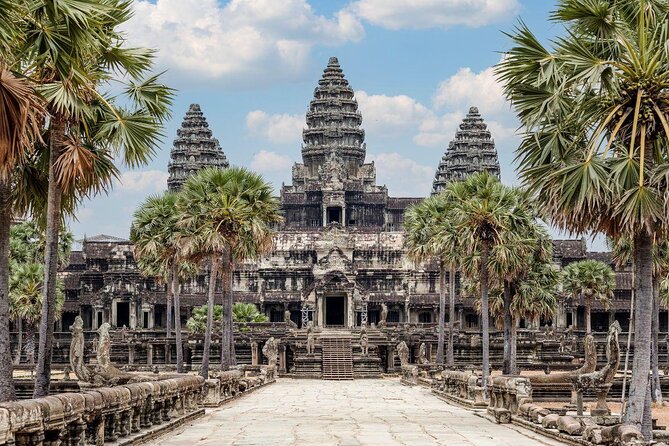
- 5:00am start to catch the best sunrise timing at Angkor Wat
- Private group format so your day doesn’t feel rushed around strangers
- Bayon’s smiling faces explained on-site with a guide who can put meaning to the carvings
- Ta Prohm’s tree-root ruins with the famous Tomb Raider vibe built into the route
- Angkor Park tickets sold separately at USD37 for a 1-day pass
- Small comforts included: bottled water, cold towels, and transport by your chosen vehicle
The Value Play: $48.50 Plus One Big Ticket
Let’s talk value up front, because at Angkor it’s easy to compare apples to oranges. The tour price is $48.50 per person, and that covers the guided temple circuit plus the day’s logistics: hotel pickup/drop-off if requested, a professional English-speaking guide, bottled water and cold towels, and transport by your chosen vehicle. You also get a mobile ticket, which helps on a busy morning.
The catch is the main monument admission. Angkor Park entrance tickets are not included and cost USD37 for a 1-day pass. So your realistic per-person budget is $48.50 + $37, and then you’ll want to keep some money aside for gratuities (recommended) and anything beyond water.
Duration also matters for value. You’re in this for about 6 to 7 hours, and that’s not just “time in transit.” Your day includes multiple temple areas with longish viewpoints and a slow, steady walking pace. If you’re the type who likes to linger, that time can feel just right. If you’re trying to pack in more and more, it can feel like a lot.
You can also read our reviews of more tours and experiences in Siem Reap


Angkor Wat Sunrise Timing: Why Starting Before the Light Matters
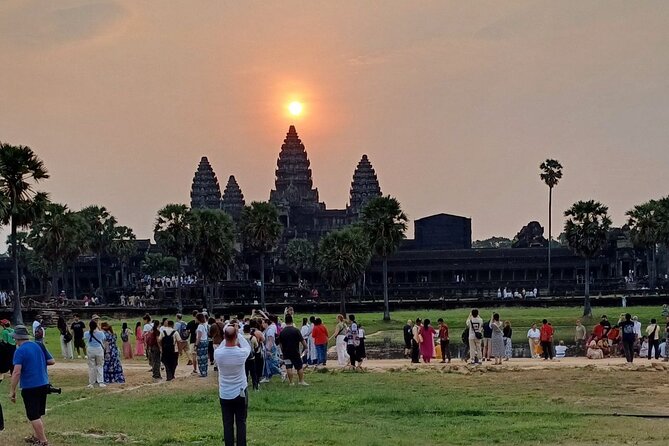
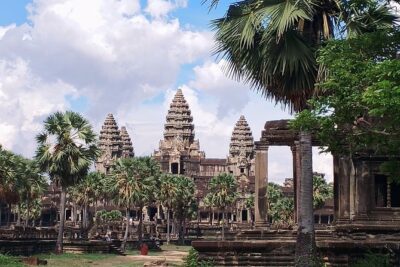
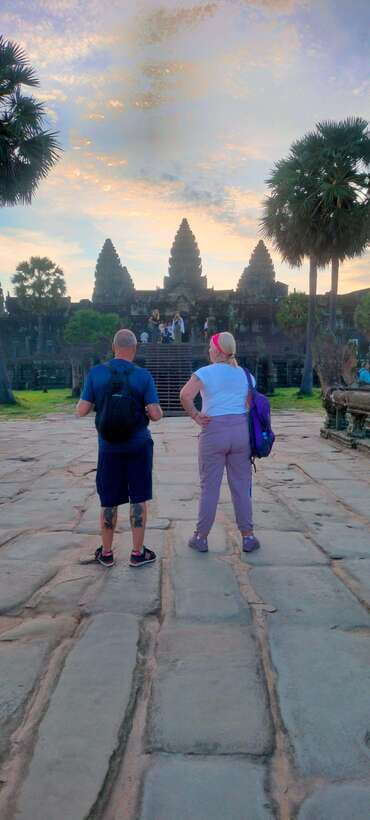
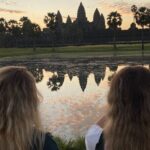
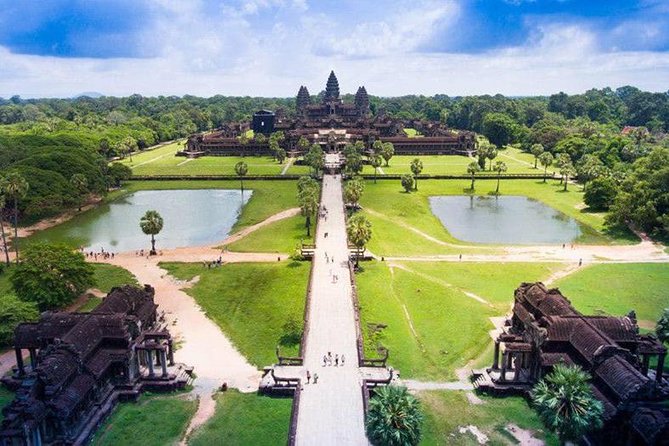
Angkor Wat is famous, but it’s the timing that makes sunrise tours feel worth it. This experience starts no later than 5:00am, and you’re picked up from your hotel by an English-speaking guide. Then you head to the temple to catch the first sunrise.
At Angkor Wat, your sunrise stop is about 1 hour. That’s a sweet spot: long enough to find a good view, watch the first light hit stone, and settle into the moment before the site fills up. One key consideration: the earlier you go, the more comfortable the experience tends to feel. Later in the day, the energy changes fast—more people, more waiting, more noise.
Also, you’re not just standing still. Even in an hour, you’ll be moving with the flow of the group and adjusting your spot as the sky changes. If you get cold early mornings easily, plan for that reality. Even if you don’t feel “cold,” you’ll likely feel a bit tired from the hour.
Angkor Wat: A Full Temple Moment With a Real Guide
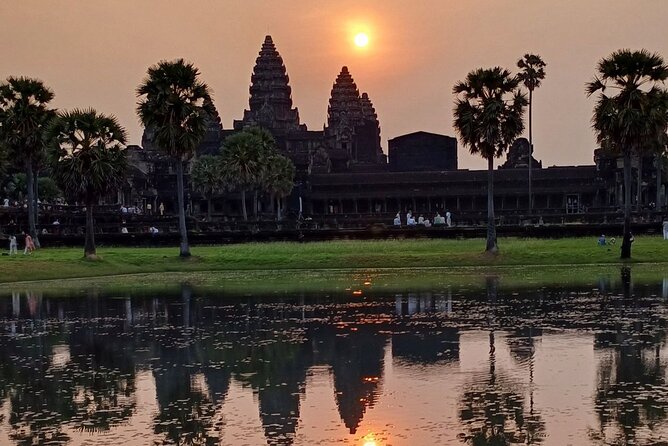
Your Angkor Wat time isn’t a quick photo sprint. The tour is built around watching sunrise and then continuing with the day right after. Since admission is not included, make sure you’ve handled the Angkor Park ticket before you arrive on-site—this keeps your first stop smooth instead of turning your sunrise into a ticket line.
What I like about this format is that it’s guide-led. You’re not left guessing where to go or what you’re looking at. The most praised element in feedback is the way guides place you at the right spots for the sunrise and explain what you’re seeing in plain, on-the-ground language. If your guide happens to be someone like Mr. Nary or Nuth Borey (both names show up in feedback), you’ll likely get a thoughtful, organized approach to the temple grounds rather than a rushed walkthrough.
And sunrise at Angkor Wat isn’t only about the view. It’s about seeing the temple shift from dark outlines to full detail—columns, gateways, and surfaces that look one way under early light and another later. That “change” is the point.
After Sunrise: Breakfast, Then Straight to Angkor Thom
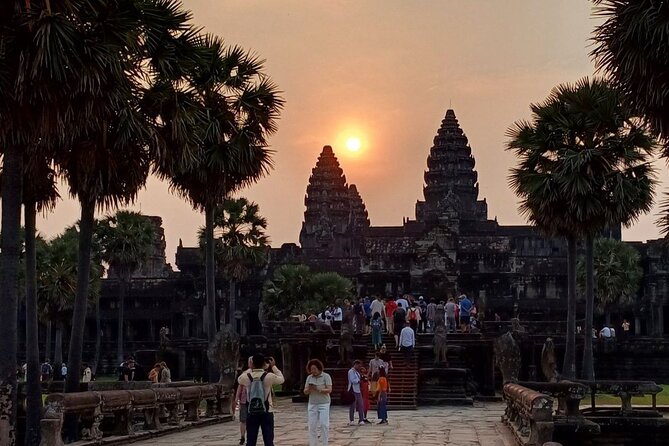
Once sunrise is done, the tour moves forward. The day is structured so you don’t just see a temple and leave—you watch the light, then you transition toward Angkor Thom, the second biggest city of the Khmer era.
There’s also a breakfast step after sunrise in the flow of the day. The exact timing of breakfast isn’t spelled out minute-by-minute, but the plan is clear: you’re fed before you enter more temple areas. Reviews also mention a coffee/food stop feeling tasty, so you’re not stuck only on water while the morning rolls on.
This matters because Angkor days can be physically draining. If you’ve ever done a sunrise plan elsewhere, you know the pattern: early wake-up, minimal food, then a long stretch of walking. Here, the structure helps prevent that.
Angkor Thom South Gate: Set the Scene in 30 Minutes
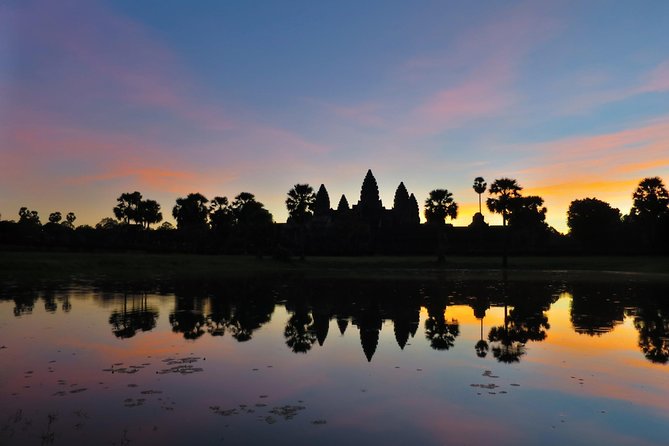
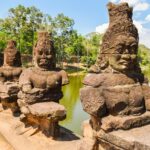
The next step is Angkor Thom South Gate. This stop is short—about 30 minutes—but it’s a good kind of short. You’re moving from the big, iconic site to the capital-city layout, and the gate gives you context fast.
Even in half an hour, it helps to have someone translate what you’re seeing so the next stop lands better. The South Gate is your threshold into the city space, and it’s the kind of moment where, without guidance, you might just think: nice gate, next.
With guidance, you get ready for what’s coming—Bayon and those famous carved faces.



Bayon Temple: The Faces You Can’t Stop Looking At
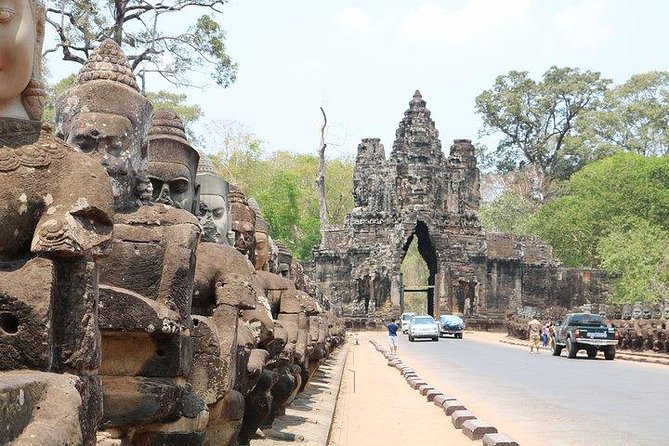
Then you settle into the Bayon Temple time—about 3 hours. That’s the long stop of the circuit after Angkor Wat, and it’s where the day’s personality really turns.
Bayon is described as the state temple of Angkor Thom, and the standout feature is the mass carving of smiling faces across the stone. This is one of those places where a guide earns their spot. The faces can look repetitive if you don’t know where to focus or what to notice. A good guide helps you slow down enough to see details and understand why this kind of stone carving matters.
Three hours gives you breathing room: not just “see it,” but “see it properly.” You’ll likely spend time repositioning for angles, noticing how the carvings repeat across areas, and taking your time with the visual rhythm of the place.
One practical thought: Bayon can be tiring if you’re walking non-stop and keeping your head tilted up the whole time. Pace yourself. Drink your water. Let the place land.
Ta Prohm: The Tomb Raider Look, Up Close
The final temple stop is Ta Prohm, often called the Tomb Raider temple. Your time here is about 2 hours, which is enough to enjoy the atmosphere without turning it into a long endurance test.
Ta Prohm’s signature feature is the way older tree roots have intertwined with masonry—stone caught in living growth. The effect feels strange in the best way, like the temple is partially reclaimed by nature rather than fixed in a single era.
If you like photo stops, this is one of your strongest moments of the tour. If you prefer quiet observation, it can still work, because Ta Prohm’s visual complexity rewards staying in place for a bit rather than racing through.
What to keep in mind: even without an official “hard hike” label, Ta Prohm requires movement. You’ll be stepping around uneven ground and weaving through group flow. Wear shoes you trust.
Pickup, Transport, and a Day That Doesn’t Feel Like a Puzzle
One reason this tour does well is that it treats Siem Reap-to-Angkor logistics as part of the experience. You get transport by your chosen vehicle, plus hotel pickup and drop-off if requested.
That’s not just comfort. In a place like Angkor, clear logistics reduce the number of decisions you have to make at 5:00am. You don’t need to solve timing, meeting points, or the “where’s the entrance” question while you’re tired and under time pressure. You show up, get guided, and follow the plan.
Also included are bottled water and cold towels, which you’ll actually appreciate during the warmer part of the morning. Small perks matter more than you think on temple days.
And because this is described as private with only your group participating, it’s a good fit if you want your pace to feel more human. You’re not constantly re-grouping around a big crowd of random schedules.
Getting More From the Guide: Ask, Don’t Just Follow
A sunrise tour can become a checklist if your guide is passive. The positive feedback for this experience focuses on how guides don’t just point—they explain, organize, and answer questions.
Names that show up in feedback include Mr. Nary, Boreye, and Nuth Borey. If you have any control at booking time, I’d try to match with a guide known for strong English and real temple command. The intellectual approach matters here because Bayon and Ta Prohm reward attention, not speed.
Here’s what to do on the ground: ask one question at each stop. Something like what to look for in the faces at Bayon, or how to interpret the way Ta Prohm’s roots interact with the stone. If your guide is the kind praised in feedback, you’ll get more than a quick answer.
Who This Tour Suits Best (And Who Should Skip It)
This tour is a strong match if you:
- Want a first-timer friendly circuit: Angkor Wat, Angkor Thom, Bayon, then Ta Prohm
- Prefer a guided day where the “what am I looking at” part is handled
- Like the idea of seeing sunrise first, then continuing before the heat and crowds peak
- Appreciate included basics like water, cold towels, and transport
I’d be cautious if you:
- Hate early mornings and don’t want a 5:00am start
- Don’t enjoy walking between multiple temple areas
- Want a very slow, solo pace with tons of downtime. This day is built to keep moving through highlights.
The best way to think of it is this: it’s designed for momentum. If you’re happy with that rhythm, you’ll likely feel like the day flows. If you want solitude and unstructured wandering, you might feel “on the move” more than you’d like.
Should You Book This Angkor Wat Sunrise Tour?
If you’re planning one major Angkor day from Siem Reap and you want the most iconic first light plus the key Khmer stops that most people remember, I’d book it. The biggest reasons are practical: early timing, a guided route that keeps the day from turning into guesswork, and included comforts like water and cold towels.
Just go in with two clear expectations. First, Angkor Park tickets cost USD37 per person and are not included in the $48.50 price. Second, plan for a busy, walking-heavy morning to early afternoon. If those fit your travel style, this is a smart way to spend your temple day—especially if you can get matched with a strong guide like the ones repeatedly praised in feedback.