REVIEW · SIEM REAP
Angkor Wat Sunrise Shared Tours: Bayon-Ta Prohm-Banteay Srei
Book on GetYourGuide →Operated by Siem Reap Tour Guide · Bookable on GetYourGuide
Four temples start with one perfect glow.
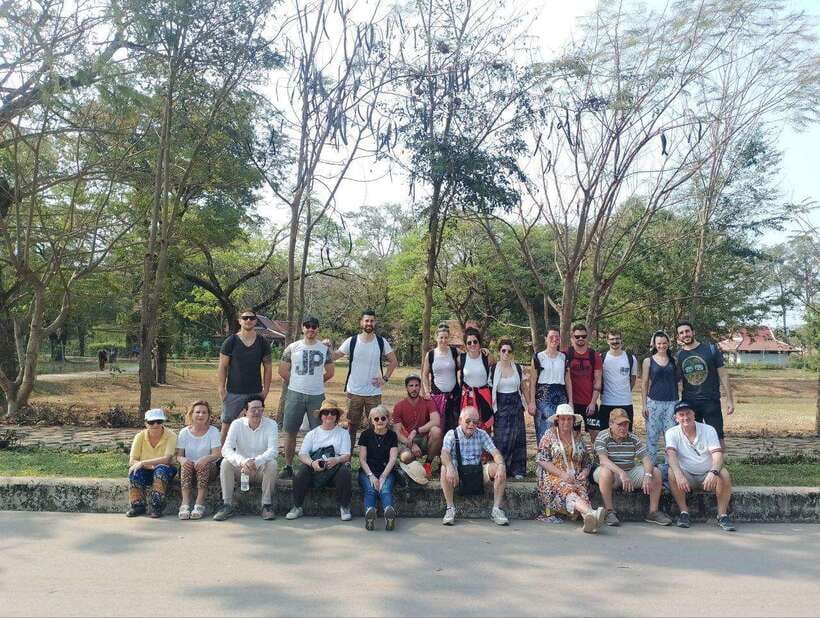
This shared-day plan is a smart way to hit Angkor essentials without getting lost in logistics: you’re in a small group (up to 12), you get an English guide who explains the history and religion at the right level, and you’ll watch the sunrise reflect in the moat at Angkor Wat. I also like that guides you may meet on this route, like Mr.Changra, John, or Sam, bring real clarity and even help with photos when you ask.
The one catch: the temple day pass isn’t included. It costs $37 per person, and you’ll pay it separately, even though it covers all the temples on the agenda.
In This Review
- Key things to know before you go
- Sunrise Angkor Wat plus the best-known temples in one day
- Price and temple pass math (what you really pay)
- Pickup, drop-off, and how the day stays organized in AC comfort
- Angkor Wat sunrise: the moat reflection moment
- Bayon Temple: 200 faces and a guide who makes it make sense
- Ta Prohm: tree roots, Hollywood fame, and real walking time
- Banteay Srei: the pink sandstone carvings and your longer break
- The countryside drive: daily life between temples
- Temple rules and what to pack for a comfortable day
- Who should book this sunrise shared tour
- Should you book? My decision guide
- FAQ
- How long is the Angkor Wat sunrise shared tour?
- What does the tour cost?
- Are temple admission fees included?
- Does the tour include hotel pickup and drop-off?
- How many people are in the group?
- Is there a live guide, and what language?
- Do you skip the line at Angkor Wat?
- What’s included in the tour package?
- What should I bring for temple visits?
- What isn’t allowed during the tour?
Key things to know before you go
- Sunrise at Angkor Wat: the moat reflection is the main moment.
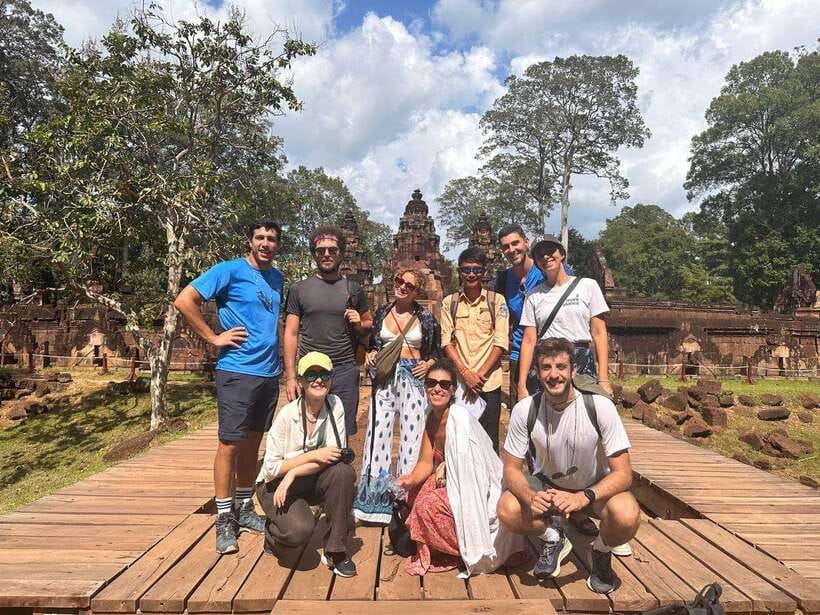
- Small group cap (12 people): enough structure to feel guided, still not a huge crowd.
- Skip-the-line entry: you use a separate entrance to save time at Angkor Wat.
- Guides who tailor the story: history and religion explained in a way you can actually use.
- Banteay Srei details: rosy carvings plus a longer stop than you might expect.
- Hotel pickup across Siem Reap: convenient collection and drop-off inside town.
Sunrise Angkor Wat plus the best-known temples in one day
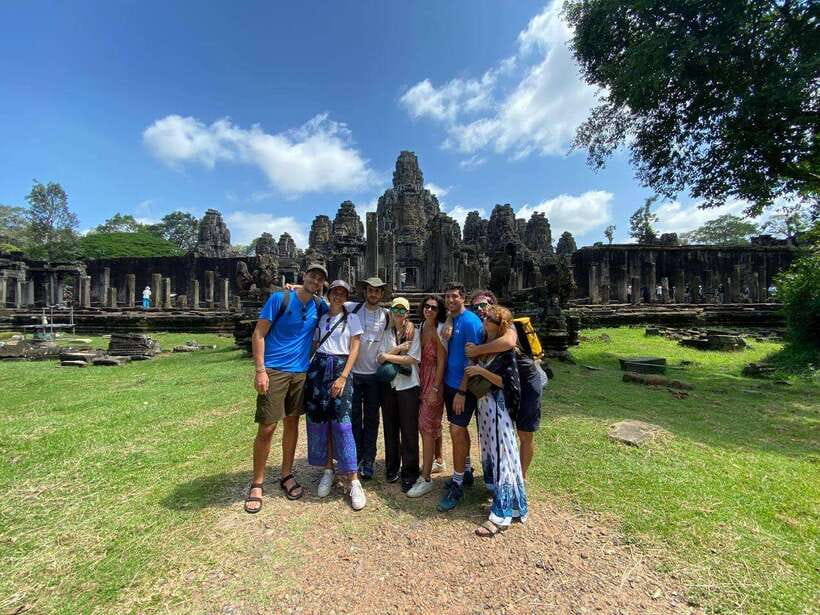
If Angkor is your big Cambodia move, this is the kind of tour that helps you feel organized from minute one. You start with the hardest-to-get-right part, the morning light at Angkor Wat. Then you move through the classic lineup people come for: Bayon, Ta Prohm, and Banteay Srei. It’s a lot, but the schedule is built so you’re not just rushing from gate to gate.
The real value is the balance: you get a professional guide and safe transport, plus enough walking time to experience each temple, not just snap photos and leave. And because this is a small shared group (maximum 12), you’re less likely to feel like a number.
You can also read our reviews of more tours and experiences in Siem Reap


Price and temple pass math (what you really pay)
The listed price is $27 per person, for a 9-hour experience. On top of that, you pay a temple day pass at your own expense: $37 per person. That means your all-in temple access is $64 per person before meals and any personal spending.
Here’s why that can still be good value. The $27 covers the parts that are usually the hidden cost when you try to DIY:
- Hotel pickup and drop-off within Siem Reap
- A professional English-speaking guide
- A safe driver in an AC minivan or minibus
- Cold drinking water and cold towels
- Gasoline, toll roads, and parking
And the $37 pass is said to cover all the temples on the agenda (the same sites you’re going to that day). So you’re not paying a separate admission each time you arrive.
One practical note from the vibe of shared tours: the value is at its best when the group stays full enough to run the full plan as intended. If you like four-temple days, aim for a departure where you’ll likely have enough people.
Pickup, drop-off, and how the day stays organized in AC comfort
This tour is designed around convenience. The driver can pick you up from multiple spots in Siem Reap town (listed pickup options include hotels and popular areas like Old Market and hostels), and drop you back at named locations in town at the end. The key detail: you’re not stuck meeting people somewhere random. Your name is on the reservation list at your pickup point.
Transport is done in an AC minivan/minibus, and the tour includes gasoline, toll roads, and parking. That matters because Angkor isn’t a single-city stroll. It’s spread out, and getting there without fighting traffic and directions is half the win.
They also build in safety briefings and provide cold water plus cold towels. That sounds small, but it helps a lot when you’re walking early and moving between sun exposure and temple shade.
Angkor Wat sunrise: the moat reflection moment
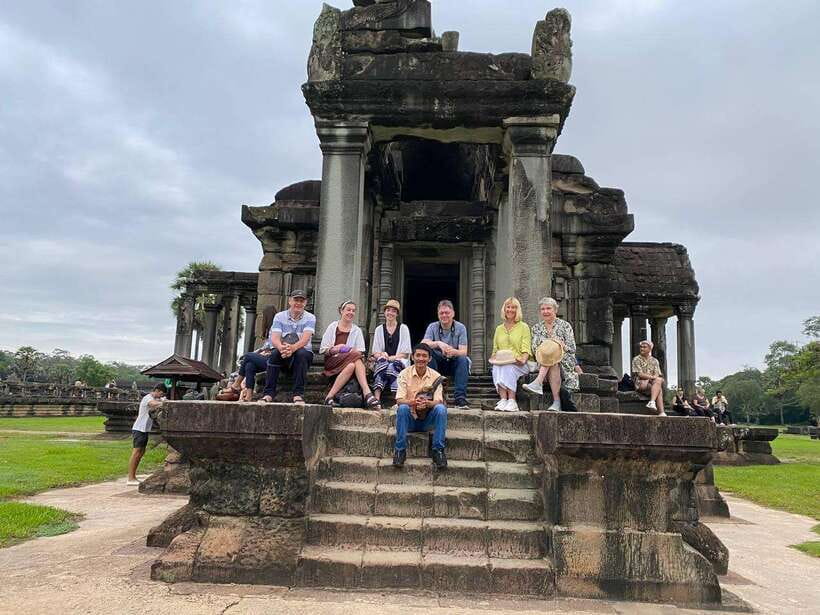
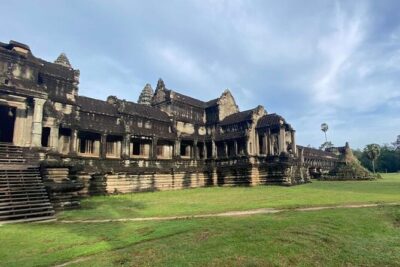
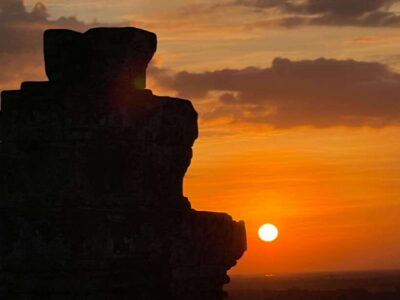
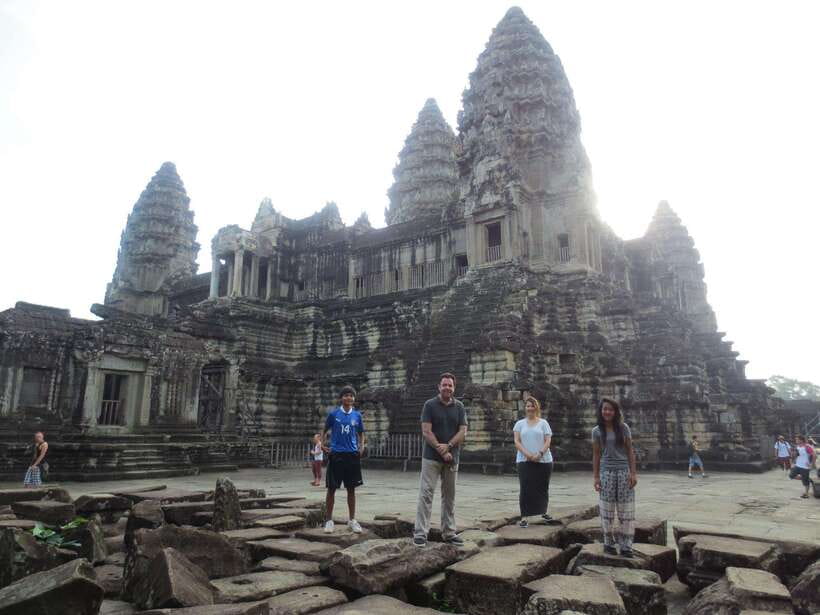
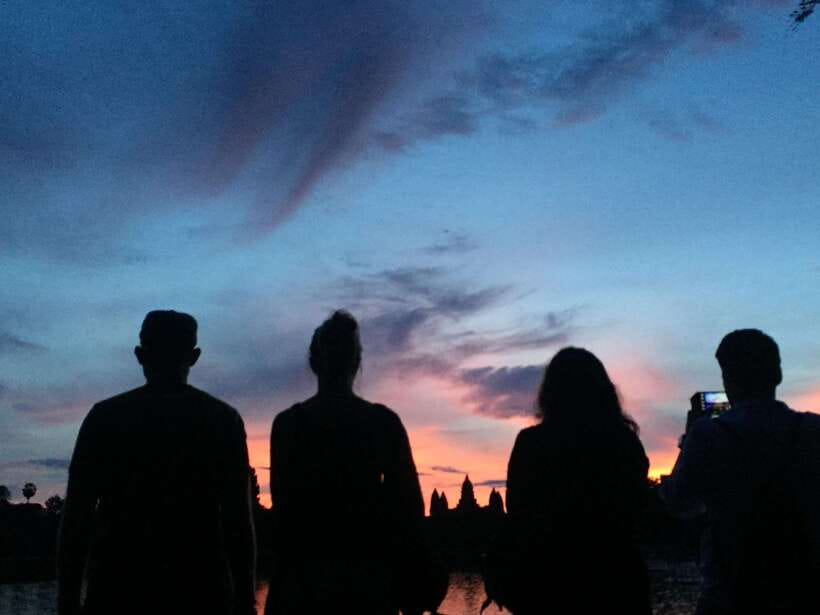
Angkor Wat at sunrise is why many people book Angkor tours in the first place, and this one is built around that first light. You’ll have enough time on-site for photo stops and a guided visit, plus a walk and photo-friendly pacing.
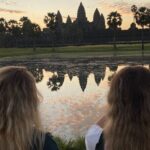
What makes the sunrise here special is the way the tour describes the core payoff: you’ll see the rising sun reflected in the moat of the Angkor Wat temple complex. That’s the kind of scene that feels cinematic, but it also rewards timing and position, which is exactly what a guided plan helps with.
Another plus: you skip the line through a separate entrance at Angkor Wat. In practice, that means you spend less time stuck near entry crowds and more time where you actually want your photos and explanations.
One scheduling detail to be aware of: the day includes breakfast time in the Angkor Wat portion of the schedule, but meals are listed as not included overall. So expect some kind of breakfast opportunity tied to the morning, but don’t assume it’s a fully covered meal package. If you care a lot about what’s served, double-check with the operator when booking.
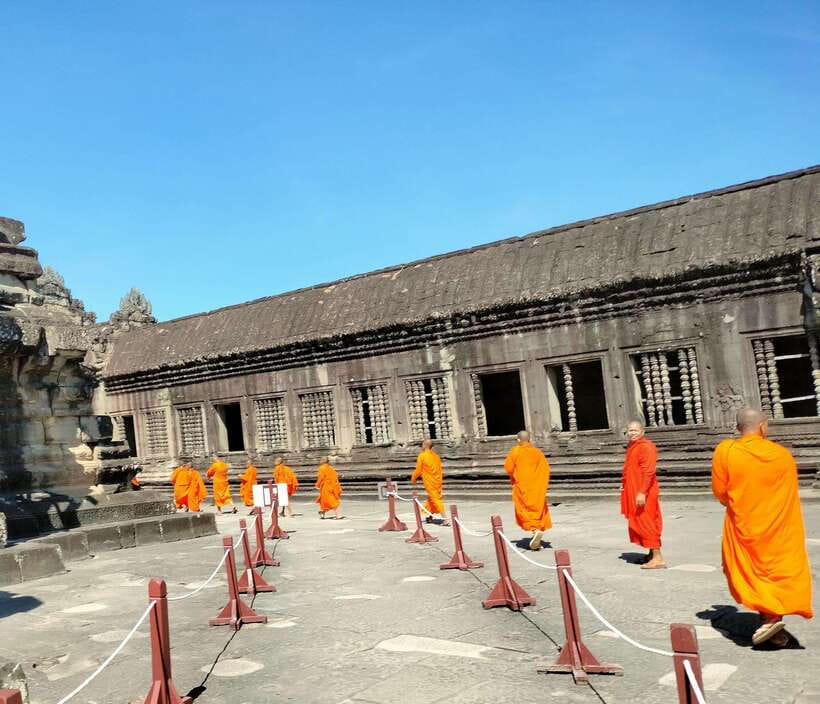
Dress rules also matter early. No shorts are allowed, and you’ll want knees and shoulders covered for temple areas. Sneakers are a smart choice for the walking surface.
Bayon Temple: 200 faces and a guide who makes it make sense
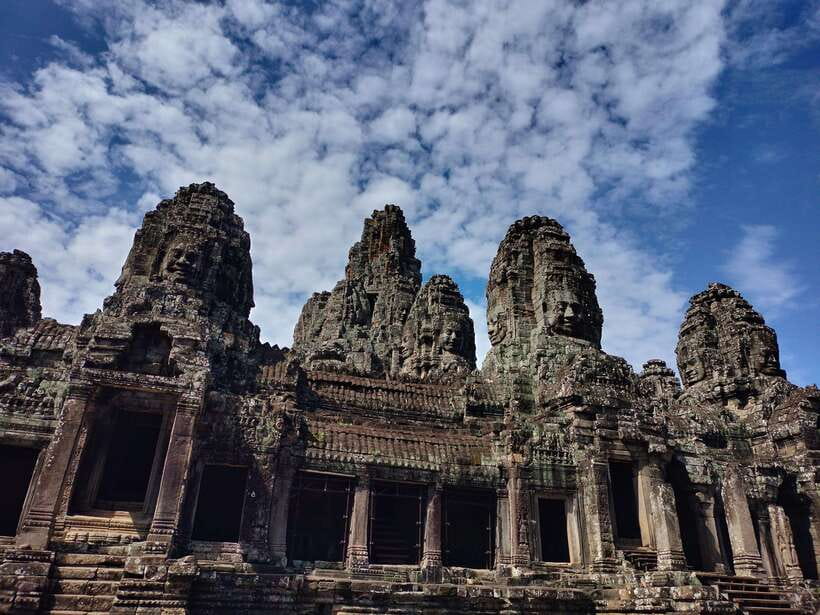
After Angkor Wat, you head to Bayon Temple. This stop is shorter than the others—about an hour with photo time, a guided visit, and walking—but it’s still one of the main emotional anchors of Angkor Thom.
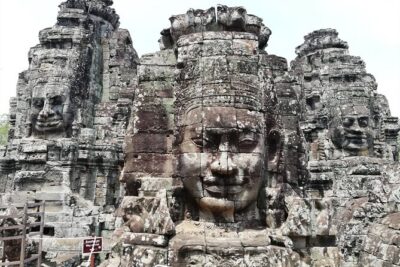
The big draw here is the faces. Bayon is described as decorated with over 200 faces, and that’s the moment your brain needs the guide for. Without context, it can turn into a blur of carvings. With a good explanation, you start noticing what changes across viewpoints and how the expressions repeat as you move around.
This is also where the guide’s “right level” approach really matters. You don’t need a textbook lecture, but you do want help connecting religion, architecture, and what you’re seeing in front of you. This tour is set up for that: live English guide, safety briefing, and time to walk rather than just stand at the main angles.


Ta Prohm: tree roots, Hollywood fame, and real walking time
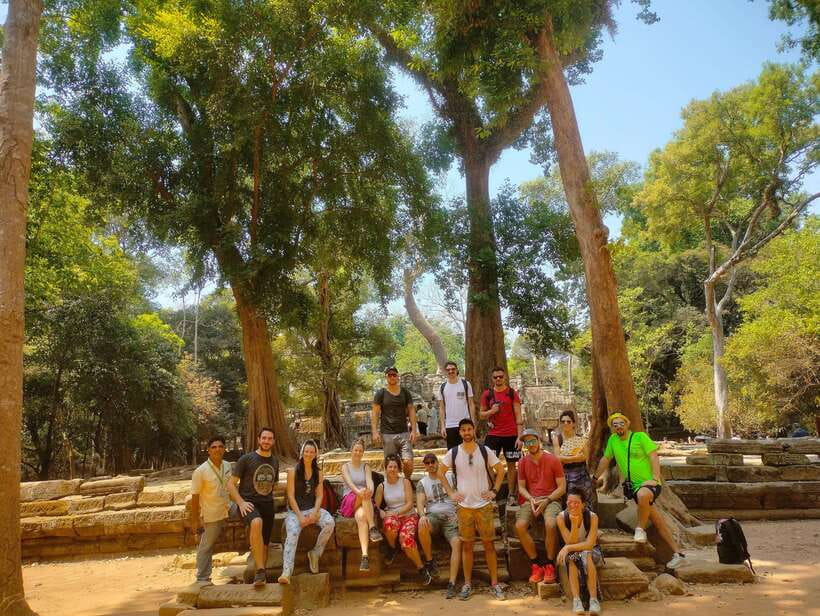
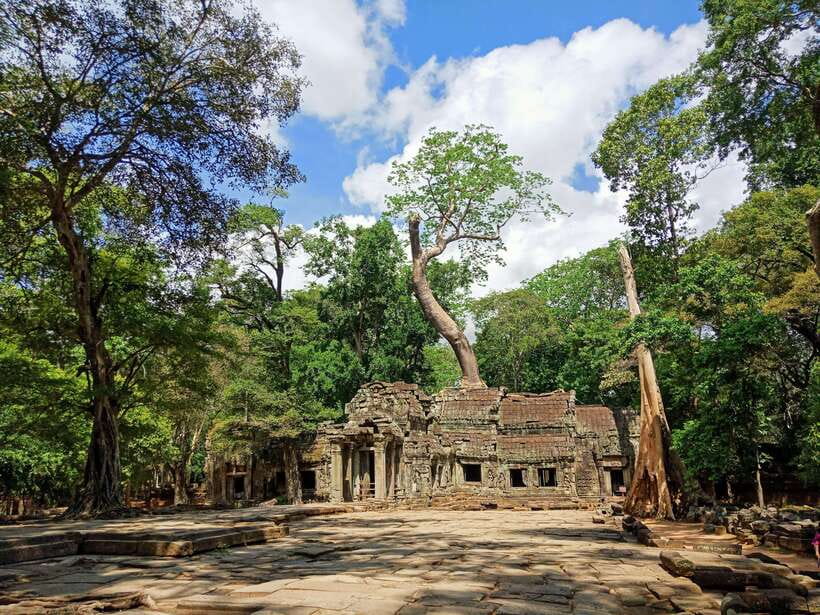
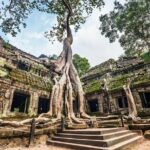
Ta Prohm is the temple people recognize even if they’ve never been to Cambodia. It’s famous for tree roots clambering over the stonework and was featured in the Hollywood movie Lara Croft Tomb Raider. That doesn’t ruin it. If anything, it helps you recognize the shapes immediately.
You’ll spend about 1.5 hours here, including photo stops and a guided visit. There’s also mention of a hop-on hop-off stop in the schedule, which usually means you get a little breathing room built into the movement between photo points.
The most practical advice for Ta Prohm: expect uneven steps and mixed light. The roots create shadows and narrow paths. If you’re doing a lot of stairy temple walking, go slow. This is also a spot where you’ll want a guide. The guide can steer you toward viewpoints that don’t just look good—they show why the roots matter and how the temple’s setting changes the mood.
Banteay Srei: the pink sandstone carvings and your longer break
Banteay Srei is the last and more detailed-feeling stop. You’ll have a longer time window here (the schedule lists several hours with break time, a photo stop, guided tour, lunch time, and time for local snacks).
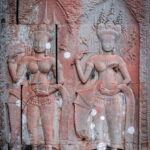
This temple is known for intricate carvings, described here as rosy and detailed. That description is spot-on for how Banteay Srei tends to look: it’s less about grand scale and more about precision. If Angkor Wat feels monumental, Banteay Srei is where you start seeing the craft.
The schedule also includes break time and local snacks. That’s important because your legs will be tired by then. Even with good pacing, it’s still a full-day temple circuit. A built-in break helps you enjoy the carvings instead of just surviving the next five minutes.
Like every temple stop, bring clothing that covers shoulders and knees. Shorts aren’t allowed. And keep your footwear comfortable—you’ll likely be walking more than you expect, especially around detailed surfaces where you’ll want to stop and look up.
The countryside drive: daily life between temples
A day like this isn’t only stone and sunrise. The tour also includes rides through the countryside, traditional villages, and old villages. You get windows on the way Angkor sits within living Cambodia, not a sealed-off theme park.
It’s not described as a formal village tour with a set performance. Instead, you’re driving through areas where you can see daily life and the texture of ordinary routines. For me, that kind of context is what keeps the day from feeling like a pure checklist.
Also, it’s a useful reset between walking zones. The vehicle time gives you a chance to cool down, drink water, and recharge your eyes before the next temple.
Temple rules and what to pack for a comfortable day
This tour has clear do-not rules. Pets are not allowed. Drones are not allowed. Shorts are not allowed. Weapons or sharp objects aren’t allowed. You also can’t bring drinks or food into the vehicle, and bikes aren’t mentioned as allowed. You’ll also want to avoid anything that violates the temple dress expectations like bare feet.
For what to bring, the list is simple and practical:
- Hat
- Sunblock
- Mosquito repellent
- Sneakers
- Light clothing that covers your knees and shoulders for temples
A quick strategy: treat this as a day where you’ll be outside for long stretches. The weather can shift, but sun and insects are always the risk.
Who should book this sunrise shared tour
Book this if you:
- Want the “big four” Angkor sights in one day: Angkor Wat, Ta Prohm, Bayon, and Banteay Srei
- Care about the sunrise experience and want it timed right
- Prefer an English guide who explains context without drowning you in info
- Like small-group structure (up to 12) but don’t want the cost of a private driver
You might choose something else if you:
- Have mobility limits or back problems. The tour includes walking and temple stairs.
- Feel unsure about altitude isn’t mentioned, but it does list altitude sickness as a factor—so if that’s an issue for you, take it seriously.
- Are very young. It’s not suitable for children under 10.
- Are older than 70. The tour lists people over 70 as not suitable.
If your perfect day is slow and private, you may feel rushed. But if your goal is a high-value, structured Angkor essentials day, this fits.
Should you book? My decision guide
Yes, I’d book it if you want the essentials, you’re okay paying the extra $37 temple pass, and you’re excited by the sunrise moat moment at Angkor Wat. The included guide, the small group size, the skip-the-line entrance, and the air-conditioned transport turn a complicated day into something you can actually enjoy.
I wouldn’t book it if you hate early mornings, dislike temple walking, or you’re looking for a fully custom pace. This is a shared plan with set stops. It works best when you want a confident itinerary and a guide to translate the meaning of what you’re seeing.
If you do book, pack for temples properly, wear comfortable shoes, and give your guide a clear photo request. Guides like John, Sam, and Mr.Changra (based on past experiences) seem to handle both explanation and picture-taking well, which makes the day land harder in your memory.
FAQ
How long is the Angkor Wat sunrise shared tour?
The duration is 9 hours.
What does the tour cost?
The price is $27 per person.
Are temple admission fees included?
No. You pay a temple day pass separately at $37 per person. It covers all temples listed in the agenda.
Does the tour include hotel pickup and drop-off?
Yes. Pickup and drop-off are included, with collection from any hotel lobby in Siem Reap town. Drop-off is also provided at listed locations in town.
How many people are in the group?
It’s a small group with a maximum of 12 participants.
Is there a live guide, and what language?
Yes, there is a live English tour guide.
Do you skip the line at Angkor Wat?
Yes. The tour includes a separate entrance to help you skip the line.
What’s included in the tour package?
Included items are hotel pickup and drop-off, a professional tour guide and safe driver, cold drinking waters and cold towels, gasoline, toll roads, and parking.
What should I bring for temple visits?
Bring a hat, sunblock, mosquito repellent, and sneakers. Wear light clothing that covers your knees and shoulders.
What isn’t allowed during the tour?
Pets, shorts, drones, and weapons or sharp objects are not allowed. Drinks or food in the vehicle are also not allowed.