REVIEW · SIEM REAP
Angkor Wat & Bayon: the Smiling Temple
Book on Viator →Operated by Angkor Cycling Tour · Bookable on Viator
Two wheels makes Angkor feel calm. I like the easy, non-intense pace and the quiet route where the guide keeps the history flowing, not overwhelming. The main catch is that the Angkor temple pass is not included.
This is built for real sightseeing time. You get mountain bike rental with a helmet, an English-speaking guide, and a full half-day plan that mixes major temple moments with slower rides on peaceful paths.
Because it’s a cycling tour, you’ll want to plan for the basics before you go. Dress respectfully for active worship areas, and expect that heat can affect how long you feel like pedaling.
In This Review
- Key things to know before you ride
- Why cycling Angkor Wat and Bayon feels different
- Price and what you actually get for $50
- Meeting point, start time, and how the morning runs
- Rolling route: peaceful trails, South Gate, and Prasat Chrung views
- Angkor Thom and Bayon: getting the smiles without rushing
- Bike setup, lunch timing, and staying comfortable in the heat
- Dress rules at active worship areas
- Small-group touring: why max 10 matters
- Who should book this cycling tour, and who might not
- Should you book Angkor Wat & Bayon: the Smiling Temple?
- FAQ
- Is Angkor Wat and Bayon admission included in the $50?
- How long is the cycling tour?
- What time does the tour start?
- Where is the meeting point?
- What’s included with the bike rental?
- Does the tour include lunch and drinks?
- What’s the group size limit?
- Is hotel pickup and drop-off included?
- How does free cancellation work?
Key things to know before you ride
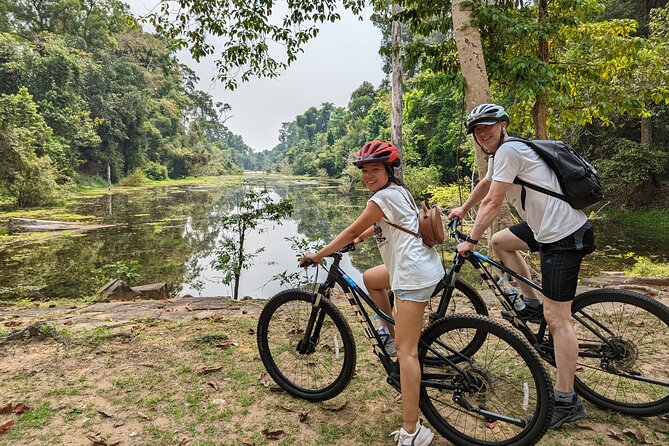
- Maximum 10 travelers keeps the group calm and the pace comfortable
- Trek mountain bike + helmet included means you start riding right away
- Lunch, coconut juice, and water included to help you keep going in the morning heat
- South Gate of Angkor Thom, plus wall viewpoints give you more variety than just temple fronts
- Bayon’s 54 towers and 216 smiling faces are the visual payoff of the route
- Temple pass not included so your real cost depends on buying entry separately
Why cycling Angkor Wat and Bayon feels different
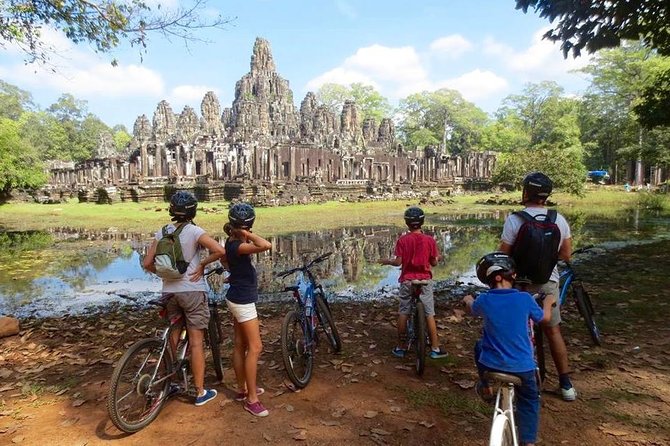
Angkor’s temples are famous for a reason, but they’re also busy. Cycling changes the rhythm fast. Instead of shuffling from one crowd pocket to another, you move at a human pace through the quieter in-between moments.
What I like about this style of tour is that it doesn’t treat you like you should be training for a race. The ride is described as leisurely and suitable for riders of different fitness levels, and the vibe is explicitly non-adventurous. That matters, because you want the temples to be the highlight, not your legs’ endurance test.
Another win: the guide’s storytelling is timed to where you are. You get history and context while you’re rolling toward each highlight, which keeps the whole morning from turning into a checklist.
You can also read our reviews of more tours and experiences in Siem Reap.
Price and what you actually get for $50
At $50 per person, the price is straightforward—if you’re clear on what’s included and what isn’t. The tour covers the “moving day” parts: bike rental (premium TREK), helmet, English-speaking guide, lunch, and drinks (including coconut juice and pure drinking water).
The big extra is temple entry. The Angkor entry ticket is not included and is listed as $37 for a 1-day pass. That means your all-in cost is basically the tour fee plus the entry pass, plus any transport needs like getting to the meeting point.
Value-wise, this works best when you would otherwise pay separately for a bike, a guide, and a plan for food and water. You’re also buying time. The ride gives you a way to see Angkor while you’re still fresh, and the schedule is built to fit a ~5-hour experience without dragging into the hot afternoon.
Meeting point, start time, and how the morning runs
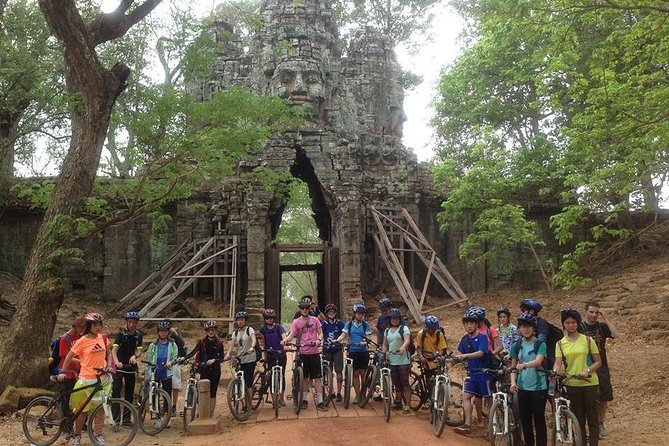
This tour starts early: 7:30 am. You meet at Taphul Rd, Krong Siem Reap 17252, Cambodia, and the tour ends back at the same meeting point.
Hotel pickup and drop-off are not included, so you’ll need a simple plan to get yourself there and back. If you’re staying central in Siem Reap, it’s often easiest to budget a short tuk-tuk ride to the start and then return after the tour.
You’ll use a mobile ticket, and confirmation is sent at booking. Practically, that means you should have your phone charged and ready for check-in.
The timing also matters for comfort. Starting in the morning gives you a better shot at cooler riding conditions, which can be a real difference in temple area heat.
Rolling route: peaceful trails, South Gate, and Prasat Chrung views
The ride is the core experience here: not just transportation, but the way you get to experience Angkor’s spaces in between the big buildings.
You start moving toward the most famous sections: Angkor Wat and Bayon, while also passing major Angkor Thom features. One of the nicer touches is that the route includes quiet trail moments with nature details like butterflies and flowers, plus the sound of the area around you. When the pace is leisurely, you notice these small things.
Here are the standout segments you’ll likely see along the way:
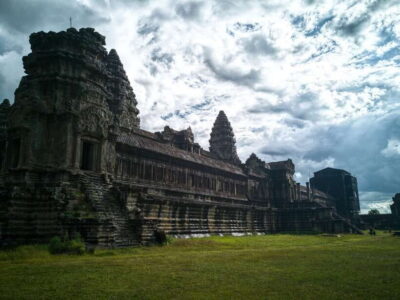
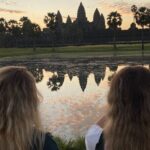
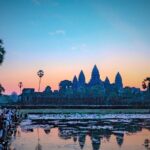
- Angkor Wat: The tour frames it as one of the seven wonders of the ancient world. This is where the day’s seriousness lands—massive scale, classic lines, and that iconic temple silhouette.
- South Gate of Angkor Thom: You’ll see the defensive wall look of Angkor Thom, and the gate is described as especially appealing. It’s a different angle than Angkor Wat, and it helps you understand how the city was designed.
- Protection wall climb to Prasat Chrung: This is where the tour shifts from flat-ish riding to a short effort for a view. You venture onto the protection wall area for a breathtaking view at Prasat Chrung. Even if you don’t love climbing, it’s typically the kind of moment that makes the whole route feel worth it.
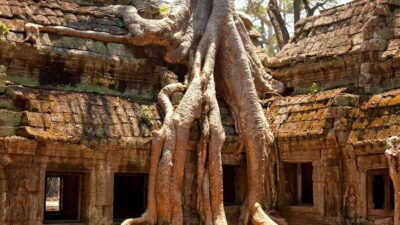
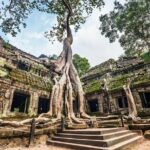
- West Gate of Angkor Thom: This stop is described as the never-restored gate. That phrasing matters: you’re seeing how something looks when it isn’t polished back into a postcard finish. It’s more “real Angkor” and less “perfectly restored tourist scenery.”
The practical note: because this includes trails and gates, it’s not a smooth-road-only ride. Expect some sections that feel more off-road than city cycling.
Angkor Thom and Bayon: getting the smiles without rushing
After working through the Angkor Thom areas, the day culminates in Bayon, the “smiling face temple.”
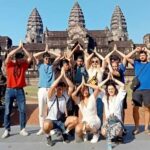
Bayon is second in importance after Angkor Wat in this tour’s framing, and the numbers give you a mental target: 54 towers and 216 smiling faces. That’s useful because it prevents you from just snapping photos without really looking. You’ll know what to focus on, and you’ll have time to pick the angles that make those faces feel alive.
What makes Bayon special on a cycling tour is the approach. You arrive having already seen other gates and wall viewpoints, so the temple doesn’t feel like it drops out of nowhere. It feels like the logical payoff of the whole route.
Also, Bayon isn’t just about the faces. The surrounding layout and the way towers cluster create a visual rhythm. If you’re the kind of traveler who likes to take 10 minutes to study a place instead of sprinting through it, this tour style supports that.
Bike setup, lunch timing, and staying comfortable in the heat
The tour provides a premium TREK mountain bike and a helmet, which is a big deal in Cambodia where it’s easy to overestimate how much you’ll want to rent and manage gear on your own.
You’ll also get lunch, plus drinks: coconut juice and pure drinking water. This helps a lot because temple touring can dehydrate you faster than you expect. Coconut juice sounds like a small detail, but on a cycling morning it’s the kind of included comfort that keeps the day running smoothly.
One real-world consideration is heat. A 5-hour morning can still get hot, and if conditions are intense, you might not want to push yourself to complete every pedal segment. In at least one family case, the company arranged a car pickup when the heat and timing became too much. The key takeaway for you: if it’s scorching, don’t try to be a hero.
Dress rules at active worship areas
Angkor isn’t a museum-only site. It’s an active spiritual place for Buddhists and local worship practices, including daily prayer and meditation. That means rules for respectful dress apply.
The guidance is clear:
- Shorts and skirts above the knees are prohibited in sacred palace areas
- Bare shoulders are prohibited
- Respectful dress is strongly encouraged
For you, that means packing (or wearing) something light but covering. Long pants or a knee-length skirt plus a shirt with sleeves will keep you from doing last-minute scrambling at the entrance.
Also, bring sunglasses and sunscreen. You’ll be outside for the ride and at the temples, and morning shade doesn’t always last.
Small-group touring: why max 10 matters
With a maximum of 10 travelers, you get a better experience than big group cycling. Smaller groups tend to move together without feeling like a train, and it’s easier for the guide to adjust the pace.
This also matters for comfort breaks and questions. If you’re traveling with kids, this group size can be a lifesaver. One family mentioned they didn’t make it all the way back by bicycle because their kids needed a break, and the leader arranged a tuk-tuk home. I can’t promise that will happen in every case, but it shows the operator can adapt when energy levels change.
The tour is also positioned as a family-friendly kind of day—fun, not hardcore. That’s a big part of why the rating is so high.
Who should book this cycling tour, and who might not
This is a great fit if you want:
- A leisurely way to see Angkor Wat and Bayon
- Cycling plus guided history in a manageable time window
- A plan that includes lunch and water, so you’re not constantly searching for food
- A small group and a calm morning flow
It may not be the best choice if you:
- Want guaranteed, smooth-road riding only (some off-road sections are part of the route)
- Have mobility limitations that make cycling difficult
- Plan to spend most of the day only inside major buildings and skip any time outside (because the “outside time” is a key part of the format)
If you’re the type who loves temples but also likes fresh air and movement, you’ll probably enjoy this more than a vehicle-only day.
Should you book Angkor Wat & Bayon: the Smiling Temple?
If you’re deciding between “temples by car” and a “temples with biking,” I’d lean toward booking this one—especially if your priority is a balanced, paced morning. The strongest reasons to choose it are the included bike and helmet, the small group size, and the fact that the schedule mixes major temple stops with quieter trail moments.
Before you book, do two simple checks:
- Budget the Angkor temple pass cost on top of the $50 tour price.
- Dress and pack for sun and worship rules—covered clothing and sunscreen save you time and stress.
Given the 4.9 average rating across 47 reviews and the fact that it’s designed as a non-adventurous ride, it’s a smart choice for most visitors who want Angkor without the big-tour chaos.
FAQ
Is Angkor Wat and Bayon admission included in the $50?
No. The Angkor entry ticket is not included. The listing notes $37 for a 1-day temple pass.
How long is the cycling tour?
The experience runs for about 5 hours.
What time does the tour start?
The start time is 7:30 am.
Where is the meeting point?
You meet at Taphul Rd, Krong Siem Reap 17252, Cambodia. The tour ends back at the same meeting point.
What’s included with the bike rental?
The tour includes a premium mountain bike (TREK) and a helmet.
Does the tour include lunch and drinks?
Yes. Lunch is included, along with coconut juice and pure drinking water.
What’s the group size limit?
The tour has a maximum of 10 travelers.
Is hotel pickup and drop-off included?
No. Hotel pick up & drop-off are not included.
How does free cancellation work?
You can cancel for a full refund up to 24 hours in advance of the experience start time. Less than 24 hours before start time isn’t refunded.